
Football Field Length: Facts You Didn’t Know
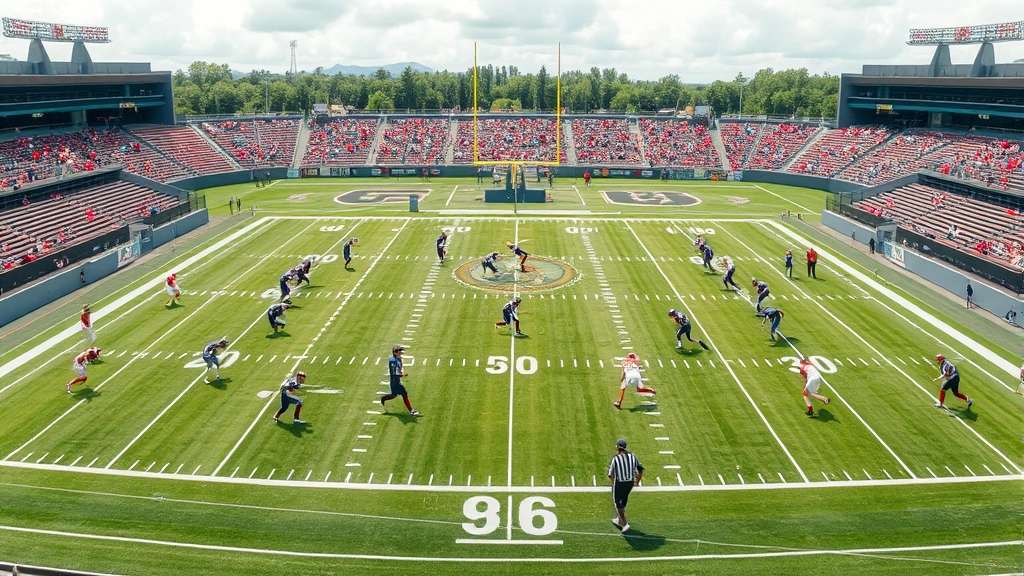
Whether you’re a die-hard football fan, a player looking to improve your game, or simply curious about the sport’s fundamentals, understanding how long is a football field in feet is essential knowledge. The answer is straightforward: an American football field measures exactly 120 yards or 360 feet in total length. However, the complete picture is far more nuanced and fascinating than this simple number suggests.
The standard dimensions of a football field have remained remarkably consistent since the sport’s inception, yet many fans and even casual players don’t fully understand what these measurements encompass. From the playing surface to the end zones, from yard line markings to the sideline boundaries, every inch of a football field serves a specific purpose in the game’s structure and strategy. This comprehensive guide explores everything you need to know about football field dimensions and why they matter to both players and fans.
Understanding field dimensions isn’t just trivia—it directly impacts gameplay, player conditioning, strategic positioning, and even sports betting odds. Let’s dive deep into the specifications that make American football the sport we know and love.
Standard Football Field Dimensions
The American football field is one of the most standardized playing surfaces in all of sports. The official length of 120 yards (360 feet) has been the regulation measurement since the sport’s formal establishment. This total length includes the entire playing field plus both end zones, which are each 10 yards deep.
When people ask how long is a football field in feet, they’re typically referring to the total playing area from one end line to the other. However, it’s important to distinguish between different measurements:
- Total field length: 120 yards (360 feet)
- Playing field only: 100 yards (300 feet)
- Each end zone: 10 yards (30 feet)
- Field width: 53⅓ yards (160 feet)
- Sideline to sideline: 53⅓ yards with 6-foot boundary areas on each side
These dimensions create a rectangular playing surface that has proven optimal for the sport’s tactical depth and physical demands. According to research from the American College of Sports Medicine, the field dimensions directly influence the cardiovascular and muscular endurance required of players, making the standardization crucial for fair competition across all levels.
Breaking Down the 120-Yard Length
The 120-yard total length represents a carefully calculated combination of playing surface and scoring areas. Understanding how this breaks down is fundamental to grasping football strategy and gameplay mechanics.
The 100-yard playing field serves as the primary battleground where most offensive and defensive action occurs. This is the area where teams advance the ball, with every yard gained or lost carrying strategic significance. The field is divided into 10-yard increments, marked clearly with yard lines that help players, coaches, and officials track progress toward the goal line.
Beyond the 100-yard playing surface sit the end zones—two 10-yard-deep areas that define the scoring zones. Touchdowns occur when a player with possession enters the opposing end zone, and field goals are attempted from anywhere on the field toward the uprights positioned at the back of each end zone. These end zones create distinct tactical variations in play-calling and strategy, as teams adopt different formations and approaches when operating in these critical areas.
The total 120-yard length ensures that teams have sufficient space to develop plays, execute formations, and create the push-and-pull dynamic that makes football compelling. When considering how this length affects the game, it’s worth reading about how long does a football game last to understand the relationship between field dimensions and total game duration.
Width and Sideline Specifications
While length often gets the most attention, the width of a football field is equally important to the game’s tactical structure. A football field measures 53⅓ yards wide (160 feet) from sideline to sideline, creating a rectangular playing surface with specific proportions.
This width measurement is exact and unambiguous—there’s no variation between high school, college, and professional levels. The width accommodates the lateral movement essential to football’s strategic complexity. Teams utilize the full width of the field to spread defenses, create throwing lanes, and establish running lanes. The width-to-length ratio creates optimal space for formations that range from the traditional pro-style spread offense to the option-based triple-option attack.
Beyond the sidelines, there are 6-foot boundary areas on each side of the field designated for team personnel, coaches, and officials. These areas are technically out of bounds but essential for the game’s administration. Players who step into these boundary zones during play are considered out of bounds, and the ball placement moves to the nearest yard line.
The sidelines themselves are white lines that clearly demarcate the field’s edge. Receivers must keep their feet in bounds when making catches near the sidelines, creating some of football’s most exciting and controversial moments. Understanding these width specifications is crucial for appreciating the skill required of cornerbacks, wide receivers, and other perimeter players.
End Zone Details and Purpose
The end zones represent the most strategically important areas on the football field, despite comprising only one-sixth of the total 120-yard length. Each end zone extends 10 yards deep (30 feet) from the goal line, creating a distinct rectangular area that defines scoring opportunities.
The goal line itself is the white line that marks the boundary between the playing field and the end zone. Possession of the ball in the opponent’s end zone results in a touchdown worth 6 points. The back line of the end zone, also called the end line, marks the deepest boundary. If a player with possession steps out of bounds at or behind the end line, the play is whistled dead.
Within each end zone sit the goal posts, positioned at the back line. These uprights stand 35 feet apart (the width of the goal) and extend 35 feet high. A team can earn extra points by kicking the ball through the uprights after scoring a touchdown. Field goals can be attempted from anywhere on the field and are worth 3 points if successful.
The end zone’s 10-yard depth creates unique strategic considerations. Offenses often employ goal-line formations with increased personnel density when approaching the end zone, while defenses must account for the reduced space available for defensive backs to cover receivers. This compression of space in the end zone leads to some of football’s most intense and dramatic moments.
Yard Line Markings and Hash Marks
The visual complexity of a football field reflects the sport’s intricate measurement system. The field is marked with yard lines at every 10-yard interval, clearly numbered to show distance from each end zone. These primary yard lines run the full width of the field and serve as reference points for players, officials, and spectators.
Between the primary 10-yard lines are hash marks indicating every yard, providing precise measurement for ball placement and penalty enforcement. The NFL features two sets of hash marks positioned at different widths than college fields, creating subtle but meaningful differences in how plays develop.
The 50-yard line sits at the exact center of the field, dividing the playing surface into two equal halves. This midfield marker holds symbolic significance in football culture and serves as the starting point for many game analyses and strategic discussions.
These markings aren’t merely decorative—they’re essential for the game’s administration. When penalties occur, officials measure and mark the ball’s position with precision. The hash mark system allows for exact yard-to-gain calculations on fourth down, where teams face critical decisions about continuing their drive or surrendering possession.
High School vs College vs Professional Fields
While the basic dimensions remain consistent, subtle but important differences exist between football fields at different competitive levels. All regulation American football fields maintain the same 120-yard length and 53⅓-yard width, but variations in hash mark positioning create strategic differences.
High school football fields feature hash marks positioned 40 feet from each sideline. This wider spacing means offensive plays develop across a broader area, influencing the types of formations and play-calling strategies employed at the high school level.
College football fields feature hash marks positioned 60 feet from each sideline—20 feet closer to the center than high school fields. This narrower spacing creates a more compressed middle portion of the field, favoring certain offensive schemes and defensive alignments.
NFL fields feature hash marks at 70 feet 9 inches from each sideline, the closest to center of any level. This positioning creates the most compressed middle field in professional football, significantly impacting how professional offenses operate and how defensive coordinators structure their units.
These hash mark differences might seem minor, but they create meaningful strategic variations. The positioning affects play-calling, receiver route combinations, and defensive assignments. Understanding these differences is essential when comparing college football game duration and style to professional play.

” alt=”Football field aerial view showing yard lines, hash marks, end zones, and field dimensions”>
The 120-yard length and 53⅓-yard width create the spatial parameters within which all football strategy operates. Understanding these dimensions provides insight into why coaches call certain plays in specific situations. Red zone strategy becomes increasingly important as teams approach the opponent’s end zone. With only 10 yards to traverse into the end zone, offensive play-calling becomes more conservative and power-focused. Teams typically rely on running plays and shorter passing routes rather than the deep passing attacks that dominate mid-field. Field position carries enormous strategic weight in football. A team operating near its own end zone (backed up near their goal line) faces different constraints than a team positioned in the middle of the field. The distance to the opponent’s end zone directly influences risk tolerance and play selection. Two-minute drill scenarios leverage the field’s dimensions in specific ways. Coaches must balance the need to advance down the 100-yard playing field with time management and clock awareness. The total 120-yard distance from one end line to the other becomes a critical factor in late-game strategy. The width of the field—53⅓ yards—creates opportunities for lateral movement and spreading defenses. Modern offensive systems exploit this width by splitting receivers to the edges, forcing defenses to cover more ground horizontally. Defensive coordinators counter by adjusting coverage schemes and utilizing the field’s full width in their positioning. Research from sports science journals demonstrates that understanding spatial constraints directly improves player decision-making and team performance. Coaches who effectively teach field dimensions to their players see improved execution in situational football. The 120-yard total length (or 100 yards of actual playing surface) creates substantial physical demands on football players. Understanding these demands helps explain why football requires such comprehensive conditioning programs. Cardiovascular endurance is essential for covering the field’s length repeatedly. Defensive backs must sprint from sideline to sideline—a distance of 53⅓ yards—while maintaining coverage integrity. Wide receivers execute deep routes that require explosive speed over extended distances. The cumulative effect of repeated movements across the field’s dimensions creates significant cardiovascular stress. A typical football player covers 1-2 miles during a game, with the exact distance depending on position. Defensive linemen who rarely venture far from the line of scrimmage cover less distance than safeties who range across the entire field. The field’s 100-yard playing surface plus the depth of end zones creates the spatial framework within which this movement occurs. Lateral agility demands are substantial given the field’s 53⅓-yard width. Players must develop the ability to move quickly across the field while maintaining balance and body control. This lateral movement, repeated over thousands of yards during a game, places unique demands on the lower body and core musculature. According to research from exercise physiology specialists, the field dimensions of football require athletes to develop unique metabolic capacities. The sport combines aerobic and anaerobic demands as players alternate between high-intensity sprints and lower-intensity movement periods. This interval-based nature of football, driven by the field’s dimensions and play structure, requires specialized conditioning approaches. When examining the full context of football’s physical demands, it’s helpful to understand how long college football games last, as the duration directly correlates with the total distance covered and energy expended.How Field Dimensions Affect Game Strategy
The Physical Demands of Field Length
” alt=”Players in action during football game showing field width and depth dimensions in gameplay context”>
A standard American football field measures 120 yards or 360 feet in total length from one end line to the other. This includes the 100-yard playing field plus two 10-yard end zones. The width is 53⅓ yards or 160 feet. The total field length is 120 yards (360 feet), which includes both end zones. The actual playing field where most offensive and defensive action occurs is 100 yards (300 feet). The distinction matters when discussing field positioning and strategic considerations. Yes, all regulation American football fields—whether high school, college, or professional—maintain identical dimensions of 120 yards long and 53⅓ yards wide. The primary difference is hash mark positioning, which affects how plays develop but doesn’t change the field’s actual size. The 10-yard depth of each end zone was established when American football formalized its rules in the late 1800s. This depth creates an appropriate balance between being challenging to defend while remaining achievable for offensive scoring drives. The 10-yard measurement has remained consistent because it optimizes the game’s tactical complexity. The 100-yard playing field length directly influences play-calling, field position strategy, and risk assessment. Teams near their own end line adopt more conservative approaches, while mid-field positioning allows for more aggressive play-calling. The distance to the opponent’s end zone is always a critical factor in situational decision-making. Hash marks divide the field into individual yard increments and serve as reference points for ball placement after penalties. Different positioning of hash marks at high school, college, and professional levels creates subtle strategic variations in how plays develop across the field. American football fields maintain standardized dimensions globally, though international football (soccer) uses different field dimensions. Canadian football fields are slightly larger at 110 yards long and 65 yards wide, reflecting variations in that sport’s rules and strategy. A team must advance 10 yards to earn a new set of downs. Given the 100-yard playing field, a team theoretically needs to achieve 10 consecutive first downs to traverse the entire field and reach the opponent’s end zone. This 10-yard progression structure directly reflects the field’s dimensional design. Understanding how long is a football field in feet provides foundational knowledge for appreciating football’s strategic depth and physical demands. The 120-yard total length and 53⅓-yard width create a precisely calibrated playing surface that has remained remarkably consistent since football’s formal establishment. From the 100-yard playing field to the 10-yard end zones, from yard line markings to hash marks, every dimension serves a specific purpose in the sport’s structure. Whether you’re interested in the game from a fan’s perspective, a player’s perspective, or a coaching perspective, understanding field dimensions enhances your appreciation for the sport. The measurements influence everything from conditioning requirements to strategic decision-making to the drama of late-game situations. The next time you watch football or step onto a field yourself, you’ll have a deeper understanding of how the 120-yard length and 53⅓-yard width create the framework for one of the world’s most compelling sports. For more insights into football’s fundamental aspects, explore our Peak Play Arena Blog where we cover everything from college football game duration to advanced strategic analysis. You might also enjoy learning about the top 10 sports in the world to understand how football compares globally.FAQ
How long is a football field in feet exactly?
What’s the difference between field length and playing field length?
Are all football fields the same size?
Why is the end zone 10 yards deep?
How does field length affect game strategy?
What do the hash marks represent?
Can football fields be different sizes in different countries?
How many yards must a team advance for a first down?


