Football Plays for Fitness: Coach’s Insights
Football isn’t just a game—it’s a comprehensive cardiovascular and strength-training program disguised as sport. Every football play demands explosive power, lateral agility, sustained endurance, and mental resilience that transforms athletes into peak performers. As a fitness-focused coach, I’ve spent two decades analyzing how football plays develop functional fitness that translates to real-world strength and conditioning gains. The beauty of football training lies in its integrated approach: players simultaneously build muscle, burn calories, improve coordination, and develop the mental toughness required for sustained athletic excellence.
Whether you’re a competitive athlete, weekend warrior, or fitness enthusiast seeking game-changing training methods, understanding how football plays condition the body reveals why this sport produces some of the most physically dominant athletes in the world. This comprehensive guide explores the fitness mechanisms behind football training, the physiological adaptations that occur through consistent play, and how you can leverage football-based conditioning to achieve your fitness goals. We’ll examine specific plays, training methodologies, and recovery strategies that championship-level coaches use to maximize athletic performance.
The Biomechanics of Football Plays and Muscle Development
Every football play activates multiple muscle groups simultaneously, creating a compound training effect superior to isolated gym exercises. When a linebacker executes a gap-control play, they’re engaging their quadriceps, hamstrings, glutes, core stabilizers, and upper body in coordinated movement patterns. This multi-joint engagement stimulates muscle fiber recruitment across fast-twitch and slow-twitch fibers, driving both strength and endurance adaptations.
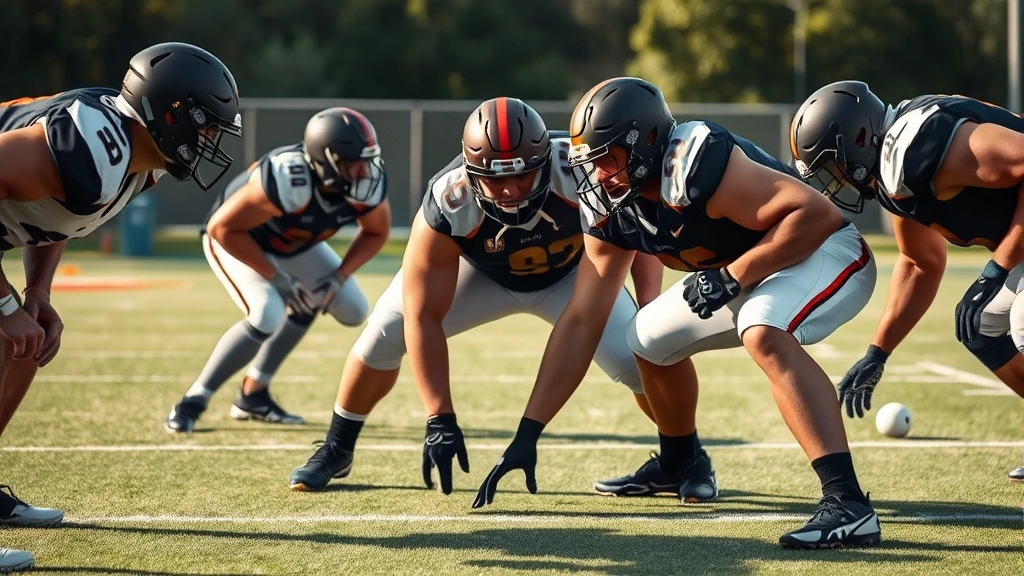
The blocking schemes inherent in football plays demand significant upper body development. Offensive linemen performing sustained blocks develop tremendous chest, shoulder, and tricep strength through constant resistance against opposing defensive players. Research from the American College of Sports Medicine demonstrates that sport-specific resistance training produces superior functional strength compared to traditional weightlifting alone. Football plays provide this sport-specific resistance through live competition, creating real-world strength demands that transfer to athletic performance.
Route-running plays for receivers and backs develop explosive lower body power and dynamic stability. The quick-cut movements required to execute precise routes force athletes to generate force through their feet while maintaining body control. This develops the proprioceptive awareness and muscular coordination essential for injury prevention and athletic longevity. When combined with proper protective equipment like a football girdle, athletes can train intensely while minimizing injury risk.
Defensive plays targeting tackling responsibility create whole-body conditioning effects. A defensive end pursuing the quarterback across the field generates power from their lower body while maintaining upper body control and balance. This integrated movement pattern strengthens the kinetic chain—the connected system of joints and muscles that generate, control, and transfer force throughout the body. The repetitive nature of football plays during practice and games accumulates significant training volume, promoting consistent muscle adaptation and hypertrophy.

Cardiovascular Conditioning Through Football Training
Football plays create variable-intensity conditioning stimuli that develop both aerobic and anaerobic fitness. Unlike steady-state cardio, football involves repeated high-intensity efforts followed by brief recovery periods—a training methodology called high-intensity interval training (HIIT). Research published in sports science journals confirms that HIIT produces superior cardiovascular adaptations compared to continuous moderate-intensity exercise, including improved VO2 max, enhanced lactate threshold, and increased mitochondrial density.
The stop-and-start nature of football plays forces the cardiovascular system to adapt to rapid intensity fluctuations. During a defensive play, a cornerback might sprint 40 yards at maximum effort, then recover for 30 seconds before the next play begins. This repeated effort-recovery cycle strengthens the heart’s ability to deliver oxygen-rich blood to working muscles and enhances the body’s capacity to clear metabolic byproducts like lactate. Over a 16-week football season, athletes accumulate hundreds of these high-intensity intervals, producing profound cardiovascular adaptations.
Offensive plays involving sustained drives—where teams execute 8-12 consecutive plays without significant breaks—demand exceptional aerobic capacity. Linemen must maintain explosive power for extended periods, while skill position players require endurance to maintain speed and decision-making quality throughout drives. This extended effort conditions the aerobic system while simultaneously building mental toughness, as athletes learn to maintain performance despite fatigue. Coaches understand that avoiding sports injuries requires proper conditioning, as fatigued athletes demonstrate increased injury rates.
The positional demands of football create diverse cardiovascular training profiles. Quarterbacks develop neuromuscular efficiency and decision-making speed, while running backs accumulate significant distance and direction changes. Linemen build tremendous power endurance, and defensive backs develop exceptional lateral cardiovascular capacity. This positional specialization within football training allows athletes to target specific fitness adaptations while maintaining sport-specific movement patterns.
Explosive Power Development in Key Plays
Explosive power—the ability to generate maximum force in minimal time—represents the defining characteristic of elite football athletes. The most impactful football plays demand explosive lower body power generated through the triple extension: hip, knee, and ankle extension occurring simultaneously. When a running back explodes through the line of scrimmage or a linebacker shoots a gap, they’re demonstrating the result of systematic power development training.
Goal-line plays exemplify explosive power demands. When a team executes a goal-line dive from the one-yard line, the running back must generate tremendous downhill force while absorbing contact from multiple defenders. This requires power development across multiple planes: vertical power for jumping over defenders, horizontal power for driving forward, and lateral power for cutting around defenders. Progressive resistance training combined with sport-specific power movements develops these capabilities.
Pass-rush plays showcase defensive explosive power. When a defensive end explosively gets off the snap and pursues the quarterback, they demonstrate elastic strength—the ability to quickly absorb force and redirect that energy explosively. This quality, developed through team training activities and individual conditioning, requires specific programming emphasizing rapid force development and elastic recoil.
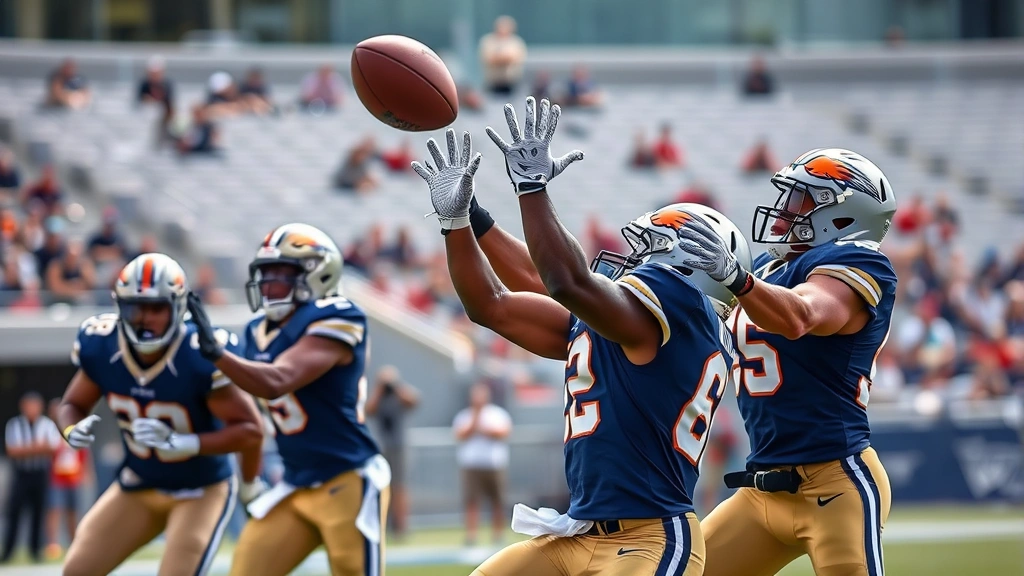
Receiving plays demand explosive vertical power and lateral acceleration. Wide receivers executing fade routes must explosively drive upward while maintaining lateral body control. Running backs cutting through traffic require explosive lateral power to change direction while maintaining forward momentum. These power qualities develop through plyometric training, speed work, and sport-specific conditioning integrated throughout the training cycle. The scientific literature from exercise physiology research demonstrates that power development requires specific training stimulus including heavy loads, high-velocity movements, and adequate recovery between efforts.
Agility and Change of Direction Training
Football plays demand exceptional agility—the ability to rapidly change direction while maintaining speed and body control. Every defensive back covering a receiver must react to sudden directional changes, executing cuts and accelerations that test the nervous system’s responsiveness and the muscular system’s stability. This agility training developed through football plays creates functional fitness that protects joints and prevents injury.
Defensive play execution requires reactive agility. A linebacker reading the offense must process information and respond with appropriate lateral movement, downhill pursuit, or backward retreat. This reactive component challenges the neuromuscular system differently than predetermined agility drills, creating superior transfer to game situations. The decision-making component of football plays integrates cognitive processing with physical execution, developing the brain-body connection essential for athletic excellence.
Route-running plays develop change-of-direction speed through predetermined but demanding movement patterns. A receiver executing a comeback route must accelerate downfield, decelerate rapidly, and redirect laterally—all while maintaining balance and preparing to receive a pass. This sequence demands eccentric strength (force absorption during deceleration), concentric power (force generation during acceleration), and neuromuscular coordination. Repeating these movements across hundreds of plays throughout a season develops exceptional agility capacity.
Screen plays and short-yardage situations create confined space agility challenges. When a running back receives a screen pass in tight space, they must navigate through traffic while maintaining balance and directional control. These congested-space situations develop the agility qualities most applicable to real-world athletic performance and injury prevention. Athletes who develop exceptional agility demonstrate reduced injury rates, as their nervous systems respond more effectively to unexpected perturbations and their muscles stabilize joints through rapid, coordinated contractions.
Recovery and Injury Prevention Strategies
Elite football programs recognize that training stimulus only represents half the adaptation equation—recovery determines whether training produces positive or negative adaptations. Coaches implementing sophisticated football plays training programs must simultaneously implement comprehensive recovery protocols addressing sleep, nutrition, hydration, and active recovery modalities.
Sleep represents the foundation of athletic recovery. During deep sleep, the body releases growth hormone, facilitates muscle protein synthesis, and consolidates neuromuscular learning. Football players engaging in intense training should prioritize 8-9 hours of consistent sleep, with consistent sleep-wake times supporting circadian rhythm optimization. Sleep deprivation impairs recovery, increases injury risk, and compromises decision-making—particularly problematic for quarterbacks and defensive backs requiring peak cognitive function.
Nutrition timing and composition directly influence recovery from football training. Post-practice nutrition should include carbohydrates for glycogen replenishment and protein for muscle protein synthesis. A 3:1 carbohydrate-to-protein ratio consumed within 30 minutes of training completion optimizes recovery. Throughout the day, adequate total protein intake (1.6-2.2 grams per kilogram body weight) supports muscle adaptation. Micronutrient adequacy, particularly iron, zinc, and B vitamins, supports metabolic function and immune system resilience.
Active recovery plays an essential role in football conditioning programs. Light training days incorporating mobility work, low-intensity movement, and flexibility training promote blood flow to recovering tissues without imposing additional training stress. Many elite programs implement weekly recovery days featuring only mobility work, stretching, and mental preparation. This strategic variation prevents overtraining while maintaining fitness levels between intense training blocks.
Injury prevention represents the ultimate goal of intelligent training programming. When athletes execute football plays with proper technique and adequate conditioning, injury rates decrease significantly. Proper custom football jerseys and protective equipment provide external protection, while internal protection derives from proper conditioning, mobility, and movement quality. Coaches should implement pre-practice dynamic warm-ups addressing mobility, activation, and neuromuscular preparation. These 10-15 minute routines prepare the body for intense effort and reduce injury risk substantially.
Programming Football Plays for Fitness Goals
Translating football play knowledge into effective fitness programming requires understanding training principles and individual fitness goals. Whether seeking to develop strength, power, endurance, or sport-specific fitness, football-based training can be systematically programmed to achieve specific objectives.
For strength development, athletes should emphasize resistance training integrated with football plays. Heavy compound movements (squats, deadlifts, bench press) performed 2-3 times weekly build foundational strength, which football plays then express through dynamic sport-specific movements. A sample weekly structure might include heavy resistance training on Monday and Thursday, moderate-intensity football practice on Tuesday and Wednesday, and skill development work on Friday. This structure allows adequate recovery between heavy efforts while maintaining consistent football-specific conditioning.
Power development requires specific programming emphasizing rapid force production. Olympic lift variations (clean pulls, snatch variations) combined with plyometric training (box jumps, bounding) develop the elastic strength essential for explosive football plays. These power movements should be performed early in training sessions when the nervous system is fresh, allowing maximum quality and force production. Athletes performing power work 2-3 times weekly show significant improvements in jumping ability, sprint acceleration, and explosive movement quality.
Endurance-focused programming emphasizes repeated-effort capacity and aerobic base development. Athletes might perform longer football-based conditioning blocks, execute multiple football plays consecutively, or participate in extended practice sessions emphasizing continuous play. Periodizing training cycles ensures adequate recovery between blocks while progressively increasing training demands. A typical 12-week block might progress from moderate-intensity, longer-duration work to higher-intensity, shorter-duration efforts, with a deload week every 3-4 weeks.
Sport-specific programming integrates all fitness qualities while maintaining football-specific movement patterns. This approach recognizes that the greatest fitness benefit comes from performing actual football plays with proper technique and adequate conditioning. Programs should include adequate resistance training for foundational strength, power development for explosive movements, and conditioning work for repeated-effort capacity. The integration of these qualities creates complete athletes capable of performing at high levels throughout entire games and seasons.
Visit the Peak Play Arena Blog for additional football training insights and coaching strategies. Coaches seeking to develop championship-level programs should explore all available resources addressing training methodology, player development, and performance optimization.
FAQ
How often should athletes perform football plays for optimal fitness development?
Most football programs conduct 4-5 practice days weekly during the season, with each practice incorporating 1-2 hours of football plays execution. Off-season training typically includes 2-3 football-specific sessions weekly combined with strength and conditioning work. The frequency should balance training stimulus with adequate recovery, typically requiring 48-72 hours between intense efforts targeting the same muscle groups or energy systems.
Can football play training improve fitness for non-athletes?
Absolutely. The cardiovascular, strength, and power benefits of football training apply universally. Non-competitive athletes can participate in flag football leagues, recreational touch football, or participate in football-based conditioning classes. These activities provide the same fitness benefits while reducing injury risk compared to contact football. The variable-intensity nature of football conditioning creates superior fitness adaptations compared to traditional steady-state exercise.
What’s the relationship between football plays and injury risk?
While football involves contact and inherent injury risk, properly conditioned athletes executing correct technique demonstrate significantly lower injury rates. Comprehensive conditioning addressing strength, power, mobility, and stability reduces injury risk. Proper warm-ups, adequate recovery, and progressive training load management further minimize injury likelihood. Athletes should prioritize technique development and conditioning quality over aggressive intensity.
How do I integrate football training with other fitness goals?
Football training complements most fitness goals effectively. Strength athletes gain sport-specific power and conditioning. Endurance athletes develop power and explosive capacity. General fitness enthusiasts gain comprehensive fitness development across all qualities. The key is balancing football-specific training with targeted work addressing individual goals. A typical week might include 3 football sessions, 2 strength sessions, and 1-2 recovery-focused sessions.
What recovery strategies matter most for football conditioning?
Sleep quality and quantity represent the highest priority, followed by nutrition timing and composition. Hydration, active recovery, and mobility work support the recovery process. Mental recovery through stress management and adequate rest days between intense efforts completes comprehensive recovery programming. Most elite athletes invest 50-60% of their training time in recovery-supporting activities, recognizing that adaptation occurs during rest, not during training.


