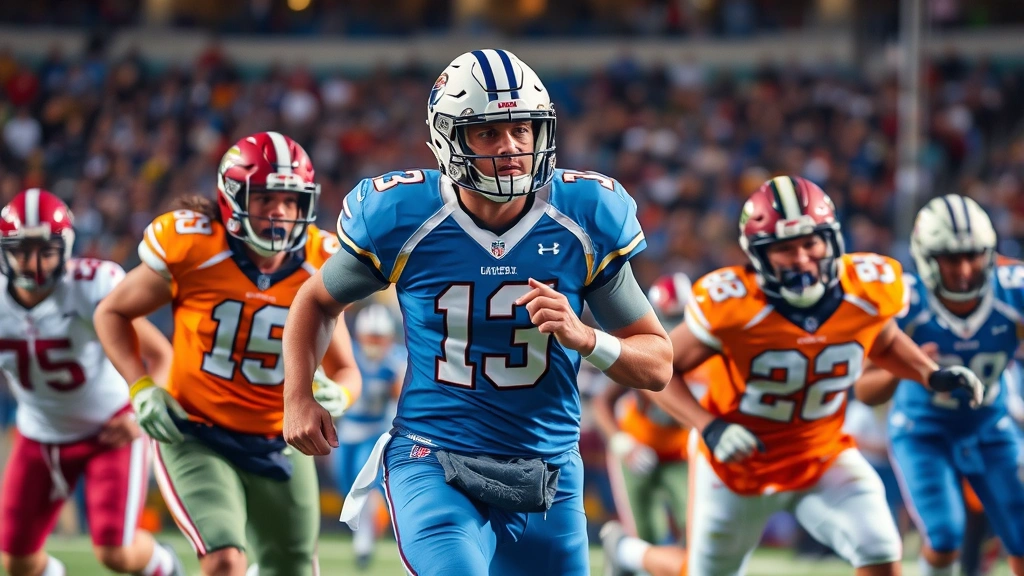
Custom Jerseys for Football: Expert Guide to Design, Quality & Performance
When you step onto the football field wearing a custom jersey that represents your team’s identity, confidence surges through your veins. Custom football jerseys aren’t just uniforms—they’re powerful symbols of team unity, pride, and professionalism that elevate performance and create lasting impressions. Whether you’re outfitting a youth league, high school program, college team, or competitive adult franchise, understanding the ins and outs of custom jersey selection can mean the difference between looking amateur and looking championship-ready.
The market for custom football jerseys has exploded over the past decade, with countless manufacturers, design platforms, and customization options available. But not all jerseys are created equal. Quality, durability, performance fabric, design accuracy, and value for money vary dramatically across suppliers. This comprehensive guide walks you through every critical decision you’ll need to make—from material selection and design principles to sizing accuracy and budget optimization—so you can confidently order jerseys that your team will be proud to wear.
Understanding Custom Football Jersey Basics
Custom football jerseys serve multiple critical functions beyond aesthetics. They establish team identity, improve player recognition during games, facilitate sponsorship opportunities, and create a professional appearance that inspires confidence. Before diving into the customization process, you need to understand the fundamental jersey styles available and their appropriate applications.
The primary jersey styles include sublimated jerseys, which feature full-color designs printed directly into the fabric; mesh jerseys, traditional football uniforms with embroidered or printed numbers and names; and replica jerseys, fan-oriented versions of professional team designs. Each style has distinct advantages depending on your team’s needs, budget, and competitive level.
Youth football programs typically benefit from durable mesh jerseys with straightforward designs, while competitive high school and college teams often invest in performance-grade sublimated jerseys that offer superior moisture management and design flexibility. Understanding these distinctions helps you align jersey selection with your program’s specific requirements and financial parameters.
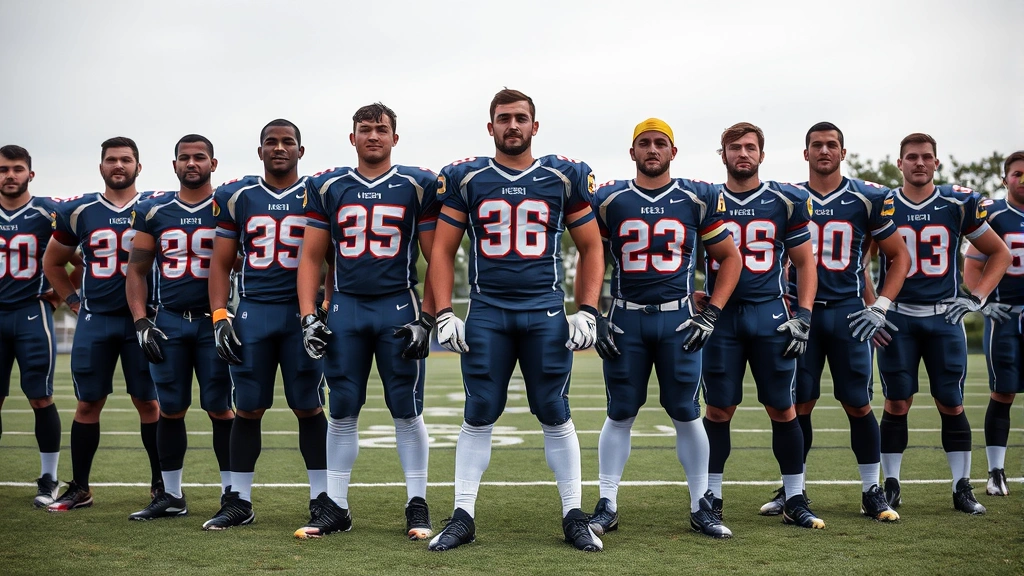
Material & Fabric Technology
The foundation of any quality custom football jersey lies in its fabric composition. Modern performance fabrics dramatically outperform traditional cotton blends, offering superior moisture-wicking, breathability, durability, and comfort during intense physical activity.
Polyester mesh remains the industry standard for football jerseys, typically comprising 100% polyester or polyester-spandex blends. Polyester naturally wicks moisture away from the skin, drying rapidly even during heavy perspiration. The mesh construction creates strategic air channels that promote ventilation across high-heat areas like the chest, back, and underarms.
Advanced fabric technologies include:
- Moisture-wicking technology—engineered fibers that actively pull sweat away from skin, preventing that uncomfortable heavy feeling that impairs performance
- Antimicrobial treatments—integrated into some premium fabrics to reduce odor-causing bacteria and maintain freshness throughout extended use
- UV protection—increasingly important for outdoor football, protecting skin from harmful sun exposure during practices and games
- Four-way stretch materials—allow unrestricted movement in all directions, critical for wide receivers, defensive backs, and other position-specific mobility demands
When selecting fabric for your custom jerseys for football, prioritize moisture-wicking properties and breathability over pure aesthetics. Players performing at high intensity generate significant heat and perspiration; jerseys that fail to manage moisture create discomfort, distraction, and potential performance degradation. Premium polyester blends with spandex (typically 5-10% spandex content) provide optimal balance between durability and flexibility.
Consider the climate where your team plays. Hot, humid environments demand maximum ventilation and moisture management, making mesh construction essential. Cooler climates allow for slightly heavier fabrics while still maintaining performance standards. Your supplier should provide detailed fabric specifications including weight (measured in GSM—grams per square meter), composition percentages, and performance certifications.
Design Principles for Maximum Impact
Exceptional custom football jersey design combines aesthetic appeal with functional clarity. Numbers and names must be instantly legible from the stands and on broadcast coverage, team colors should reflect your brand identity, and overall design should enhance rather than distract from player performance.
Effective design principles include:
- High contrast between numbers and jersey background—ensures visibility in various lighting conditions and broadcast formats. White numbers on dark jerseys or dark numbers on white jerseys provide maximum contrast.
- Adequate number size—professional standards call for numbers at least 6 inches tall on the chest and 10-12 inches on the back, ensuring visibility from distance
- Strategic name placement—back neck placement (above the number) allows for easy player identification while maintaining clean aesthetics
- Team logo positioning—typically centered on the chest, your logo should be proportionate to jersey size and visible from typical viewing distances
- Sleeve design elements—stripes, bands, or color blocking can enhance visual interest while maintaining professional appearance
- Color psychology—select colors that reflect team personality while considering visibility and emotional impact. Research from the American College of Sports Medicine suggests that team colors influence both player psychology and fan perception.
Your design should remain consistent across all jersey versions (home, away, alternate) while allowing for color variations. Create detailed design specifications including pantone color codes, exact number fonts, logo placement measurements, and stripe patterns. This documentation prevents costly errors during production and ensures consistency if you reorder jerseys in future seasons.
Consider consulting your Peak Play Arena Blog for inspiration on successful team branding strategies and design trends in competitive football.
Sizing, Fit & Comfort Considerations
Proper sizing directly impacts player comfort, performance, and jersey longevity. Ill-fitting jerseys restrict movement, create chafing, and diminish the professional appearance that custom jerseys are meant to provide.
Football jerseys typically follow these fit guidelines:
- Youth sizes (XS-XL)—designed for players ages 6-18, with proportions scaled to younger body types
- Adult sizes (XS-4XL)—accommodate diverse player physiques from smaller skill position players to larger linemen
- Performance cuts—tailored specifically for athletic movement, with dropped armholes and tapered sides that move with the body
Proper jersey fit should allow approximately 1-2 inches of space between the jersey and the player’s body when wearing shoulder pads. Sleeves should reach approximately 2 inches above the elbow, providing protection while allowing full arm range of motion. The jersey length should extend to approximately mid-hip, covering the waistband without excessive fabric bunching.
Always request detailed size charts from your supplier, including chest width, sleeve length, and total jersey length measurements. Have multiple team members try sample sizes before finalizing your order. Individual players have varying preferences—some prefer tighter fits for reduced wind resistance, others prefer looser cuts for maximum movement freedom. Accommodate these preferences by offering 1-2 size options per player and allowing for individual adjustments.
Quality manufacturers provide pre-production samples for fit verification. Take advantage of this service to identify sizing issues before committing to full production runs. Correcting sizing errors after production is expensive and time-consuming; preventing them upfront saves significant frustration and expense.
For additional insights on how proper athletic equipment impacts performance and injury prevention, review our guide on how to avoid sports injuries, which addresses equipment fit as a critical injury prevention strategy.
Printing & Embroidery Methods Explained
The method used to apply numbers, names, and logos dramatically affects durability, appearance, and cost. Understanding the strengths and limitations of each technique helps you select the optimal approach for your specific needs.
Screen printing remains the most cost-effective method for large production runs. Ink is forced through screens onto the fabric, creating vibrant colors with excellent durability. Screen printing works best for simple designs with limited colors and is ideal for teams ordering 50+ jerseys. However, screen printing cannot reproduce photographic detail or extremely complex color gradients.
Direct-to-garment (DTG) printing uses specialized inkjet technology to print directly onto the jersey fabric, enabling full-color photographic reproduction. DTG printing excels for small batches, complex designs, and photo-quality graphics. The downside is higher per-unit cost, making it less economical for large team orders. DTG prints are durable but may fade slightly faster than screen-printed designs with extended washing and use.
Sublimation printing converts ink to gas that bonds with polyester fibers at the molecular level, creating prints that are virtually indestructible. Sublimated designs won’t crack, peel, or fade even after hundreds of wash cycles. Sublimation enables full-color designs across the entire jersey, creating seamless full-coverage aesthetics. This premium method costs more than screen printing but provides unmatched longevity—ideal for jerseys you plan to use for multiple seasons.
Embroidery uses needle and thread to stitch designs directly into the fabric, creating tactile, three-dimensional effects that enhance visual impact. Embroidered numbers and logos convey premium quality and durability. However, embroidery is labor-intensive, making it more expensive than printing methods. It’s best reserved for logos, patches, and accent elements rather than full-coverage designs.
For most competitive football programs, screen printing combined with embroidery provides optimal balance between cost, durability, and appearance. Screen-printed numbers with embroidered team logos creates professional aesthetics while maintaining budget efficiency for large team orders.
Budget Planning & Cost Optimization
Custom football jersey costs vary dramatically based on order quantity, fabric quality, design complexity, and customization methods. Understanding cost drivers helps you allocate budget effectively without compromising quality.
Typical cost ranges include:
- Budget jerseys (youth programs, casual leagues)—$12-20 per unit for 50+ quantity orders using basic screen printing
- Mid-range jerseys (high school, competitive adult)—$25-40 per unit for quality polyester mesh with durable screen printing and embroidery
- Premium jerseys (elite programs, professional quality)—$50-100+ per unit for sublimated designs, advanced fabrics, and comprehensive customization
Cost optimization strategies include:
- Increase order quantities—per-unit costs decrease significantly with larger orders. Ordering 100 jerseys typically costs 20-30% less per unit than ordering 25.
- Simplify design complexity—each additional color in screen printing increases costs. Limiting designs to 3-4 colors reduces expenses without sacrificing visual impact.
- Standardize sizing—offering limited size options (e.g., youth small-XL and adult S-3XL) reduces production complexity and inventory requirements.
- Plan ahead—rush orders incur premium fees. Planning 8-12 weeks in advance allows manufacturers to schedule production efficiently, reducing costs.
- Bundle with other apparel—many suppliers offer volume discounts for combined orders including practice jerseys, warm-up gear, and accessories.
Don’t compromise quality to save money. Cheap jerseys that deteriorate after one season ultimately cost more than investing in durable jerseys that perform reliably for multiple years. Calculate total cost of ownership across the jersey’s expected lifespan rather than focusing solely on upfront purchase price.
Ordering Process & Timeline Management
Successful custom jersey projects require meticulous planning and clear communication with your supplier. Understanding the typical timeline prevents last-minute rushes that inflate costs and compromise quality.
Standard ordering timeline:
- Weeks 1-2: Design finalization—develop detailed design specifications, color codes, sizing requirements, and approval from stakeholders
- Weeks 3-4: Supplier selection and quotation—research manufacturers, request detailed quotes, and evaluate samples from top candidates
- Weeks 5-6: Sample approval—order production samples to verify fit, color accuracy, and print/embroidery quality
- Weeks 7-8: Final adjustments and order placement—make any necessary modifications based on sample evaluation and place final production order
- Weeks 9-12: Production and quality assurance—manufacturer produces jerseys while you coordinate final sizing confirmation and payment
- Week 13: Delivery and distribution—jerseys arrive and are distributed to team members
Maintain detailed communication with your supplier throughout the process. Request progress photos, clarify any ambiguities in writing, and establish clear expectations regarding delivery dates and quality standards. Many jersey disputes arise from miscommunication rather than actual quality problems; clear documentation prevents these issues.
When selecting a supplier, verify their experience with your specific team level. Youth league manufacturers may lack the quality standards expected by competitive high school or college programs. Check references, review portfolio examples, and ensure they have capacity to handle your specific order volume and timeline.
Quality Assurance & Durability Testing
Premium custom football jerseys should withstand rigorous use including repeated washing, extended sun exposure, impact from tackles and collisions, and aggressive movement. Implementing quality assurance measures ensures your investment performs reliably.
Durability testing should include:
- Colorfastness testing—wash jerseys 10+ times using standard washing protocols and verify colors remain vibrant without fading or bleeding
- Print durability assessment—inspect screen-printed or embroidered designs after washing to confirm they haven’t cracked, peeled, or separated from the fabric
- Seam strength evaluation—examine armholes, sleeve seams, and side seams to confirm stitching is secure and won’t unravel with use
- Fabric integrity inspection—verify the fabric hasn’t developed pilling, holes, or thin spots that indicate poor quality
- Fit consistency verification—confirm sizing remains consistent across the entire production run without unexpected shrinkage or distortion
Request that your manufacturer provide care instructions specific to your jersey’s fabric and customization method. Different printing techniques require different washing approaches; sublimated jerseys can handle hot water while some DTG prints perform better with cold water washing. Providing clear care instructions to players extends jersey lifespan and maintains appearance.
For comprehensive guidance on maintaining athletic equipment and preventing performance degradation, explore how to avoid sports injuries, which includes equipment maintenance as a key injury prevention strategy.
Establish a warranty or quality guarantee with your supplier. Reputable manufacturers stand behind their products and will replace defective jerseys. Clarify the timeline for submitting quality claims and what constitutes a defect covered under warranty.
Consider ordering 5-10% additional jerseys beyond your team size to account for damage, loss, or future replacement needs. Having replacement jerseys available prevents mid-season gaps in uniform availability and allows for roster adjustments without ordering entire new batches.
Frequently Asked Questions
How long do custom football jerseys typically last?
Quality custom jerseys with proper care can last 3-5+ seasons of regular use. Factors affecting longevity include fabric quality, customization method durability, washing frequency, and storage conditions. Sublimated designs last longer than screen-printed designs. Proper care—cold water washing, air drying, and avoiding fabric softeners—extends jersey lifespan significantly.
Can we customize jerseys with player names and numbers?
Yes, this is standard customization. Most manufacturers offer name and number customization as part of the base service. You can choose font styles, number sizes, and placement locations. Some suppliers charge per-player customization fees ($2-5 per jersey), while others include basic customization in the base price. Clarify customization costs when requesting quotes.
What’s the minimum order quantity for custom jerseys?
Minimum order quantities vary by supplier but typically range from 12-25 jerseys for small orders to 50+ for better pricing. Some manufacturers offer lower minimums for premium customization methods like sublimation. Larger orders (100+) qualify for significant per-unit discounts. Confirm minimum quantities before committing to a supplier.
How should we store custom jerseys to maintain quality?
Store jerseys in a cool, dry location away from direct sunlight. Hang jerseys on hangers rather than folding to prevent creasing and fabric stress. Avoid storing in plastic bags that trap moisture; use breathable storage containers. Keep jerseys away from extreme heat, humidity, and pest-prone areas. Proper storage prevents premature fading and fabric degradation.
Can we add sponsor logos to custom jerseys?
Yes, sponsor logos are commonly added to team jerseys. Discuss logo placement, size, and quantity with your supplier. Sponsors typically appear on sleeves, chest, or back of jerseys. Verify that adding sponsor logos doesn’t conflict with league regulations, particularly in youth and high school programs that may have restrictions on commercial advertising.
What’s the difference between replica and authentic custom jerseys?
Replica jerseys are fan-oriented versions featuring professional team designs with lighter-weight fabrics and simplified construction. Authentic jerseys are designed for actual player use with premium fabrics, advanced customization, and enhanced durability. For team use, you want authentic-grade jerseys designed for competitive performance rather than fan replicas.
How do we ensure accurate color reproduction?
Request detailed color specifications using Pantone color codes rather than relying on visual descriptions or digital images. Different screens display colors differently; Pantone codes ensure consistent color reproduction. Request physical color samples from your supplier before approving full production. Verify that colors match your team’s official brand standards.
Can custom jerseys be altered after production?
Minor alterations like hemming sleeves or adjusting side seams are possible but expensive and time-consuming. Screen-printed or embroidered designs cannot be easily altered. Always verify sizing and design accuracy before production rather than planning post-production modifications. This approach saves significant time and expense.
What fabric weight is best for football jerseys?
Football jerseys typically use 150-180 GSM (grams per square meter) polyester mesh. Lighter fabrics (under 150 GSM) offer maximum breathability but less durability. Heavier fabrics (over 200 GSM) provide durability but may feel less breathable. For most applications, 160-180 GSM provides optimal balance between durability and performance.
How do we handle jerseys for players with specific medical needs?
Communicate any special requirements (allergies, sensory sensitivities, specific fit needs) to your supplier well in advance. Some manufacturers can produce custom fits or use alternative fabrics for players with specific medical conditions. This requires advance planning but ensures all team members can participate comfortably and safely.


