
Best Strength Exercises? Coach’s Top 5 Picks for Athletic Performance
When it comes to building explosive power and athletic dominance, most coaches agree that foundational strength exercises form the backbone of any serious training program. Whether you’re an athlete preparing for competition or a fitness enthusiast seeking measurable results, understanding which exercises deliver the most impact is crucial. The exercises I’m about to share have been scientifically validated and field-tested with hundreds of athletes across multiple sports disciplines.
These five strength exercises aren’t just randomly selected—they’re chosen because they build functional power, improve athletic performance, and create the muscular foundation necessary for sustained success. When combined strategically with proper nutrition and recovery, they’ll transform your physique and elevate your game to the next level.

The Barbell Back Squat: The King of Strength Exercises
The barbell back squat stands as the undisputed champion among lower body strength exercises. This compound movement engages your quadriceps, hamstrings, glutes, and core simultaneously, making it the most efficient lower body exercise for building strength and mass. When performed correctly, the back squat activates over 200 muscles throughout your entire body.
What makes the squat so powerful is its ability to generate force through multiple joints. According to the American College of Sports Medicine, compound movements like the squat produce superior hormonal responses compared to isolation exercises, leading to greater overall strength gains and muscle development. The heavy loading capacity of the barbell squat allows you to progressively overload—the fundamental principle of strength adaptation.
For athletes specifically, understanding proper form reduces injury risk while maximizing performance gains. Start with bodyweight or light weight to master the movement pattern. Focus on descending with control, maintaining an upright torso, and driving through your heels on the ascent. Elite strength coaches recommend 3-5 sets of 3-6 repetitions for pure strength development.
Key Benefits:
- Builds massive leg strength and muscle
- Improves athletic explosiveness and jumping ability
- Enhances metabolic rate for fat loss
- Strengthens core and stabilizer muscles
- Increases bone density and joint resilience
Deadlifts: Maximum Power Development
If the squat is the king, the deadlift is the emperor of strength exercises. This primal movement pattern—lifting a weight from the ground—engages virtually every muscle group in your body and builds raw, functional strength that translates directly to athletic performance and real-world strength.
The deadlift’s superiority lies in its simplicity and effectiveness. You’re literally training your body to produce maximum force against maximum resistance. Research published in the Journal of Strength and Conditioning Research demonstrates that deadlifts produce some of the highest force outputs of any exercise, making them unmatched for developing explosive power.
There are several deadlift variations worth exploring: conventional deadlifts, sumo deadlifts, and trap bar deadlifts. Each variation emphasizes slightly different muscle groups and movement patterns. Conventional deadlifts emphasize posterior chain engagement, while sumo deadlifts increase quadriceps involvement. The trap bar deadlift offers a neutral grip that many athletes find more comfortable.
When programming deadlifts, quality matters more than volume. Perform 2-5 sets of 1-5 repetitions with heavy weight to maximize strength adaptation. Always prioritize perfect form over ego-driven heavy weight. A single poorly executed rep can undo weeks of training progress through injury.
Deadlift Benefits for Athletes:
- Builds posterior chain power for sprinting and jumping
- Strengthens grip strength and forearm endurance
- Improves spinal stability and posture
- Develops full-body coordination and muscle recruitment
- Creates hormonal response that boosts testosterone naturally
Bench Press: Upper Body Domination
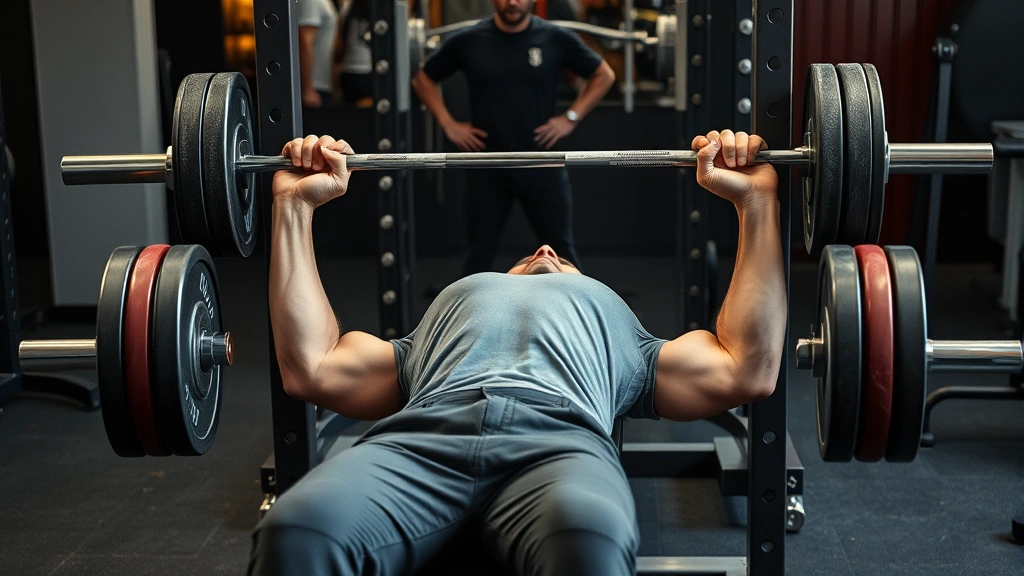
The barbell bench press reigns as the quintessential upper body strength exercise. This horizontal pushing movement builds chest, shoulder, and tricep strength while improving pushing power essential for contact sports and athletic performance.
What distinguishes the bench press from other pressing movements is its horizontal pressing pattern, which uniquely targets the pectoralis major and anterior deltoids. When performed with proper scapular retraction and control, the bench press creates a powerful upper body foundation. Check our fitness blog for more comprehensive training guidance on pressing mechanics.
The bench press offers multiple grip widths and variations. A wider grip emphasizes chest development, while a narrower grip shifts emphasis toward triceps. Incline and decline variations target different chest regions. For maximum strength development, stick with flat barbell bench press as your primary pressing movement.
Progressive overload is critical with the bench press. Track your weights religiously and aim to add weight or reps each week. Perform 3-5 sets of 3-6 repetitions for pure strength gains. Proper shoulder health requires balancing pressing volume with pulling exercises to maintain muscular balance.
Bench Press Advantages:
- Builds powerful chest and shoulders
- Improves pressing strength for athletic movements
- Strengthens triceps and front deltoids
- Enhances upper body stability and control
- Provides measurable progress tracking
Bent-Over Rows: Building Posterior Chain Strength
While the bench press dominates pushing movements, the bent-over barbell row stands as the premier pulling exercise. This horizontal pulling movement balances pressing volume, strengthens your back, and builds the posterior chain power essential for athletic dominance.
The bent-over row engages your lats, rhomboids, middle back, and biceps while requiring significant core stabilization. This exercise directly counters the postural issues created by modern sedentary lifestyles and excessive pressing volume. Athletes who emphasize rowing develop superior pulling strength, better posture, and reduced injury risk.
Proper bent-over row form requires a neutral spine maintained throughout the movement. Hinge at the hips, maintaining a slight knee bend, and row the weight to your lower chest or upper abdomen. Control the eccentric (lowering) phase to maximize muscle damage and strength adaptation. The bent-over row also builds grip strength and forearm endurance.
Programming should reflect a 1:1 pressing to pulling ratio. If you bench press 3 times weekly, ensure you’re rowing with similar frequency and volume. Perform 3-5 sets of 5-8 repetitions for strength-hypertrophy development. Many coaches recommend motivational approaches to training consistency since pulling exercises require mental fortitude.
Rowing Benefits:
- Builds powerful back and lat muscles
- Improves pulling strength and grip endurance
- Corrects postural imbalances from pressing
- Strengthens rear deltoids and upper back
- Reduces shoulder injury risk through balanced development
Overhead Press: Shoulder Stability and Power
The standing overhead press—often called the military press—represents the ultimate test of upper body strength and stability. This vertical pressing movement builds shoulders, upper chest, and triceps while demanding exceptional core stability and total body tension.
Unlike the bench press’s horizontal pressing pattern, overhead pressing requires vertical force production. This variation develops shoulder strength and stability in the frontal plane, creating well-rounded shoulder development. The overhead press also requires significant core engagement to stabilize the weight overhead, making it a full-body strength exercise despite its upper body focus.
The overhead press is technically demanding and requires proper progression. Start with light weight and master the movement pattern before adding significant load. The weight should travel in a straight line, and your core must remain engaged throughout. Avoid excessive back arching—this reduces core tension and increases lower back strain.
Perform the overhead press for 3-5 sets of 3-6 repetitions when training for pure strength. Many athletes find that pressing twice weekly—once for strength and once for volume—optimizes shoulder development. Understanding proper training structure and recovery timing applies equally to strength training as to sport-specific conditioning.
Overhead Press Advantages:
- Builds powerful shoulders and upper chest
- Develops exceptional core stability
- Improves vertical pressing strength
- Strengthens stabilizer muscles
- Creates well-rounded shoulder development
The overhead press demands respect and patience. This exercise separates serious athletes from casual gym-goers because it rewards consistent, intelligent training while punishing poor form immediately.
These five exercises form the foundation of any serious strength program. When combined intelligently with proper progression, adequate recovery, and consistent effort, they’ll build the strength and power necessary for athletic dominance and impressive physique transformation.
FAQ
How often should I perform these strength exercises?
For optimal strength development, train each movement 2-3 times weekly with adequate recovery between sessions. A common approach involves splitting exercises across multiple sessions: squat and bench press on day one, deadlift and rows on day two, overhead press on day three. Allow 48-72 hours recovery between training the same movement pattern.
What weight should I start with?
Begin with a weight that allows you to complete all prescribed repetitions with perfect form while maintaining 2-3 repetitions in reserve. You should feel challenged but never compromised on technique. Progressive overload—gradually increasing weight or repetitions—drives strength adaptation over time. Increase weight by 5-10 pounds once you can complete all sets and reps comfortably.
Can I perform these exercises if I’m a beginner?
Absolutely, but prioritize learning proper form before adding significant weight. Consider working with a qualified strength coach initially to establish correct movement patterns. Proper planning and strategy apply to training as much as competitive sports. Begin with bodyweight variations or light dumbbells, progress to barbells, then gradually increase load as proficiency improves.
How do these exercises improve athletic performance?
These compound movements build the strength foundation that translates to explosive power, improved speed, enhanced jumping ability, and increased injury resilience. Athletes with superior baseline strength perform better across virtually every sport. Research demonstrates that strength training improves athletic performance across multiple sport disciplines.
Should I add isolation exercises alongside these movements?
Absolutely. While compound movements form your program’s foundation, isolation exercises address specific weaknesses and muscle groups. After completing your compound lifts, add 2-3 isolation exercises targeting specific muscles. For example, following squats add leg curls and leg extensions; after bench press add dumbbell flyes and tricep extensions.
How important is nutrition for strength development?
Nutrition is equally important as training. Your muscles require adequate protein (0.7-1 gram per pound of bodyweight), carbohydrates for energy, and healthy fats for hormone production. Without proper nutrition, even perfect training produces suboptimal results. The American College of Sports Medicine emphasizes nutrition’s critical role in athletic performance.
Can women perform these strength exercises?
These exercises benefit everyone regardless of gender. Women develop strength identically to men and experience similar performance improvements. Women shouldn’t fear strength training creates excessive bulk—building muscle requires significant caloric surplus and time. Strength training improves body composition, bone density, and athletic performance for women equally as men.
What’s the best progression strategy?
Track your workouts meticulously and aim to add weight or repetitions weekly. Once you complete all prescribed sets and reps comfortably, increase weight by 5-10 pounds. This linear progression continues until progress stalls, then implement advanced periodization strategies. Strategic planning separates successful athletes from inconsistent performers in both sport and training.


