Football Quotes for Motivation: Expert Picks That Transform Your Game
Football isn’t just a sport—it’s a mindset. Whether you’re grinding through preseason training, preparing for fantasy football draft strategy, or pushing through the mental challenges of competition, the right words at the right moment can shift your entire perspective. The most successful athletes understand that motivation stems from more than physical training; it comes from the mental fortitude cultivated through powerful messaging and inspirational guidance.
Throughout football history, legendary coaches, iconic players, and sports psychologists have shared wisdom that transcends the gridiron. These football quotes for motivation serve as anchors during tough moments, reminding athletes why they started and what they’re fighting for. In this comprehensive guide, we’ve curated expert-selected quotes that resonate with players at every level—from high school athletes to professional competitors—and we’ll explore how to harness their psychological power to elevate your performance.
Legendary Coach Wisdom That Shapes Champions
Coaching legends have shaped football culture through their powerful messages and unwavering commitment to excellence. These aren’t just catchy slogans—they’re psychological tools backed by decades of experience working with elite athletes. Coach Vince Lombardi’s philosophy remains foundational to modern football motivation: “The achievements of an organization are the results of the effort of each individual.” This quote encapsulates the balance between individual excellence and collective success, reminding players that personal accountability directly impacts team outcomes.
Another cornerstone motivation principle comes from Coach Bear Bryant: “Winning isn’t everything, but wanting to win is.” This distinction matters profoundly in sports psychology. The desire—the internal drive—often predicts success more accurately than raw talent. When you genuinely want to win, you’ll invest the mental energy required to overcome obstacles. This connects directly to understanding how to avoid sports injuries through proper mental focus and disciplined execution.
Coach Tom Landry contributed another gem: “Setting a goal is not the main thing. It is deciding how you will go about achieving it.” This quote addresses a critical gap in athlete development—many players set ambitious targets but fail to construct actionable pathways. The methodology matters more than the destination. By focusing on process-oriented thinking, athletes develop resilience and adaptability when circumstances change.
Modern coaching philosophy has evolved, but the core principle remains: powerful words from respected leaders create psychological anchors that athletes reference during difficult moments. When fatigue sets in during the fourth quarter, when doubt creeps in after a mistake, these quotes provide mental scaffolding to refocus and recommit.

Iconic Player Motivation Quotes
Player-generated quotes carry unique authenticity because they emerge from lived experience in the arena. These athletes have faced the exact pressures and challenges that current players encounter. Joe Montana’s perspective on pressure reveals deep psychological insight: “Pressure is something you feel when you care about something. It’s a privilege.” This reframe transforms a typically negative emotion into evidence of commitment and passion—a powerful cognitive shift.
Tom Brady’s approach to motivation emphasizes persistence: “I’m not always going to be perfect. You’re not always going to be perfect, but I am always going to work my tail off.” This accessibility—acknowledging imperfection while committing to effort—resonates deeply with athletes at all levels. It removes the paralyzing expectation of flawlessness and replaces it with actionable consistency and relentless work ethic.
Jerry Rice, widely considered the greatest receiver in football history, provided this motivation anchor: “Today I will do what others won’t, so tomorrow I can accomplish what others can’t.” This quote directly addresses the daily grind of training and preparation. Excellence isn’t built through occasional heroic efforts; it’s constructed through unglamorous daily choices that others avoid. When you’re considering skipping a workout or cutting a training session short, Rice’s words provide powerful perspective on delayed gratification and long-term thinking.
Peyton Manning’s philosophy on competition offers another dimension: “I don’t think about what I’ve done. I think about what I have to do.” This forward-focused mentality prevents athletes from becoming complacent after success or paralyzed by past failures. The present moment—the next play, the next practice, the next game—is where control exists and where motivation must direct energy.
Building Mental Toughness Through Motivational Mindsets
Mental toughness separates good athletes from great ones. Research from the American College of Sports Medicine confirms that psychological factors often determine athletic performance more significantly than physical attributes alone. Building this toughness requires consistent exposure to motivational frameworks that reshape how you interpret challenges.
Quotes about resilience become particularly valuable during setbacks. When you miss a crucial tackle, throw an interception, or experience a season-ending injury, your mental response determines recovery trajectory. Tim Tebow’s perspective on adversity demonstrates this: “If you believe it, you can achieve it.” While seemingly simple, this statement encodes a complex psychological principle—belief systems directly influence neurological processing and behavioral choices.
The concept of “next play mentality” has become increasingly central to football culture. This involves acknowledging the previous play without allowing it to contaminate focus on the present moment. Coaches now frequently reference this principle because sports psychology research validates its effectiveness. A quote that captures this: “You can’t change the past, but you can change your response to it.” This empowers athletes by redirecting energy from regret toward actionable present-moment focus.
Building mental toughness also involves embracing discomfort. Coach Nick Saban’s approach emphasizes this: “I’m a big believer that if you’re not getting better, you’re getting worse.” This growth-oriented mindset prevents complacency and provides psychological permission to pursue challenging training. When workouts feel difficult, this quote reframes discomfort as evidence of progress rather than punishment.
Game-Day Psychology and Pre-Performance Quotes
The hours immediately before competition represent a critical psychological window. Athletes’ mental states during this period significantly influence performance outcomes. Sports psychologists now recommend that players develop personalized pre-game routines incorporating motivational quotes that align with their individual psychology.
Different quotes serve different psychological functions. Some quotes energize and activate the nervous system—these work best for athletes who need heightened arousal. Examples include: “Leave it all on the field” and “This is your moment.” Other quotes calm and center—these benefit athletes prone to anxiety: “Trust your training” and “Control what you can control.”
The concept of psychological priming explains why pre-game quotes prove so effective. When you consciously expose yourself to motivational messaging before competition, you’re literally priming neural networks associated with confidence, focus, and resilience. Neuroscience research demonstrates that visualization combined with motivational affirmations creates stronger neural pathways than visualization alone.
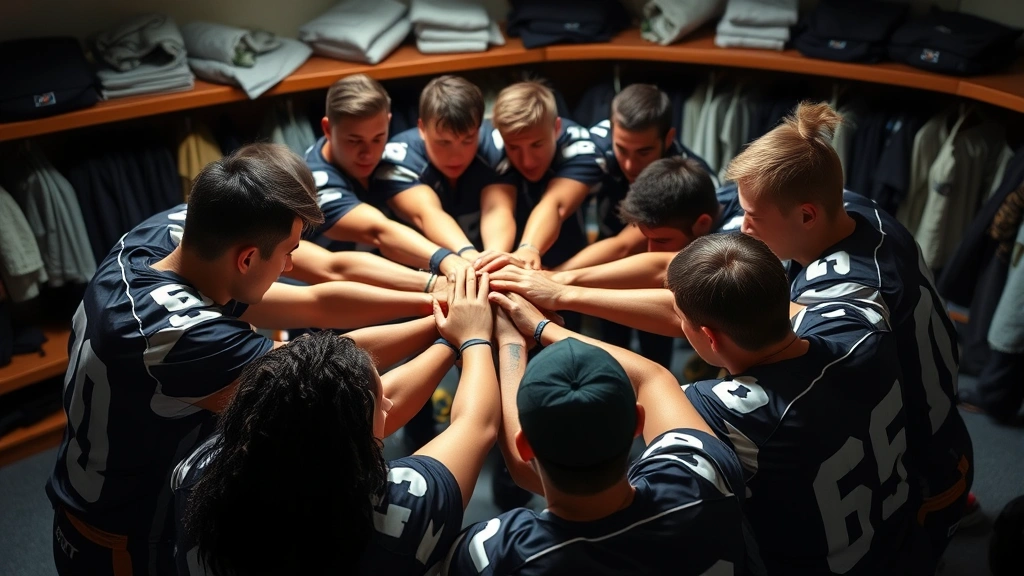
Players at the college football level often employ quote-based rituals. Writing a quote on tape, repeating it in the locker room, or reviewing it during warm-ups creates a psychological anchor that persists throughout the game. When pressure spikes in critical moments, these pre-game exposures surface automatically, providing mental stability.
Creating Team Culture Through Unified Motivation
Individual motivation matters, but team-wide motivational culture creates exponential impact. When an entire organization embraces shared motivational principles, it creates psychological cohesion and unified purpose. This connects directly to understanding what drives elite players at the professional level—many cite team culture and shared mission as primary satisfaction sources.
Legendary coach Bill Walsh understood this principle deeply. His quote—”Champions keep playing until they get it right”—became embedded in San Francisco 49ers culture. This wasn’t just motivational decoration; it shaped organizational values, training approaches, and player accountability systems. When everyone operates from shared motivational principles, it dramatically reduces friction and increases coordination.
Team motivation quotes work best when they’re visible, repeated, and connected to organizational values. The Peak Play Arena Blog frequently discusses how successful programs embed motivational messaging throughout facilities—on whiteboards, in meeting rooms, on practice field signage. This constant exposure creates what psychologists call “environmental priming,” where surroundings automatically activate desired mental states.
Creating effective team culture also involves selecting quotes that resonate with your specific roster. A team of young, hungry players might respond powerfully to quotes about opportunity and proving yourself. A veteran roster might connect more deeply with quotes about legacy and finishing strong. The psychological principle remains consistent: motivation is most powerful when it addresses the specific psychological needs of your audience.
Applying Quotes to Your Training Regimen
The practical application of motivational quotes transforms them from inspiration into performance tools. During training, quotes serve multiple functions: they combat fatigue, refocus attention when concentration lapses, and reinforce desired behaviors and attitudes.
Consider implementing quotes into your training structure. Create a “quote of the week” system where you select one motivational statement and consciously apply it throughout your training. Monday might focus on effort and intensity. By mid-week, you might emphasize technical precision. The final practice week before competition could emphasize confidence and trust in preparation. This systematic approach ensures quotes remain psychologically potent rather than becoming background noise.
When high school football players implement quote-based training strategies, they often experience measurable improvements in workout quality and consistency. The mechanism is straightforward: motivational messaging reduces perceived effort and increases intrinsic motivation, allowing athletes to push harder while feeling less depleted.
Individual athletes can create personal motivation systems by pairing specific quotes with specific training objectives. If you’re working on speed development, select quotes about explosiveness and acceleration: “Acceleration is the difference between good and great.” When training footwork and technique, choose quotes emphasizing precision and discipline: “Champions are made in the moments when no one is watching.” This targeted approach leverages psychological specificity to maximize training transfer.
Documentation amplifies effectiveness. Write your selected quotes in a training journal. Review them before and after workouts. Rate how effectively each quote influenced your mental state and performance quality. Over time, you’ll identify which quotes resonate most powerfully with your psychology, allowing you to build a personalized motivation toolkit.
Recovery and reflection periods also benefit from motivational messaging. After difficult training sessions, reviewing a quote about growth and adaptation helps your nervous system transition from activation to recovery. This supports both psychological well-being and physiological recovery processes.
FAQ
What makes a football quote truly motivational?
Effective football quotes address universal athletic challenges—fatigue, doubt, pressure, failure—while providing psychological tools for overcoming them. The most powerful quotes come from credible sources (legendary coaches or elite players) and offer actionable mindsets rather than empty platitudes. The best quotes resonate personally with individual athletes, addressing their specific psychological needs and competitive contexts.
How often should I review motivational quotes?
Research suggests daily exposure creates optimal psychological priming. Incorporate quote review into morning routines, pre-workout preparation, and pre-competition rituals. During challenging periods—injury recovery, performance slumps, or intense competition—increase exposure to 2-3 times daily. The key is consistency; sporadic exposure provides minimal psychological benefit.
Can motivational quotes replace proper training and coaching?
Absolutely not. Quotes serve as psychological supplements to physical training and technical coaching. They enhance mental preparation and resilience but cannot substitute for proper technique development, strength training, or strategic understanding. The most effective athletes combine excellent coaching, consistent training, and powerful psychological frameworks.
How do I find quotes that resonate with my personality?
Experiment with different quotes and honestly assess your psychological response. Some athletes respond to aggressive, competitive messaging. Others connect with quotes emphasizing process, trust, and patience. Your personality type, competitive context, and current challenges should all influence quote selection. Keep a list of quotes that genuinely inspire you, and revisit them regularly.
Should entire teams use the same motivational quotes?
Teams benefit from shared core motivational principles that create unified culture. However, individual players should also maintain personalized motivation systems aligned with their psychology. The optimal approach combines team-wide motivational messaging with space for individual psychological customization. This respects both collective unity and individual differences.


