
Powderpuff Football: Fun Workout or Just a Game?
Powderpuff football has evolved from a novelty halftime entertainment into a legitimate athletic competition that deserves serious consideration as a fitness activity. Originally created as a lighthearted tradition where female students played tackle football, this sport has transformed into an organized, competitive format that delivers genuine cardiovascular benefits, strength development, and athletic skill enhancement. Whether you’re a participant wondering about the real fitness value or a coach evaluating program benefits, understanding the workout intensity and health advantages of powderpuff football is essential.
The question isn’t whether powderpuff football is “just a game”—it’s recognizing that competitive sports inherently combine entertainment with legitimate physical conditioning. When executed at appropriate intensity levels with proper training protocols, powderpuff football provides measurable fitness outcomes comparable to traditional athletic programs. This comprehensive guide explores the scientific basis behind powderpuff football’s fitness benefits, training methodologies, injury prevention strategies, and how it stacks against other popular team sports.
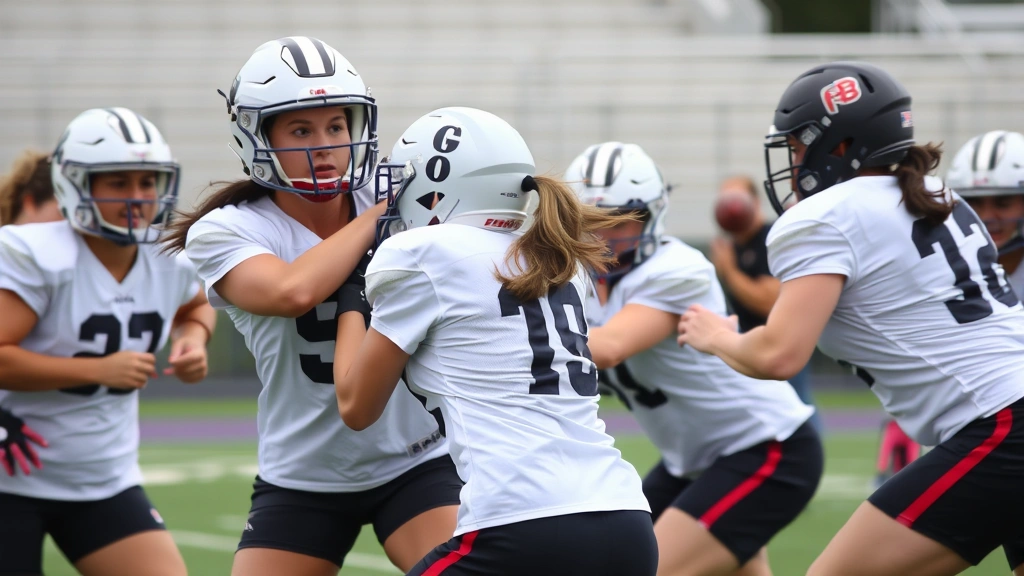
The Physical Demands of Powderpuff Football
Powderpuff football places athletes in a high-intensity interval training environment that rivals traditional athletic programs. Unlike casual recreational leagues, competitive powderpuff football demands explosive movements, sustained effort periods, and tactical decision-making under fatigue—hallmarks of effective fitness training. Players experience repeated acceleration, deceleration, and directional changes that challenge multiple physiological systems simultaneously.
The sport’s physical demands vary by position, with offensive and defensive linemen performing sustained power efforts while receivers and defensive backs execute repeated sprinting intervals. Quarterbacks develop upper body stability and rotational power through consistent throwing mechanics. Each position group encounters unique biomechanical challenges that target specific muscle groups and energy systems. Understanding these position-specific demands helps athletes optimize their training approaches and maximize fitness adaptations.
Research from the American College of Sports Medicine (ACSM) confirms that team sports requiring intermittent high-intensity efforts produce superior cardiovascular adaptations compared to steady-state aerobic activities. Powderpuff football’s structure—alternating plays with brief recovery periods—creates an optimal stimulus for metabolic conditioning and functional fitness development.

Cardiovascular Benefits and Aerobic Conditioning
The cardiovascular demands of powderpuff football extend far beyond simple aerobic exercise. A typical game involves multiple high-intensity efforts lasting 4-10 seconds separated by 20-40 second recovery periods, creating an interval training stimulus that enhances both aerobic and anaerobic capacity. Players consistently elevate heart rates to 85-95% of maximum during active plays, with brief recovery windows allowing partial restoration before the next explosive effort.
This interval training approach produces superior cardiovascular adaptations compared to continuous steady-state exercise. Athletes develop increased stroke volume, improved cardiac output efficiency, and enhanced oxygen utilization at the mitochondrial level. Regular powderpuff football participation strengthens the heart’s ability to deliver oxygen-rich blood to working muscles while simultaneously improving the muscles’ capacity to extract and utilize that oxygen efficiently.
The sport also enhances anaerobic threshold—the exercise intensity at which lactate accumulation begins to exceed clearance capacity. By repeatedly challenging this physiological boundary, powderpuff athletes improve their ability to sustain high-intensity efforts before fatigue compromises performance. This adaptation translates directly to improved athletic capacity in any sport or fitness endeavor. Check out our detailed guide on how long a football game lasts to understand the cumulative demands athletes face.
Studies published in the Journal of Strength and Conditioning Research demonstrate that female athletes participating in intermittent team sports show 15-25% improvements in VO2 max over a single season—improvements matching or exceeding those from dedicated aerobic training programs. These cardiovascular adaptations reduce resting heart rate, improve exercise recovery capacity, and enhance overall metabolic health.
Strength Development and Muscular Engagement
Powderpuff football demands functional strength across all major muscle groups, creating a comprehensive resistance training stimulus without requiring formal weight room sessions. The sport engages the lower body through repeated acceleration, deceleration, cutting movements, and collision mechanics. Offensive and defensive linemen specifically develop exceptional core stability, hip strength, and lower back resilience through sustained contact and positional holds.
Upper body strength develops through tackling mechanics, throwing (for quarterbacks), and blocking techniques. The shoulder complex, chest, and triceps experience significant loading during contact plays, while core musculature stabilizes the trunk against rotational and lateral forces. Players naturally develop functional strength patterns that translate directly to injury resilience and athletic performance improvement.
The resistance provided by opposing players creates variable load conditions—more effective for strength development than fixed resistance—because athletes must adapt force production to opponent movement patterns. This adaptive strength development enhances neuromuscular coordination and real-world functional capacity. Additionally, the eccentric loading during deceleration and collision creates significant hypertrophic stimulus, promoting lean muscle development without excessive volume.
Research from the National Academy of Sports Medicine (NASM) confirms that multi-directional team sports produce superior functional strength gains compared to single-plane resistance training. The unpredictable nature of competitive play forces the nervous system to recruit muscle stabilizers and synergists, creating comprehensive strength development patterns.
Agility, Speed, and Athletic Performance
Powderpuff football demands exceptional agility and change-of-direction speed—qualities that define elite athletic performance. Unlike straight-line sprinting, football requires rapid deceleration, lateral shuffling, and multi-directional acceleration under game-realistic conditions. These demands force the nervous system to develop rapid force production and precise motor control patterns.
Defensive backs and receivers develop exceptional lateral agility and acceleration capacity through repeated positional play. Linemen develop explosive power and rapid weight distribution changes necessary for effective blocking and tackling. The sport’s demands naturally enhance proprioception—the body’s awareness of position and movement in space—which improves balance and coordination across all athletic activities.
Speed development in powderpuff football differs from isolated sprint training because it occurs within tactical contexts requiring decision-making and reaction to opponent movement. This game-realistic speed training produces superior transfer to competitive performance compared to purely mechanical sprint work. Athletes develop context-dependent acceleration patterns that enhance reactive performance under pressure.
The repeated acceleration-deceleration cycles strengthen the anterior cruciate ligament (ACL), hamstring complex, and hip musculature—structures critical for injury prevention in any athletic endeavor. Proper conditioning through competitive play actually reduces injury risk by developing the neuromuscular control necessary for safe movement patterns. For more context on athletic positions and movement patterns, explore our football defense positions guide.
Injury Prevention and Safe Play Practices
While powderpuff football involves contact, proper technique instruction and appropriate rule modifications significantly reduce injury risk below that of traditional tackle football. Modern powderpuff leagues increasingly implement evidence-based safety protocols including proper tackling mechanics instruction, graduated contact progression, and appropriate recovery periods between games and practices.
Effective injury prevention begins with comprehensive preseason conditioning that prepares athletes for the sport’s physical demands. Strength training emphasizing eccentric loading, balance development, and core stability reduces injury risk substantially. ACSM guidelines recommend 8-12 weeks of preparatory conditioning before beginning high-intensity team sport participation, allowing structural tissues to adapt gradually.
Proper tackling technique represents the single most important injury prevention intervention. Athletes should be taught to maintain neutral spine position, keep their head up with eyes on the target, and drive through the opponent’s midsection using leg power rather than arm strength. This technical foundation prevents the awkward collision angles and excessive cervical loading that cause serious injuries.
Appropriate rule modifications enhance safety without sacrificing competitive integrity. Flag attachment systems, restricted contact zones, and technique-focused officiating reduce injury incidence while maintaining game authenticity. Recovery protocols including adequate rest between games, dynamic warm-ups, and post-competition recovery strategies minimize cumulative fatigue that increases injury susceptibility.
Training Programs for Powderpuff Athletes
Optimal training for powderpuff football incorporates periodized conditioning that builds aerobic capacity, develops position-specific strength, and sharpens tactical skills progressively throughout the season. A comprehensive program includes resistance training, metabolic conditioning, sport-specific skill development, and appropriate recovery strategies.
Off-Season Preparation (8-12 weeks before competition): Focus on building general strength and aerobic capacity. Resistance training should emphasize compound movements (squats, deadlifts, bench press, rows) performed 3-4 times weekly. Aerobic conditioning includes steady-state running, interval training, and sport-specific conditioning circuits. This phase prepares the body for the demands of competitive play and establishes the foundation for advanced training.
Preseason Phase (4-8 weeks): Increase sport-specific conditioning intensity while maintaining strength development. Implement position-specific drills, introduce contact progression, and refine tactical understanding. Conditioning sessions should replicate game intensity patterns with high-effort intervals separated by brief recovery periods. This phase bridges general fitness and competition-ready performance.
In-Season Maintenance: Emphasize recovery and skill refinement rather than pushing fitness development. 1-2 strength sessions weekly maintain muscular capacity while allowing adequate recovery between games. Conditioning sessions focus on technique refinement and tactical preparation rather than building new fitness capacities. Adequate sleep, nutrition, and stress management become critical.
Sample Weekly Training Structure: Monday-Tuesday: Strength focus with lower body emphasis; Wednesday: Sport-specific conditioning and skill development; Thursday: Upper body strength and recovery emphasis; Friday: Game day; Saturday-Sunday: Complete rest or light activity recovery. This structure balances development stimulus with recovery necessity.
Nutrition timing becomes critically important during competitive season. Consuming carbohydrates and protein within 30-60 minutes post-practice optimizes recovery and adaptation. Hydration should be maintained throughout training with electrolyte replacement during intense sessions exceeding 60 minutes. Consult our Peak Play Arena Blog for additional performance optimization strategies.
Comparison with Other Team Sports
When compared to soccer, basketball, and traditional tackle football, powderpuff football delivers competitive fitness benefits while offering distinct advantages regarding injury profile and accessibility. Soccer and basketball demand continuous movement across larger playing areas, producing superior aerobic stimulus but less strength development. Traditional tackle football demands similar strength development but carries substantially higher injury risk, particularly regarding head trauma and long-term neurological consequences.
Powderpuff football occupies an optimal middle ground—combining intermittent high-intensity efforts that develop both aerobic and anaerobic capacity with functional strength demands that enhance overall athletic performance. The sport’s shorter duration (typically 30-45 minutes competitive time) concentrates training stimulus efficiently while reducing cumulative injury risk from overuse. Players can participate at high intensity without the extended duration that increases fatigue-related injury susceptibility.
The competitive and social dimensions of powderpuff football enhance adherence to training compared to individual fitness programs. Research consistently demonstrates that team sport participants maintain higher training consistency and achieve superior long-term fitness outcomes compared to those exercising alone. The community aspect, shared goals, and social accountability create intrinsic motivation that sustains participation.
For female athletes specifically, powderpuff football offers unique benefits. The sport provides opportunities to develop strength, power, and athletic confidence in an environment historically dominated by male participation. Female athletes participating in powderpuff football demonstrate increased bone mineral density, enhanced cardiovascular capacity, and improved body composition compared to non-athletic peers. These adaptations carry lifelong health implications, reducing osteoporosis risk and supporting metabolic health.
Check out our top 10 sports in the world article for broader athletic context and our sports trivia questions and answers for additional football knowledge. Additionally, our football trivia section offers fascinating historical context about the sport’s evolution.
FAQ
Is powderpuff football a legitimate workout?
Yes, absolutely. Powderpuff football delivers measurable fitness benefits including cardiovascular improvements, strength development, agility enhancement, and metabolic conditioning comparable to dedicated athletic programs. The intermittent high-intensity nature creates optimal stimulus for fitness adaptation.
How many calories does powderpuff football burn?
A typical game burns 300-500 calories depending on body weight, intensity level, and position. Higher body weight and sustained high-intensity play increase caloric expenditure. Combined with training sessions, weekly powderpuff participation can contribute meaningfully to caloric balance for body composition management.
Can powderpuff football cause serious injuries?
Properly supervised powderpuff football with appropriate rule modifications and technique instruction carries injury rates comparable to other team sports. Serious injuries are uncommon when proper tackling mechanics are taught, progressive contact is implemented, and adequate recovery is provided.
What’s the best way to prepare for powderpuff football?
Begin with 8-12 weeks of general conditioning including resistance training (3-4 days weekly), aerobic development (steady-state and interval work), and flexibility training. Progress to sport-specific drills 4-8 weeks before competition. Ensure adequate sleep, nutrition, and stress management throughout preparation.
How does powderpuff football compare to traditional tackle football for fitness?
Both sports develop similar fitness qualities including strength, power, and cardiovascular capacity. Powderpuff football carries substantially lower injury risk, particularly regarding head trauma. The shorter duration and modified contact rules reduce cumulative stress while maintaining competitive intensity.
Can beginners participate in powderpuff football?
Yes, beginner-friendly leagues and appropriate progression protocols make powderpuff football accessible to athletes without prior football experience. Proper coaching, graduated contact introduction, and technique emphasis allow safe entry for newcomers while they develop necessary skills and conditioning.


