
Boost Your Stamina: Coach’s Top Football Tips for OSSAA Success
Football demands more than just technique and strategy—it requires exceptional cardiovascular endurance and mental toughness. Whether you’re competing in OSSAA football or training for elite-level play, stamina separates champions from the rest. As a fitness coach who’s worked with countless football athletes, I’ve seen firsthand how proper conditioning transforms performance on the field. This comprehensive guide reveals science-backed training methods that will dramatically improve your endurance, allowing you to dominate in the fourth quarter when opponents are fading.
The beautiful aspect of stamina training for football is that it directly translates to competitive advantage. Players with superior conditioning maintain their speed, strength, and decision-making ability throughout all four quarters. They recover faster between plays, execute complex formations with precision, and most importantly, they finish games strong. In this guide, you’ll discover proven conditioning protocols used by elite athletes, nutrition strategies that fuel endurance, and recovery techniques that keep you performing at peak levels.
Understanding Football-Specific Stamina
Football stamina differs fundamentally from endurance sports like distance running. Football requires repeated explosive efforts followed by brief recovery periods. A typical play lasts 5-10 seconds of maximum intensity, followed by 25-40 seconds of relative recovery during huddles and play calls. This unique pattern means your conditioning must address both anaerobic power and aerobic capacity simultaneously.
The human body operates in three energy systems: the phosphocreatine system (0-10 seconds), the anaerobic glycolytic system (10 seconds to 2 minutes), and the aerobic system (2+ minutes). Football players activate all three systems during competition. Your left tackle explodes off the line using phosphocreatine power, then sustains effort through the anaerobic system, while your aerobic base keeps you fresh throughout the entire game.
Research from the American College of Sports Medicine demonstrates that athletes who train all three energy systems simultaneously show superior performance compared to those who focus on single systems. This integrated approach is what separates good conditioning programs from exceptional ones.
Understanding your position’s specific demands is crucial. Linemen experience sustained pressure and require tremendous anaerobic capacity. Skill position players need explosive power combined with aerobic endurance for repeated sprint efforts. Check your high school football scores to analyze games and identify where stamina deficiencies cost your team victories.
High-Intensity Interval Training for Football Athletes
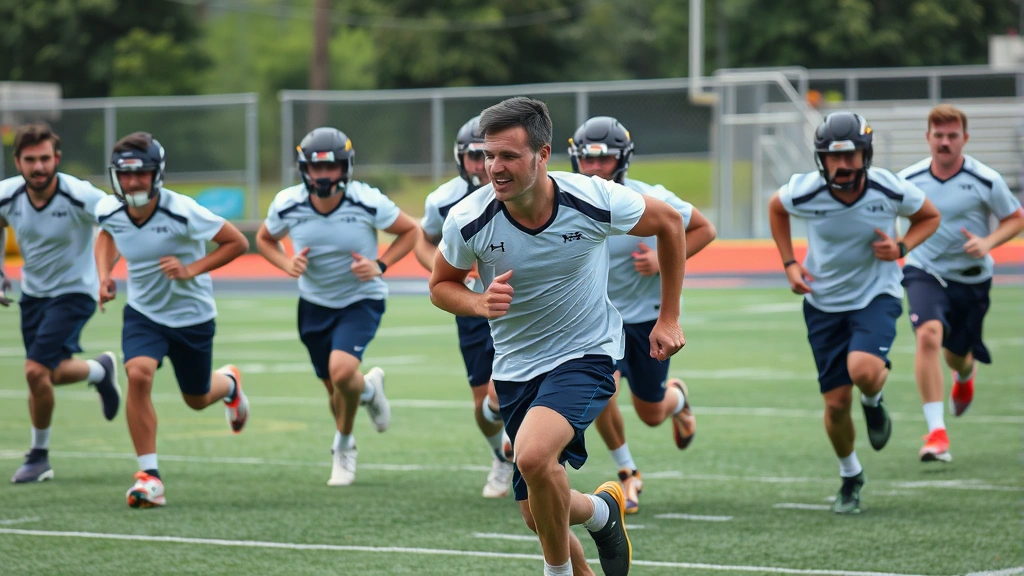
High-intensity interval training (HIIT) is the gold standard for football conditioning. HIIT alternates between maximum-effort work intervals and recovery periods, perfectly mimicking game demands. Elite football programs utilize HIIT because it improves both aerobic capacity and anaerobic power while preserving muscle mass.
The most effective football HIIT protocol involves 30-second maximum-effort intervals followed by 90-second recovery periods, repeated 8-12 times. This ratio closely matches actual game play timing. During work intervals, you should reach 90-95% of maximum heart rate. Recovery periods allow partial restoration of phosphocreatine stores while maintaining elevated heart rate.
Recommended HIIT Workouts for Football:
- Sprint Intervals: 30-second all-out sprints with 90-second walking recovery, performed twice weekly
- Shuttle Runs: 30-yard shuttle sprints at maximum intensity, mimicking defensive backpedaling and lateral movement
- Stair Sprints: Stadium or bleacher sprints building explosive power and aerobic capacity simultaneously
- Sled Push Intervals: 30-second maximum-effort sled pushes with 90-second recovery, building lower-body power
- Battle Rope Circuits: 30 seconds maximum effort alternating with 90-second recovery, engaging total-body conditioning
Research published in the Journal of Sports Science and Medicine shows that athletes performing HIIT twice weekly for 8 weeks improved their repeated sprint ability by 15-20% compared to control groups. This directly translates to maintaining speed and power throughout football games.
Building Aerobic Base Through Strategic Conditioning
While HIIT builds anaerobic capacity, your aerobic base—developed through steady-state conditioning—provides the foundation for all performance. Many coaches make the mistake of neglecting aerobic training, focusing entirely on high-intensity work. This creates athletes who excel in short bursts but fade during extended games.
Incorporate one longer, steady-state conditioning session weekly. This should last 20-30 minutes at 60-75% maximum heart rate. You’ll maintain continuous effort without reaching absolute maximum intensity. This trains your aerobic system to efficiently utilize oxygen, improving your ability to recover between plays and maintain performance when fatigued.
Effective Aerobic Conditioning Methods:
- Tempo Runs: 20-30 minute runs at comfortable conversation pace, building aerobic capacity
- Continuous Football Drills: 20-30 minutes of non-stop football movements at moderate intensity
- Swimming: 20-30 minute continuous swimming providing low-impact aerobic training
- Cycling: 30-45 minute moderate-intensity cycling sessions building leg endurance
- Rowing: 20-30 minute steady-state rowing engaging total-body aerobic system
The combination of HIIT and aerobic base training is crucial. Research from the National Strength and Conditioning Association confirms that integrated training approaches produce superior results. Athletes training both systems improve their lactate threshold—the intensity at which lactate accumulation exceeds clearance—allowing them to perform harder for longer before fatigue sets in.
Consider reviewing college football predictions to understand how stamina impacts outcomes at elite levels, then apply those lessons to your OSSAA training.
Sport-Specific Drills That Boost Endurance
The most effective conditioning integrates sport-specific movements. Generic running builds general fitness but doesn’t specifically train football demands. Sport-specific drills condition your energy systems while developing football skills simultaneously.
Essential Sport-Specific Endurance Drills:
- 110-Yard Sprints: Run the length of the field plus 10 yards, walk back, repeat 6-8 times. This drill builds speed endurance specific to football distances
- Three-Cone Drills: Perform maximum-effort three-cone shuttle drills (requiring 40-yard movements with directional changes) with 60-90 second recovery, repeating 6-10 times
- Position-Specific Movements: Defensive backs perform max-effort backpedal-and-sprint combinations; linemen perform explosive drive drills; receivers run maximum-effort route progressions
- Ladder Drills with Sprints: Complete agility ladder footwork, immediately followed by 20-yard sprints, repeating 6-8 times
- Pursuit Drills: Multiple defenders sprint to simulate pursuing ball carriers, requiring continuous directional changes and sustained effort
- Game-Situation Conditioning: Two-minute drill scenarios requiring repeated play execution at game intensity
These drills condition your specific movement patterns while building cardiovascular capacity. A defensive back performing backpedal-and-sprint intervals develops stamina while perfecting technique. A lineman executing explosive drive drills builds anaerobic power while training game movements.
The key is performing these drills at game intensity. Half-effort conditioning produces half-effort results. Push yourself to 90-95% maximum effort during work intervals, understanding that this discomfort during practice prevents failure during competition.
Nutrition Strategies for Enhanced Stamina
Conditioning excellence extends far beyond the practice field. Nutrition directly impacts your stamina capacity, energy availability, and recovery speed. Many football players sabotage their conditioning gains through poor nutritional choices.
Pre-Practice Nutrition:
Consume carbohydrates 2-3 hours before practice to maximize available energy. A meal containing 40-60 grams of complex carbohydrates (brown rice, sweet potato, oatmeal) with lean protein (chicken, turkey) provides sustained energy. Avoid high-fat foods that slow digestion and heavy meals that cause discomfort.
Intra-Practice Hydration:
Dehydration dramatically reduces stamina and performance. Drink 4-8 ounces of water every 15-20 minutes during practice. In hot conditions, consume sports drinks containing 6-8% carbohydrates and electrolytes to maintain performance during extended sessions. Proper hydration maintains blood volume, allowing efficient oxygen delivery to working muscles.
Post-Practice Recovery Nutrition:
Within 30-60 minutes after practice, consume a meal containing carbohydrates and protein in a 3:1 or 4:1 ratio. This replenishes depleted glycogen stores and initiates muscle protein synthesis. A recovery meal might include grilled chicken (25g protein), brown rice (40g carbohydrates), and vegetables. This nutritional timing maximizes adaptation to your conditioning stimulus.
Daily Nutrition for Stamina Development:
- Carbohydrates: 5-7 grams per kilogram of body weight daily, timing most around practice
- Protein: 1.6-2.0 grams per kilogram of body weight daily, distributed across meals
- Healthy Fats: 20-30% of total calories from sources like avocados, nuts, and olive oil
- Micronutrients: Abundant vegetables and fruits providing antioxidants and vitamins supporting recovery
The Academy of Nutrition and Dietetics emphasizes that athletes performing high-volume conditioning require exceptional nutritional support. Proper fueling amplifies conditioning adaptations, allowing you to train harder and recover faster.
Recovery Protocols Every Football Player Needs
Stamina develops during recovery, not during training. Your conditioning sessions create the stimulus; adaptation occurs during rest periods. Neglecting recovery sabotages even the most intense training.
Sleep Optimization:
Aim for 8-10 hours of quality sleep nightly. Sleep drives hormonal recovery, consolidates neural adaptations, and replenishes energy stores. During deep sleep phases, growth hormone secretion peaks, facilitating muscle adaptation and recovery. Establish consistent sleep schedules, maintain cool dark sleeping environments, and avoid screens 60 minutes before bed.
Active Recovery Days:
Include 1-2 weekly sessions of light activity—walking, easy cycling, swimming, or light stretching—at 40-50% maximum heart rate. Active recovery promotes blood flow, facilitating nutrient delivery and metabolite removal without creating additional fatigue.
Foam Rolling and Mobility Work:
Daily 10-15 minute foam rolling sessions reduce muscle tension, improve mobility, and enhance recovery. Focus on primary movers: quadriceps, hamstrings, glutes, hip flexors, and calves. Improved mobility allows better movement mechanics during conditioning, reducing injury risk.
Cold Water Immersion:
Some research suggests 10-15 minute cold water immersion (50-59°F) post-practice reduces inflammation and accelerates recovery. However, timing matters—cold immersion immediately post-exercise may blunt adaptation signals. Consider cold immersion 2-4 hours post-practice for optimal benefits.
Compression Garments:
Wearing compression sleeves or tights for 2-4 hours post-practice supports blood flow and reduces perceived soreness. While benefits are modest, they contribute to comprehensive recovery strategies.

Mental Toughness and Stamina Connection
Physical stamina and mental toughness are inseparable. When your body screams for relief during the fourth quarter, mental strength determines whether you maintain intensity or fade. Elite athletes develop psychological stamina alongside physical conditioning.
Building Mental Stamina:
- Embrace Discomfort: During conditioning, deliberately push into uncomfortable intensity. Learn to distinguish between pain signals requiring caution and discomfort from intense effort. Mental toughness develops by repeatedly choosing intensity despite discomfort
- Visualization: Spend 5-10 minutes daily visualizing yourself performing with exceptional stamina in crucial game situations. Visualize the fourth quarter, championship moments, and scenarios where your conditioning provides competitive advantage
- Goal Setting: Establish specific conditioning benchmarks—running times, sprint distances, recovery metrics. Pursuing measurable goals maintains motivation and provides tangible progress evidence
- Competitive Mindset: View conditioning sessions as competitions. Challenge teammates, track personal records, and approach every repetition with competitive intensity
- Breathing Techniques: Develop controlled breathing patterns allowing you to maintain intensity when fatigued. Deep diaphragmatic breathing reduces anxiety and improves oxygen utilization
Research in sports psychology demonstrates that athletes combining physical training with mental conditioning techniques show 20-30% greater performance improvements than those focusing solely on physical training. Your mind determines whether you finish strong or fade when fatigued.
Stay updated on elite performance by checking Peak Play Arena Blog for latest conditioning insights, and track performance metrics through 2025 Fantasy Football Rankings to understand how stamina impacts elite athlete performance.
For OSSAA football specifically, review Oregon football scores to analyze how stamina impacts outcomes, and explore college football playoff predictions to understand how conditioning separates championship teams.
FAQ
How long does it take to significantly improve football stamina?
Most athletes notice substantial stamina improvements within 4-6 weeks of consistent training. However, significant adaptations—increased mitochondrial density, improved lactate threshold—require 8-12 weeks. Championship-level stamina develops over entire seasons and multiple years of progressive training.
Can I do HIIT training daily?
No. High-intensity interval training creates significant metabolic stress requiring adequate recovery. Perform HIIT no more than 2-3 times weekly, separated by at least 48 hours. Excessive HIIT leads to overtraining, increased injury risk, and diminished returns. Balance HIIT with aerobic conditioning and recovery days.
What’s the best time to perform conditioning workouts?
Perform conditioning workouts when you’re adequately fueled and recovered. For most athletes, mid-morning or early afternoon works best. Avoid conditioning on empty stomachs or immediately after heavy strength training. Prioritize sleep and nutrition over timing.
How do I know if I’m overtraining?
Signs of overtraining include persistent fatigue, declining performance despite increased training, elevated resting heart rate, frequent illness, mood disturbances, and sleep disruption. If experiencing multiple overtraining symptoms, reduce training volume by 30-40% and prioritize recovery for 1-2 weeks.
Should I do conditioning before or after strength training?
Generally, perform strength training first when you’re fresh and can generate maximum power. Conditioning afterward, when fatigued, trains your ability to perform when tired—directly applicable to football. However, separate extremely intense conditioning and strength sessions by several hours when possible.
What supplements enhance stamina?
Evidence-based supplements for football conditioning include: Beta-alanine (buffering lactate accumulation), caffeine (improving alertness and power output), beetroot juice (enhancing oxygen efficiency), and sodium bicarbonate (buffering acidosis). However, prioritize nutrition and training before considering supplements.


