Iowa Football Strength Training: Coach Insights and Elite Performance Strategies
The University of Iowa football program stands as a powerhouse in collegiate athletics, and much of that success stems from world-class strength and conditioning protocols that transform athletes into elite competitors. Iowa’s coaching staff has developed a comprehensive approach to strength training that emphasizes functional movement, explosive power development, and injury prevention—principles that have elevated the Hawkeyes to consistent bowl game appearances and Big Ten conference competitiveness.
In this deep dive into Iowa football strength training, we’ll explore the methodologies, philosophies, and insider perspectives from coaching staff who’ve spent decades refining the perfect formula for developing college football players. Whether you’re an aspiring athlete, a parent of a recruited prospect, or simply interested in elite-level athletic development, understanding Iowa’s approach provides invaluable insights into what separates championship-caliber programs from the rest.
Iowa Football’s Strength Training Philosophy
At the core of Iowa football’s success lies a strength training philosophy rooted in functional movement patterns and sport-specific application. Rather than chasing arbitrary numbers on the bench press or squat rack, Iowa’s coaching staff prioritizes movements that directly translate to on-field performance. This athlete-centered approach recognizes that raw strength means nothing if it doesn’t enhance acceleration, deceleration, lateral agility, and collision resistance.
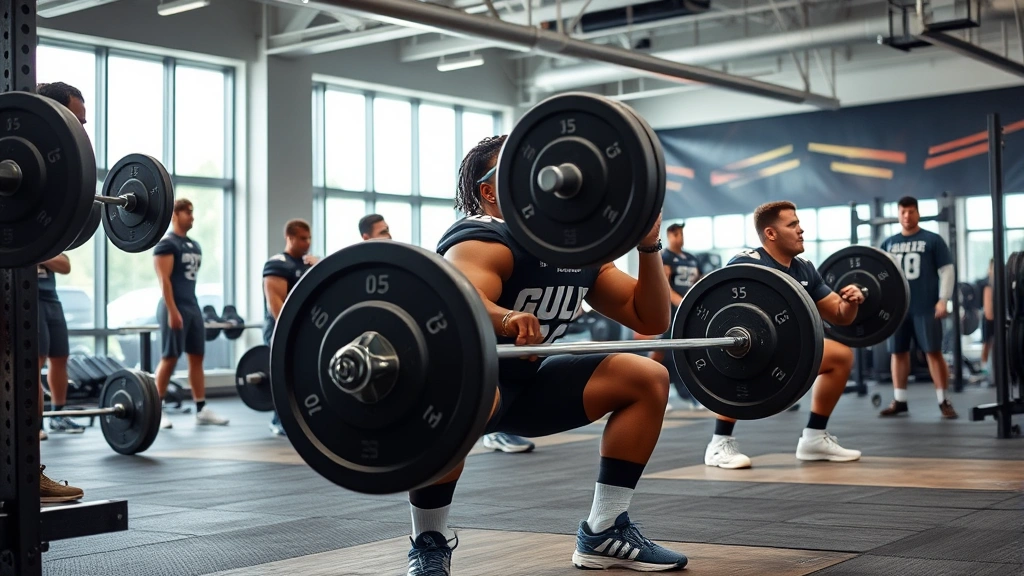
The philosophy emphasizes multi-joint compound movements as the foundation of all training. Squats, deadlifts, bench presses, and Olympic lifts form the cornerstone of Iowa’s program because these movements recruit multiple muscle groups simultaneously, building integrated strength that mirrors the demands of football. The coaching staff understands that football is a game of coordinated power—athletes must generate force from the ground up through their entire kinetic chain.
Iowa’s approach also prioritizes unilateral training and asymmetrical loading. Single-leg exercises, single-arm movements, and rotational work address the reality that football is rarely played in perfectly symmetrical positions. Linebackers must shed blocks with one arm while pursuing laterally. Offensive linemen must drive forward while maintaining a staggered stance. These movement patterns get trained explicitly in Iowa’s facility.
Coach insights from Iowa’s strength and conditioning staff reveal an unwavering commitment to progressive overload within a framework of sustainable development. Rather than attempting maximum strength gains in short windows, Iowa coaches build athletes over 4-year periods, establishing a foundation in year one that supports increasingly sophisticated training in subsequent years. This long-term perspective prevents overuse injuries and creates durable athletes capable of maintaining high performance throughout entire seasons.
The program also emphasizes the interconnection between strength training and football game demands. Understanding that a regulation football game requires explosive bursts followed by recovery periods, Iowa’s training incorporates density-based work and metabolic conditioning alongside pure strength development. Athletes must develop the capacity to produce maximum force repeatedly across four 15-minute quarters.
Periodization and Seasonal Programming
Iowa football’s annual training cycle follows a sophisticated periodized model that manipulates volume, intensity, and exercise selection throughout the year. This systematic approach prevents plateaus, manages fatigue, and times peak performance for the competitive season.
The training year divides into distinct phases:
- Offseason Phase (January-March): Emphasis on building work capacity and addressing movement deficiencies identified during the previous season. Athletes perform higher-volume training with moderate intensity, establishing the foundation for subsequent phases.
- Spring Training (April-May): Integration of strength gains with on-field football activities. Training becomes more sport-specific, with emphasis on power expression and speed development.
- Summer Training (June-August): Maintenance and refinement of strength levels while managing heat stress and recovery in summer conditions. Focus shifts toward maintaining mobility and preventing summer deconditioning.
- Preseason (August-September): Transition from isolated strength work toward football-specific conditioning. Training volume decreases while intensity remains high, preparing athletes for game demands.
- In-Season (September-November): Maintenance of strength and power while prioritizing recovery between games. Sessions become shorter and more focused, preserving energy for practice and competition.
Within each phase, Iowa coaches manipulate training variables strategically. During offseason blocks, repetition ranges increase (8-12 reps) to build muscle mass and work capacity. As the season approaches, rep ranges decrease (3-6 reps) with heavier loads to develop maximum strength and power. This undulating approach ensures athletes develop all strength qualities necessary for football.
Deload weeks occur every 3-4 weeks, reducing training volume by 40-50% to allow nervous system recovery and adaptation. Many programs skip deloads, but Iowa coaches recognize that recovery is when adaptation occurs. Strategic deloading prevents overtraining syndrome and maintains long-term progression.
Position-Specific Training Protocols
While Iowa employs universal principles across the program, training becomes increasingly specialized based on positional demands. Offensive linemen require different strength qualities than defensive backs, and Iowa’s coaching staff tailors programming accordingly.
Offensive and Defensive Linemen: These positions demand maximum strength, particularly in lower body and core stability. Training emphasizes heavy squats, deadlifts, and pressing variations. Linemen perform additional work for hip mobility and ankle dorsiflexion—critical for maintaining low pad level and driving through contact. Push sled variations and band resisted movements develop the explosive drive needed to generate power into opposing linemen.
Linebackers and Edge Rushers: These positions require explosive power combined with lateral agility. Training incorporates Olympic lifting variations (power cleans, hang cleans) to develop vertical and horizontal power. Single-leg work becomes prominent, with Bulgarian split squats and single-leg deadlifts addressing the asymmetrical demands of lateral pursuit and direction changes.
Running Backs and Receivers: Speed, change-of-direction ability, and lower body resilience define success at these positions. Training emphasizes unilateral lower body work, plyometric progressions, and rotational core training. These athletes perform additional hip and ankle mobility work to support the extreme ranges of motion required during cutting and lateral acceleration.
Quarterbacks: Often overlooked in strength training discussions, quarterbacks at Iowa receive specialized programming focused on rotational core strength, shoulder stability, and hip mobility. The kinetic chain of throwing demands integrated strength from ground to hand, and Iowa coaches ensure QBs develop sufficient strength to maintain accuracy under fatigue and physical pressure.
Despite positional specialization, all Iowa football players follow the same foundational exercises. The Peak Play Arena Blog discusses how this unified foundation builds team cohesion and ensures no athlete misses critical movement patterns.
Power Development and Speed Enhancement
Raw strength without power is merely potential. Iowa’s coaching staff dedicates significant training time to converting strength into explosive, game-winning power. This distinction separates elite programs from mediocre ones.
Olympic Lifting Variations: Power cleans, hang cleans, and snatch variations form the cornerstone of Iowa’s power development. These movements teach athletes to accelerate loads rapidly from ground to overhead positions, directly translating to explosive takeoff and vertical jump ability. Olympic lifts also demand tremendous technical proficiency, requiring athletes to develop body awareness and movement precision that enhances overall athleticism.
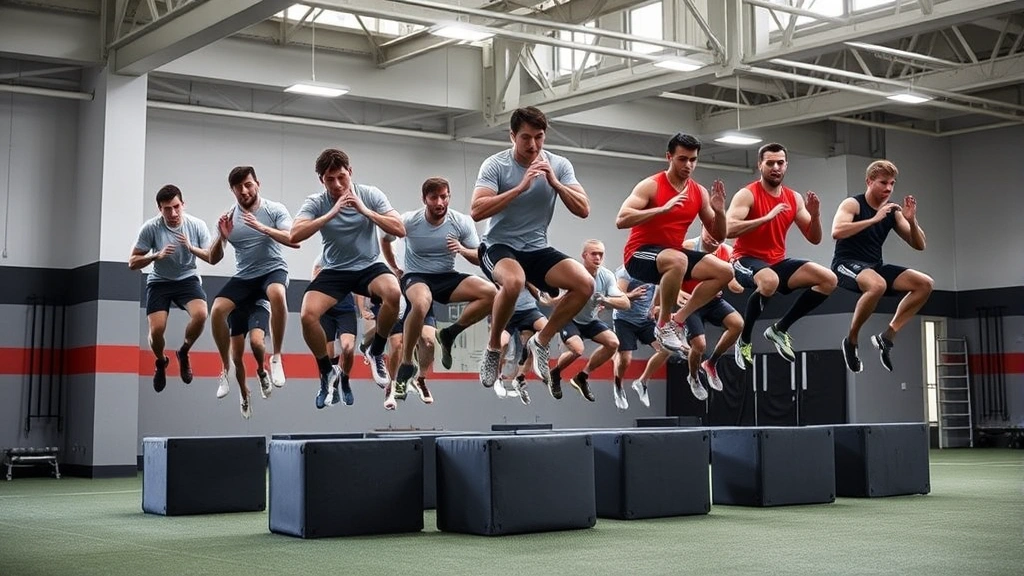
Plyometric Training: Box jumps, depth jumps, and medicine ball throws develop the stretch-shortening cycle—the neuromuscular mechanism underlying explosive movements. Iowa coaches progress plyometrics systematically, beginning with bilateral movements and advancing toward single-leg variations as athletes develop proficiency. Plyometric training typically occurs early in sessions when the nervous system is fresh and capable of producing maximum power.
Contrast Training and Post-Activation Potentiation: Iowa coaches pair heavy strength movements with explosive variations to enhance power output. For example, athletes might perform heavy squats immediately followed by jump squats, allowing the nervous system priming from heavy loading to enhance explosive performance. This advanced technique requires sophisticated programming but produces superior power gains compared to training strength and power separately.
Speed Development: While strength and conditioning coaches develop power in the weight room, speed coaches work with athletes on acceleration mechanics, stride length, and stride frequency. Iowa’s program integrates these specialties, recognizing that pure sprinting speed depends on strength qualities developed through resistance training. Athletes who develop superior lower body strength and power naturally accelerate faster and achieve higher top-end speeds.
Iowa’s approach to college football performance emphasizes that power development directly impacts on-field success, whether in winning close games or dominating opponents physically.
Injury Prevention and Durability
Iowa’s strength training philosophy recognizes that the strongest athlete is the one who stays healthy. The program dedicates considerable attention to injury prevention, understanding that a slightly weaker but completely healthy athlete outperforms a stronger athlete sidelined by injury.
Movement Quality and Corrective Exercise: Before athletes perform heavy training, Iowa coaches assess movement patterns and address deficiencies. Athletes with limited ankle mobility, poor hip stability, or inadequate scapular control receive targeted corrective work. This preventive approach addresses problems before they manifest as injuries.
Shoulder Health Protocol: Given the repetitive throwing and tackling demands in football, shoulder health receives special attention. Iowa athletes perform significant rotator cuff training, scapular stability work, and thoracic mobility exercises. These seemingly minor movements prevent the shoulder impingement and labral issues that plague many football players.
Knee and Ankle Resilience: Iowa coaches understand that lower extremity injuries end seasons. Training incorporates single-leg balance work, proprioceptive training, and lateral stability exercises. Athletes perform ankle mobility and calf strengthening work to support the ankle stability required for rapid direction changes without injury.
Core Integration: Rather than isolated abdominal work, Iowa emphasizes functional core training that builds anti-rotation, anti-extension, and anti-lateral flexion capacity. Pallof presses, dead bugs, and bird dogs teach the core to stabilize the spine during dynamic movements, preventing the back injuries common in football.
Recovery Protocols: Iowa’s coaching staff recognizes that training doesn’t build athletes—recovery does. The program emphasizes sleep quality, massage therapy, ice baths when appropriate, and strategic nutrition timing. Overtraining is actively prevented through monitoring and program adjustment.
Nutrition and Recovery Integration
Strength training stimulus alone doesn’t produce results. Iowa’s program integrates nutrition and recovery as fundamental components of athlete development, recognizing that training creates the demand for adaptation, but nutrition and recovery provide the resources for that adaptation.
Protein Periodization: Iowa athletes consume elevated protein throughout training cycles (1.6-2.2 grams per kilogram of body weight daily), with timing strategized around training sessions. Post-workout nutrition becomes particularly important, with athletes consuming protein and carbohydrates within 30-60 minutes of training to optimize muscle protein synthesis and glycogen replenishment.
Carbohydrate Periodization: Higher-volume training blocks require greater carbohydrate intake to sustain training quality and replenish depleted glycogen stores. As the season approaches and training volume decreases, carbohydrate intake may decrease slightly. This strategic periodization prevents excessive body fat gain during offseason while maintaining performance.
Sleep Optimization: Iowa coaches emphasize that sleep is when adaptation occurs. Athletes are educated on sleep hygiene, encouraged to maintain consistent sleep schedules, and provided resources (blackout curtains, temperature control) to optimize sleep quality. Research consistently shows that athletes sleeping less than 7-8 hours nightly experience impaired recovery and elevated injury risk.
Active Recovery: Iowa’s program includes dedicated active recovery sessions—light walking, swimming, or mobility work—on non-lifting days. These sessions promote blood flow without creating additional training stress, facilitating faster recovery between intense sessions.
Technology and Performance Monitoring
Modern Iowa football strength training incorporates cutting-edge technology to objectively monitor athlete readiness, progress, and injury risk. This data-driven approach removes guesswork from training decisions.
Force Plate Analysis: Iowa’s facility includes force plates that measure ground reaction forces during jumping and lifting movements. This technology quantifies power output, symmetry, and movement quality, allowing coaches to identify asymmetries before they cause injury. Athletes with significant side-to-side differences receive corrective work to restore balance.
Heart Rate Variability Monitoring: HRV measurements assess nervous system readiness, indicating whether athletes have recovered sufficiently for intense training. If HRV is suppressed, indicating inadequate recovery, training intensity decreases to prevent overtraining. This technology-guided approach optimizes training stimulus while preventing burnout.
Movement Screening: Iowa uses advanced movement assessments to identify movement deficiencies and injury risk factors. These screenings guide corrective exercise programming and inform return-to-play decisions following injury.
Velocity-Based Training: Coaches use devices measuring bar velocity during lifts to ensure appropriate training loads. When athletes can no longer move prescribed weights at intended velocities, fatigue is recognized and training is adjusted. This prevents forcing athletes through workouts when fatigue is excessive.

The integration of technology with football strategy and athlete development demonstrates Iowa’s commitment to evidence-based training. Coaches make decisions based on objective data rather than subjective impression, optimizing outcomes.
Coach Insights: Direct Perspectives from Iowa Staff
Iowa’s strength and conditioning coaches emphasize several consistent themes when discussing their program:
“Consistency Over Perfection.” Coaches stress that showing up and executing solid training consistently outweighs occasional perfect sessions. Athletes who train hard four days weekly for four years develop superior results compared to those training perfectly two days weekly.
“Movement Quality Precedes Loading.” Before athletes lift heavy, they must move correctly. Coaches spend significant time teaching proper squat, deadlift, and pressing mechanics, understanding that poor movement patterns limit long-term progress and increase injury risk.
“Individualization Within Structure.” While Iowa follows systematic programming, coaches recognize individual differences. Athletes with particular limitations or asymmetries receive targeted modifications while maintaining the program’s fundamental structure.
“Patience with Development.” Iowa coaches explicitly reject the notion of overnight transformations. Development occurs across multiple years, with systematic progression from year to year. Freshman athletes aren’t expected to match senior strength levels, and programming reflects these developmental differences.
“Training Serves Football.” Ultimately, Iowa coaches remember that strength training exists to improve football performance, not for its own sake. Every exercise and programming decision connects back to on-field demands. Exercises that don’t serve football get eliminated, regardless of how popular or trendy they might be.
These insights, shared consistently across Iowa’s coaching staff, represent decades of accumulated knowledge and success. The Iowa football forum frequently discusses these principles, with former players and coaches reinforcing their importance.
Comparing Iowa’s Approach to Other Elite Programs
While Iowa’s strength training philosophy is distinctive, it shares core principles with other elite collegiate programs. The emphasis on functional movement, systematic periodization, and injury prevention represents best practices across top-tier programs. What distinguishes Iowa is the consistency of application and the long-term perspective prioritizing sustainable athlete development over short-term gains.
Iowa coaches often reference research from the American College of Sports Medicine, ensuring their programming aligns with exercise science evidence. This commitment to evidence-based training separates Iowa from programs relying on outdated or ineffective methodologies.
The program’s success in developing NFL-caliber athletes demonstrates the effectiveness of Iowa’s approach. Numerous Iowa football alumni compete at the highest professional levels, a testament to the strength and conditioning foundation they received in Iowa City.
Implementing Iowa-Inspired Training Principles
While most readers won’t have access to Iowa’s elite facilities and coaching staff, many principles can be implemented at any training facility or even home gym. The key is understanding the underlying logic and adapting it to available resources.
For High School Athletes: Focus on learning proper movement patterns through compound exercises. Develop consistency with training, attending sessions regularly and progressing gradually. Emphasize mobility and injury prevention as much as strength development. Understand that training in high school builds the foundation for collegiate-level work.
For College Athletes Outside Power Programs: Apply Iowa’s periodization principles within your program. Even if your coaching staff doesn’t explicitly periodize training, you can track your own progression and adjust volume/intensity strategically. Emphasize movement quality and position-specific training adapted to your sport.
For General Fitness Enthusiasts: Adopt Iowa’s philosophy of functional movement over arbitrary strength goals. Perform compound exercises, progress systematically, and prioritize recovery as much as training. Recognize that strength is merely one component of overall fitness.
Understanding Iowa’s approach to football performance provides a framework applicable far beyond competitive athletics.
FAQ
What is Iowa football’s primary strength training focus?
Iowa emphasizes functional compound movements that directly transfer to on-field performance. Rather than chasing arbitrary numbers, programming prioritizes explosive power, movement quality, and injury prevention.
How often do Iowa football players lift weights?
During offseason, Iowa athletes typically lift 4-5 days weekly with varying intensity and volume. During in-season, sessions reduce to 2-3 days weekly, maintaining strength while prioritizing recovery for games.
What exercises form the foundation of Iowa’s program?
Squats, deadlifts, bench presses, and Olympic lifting variations (power cleans, hang cleans) form the cornerstone. These compound movements develop integrated strength and power applicable to football.
How does Iowa periodize training throughout the year?
Iowa follows systematic periodization, manipulating volume and intensity across offseason, spring, summer, preseason, and in-season phases. This approach prevents plateaus and times peak performance for competition.
What role does nutrition play in Iowa’s strength program?
Nutrition is integral to the program, with periodized protein and carbohydrate intake supporting training demands and recovery. Post-workout nutrition timing becomes particularly important for optimizing adaptation.
How does Iowa prevent injuries during strength training?
Iowa emphasizes movement quality assessment, corrective exercise programming, and strategic loading progressions. Special attention to shoulder, knee, and ankle health prevents common football injuries.
Can high school athletes apply Iowa’s training principles?
Absolutely. While Iowa’s resources are elite, the underlying principles—functional movement, systematic progression, injury prevention, and recovery emphasis—apply at any level and with any budget.
How important is recovery in Iowa’s program?
Recovery is considered equally important as training stimulus. Iowa emphasizes sleep, nutrition timing, active recovery sessions, and strategic deloading. Coaches recognize that adaptation occurs during recovery, not during training.
What technology does Iowa use for strength training?
Iowa employs force plates for power measurement, heart rate variability monitoring for readiness assessment, velocity-based training tools, and advanced movement screening. This data-driven approach optimizes programming decisions.
How does Iowa’s approach differ from other collegiate programs?
While Iowa shares core principles with elite programs, the distinctive element is consistency of application and the long-term developmental perspective. Iowa prioritizes sustainable athlete development over short-term performance gains, producing durable, NFL-ready athletes.


