Mastering the Pump Fake: College QB Secrets to Deceive Defenses
The pump fake stands as one of football’s most lethal offensive weapons, separating elite college quarterbacks from average ones. This deceptive throwing motion creates crucial separation between defenders and receivers, extending plays that should collapse and turning potential sacks into touchdown passes. When executed with precision and timing, the pump fake becomes a psychological chess move—forcing safeties to commit prematurely, linebackers to freeze momentarily, and defensive backs to lose their leverage. College football’s most dangerous signal-callers have mastered this art, understanding that the game extends far beyond arm strength and accuracy into the realm of misdirection and mental manipulation.
The science behind an effective pump fake combines biomechanics, cognitive psychology, and situational awareness. Elite quarterbacks don’t simply twitch the ball; they execute a convincing partial throwing motion that triggers defender reactions before the actual pass release. This article reveals the exact techniques, progression reads, and mental frameworks that transform quarterbacks into offensive magicians, enabling them to exploit defensive vulnerabilities with calculated deception.
Understanding the Pump Fake Mechanics
The pump fake begins with proper grip and arm positioning. Your fingers must maintain their throwing grip throughout the entire motion—any relaxation signals deception to observant defenders. College quarterbacks like Bryce Young and C.J. Stroud excel because they keep consistent hand pressure whether executing a full throw or a pump fake. The motion initiates from the shoulder, not the elbow, creating a legitimate throwing appearance that forces defensive recognition delays.
The throwing platform foundation proves essential. Your feet positioning determines whether defenders respect the fake. A quarterback with poor footwork telegraphs intentions immediately; defenders read sloppy mechanics and ignore the pump fake entirely. Your weight distribution should remain neutral, allowing explosive movement in any direction post-fake. Elite college programs emphasize this foundation relentlessly during training camp, understanding that mechanical inconsistency undermines every deceptive element.
The eye manipulation component separates average pump fakes from championship-level execution. Your vision must follow the initial read completely, creating authentic quarterback behavior. When safety help rotates toward your pump fake target, they commit because your eyes convinced them. This isn’t trickery—it’s legitimate quarterback mechanics executed with awareness. Professional scouts specifically evaluate this skill, recognizing that eye discipline indicates decision-making maturity.
Understanding quarter timing in game situations helps quarterbacks recognize when aggressive pump fakes become most valuable. Late-quarter scenarios with critical yardage demands create perfect pump fake opportunities, as defensive desperation increases the likelihood of aggressive reactions.
Timing and Rhythm: The Critical Elements
Exceptional pump fakes operate on razor-thin timing margins. The fake must occur during defender processing windows—typically 0.3 to 0.6 seconds after snap. This brief window exists while defensive players recognize formations, identify coverage, and begin lateral movement. Quarterbacks who pump fake too early appear panicked; those who wait too long watch defenders already commit to actual throwing lanes.
Rhythm recognition develops through thousands of repetitions. College quarterbacks practice pump fakes against scout teams, live coverage, and film study sessions. Your internal clock must synchronize with receiver stem patterns, allowing you to pump fake precisely when defenders begin recognition sequences. This timing separates game experiences from practice reps—actual game speed requires accelerated decision-making.
The pump fake duration should remain minimal. Extended arm extension looks unnatural and allows defenders additional processing time. College coaches teach the abbreviated motion—a quick shoulder rotation and elbow extension lasting approximately 0.15 seconds. This brevity maintains deception while allowing rapid transition to secondary reads or scramble movement. Think of it as a flick, not a full throwing motion.
Release point consistency enhances deception credibility. Your actual throwing release point should mirror your pump fake release point. If defenders observe different release heights between fakes and actual throws, they’ll disregard future deception attempts. This consistency requirement demands extensive practice, as muscle memory must encode identical mechanics for both actions.
Reading Defensive Reactions
Elite college quarterbacks become defensive psychologists, understanding that pump fakes succeed when defenders make specific mistakes. Safety overcommitment represents the primary target. When your pump fake convinces a safety that a deep pass is coming, they rotate their hips toward coverage responsibility, opening throwing lanes underneath. You’re not fooling everyone—you’re manipulating one defender’s positioning to create advantages elsewhere.
The corner bite reaction opens intermediate routes. Defensive backs who respect deep ball threats will jump pump fakes, creating separation for slot receivers or tight ends running intermediate patterns. College offenses specifically design plays exploiting this tendency, knowing that cornerback aggression creates predictable windows.
Understanding linebacker flow patterns helps quarterbacks recognize when pump fakes become dangerous. Linebackers watching running backs or tight ends tend to bite on play-action fakes, creating passing lanes. A well-timed pump fake combined with linebacker overcommitment turns intermediate routes into explosive plays. This reads directly into game management principles, where quarterbacks must balance aggressive play-calling with situational awareness.
Defensive line recognition determines whether pump fakes create escape opportunities. Pass rushers focused on quarterback positioning will overextend when pump fakes suggest throws, creating running lanes. College quarterbacks exploit this by using pump fakes as scramble initiators, converting potential sacks into rushing yards or secondary receiving options.
The film study advantage cannot be overstated. Successful college programs dedicate significant preparation to identifying individual defender tendencies. Your opponent’s safety might consistently bite on deep pump fakes; their cornerback might overcommit to inside leverage. This intelligence transforms generic pump fakes into targeted deception, increasing success probability dramatically.
Advanced Pump Fake Variations
College football’s most sophisticated offenses employ multiple pump fake variations, preventing defensive adaptation. The single shoulder fake involves minimal upper body movement, suggesting short-to-intermediate throws. This variation works effectively against aggressive corners or safeties in coverage, creating hesitation without committing your entire frame to deception.
The double pump fake represents advanced-level deception. You execute an initial pump fake, allow defender reaction, then execute a secondary fake toward a different target. This two-stage deception requires exceptional timing and defender recognition, but against inexperienced secondaries, it creates explosive opportunities. College coaches emphasize that double pump fakes carry higher risk—if defenders recognize the first fake, the second becomes obvious.
The play-action pump fake combination merges running back deception with throwing motion fakes. Your running back executes legitimate-appearing handoff motion while you simultaneously pump fake toward receivers. This dual-layer deception overwhelms linebacker recognition, creating massive throwing windows. Elite college offenses build entire gameplans around this combination, particularly in red zone situations.
Scramble drill pump fakes occur when designed plays break down. Quarterbacks maintain pocket presence through pump fakes, keeping receivers engaged while scrambling laterally. This variation requires exceptional spatial awareness and receiver communication, but creates explosive plays when executed properly. College programs specifically train these scenarios, understanding that games demand adaptability beyond scripted plays.
Game Situation Application
Pump fake effectiveness varies dramatically based on game situations. Third-down scenarios create optimal pump fake opportunities, as defenses employ aggressive coverage schemes. Safeties rotate higher; corners play tighter coverage. These compressed defensive alignments increase pump fake success rates significantly. College quarterbacks recognize this and emphasize deception on crucial downs, understanding that converting third downs wins games.
Understanding football rule structures helps quarterbacks recognize which situations allow aggressive pump fakes without penalty risk. Intentional grounding rules prevent reckless throwing, but pump fakes followed by scrambles remain legal. College coaches emphasize this distinction, teaching quarterbacks to differentiate between deception and rule violations.
Red zone pump fakes deserve specialized attention. Compressed field dimensions increase defender density, making genuine pump fakes more effective. Safety help becomes unavailable; corners play tighter. Quarterbacks exploit this by using pump fakes to create one-on-one situations, converting them into touchdown opportunities. College programs specifically script red zone pump fakes, recognizing that goal-line efficiency determines championship outcomes.
Two-minute drill situations demand calculated pump fake usage. Clock management becomes paramount; wasted plays through unsuccessful deception prove costly. Experienced college quarterbacks balance aggressive pump fakes with situational awareness, understanding when deception serves clock management versus when straightforward execution becomes necessary.
The late-game context influences pump fake strategy significantly. Trailing quarterbacks employ more aggressive deception, accepting higher risk for explosive plays. Leading quarterbacks use pump fakes conservatively, prioritizing ball security over yardage gains. Game duration awareness helps quarterbacks make these contextual decisions instinctively.
Training Drills for Mastery
Seven-on-seven drills provide foundational pump fake training. These sessions eliminate run game complexity, isolating passing mechanics and deception. Quarterbacks face live coverage without line interference, forcing recognition of defender reactions and timing development. College programs dedicate significant practice time to seven-on-seven work, understanding that isolated passing situations build fundamental skills.
The film study protocol involves watching opponent coverage tendencies in slow motion. Quarterbacks identify which defenders consistently bite on pump fakes, creating strategic deception targets. This preparation transforms generic pump fakes into targeted weapons, increasing effectiveness dramatically. Elite college programs dedicate entire meetings to this analysis, creating detailed defensive tendencies reports.
Scout team live action provides game-speed repetitions against familiar defenses. Quarterbacks execute pump fakes against defensive alignments mirroring upcoming opponents. This practice bridges the gap between isolated drills and actual game scenarios, building confidence through successful repetitions. College coaches emphasize scout team intensity, understanding that competitive practice develops championship-level execution.
Mirror drills focus specifically on eye discipline and mechanical consistency. Quarterbacks pump fake toward one target while actually throwing to another, developing the eye separation necessary for effective deception. These drills feel unnatural initially, but develop the psychological discipline required for elite pump fake execution.
Two-minute drill scenarios apply pump fakes within game-realistic situations. Quarterbacks face clock pressure, down-and-distance requirements, and defensive schemes. These high-pressure scenarios develop the decision-making maturity necessary for championship-level play. College programs specifically train these situations, understanding that tournament success demands situational expertise.
The receiver communication component proves essential. Receivers must understand pump fake intentions, maintaining routes while your eyes deceive defenders. This synchronization develops through repetition and communication. College quarterbacks and receivers spend extensive time building this chemistry, recognizing that effective deception requires coordinated execution.
A comprehensive training approach incorporates strategic game analysis, allowing quarterbacks to understand which pump fakes create winning situations. This integration of practice, film study, and game application transforms technical skills into championship performance.

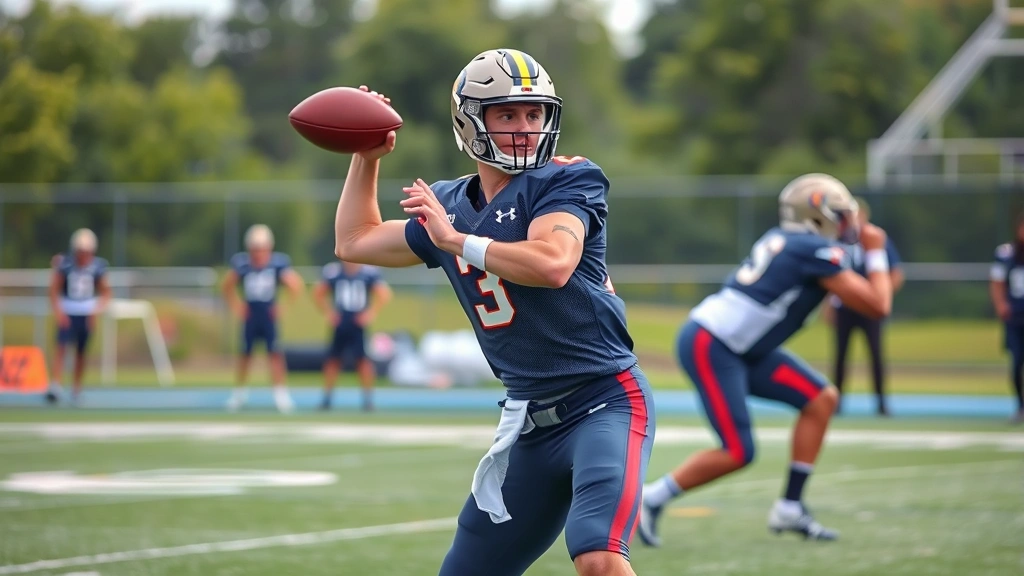
” alt=”College quarterback executing pump fake motion during practice, demonstrating arm positioning and footwork mechanics”/>
Mental Framework for Pump Fake Success
Championship-level pump fake execution requires specific psychological approaches. Confidence without arrogance describes the optimal mindset. You must trust your deception completely, committing fully to the fake motion. Tentative pump fakes appear unnatural and fail immediately. However, overconfidence leads to reckless decisions and turnovers. Elite college quarterbacks balance this perfectly, executing decisive fakes while maintaining field awareness.
The defender empathy perspective enhances deception effectiveness. Understanding how defenders process information allows you to manipulate their recognition sequences. You’re not fooling them with magic—you’re exploiting natural cognitive processing limitations. College quarterbacks who study defensive psychology excel at pump fakes, recognizing that deception succeeds through understanding opponent thought patterns.
Failure tolerance becomes necessary for aggressive pump fake usage. Some fakes will fail; defenses will occasionally read your deception. Championship quarterbacks accept this risk-reward dynamic, understanding that conservative play-calling limits explosive potential. College programs specifically train mental resilience, developing quarterbacks who execute aggressive strategies without hesitation despite occasional failures.
The rhythm trust component involves surrendering to practiced mechanics. Elite quarterbacks don’t consciously think about pump fakes during games—they’ve internalized the motion through thousands of repetitions. This automaticity allows rapid decision-making and natural execution. College programs prioritize repetition-based learning, understanding that championship performance demands unconscious competence.
Analyzing Elite College Quarterback Pump Fake Techniques
Recent college football seasons showcase exceptional pump fake execution at the highest levels. Modern quarterbacks like Stetson Bennett and Will Anderson demonstrated masterful deception against elite defenses, converting pump fakes into explosive plays in critical moments. Film analysis reveals their consistency—every pump fake maintains identical mechanics regardless of game situation or defender reaction.
The mechanics repetition principle emerges from analyzing successful college quarterbacks. They’ve practiced pump fakes thousands of times, encoding the motion into muscle memory. This repetition allows game-speed execution without conscious thought. College coaching staffs prioritize this volume, understanding that championship performance requires extensive preparation.
Situational awareness integration distinguishes elite pump fakes from average ones. Successful college quarterbacks recognize when deception creates winning situations versus when straightforward execution becomes necessary. This decision-making maturity develops through experience and coaching emphasis. Programs that teach situational awareness alongside technical skills consistently produce championship-level quarterbacks.
The receiver relationship factor influences pump fake effectiveness significantly. Quarterbacks with excellent receiver chemistry execute more effective deceptions, as receivers understand intentions and adjust routes accordingly. College programs emphasizing quarterback-receiver development create environments where pump fakes become weapons rather than desperate gambles.
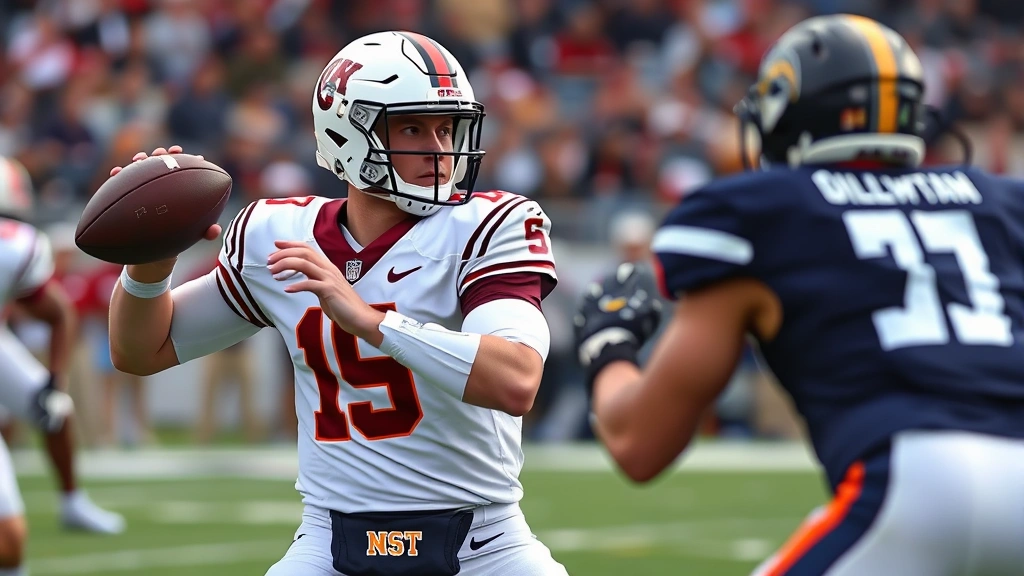
” alt=”Elite college quarterback in game uniform reading defensive coverage, demonstrating focused eye discipline during play execution”/>
FAQ
What’s the optimal pump fake duration for college quarterbacks?
The ideal pump fake lasts approximately 0.15 seconds—a brief shoulder rotation and elbow extension. Extended motions appear unnatural and allow defenders additional processing time. Brevity maintains deception credibility while enabling rapid transition to actual throws or scramble movement.
How do I develop timing for effective pump fakes?
Timing develops through extensive repetition against live coverage. Seven-on-seven drills, scout team action, and film study all contribute to timing recognition. Your internal clock must synchronize with receiver stem patterns and defensive reaction windows. This skill requires thousands of practice repetitions.
Which defenders should I target with pump fakes?
Safeties represent primary pump fake targets, as their deep coverage responsibility makes them susceptible to deep ball deception. Cornerbacks also bite on intermediate pump fakes. Linebacker flow patterns create opportunities when they overcommit to backfield action. Film study reveals individual defender tendencies, allowing targeted deception.
Can pump fakes work against experienced defenses?
Yes, but with modifications. Experienced defenses require more sophisticated pump fake variations and better timing. Double pump fakes, play-action combinations, and scramble-integrated fakes work better against veteran defenders. Film study becomes essential, as experienced defenses exploit predictable deception patterns.
How do I avoid throwing interceptions when using pump fakes?
Maintain complete field awareness despite deception focus. Never pump fake into tight coverage without secondary reads. Understand when aggressive deception becomes reckless. College quarterbacks balance confidence with decision-making discipline, recognizing that turnovers negate deception benefits. Practice decision-making scenarios extensively.
What’s the relationship between pump fakes and play-action success?
Pump fakes and play-action fakes complement each other perfectly. Play-action uses running back deception; pump fakes use throwing motion deception. Combined, they overwhelm linebacker recognition, creating massive throwing windows. College offenses specifically design plays integrating both elements for red zone efficiency.
How do elite college programs train pump fake execution?
Elite programs use seven-on-seven drills, scout team live action, mirror drills, and extensive film study. They emphasize repetition-based learning, understanding that championship execution requires thousands of practice repetitions. Situational drills specifically train two-minute scenarios and red zone pump fake application.


