Football Workouts for Speed: Coach Insights & Science-Backed Training
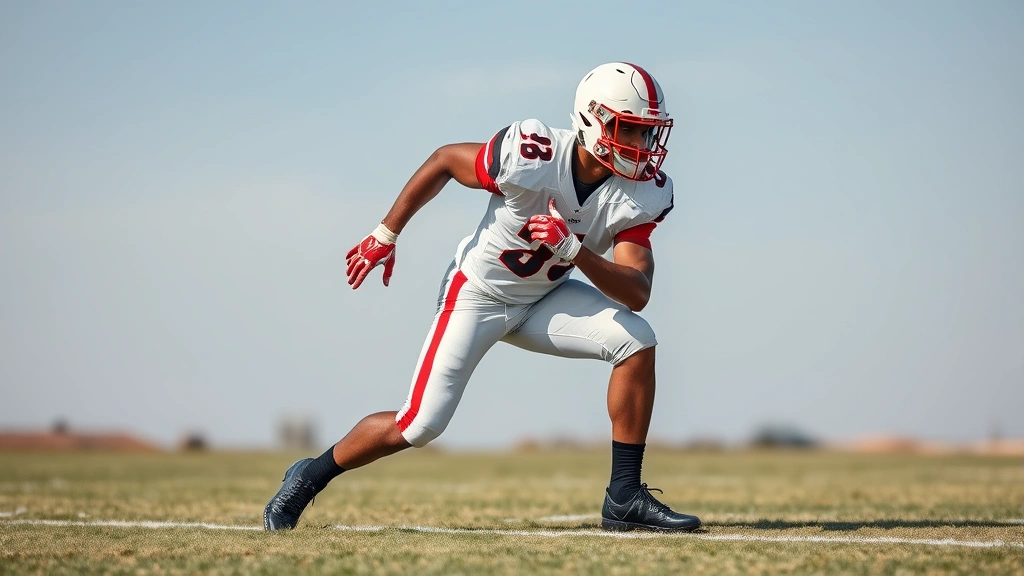
Speed wins football games. Whether you’re a wide receiver racing down the sideline, a defensive back covering elite athletes, or a linebacker pursuing ball carriers across the field, explosive speed separates champions from competitors. Modern coaching emphasizes that raw athleticism combined with sport-specific conditioning creates the unstoppable edge every player craves.
This comprehensive guide reveals proven football speed training protocols used by elite coaches, strength and conditioning professionals, and championship programs. We’ll explore the biomechanics of acceleration, deceleration, and top-end velocity while providing actionable workouts you can implement immediately. The science is clear: systematic speed development transforms athletes into game-changers.
The Biomechanics of Football Speed
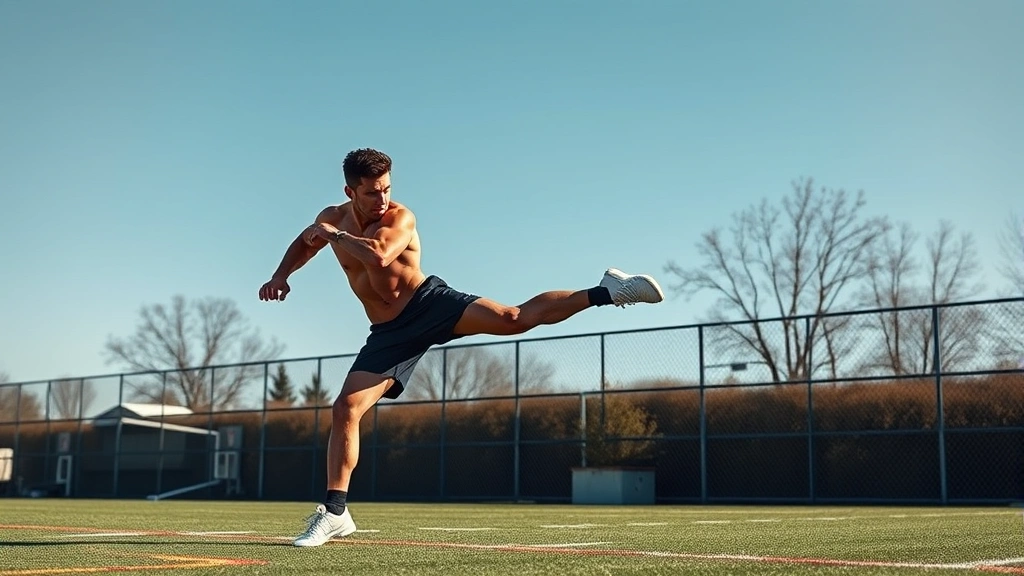
Understanding how your body generates speed is fundamental to improvement. Football speed isn’t simply about leg turnover—it’s about force production, ground contact time, and neuromuscular coordination. The American College of Sports Medicine emphasizes that speed development requires coordinated training of the nervous system, muscular system, and metabolic pathways.
Acceleration dominates football. A defensive back might need explosive first-step quickness more than top-end speed. Conversely, a track star converting to wide receiver benefits from maximum velocity training. The distinction matters because coaching strategies differ significantly.
Ground reaction force (GRF) is the foundation. When your foot contacts the ground, you generate force that propels your body forward. Elite sprinters produce 2-3 times their body weight in vertical force. Football athletes must apply this principle while changing direction, backpedaling, and reacting to unpredictable stimuli.
Neural adaptation precedes muscular adaptation. During the first 2-3 weeks of speed training, your nervous system learns to recruit muscle fibers more efficiently. You’ll notice dramatic improvements before significant muscle growth occurs. This explains why beginners often see 5-10% speed gains in just four weeks.
Stride length and stride frequency determine velocity. Increasing either component boosts overall speed. However, excessive stride length often reduces ground contact efficiency and increases injury risk. Optimal stride length varies by individual anthropometry and sport demands. Visit our Peak Play Arena Blog for sport-specific training breakdowns.
Acceleration Training Protocols
Acceleration creates separation in football. The player who reaches top speed fastest gains competitive advantage, whether pursuing a ball carrier or exploding off the line. Coaches recognize that acceleration training differs fundamentally from maximum velocity work.
Phase 1: Starts and First-Step Quickness (0-10 Meters)
This phase emphasizes powerful ground contact and aggressive forward lean. Your body angle at start determines acceleration trajectory. Elite athletes achieve 45-50 degrees of forward lean during initial acceleration phase.
- 3-Point Stance Starts: Assume athletic position with one foot forward. Drive through front foot, extending hip and knee explosively. Perform 6-8 reps with maximum effort, 2-minute rest between sets. Complete 3-4 sets twice weekly.
- Standing Starts with Arm Drive: Begin upright. Explode forward with aggressive arm action, driving knees to waist height. Emphasize the first two steps above all else. Perform 5-6 repetitions per set, 4 sets total.
- Resistance Band Sprints: Partner holds a resistance band around your waist while you drive forward against increasing tension. Complete 4-5 sprints of 20 meters, focusing on maintaining form under resistance. Rest 3 minutes between efforts.
Phase 2: Acceleration Development (10-30 Meters)
This intermediate range requires building momentum while maintaining power output. Many athletes decelerate here, losing the advantage gained in initial acceleration.
- Weighted Sled Pushes: Load a sled with 20-30% of your body weight. Drive forward explosively, covering 20-30 meters with 2-minute rest intervals. Complete 4-5 repetitions. Reduce weight when form deteriorates.
- Hill Sprints: Find a 5-8% grade hill. Sprint uphill for 20-30 meters, focusing on maintaining acceleration. The incline naturally enforces proper mechanics and builds exceptional power. Complete 4-6 efforts with 2-minute recovery between sprints.
- Parachute Sprints: Attach a training parachute to your torso. Sprint 30 meters against air resistance, forcing sustained power output. The parachute deploys at speed, increasing difficulty progressively. Perform 4-5 repetitions with 2-3 minute rest periods.
Acceleration training requires full recovery between efforts. Unlike aerobic training, sprinting demands complete nervous system restoration. Inadequate rest reduces neural recruitment, limiting gains and increasing injury risk.
Maximum Velocity Development
Once you’ve mastered acceleration, maximum velocity training unlocks top-end speed. This phase emphasizes stride frequency, elastic energy storage, and sustained power. Exercise physiology research demonstrates that maximum velocity training optimally occurs after acceleration development.
Fly Sprints: Accelerate for 20-30 meters, then maintain top speed for an additional 20-40 meters. The acceleration phase prepares your nervous system; the fly portion captures true maximum velocity. Complete 3-4 repetitions with 3-minute rest intervals. Perform twice weekly with 72 hours between sessions.
Downhill Sprints: A slight decline (3-5%) allows athletes to achieve higher velocities than flat ground permits. The reduced resistance encourages increased stride frequency. Sprint 40-60 meters downhill, focusing on relaxation and cadence. Complete 4-5 efforts with adequate recovery.
Overspeed Training: Towing protocols using elastic cords or motorized devices allow athletes to exceed their natural maximum velocity. The nervous system adapts to faster movement patterns, improving subsequent unassisted sprints. Perform 3-4 towing efforts of 30-40 meters, 3-minute recovery between repetitions.
Maximum velocity training should occur when central nervous system fatigue is minimal. Schedule these sessions early in training blocks, after general warm-up but before other demanding work. Elite programs dedicate 2-3 sessions weekly to velocity development during in-season phases.
Plyometric Power Exercises
Plyometrics bridge strength training and speed development. These explosive movements teach muscles to generate maximum force rapidly, directly translating to football performance. ACSM-certified trainers emphasize that proper progression prevents injury while maximizing adaptation.
Single-Leg Bounds: Bound forward explosively on one leg for 20-30 meters. Focus on powerful ground contact and minimal ground contact time. Complete 4-5 bounds per leg, rest 2 minutes, then repeat for 3-4 sets. Perform once weekly.
Box Jumps: Jump onto a 24-30 inch box from standing position. Step down (never jump down initially). Perform 5-6 repetitions, rest 2 minutes, complete 4 sets. Progress to explosive jumps off the box once baseline strength develops.
Depth Jumps: Step off a 12-18 inch box, land with bent knees, and immediately jump vertically. Minimize ground contact time. Complete 3-4 repetitions, 3-minute rest, 3-4 sets total. This advanced movement requires adequate preparation.
Lateral Bounds: Bound side-to-side explosively, covering maximum distance per repetition. Football demands lateral explosiveness for defensive positioning and route running. Perform 5-6 bounds per direction, 4 sets, once weekly.
Medicine Ball Throws: Hold a 6-10 pound medicine ball. Perform explosive forward throws, lateral throws, and overhead throws. Complete 6-8 repetitions per direction, 3-4 sets. Medicine ball work develops power transfer from lower body through core to upper body.
Plyometric training requires complete recovery. Never perform these movements while fatigued. Schedule plyometrics early in training sessions, after warm-up but before other demanding work. Progress gradually—rushing advancement increases injury risk significantly.
Sport-Specific Speed Drills
Football speed demands sport-specific application. Raw sprinting speed means little if you can’t apply it within game contexts. Elite coaches integrate directional changes, reactive elements, and football-specific movements into speed training.
Cone Drills and Change of Direction:
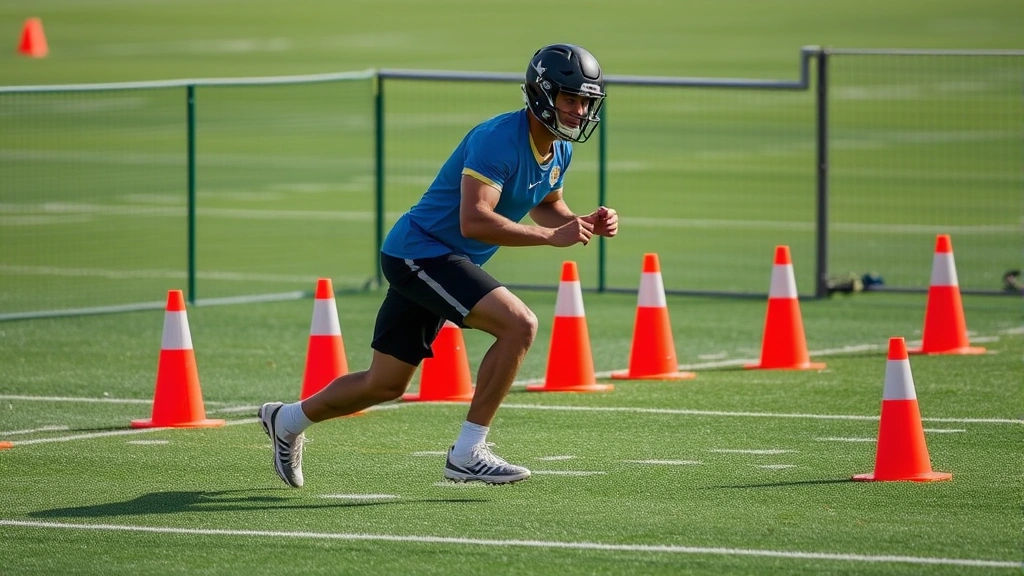
- 5-10-5 Shuttle: Sprint 5 yards to one side, plant and change direction, sprint 10 yards to opposite side, plant and return 5 yards. Time the complete movement. Perform 4-6 repetitions with 2-minute rest. This drill develops deceleration and directional change power.
- T-Drill: Sprint forward 10 yards, shuffle laterally 5 yards in each direction, backpedal 10 yards to start. Complete 4-5 efforts with full recovery. The T-drill emphasizes all movement patterns football demands.
- Three-Cone Drill: Sprint forward 5 yards, plant and turn around a cone, sprint 10 yards around second cone, plant and return 5 yards. This classic combines acceleration, deceleration, and turning mechanics.
Reactive Training:
Football is reactive. Implement drills where directional changes depend on external cues rather than predetermined patterns. Partner-based drills where one athlete responds to another’s movements develop game-applicable speed. Coaches should observe college football patterns to understand how game situations demand reactive athleticism.
- Mirror Drill: Face a partner who leads with directional changes. Mirror their movements, maintaining defensive positioning. Perform 30-45 second efforts with 90-second rest. Complete 5-6 repetitions.
- Chase Drill: One athlete sprints while the other pursues. The chasing athlete must close distance using superior speed and angles. Alternate roles, performing 4-5 efforts per position.
Position-Specific Speed Work:
Receivers benefit from acceleration drills emphasizing first-step quickness and directional change. Defensive backs require lateral explosiveness and backward speed development. Linemen need starting strength and short-area quickness. Customize programming based on positional demands rather than generic speed training.
Recovery and Periodization
Speed development requires strategic programming. Periodization structures training into phases, optimizing adaptation while managing fatigue. Poor periodization stalls progress and increases injury risk dramatically.
Macrocycle Planning (Annual Organization):
- Offseason Phase (12-16 weeks): Emphasize acceleration, maximum velocity, and plyometric development. Perform speed work 3-4 times weekly with varied stimuli. Integrate strength training emphasizing power production.
- Preseason Phase (6-8 weeks): Maintain speed qualities while increasing sport-specific conditioning. Reduce volume slightly, maintain intensity. Add reactive and football-specific drills.
- In-Season Phase (12-16 weeks): Perform speed maintenance work 1-2 times weekly. Emphasize quality over quantity. Prioritize injury prevention and recovery.
Recovery Strategies:
Speed training damages muscle tissue and depletes neural resources. Inadequate recovery prevents adaptation. Implement comprehensive recovery:
- Sleep: Aim for 7-9 hours nightly. Growth hormone and testosterone—critical for speed development—release primarily during sleep. Poor sleep obliterates training gains.
- Nutrition: Consume adequate protein (0.7-1.0 grams per pound bodyweight), carbohydrates for glycogen replenishment, and healthy fats for hormone production. Time carbohydrate intake around training sessions.
- Active Recovery: Light walking, swimming, or cycling on non-training days enhances blood flow and promotes adaptation without creating additional fatigue.
- Mobility Work: Dynamic stretching before training, static stretching after training, and dedicated mobility sessions prevent tightness that restricts speed mechanics.
Deload Weeks:
Every 3-4 weeks, reduce training volume by 40-50%. Maintain intensity but decrease repetitions. Deload weeks allow nervous system recovery, reduce injury risk, and prevent overtraining. Athletes often return from deload weeks with improved performance.
Visit our Fantasy Football Names resource for entertainment between training sessions. Mental recovery matters as much as physical recovery.
FAQ
How quickly will I see speed improvements?
Neural adaptations occur within 2-3 weeks, producing noticeable speed gains. Significant strength and power development requires 6-8 weeks. Expect 5-10% improvement in first month with consistent training, 10-15% over 12 weeks with proper periodization.
Can I perform speed training while playing football?
Yes, but reduce volume significantly. In-season speed maintenance requires 1-2 sessions weekly, 15-20 minutes per session. Prioritize recovery and avoid excessive fatigue that impairs game performance. Coordinate with coaching staff to integrate speed work appropriately.
What’s the best age to begin speed training?
Youth athletes (12+) benefit from movement quality, basic plyometrics, and acceleration drills. Adolescents (15+) can progress to advanced plyometrics and maximum velocity work. ACSM guidelines emphasize age-appropriate progressions and qualified supervision.
Should I combine speed training with strength training?
Absolutely. Speed and strength are complementary. However, sequence them strategically: perform speed work first when nervous system is fresh, then strength training. Allow 4-6 hours between sessions or split training across days when possible.
What equipment is essential for speed training?
Minimal equipment suffices: cones, resistance bands, a sled, and plyometric boxes. Parachutes and towing systems enhance training but aren’t mandatory. Quality coaching and consistent effort matter more than equipment sophistication. Check our Sports Betting Odds Explained article for understanding football analytics—knowledge of game mechanics improves training understanding.
How do I prevent speed training injuries?
Prioritize movement quality over speed. Adequate warm-up (10-15 minutes) prepares muscles and nervous system. Progress gradually—don’t increase volume more than 10% weekly. Incorporate mobility work and adequate recovery. Work with qualified strength coaches who assess movement patterns.
Can football-specific speed training improve other sports?
Absolutely. Speed principles apply universally. Acceleration, deceleration, and directional change benefit athletes in basketball, soccer, and lacrosse. Sport-specific application differs, but fundamental speed development translates across athletic domains.


