
Mines Football Strength Training: Coach Insights from Colorado School of Mines
The Colorado School of Mines football program has built a reputation for developing physically dominant athletes who compete at the highest levels of NCAA Division II football. Behind every explosive tackle, powerful sprint, and game-changing performance lies a meticulously designed strength training program that transforms student-athletes into elite competitors. This comprehensive guide reveals the coaching philosophies, training methodologies, and performance principles that define strength development at Mines, offering insights applicable to football programs at any level.
Strength training in collegiate football extends far beyond lifting heavy weights. It encompasses periodized programming, injury prevention strategies, nutritional optimization, and sport-specific movement patterns that build resilience and explosive power. The Mines football coaching staff understands that sustainable strength development requires a holistic approach integrating science-backed principles with real-world application. Athletes who commit to these proven methods experience dramatic improvements in performance metrics, injury resilience, and competitive longevity.
Periodization Framework for Football Strength
The Mines football strength and conditioning program operates on a periodized training model that aligns with the competitive calendar and athlete development phases. Periodization divides the training year into distinct blocks, each emphasizing different strength qualities: maximum strength, hypertrophy, power, and muscular endurance. This systematic approach prevents plateaus, manages fatigue accumulation, and ensures athletes peak during competition.
Off-season phase (January-April) focuses on building foundational strength and addressing individual weaknesses. Coaches implement higher volume training with moderate loads, typically 70-85% of one-repetition maximum (1RM). Athletes perform 3-4 sets of 6-8 repetitions on compound movements, creating the muscular foundation necessary for subsequent power development. This phase establishes movement quality, corrects imbalances, and builds work capacity. Research from the American College of Sports Medicine confirms that progressive overload during hypertrophy phases increases muscle cross-sectional area by 5-10% over 8-12 weeks when combined with adequate protein intake.
Pre-season phase (May-August) transitions toward power and speed-strength development. Training loads increase to 80-90% 1RM with reduced volume, performed for 3-5 repetitions. Plyometric work, Olympic lift derivatives, and medicine ball throws become prominent, enhancing rate of force development. Athletes simultaneously perform positional-specific drills that integrate strength gains into football-specific movements. This phase prepares the neuromuscular system for the demands of contact football and accelerates the transition from general strength to sport-specific power.
In-season phase (September-November) maintains strength levels while prioritizing recovery and managing fatigue. Training frequency decreases to 2-3 sessions weekly, focusing on movement quality and strategic strength maintenance. Coaches emphasize staying updated with training methodologies to ensure in-season programming doesn’t compromise performance. Loads remain moderate (70-80% 1RM) with lower volume, preserving strength qualities without accumulating excessive fatigue that would impair game performance.
Essential Core Lifts and Movement Patterns
Mines football emphasizes mastery of fundamental compound movements that develop functional strength applicable to football demands. These core lifts form the foundation of every athlete’s program, regardless of position. Movement quality precedes load progression, ensuring athletes build strength through optimal biomechanics rather than compensatory patterns.
Back Squat remains the cornerstone exercise for lower body strength development. This movement pattern strengthens the quadriceps, glutes, hamstrings, and core simultaneously while improving hip mobility and ankle stability. Athletes work toward squatting 1.5-2.0 times bodyweight, generating the lower body power necessary for explosive starts, lateral movement, and contact resistance. Coaches carefully monitor depth, knee tracking, and spinal alignment, using video analysis and real-time cueing to maintain form across all load ranges.
Deadlift variations (conventional, sumo, trap bar) develop posterior chain strength critical for pulling movements, linebacker explosiveness, and injury prevention. The deadlift strengthens the erector spinae, glutes, hamstrings, and grip strength simultaneously. Athletes targeting deadlift 1.75-2.25 times bodyweight develop the raw pulling strength that translates directly to tackling power and ground engagement. Mines coaches emphasize controlled eccentric phases, teaching athletes to decelerate bodyweight effectively—a skill preventing lower back injuries during repetitive contact.
Bench Press and its variations build upper body pressing strength essential for linemen and defensive players who must generate force through contact. Athletes develop 1.0-1.25 times bodyweight bench press strength, improving shoulder stability and chest/triceps power. Dumbbell variations enhance unilateral strength development, addressing muscular imbalances that predispose athletes to shoulder injuries.
Olympic lift derivatives (power cleans, hang cleans, push presses) develop explosive power and rate of force development. These technical movements require extensive coaching but produce superior power development compared to traditional strength training alone. Athletes performing 3-5 power clean repetitions at 75-85% 1RM develop the neuromuscular coordination necessary for explosive first steps and vertical jump performance.
Developing Explosive Power and Athletic Velocity
Strength without power diminishes football effectiveness. Mines coaches understand that power represents the rate of force production, determining acceleration, jump height, and tackle velocity. The program integrates multiple power development methods creating comprehensive explosiveness.
Plyometric training includes depth jumps, box jumps, bounding sequences, and reactive drills that develop stretch-shortening cycle capacity. Athletes perform 3-4 plyometric sessions weekly during pre-season, executing 3-5 repetitions of maximum-effort jumps. This training enhances elastic energy utilization, allowing muscles to store and release energy more efficiently. Studies show plyometric training increases vertical jump by 4-8 inches over 8 weeks when combined with strength training.
Medicine ball throws, slam balls, and rotational power exercises develop explosive power through multiple planes. Athletes perform explosive chest passes, overhead slams, and rotational throws, developing power generation capabilities that transfer directly to blocking, tackling, and positional movements. These movements also improve core stability and rotational strength essential for football’s multi-planar demands.
Resisted sprint training using sleds, bands, and parachutes develops acceleration power and running mechanics simultaneously. Athletes perform 4-6 repetitions of 20-40 yard sprints with varying resistance levels, overloading the acceleration phase. This training improves force application during ground contact, increasing stride power and speed development. Exercise physiology research demonstrates that resisted sprint training improves 10-yard sprint times by 3-5% within 4-6 weeks of consistent application.
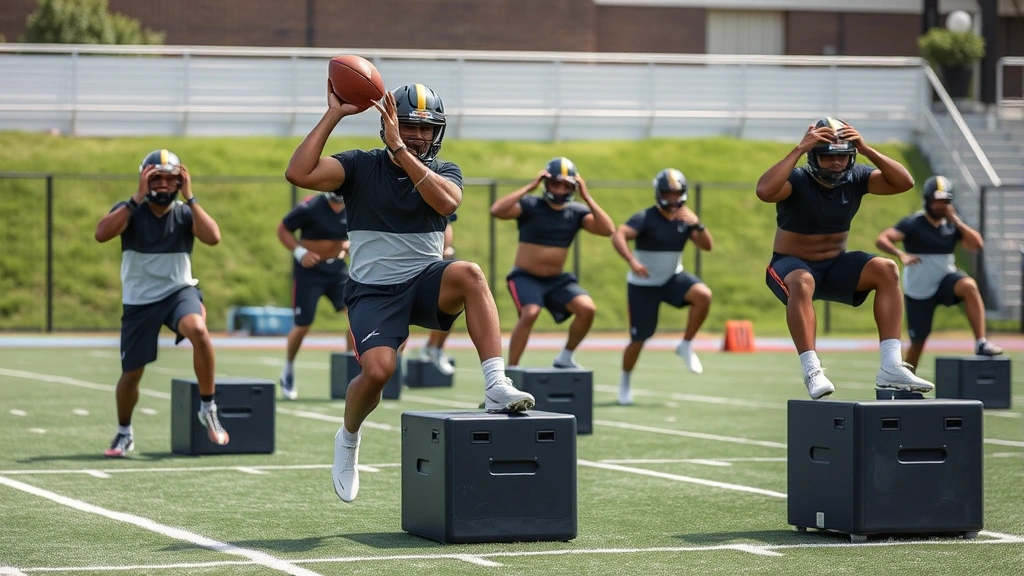
” alt=”Football players performing explosive power training with medicine balls and plyometric exercises on outdoor field during practice session”>
Injury Prevention Through Structural Balance
The Mines football program recognizes that injury prevention through strength training saves seasons and protects athletic careers. Coaches implement strategic imbalance correction, mobility enhancement, and stabilization training that reduces injury risk by 20-30% according to meta-analyses of injury prevention programs.
Structural balance assessment identifies strength asymmetries between limbs and muscle groups. Coaches measure unilateral leg strength ratios (single-leg squat strength should equal 85-90% of bilateral squat strength) and upper body pushing/pulling ratios. Athletes with deficient areas receive targeted corrective training, addressing these imbalances before they manifest as injuries. A player with weak glutes receives supplemental single-leg deadlifts and hip thrusts; an athlete with shoulder stability issues receives extensive rotator cuff and scapular stabilization work.
Ankle and foot stability training prevents common football injuries including ankle sprains and Achilles tendon injuries. Single-leg balance work, proprioceptive training, and ankle mobility drills strengthen stabilizer muscles and improve neuromuscular control. Athletes perform single-leg exercises (single-leg squats, single-leg deadlifts, single-leg Romanian deadlifts) regularly, building ankle stability that translates to improved cutting ability and injury resilience.
Shoulder health receives systematic attention through rotator cuff strengthening, scapular stability training, and thoracic mobility work. Coaches emphasize external rotation strength (should equal 65-75% of internal rotation strength) and healthy scapulohumeral rhythm. These interventions prevent rotator cuff impingement, labral injuries, and chronic shoulder pain that plague overhead-dominant athletes.
Knee injury prevention focuses on ACL protection through eccentric hamstring strengthening, quad-to-hamstring strength ratios of 1:0.6, and landing mechanics training. Athletes perform Nordic hamstring curls, eccentric leg curls, and drop landing drills that strengthen the structures protecting the knee joint. When athletes understand proper how long does a football game last and the physical demands across 60 minutes, they appreciate these preventive measures.
Program Implementation and Athlete Monitoring
Effective strength training programs require systematic implementation and continuous monitoring. Mines coaches utilize performance testing, data tracking, and individualized program adjustments ensuring each athlete progresses optimally.
Baseline testing establishes individual starting points across multiple performance domains: 1RM assessments (squat, bench, deadlift), vertical jump, broad jump, 40-yard sprint, 20-yard shuttle, and functional movement screening. This comprehensive testing reveals individual strengths, weaknesses, and movement quality issues informing individualized program design. Athletes receive specific targets based on position demands and individual baseline metrics.
Strength assessments occur every 4-6 weeks, tracking progress and informing load adjustments. Rather than testing maximum efforts frequently (which accumulates fatigue), coaches use estimated 1RM calculations from working sets. An athlete performing 5 repetitions at 315 pounds estimates approximately 360-pound 1RM, allowing progress tracking without excessive fatigue.
Movement quality monitoring uses video analysis and real-time coaching cues preventing form degradation as fatigue accumulates. When athletes demonstrate compensatory movement patterns, coaches reduce loads or volume, prioritizing quality over quantity. This approach builds strength through optimal biomechanics, reducing injury risk and maximizing training efficiency.
Technology integration including force plates, accelerometers, and motion capture systems provides objective performance data. These tools quantify force production, power output, and movement quality, informing evidence-based programming adjustments. Coaches track readiness metrics including heart rate variability and sleep quality, adjusting training intensity based on athlete recovery status. Athletes understanding college football predictions this week recognize that individual preparation quality directly impacts competitive success.
Nutrition, Recovery, and Adaptation
Strength development depends equally on training stimulus and recovery optimization. Mines nutrition staff coordinates with strength coaches, implementing evidence-based nutrition strategies supporting muscle development, strength gains, and sustained performance.
Protein intake targets 1.6-2.0 grams per kilogram bodyweight daily, distributed across 4-5 meals supporting muscle protein synthesis. Athletes consume high-quality protein sources (lean meats, eggs, Greek yogurt, legumes) at each meal, providing essential amino acids triggering muscle adaptation. Research from International Society of Sports Nutrition confirms that adequate protein intake combined with resistance training increases lean muscle mass by 2-4 kilograms over 8-12 weeks.
Carbohydrate periodization aligns with training intensity and phase. High-intensity training phases require 6-8 grams per kilogram bodyweight daily supporting performance and recovery; lower intensity phases utilize 4-5 grams per kilogram. Athletes time carbohydrate intake around training, consuming 1-4 grams per kilogram 2-3 hours pre-training and 0.8-1.2 grams per kilogram within 30 minutes post-training, optimizing energy availability and glycogen replenishment.
Sleep optimization receives systematic attention, with athletes targeting 7-9 hours nightly. Coaches educate athletes on sleep hygiene, circadian rhythm management, and recovery prioritization. Sleep deprivation impairs strength adaptation, increases injury risk, and compromises decision-making—consequences unacceptable to competitive programs. Athletes tracking sleep quality often demonstrate 15-25% greater strength gains compared to peers with poor sleep.
Active recovery strategies including light movement, foam rolling, stretching, and contrast water therapy (alternating hot/cold immersion) accelerate recovery between sessions. These modalities reduce muscle soreness, enhance blood flow, and prepare the nervous system for subsequent training. Athletes performing structured active recovery sessions demonstrate reduced perceived fatigue and improved training quality across consecutive sessions.
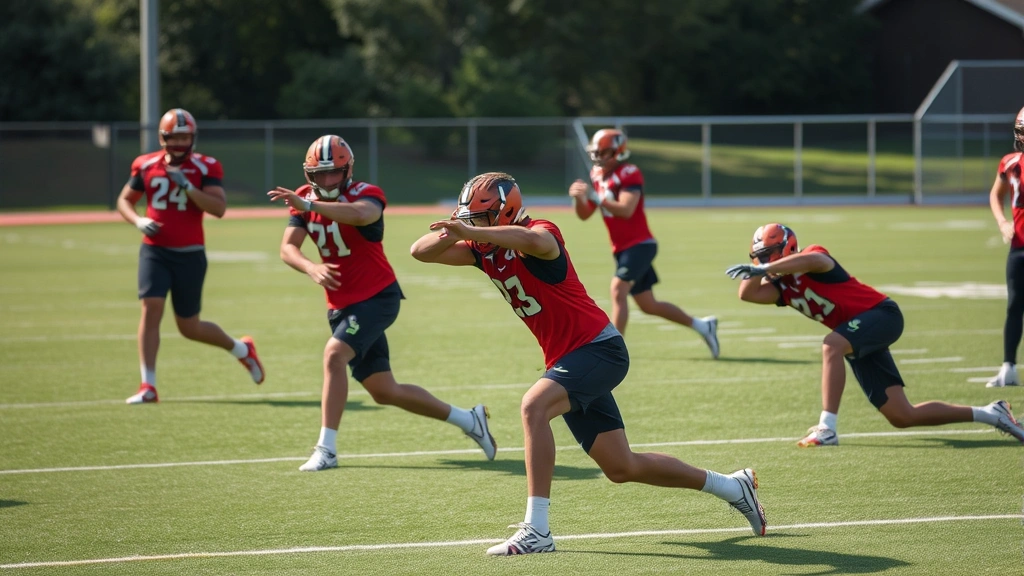
” alt=”Collegiate football players performing dynamic stretching and mobility work on field with focus on hip, shoulder, and thoracic mobility movements”>
FAQ
What is the primary focus of Colorado School of Mines football strength training?
Mines football emphasizes periodized strength development integrated with power training, injury prevention, and sport-specific movement patterns. The program balances maximum strength development with explosive power, ensuring athletes possess both raw strength and the ability to express that strength rapidly in football contexts. Coaches prioritize movement quality, structural balance, and evidence-based programming adjusting to individual athlete needs and competitive phases.
How often do Mines football athletes train strength during the season?
In-season training occurs 2-3 times weekly, maintaining strength while managing fatigue and prioritizing game performance. Sessions emphasize movement quality and strategic strength maintenance rather than progressive overload. This frequency prevents strength loss while allowing adequate recovery for practice, games, and overall training demands. Off-season training increases to 4-5 sessions weekly, supporting maximum strength and hypertrophy development.
What role does injury prevention play in the Mines football strength program?
Injury prevention represents a primary program objective, not a secondary consideration. Coaches systematically address structural imbalances, mobility limitations, and stabilization deficits through targeted strength training. Comprehensive ankle stability work, shoulder health programming, ACL protection strategies, and eccentric strength development reduce injury incidence by 20-30%. Athletes understand that staying healthy directly impacts playing time and career longevity, motivating commitment to preventive training.
How do Mines coaches monitor athlete progress and adjust programming?
Comprehensive monitoring includes baseline testing, 4-6 week strength assessments, movement quality analysis, and technology-driven readiness metrics. Coaches track vertical jump, sprint times, strength ratios, and functional movement quality, adjusting loads and volume based on individual response. This data-driven approach ensures programming remains challenging yet sustainable, maximizing adaptation while preventing overtraining.
What nutrition strategies support Mines football strength development?
Strategic nutrition emphasizes adequate protein intake (1.6-2.0 grams per kilogram bodyweight), carbohydrate periodization aligned with training intensity, and consistent meal timing supporting muscle protein synthesis. Athletes coordinate with nutrition staff, consuming balanced meals supporting energy availability, recovery, and adaptation. Combined with optimized sleep and active recovery strategies, comprehensive nutrition enables the training stimulus to produce maximum strength and muscle development.
How does the Mines program balance strength training with other football demands?
Programming coordinates with practice schedules, game demands, and overall training volume. In-season sessions emphasize maintenance and movement quality; off-season phases support progressive overload and development. Coaches monitor total training stress, adjusting strength training intensity when practice and game demands spike. This integrated approach prevents overtraining while ensuring athletes maintain strength qualities supporting peak performance. Understanding college football best bets frameworks helps athletes recognize that individual preparation quality directly impacts team competitiveness.
What makes Olympic lifts valuable for football strength development?
Olympic lift derivatives (power cleans, hang cleans) develop explosive power and rate of force development superior to traditional strength training alone. These technical movements enhance neuromuscular coordination, teaching athletes to generate force rapidly—a critical quality determining acceleration, jump height, and tackle velocity. While requiring extensive coaching, Olympic lifts produce measurable improvements in vertical jump (4-8 inches) and sprint times (3-5% improvement) within 4-6 weeks. Athletes should consult National Strength and Conditioning Association resources for coaching standards and progression protocols.
How do individual differences influence Mines football strength programming?
Position-specific demands, baseline strength levels, movement quality, and injury history inform individualized program design. Linemen emphasize maximum strength and hypertrophy; skill position players prioritize power and speed development. Athletes with mobility limitations receive targeted flexibility work; those with strength imbalances receive corrective training. This individualized approach maximizes training efficiency, ensuring each athlete receives programming optimally addressing their unique needs and position demands.


