Table of Contents
Introduction
There’s something magical about volleyball that hooks you from the first bump, set, and spike. Maybe it’s the lightning-fast rallies or the way six players move like they’re reading each other’s minds. Whatever draws you in, one thing’s certain: understanding the basic rules makes everything click into place.
Here’s the thing about volleyball rules—they’re not just arbitrary restrictions. They’re what make this sport so beautifully balanced between offense and defense. Think of them as the framework that turns chaos into strategy. When you know why players rotate clockwise or what makes a serve legal, suddenly you’re not just watching people hit a ball back and forth. You’re seeing chess matches played at 60 mph. And if you’re curious about how volleyball ranks among global sports, check out this insight on sports concepts and global sports popularity—it might surprise you.
Now, let’s talk about the stuff that really matters on the court. Serving rules, rotations, player positions—these aren’t just technical details to memorize. They’re the building blocks of every amazing rally you’ve ever watched. Ever wonder why that setter always seems to be in the perfect spot? Or how teams avoid those momentum-killing faults? It all comes down to understanding the mechanics. Plus, knowing these rules inside and out can literally save you from injury (and embarrassment). Speaking of staying safe out there, you’ll want to brush up on injury prevention in sports too.
The court itself tells a story through its lines, dimensions, and that net stretched across the middle like a battlefield. Every marking has a purpose. Every measurement is standardized for good reason. But volleyball isn’t just about following rules—it’s about the spirit of the game. The respect between teammates, the handshake after a hard-fought match, the way experienced players help newcomers learn the ropes. That’s the real culture of volleyball, and it’s just as important as knowing when you’ve committed a foot fault.
What You’ll Learn in This Guide
Ready to master the fundamentals? Here’s exactly what we’re going to cover together:
- Objective and Basic Gameplay: The core goal of volleyball and how two teams battle it out to score points by getting that ball over the net within the rules.
- Team Composition and Roles: Who does what on the court—from the setter who orchestrates every play to the hitters who bring the thunder.
- Scoring System and Winning Conditions: How points add up, what different match formats look like, and what it actually takes to win.
- Serve, Rotation, and Fault Rules: The nitty-gritty of serves, rotations, common mistakes, and what happens when things go wrong.
By the time we’re done, you’ll feel confident stepping onto any court. Whether you’re playing your first game, calling your first match, or just want to impress your friends with your volleyball knowledge—you’ll have what it takes.
Coming up, we’re going to break down everything from serving techniques that actually work to rotation strategies that keep teams in sync. We’ll cover court setup, equipment standards, and yes—even the unwritten rules of good sportsmanship that separate great players from just good ones. If you’re looking to build stronger connections with your team, you might also enjoy reading about team bonding activities in sports for some practical ideas.
Here’s what I love about teaching volleyball rules: once you get them, everything else falls into place. The strategy becomes clearer. The fast-paced action makes sense. Even those incredible professional matches become easier to follow and appreciate.
So let’s jump in and unlock what makes volleyball such an incredible sport. Trust me—once you understand these fundamentals, you’ll never watch or play the game the same way again.

Now that we’ve covered the volleyball basics, let’s get into the real meat and potatoes—the rules and gameplay that make this sport tick. Whether you’re stepping onto the court for the first time or you’ve been watching from the sidelines wondering what’s actually happening, understanding these fundamentals changes everything. It’s the difference between just hitting a ball around and truly playing volleyball. And trust me, once you get these concepts down, you’ll start seeing the game in a completely different light.
Understanding Basic Rules and Gameplay in Volleyball
Here’s what volleyball boils down to: two teams trying to slam the ball into each other’s court while keeping it off their own. Sounds simple, right? Well, that’s where things get interesting. The speed, the strategy, the split-second decisions—it all comes together in this beautiful chaos that requires serious teamwork and precision.
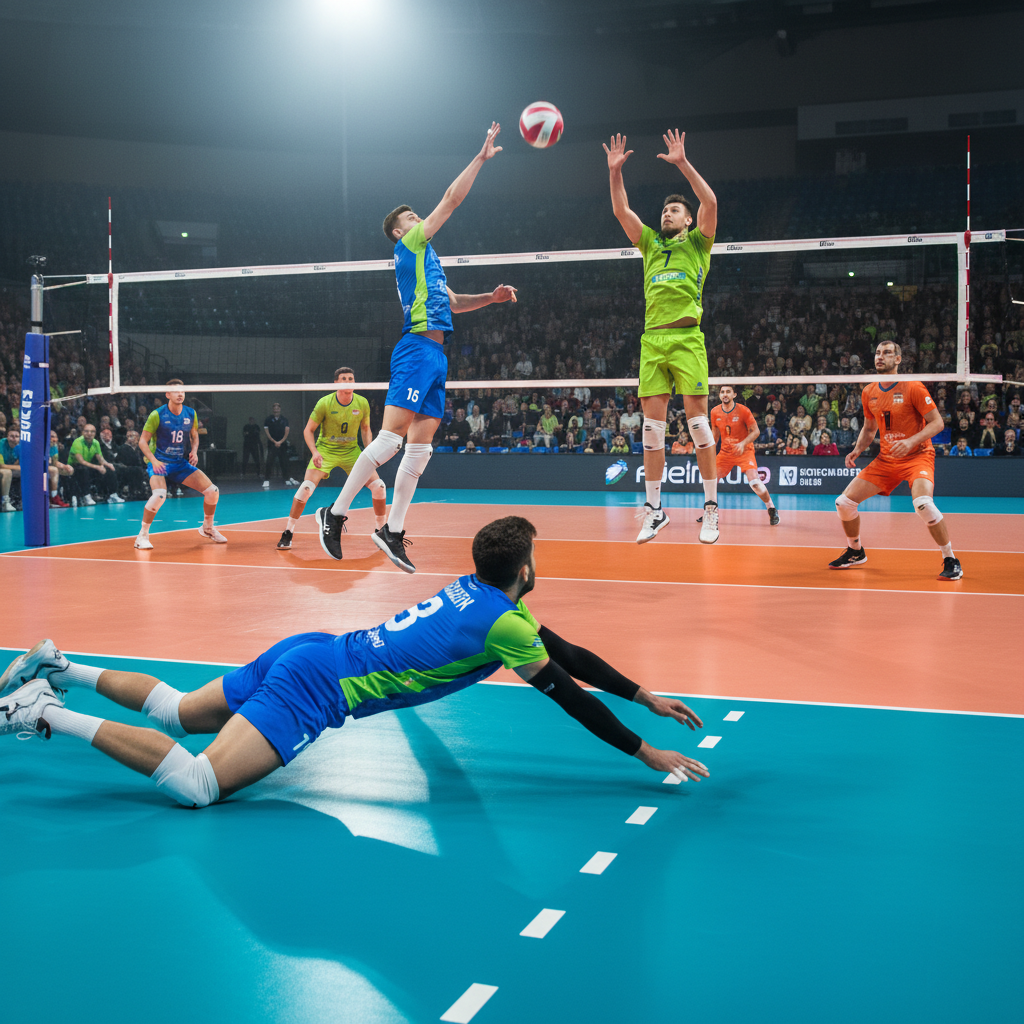
Picture this: players diving, setting up perfect plays, and launching attacks that seem to defy physics. Each rally is like a chess match played at lightning speed. Teams get three touches to send the ball back over the net, and those three touches? They can make or break everything. The serve starts it all, then it’s a battle of wits and reflexes until someone scores.
What makes volleyball special is how every player matters. You’ve got your setters orchestrating plays like conductors, your hitters delivering powerful attacks, and your defenders keeping rallies alive with incredible saves. Miss one rotation or communication breakdown, and the whole thing falls apart. But when it clicks? Magic happens.
Key Aspects of Volleyball Gameplay
Let’s break down the essential stuff you absolutely need to know. These are the building blocks that everything else is built on:
- Team Composition and Roles: Six players per team, each with their own job to do. Your setters are like the quarterbacks—they run the offense and decide where the ball goes. Hitters (or attackers) are your heavy artillery, delivering those game-changing spikes. Then you’ve got your defensive specialists keeping everything together in the back row. It’s a beautiful system when everyone knows their role. Want to see how volleyball stacks up against other team sports? Check out top sports worldwide to get some perspective on what makes volleyball unique.
- Scoring System and Winning Conditions: Points happen when your opponent messes up—either they can’t return your attack, they hit it out of bounds, or they violate a rule. Most matches are best-of-five sets, and you need 25 points to win a set (but you’ve got to win by two). This scoring system keeps things intense because every single point matters. One bad serve or missed dig can shift momentum completely.
- Serve Rules and Faults: The serve kicks off every rally, and it’s got to clear the net and land in bounds—simple as that. But here’s where people trip up: step on that service line, serve into the net, or send it flying out of bounds, and boom—you just gave the other team a free point. Getting your serve consistent is huge, kind of like how hand-eye coordination impacts every sport you play.
- Rotations and Positioning: Every time your team wins the serve back, everyone rotates clockwise. Sounds easy, but this is where strategy gets interesting. Players move through different positions, from front row attacking to back row defense. Mess up your rotation or stand in the wrong spot during a serve, and that’s another point for the opposition. Teams that nail this usually have great chemistry—something you can build through sports team bonding activities that strengthen trust and communication.
Get these fundamentals locked in, and you’re ready to tackle more advanced strategies. Plus, you’ll make way fewer costly mistakes that can swing matches. The better you understand the rules, the more you can focus on the fun stuff—like perfecting that killer spike or making an impossible save.
Essential Equipment and Court Specifications in Volleyball
Alright, let’s talk gear and court setup. You can’t just grab any ball and start playing—well, you can for backyard fun, but if you want to play real volleyball, there are standards for a reason. These specifications aren’t just bureaucratic nonsense; they actually shape how the game is played and what skills you need to develop.
Think about it: the court size affects your defensive strategy, net height determines what kind of attacks work, and even the ball’s weight influences your technique. When you’re shopping for equipment or setting up a court, knowing these details makes all the difference. Plus, using proper gear helps prevent injuries—something that ties into broader sports injury prevention strategies that every athlete should know.
Key Elements of Volleyball Equipment and Court Standards
Here’s what you need to know about the technical side of things:
- Official Court Dimensions: We’re talking 18 meters long by 9 meters wide—that’s about 59 by 29 feet for those thinking in imperial. The court gets split right down the middle by the net, and you’ve got important lines everywhere: attack lines, service areas, boundary markers. These aren’t just suggestions—they define legal plays and help referees make calls. Whether you’re setting up for practice or competition, these measurements matter.
- Net Height and Specifications: Here’s where things get interesting—the net height changes depending on who’s playing. For men, it’s 2.43 meters (about 8 feet). For women, it’s 2.24 meters (roughly 7 feet 4 inches). The net needs to be tight and extend past the sidelines, creating that crucial barrier between teams. Get this wrong, and the whole game feels off.
- Volleyball Ball Characteristics: The official volleyball isn’t just any round ball. We’re talking 65-67 centimeters around and weighing 260-280 grams. That specific weight and size affects everything—how it flies through the air, how it feels when you hit it, how much spin you can put on it. Pair this with the right court shoes that give you traction and support, and you’re set for optimal performance.
- Protective Gear and Uniforms: Volleyball might not look like a contact sport, but those dives and slides add up. Knee pads are pretty much essential, and many players add elbow pads and ankle support. Your uniform needs to meet team standards while letting you move freely. It’s not just about looking good—it’s about staying safe and comfortable during those intense rallies.
When you understand both the gameplay rules and the equipment standards, volleyball starts making complete sense. You see why certain plays work, why positioning matters so much, and how the sport has evolved to be both athletic and strategic. That’s the foundation you need to really enjoy and excel at volleyball—whether you’re playing or just watching from the stands.

Here’s the thing about volleyball—it’s way more than just bumping a ball back and forth. We’ve covered a lot of ground together, from understanding how six players work as one unified machine to mastering those sometimes tricky scoring rules. (Trust me, that 25-point requirement with a two-point lead keeps things interesting until the very last rally.) When you really get how serving, setting, hitting, and defending all fit together? That’s when volleyball stops feeling overwhelming and starts feeling like pure magic.
Now, let’s talk about those rotation rules and player positions we went through. I know they might seem like just red tape, but they’re actually the backbone of fair play. Think of them as the GPS of volleyball—they keep everyone exactly where they need to be. And those faults we discussed? One little net touch or serving error can flip the entire momentum of a game. It’s wild how quickly things can change. Having the right court setup and equipment isn’t just about following rules either—it’s about keeping everyone safe and ensuring every game feels consistent, whether you’re playing at the local rec center or watching the pros.
Want to take your volleyball game to the next level? Start with your serve—it’s your chance to control the game right from the start. Master those rotations too, because team chemistry depends on everyone knowing their role. And here’s something crucial: work on your hand-eye coordination. Volleyball happens fast, and those split-second reactions can make all the difference. Check out our detailed how to improve hand-eye coordination guide for some game-changing tips. Building team chemistry off the court matters just as much—explore these effective sports team bonding activities that’ll help your team click when it counts. Oh, and please don’t skip injury prevention. Nobody wants to sit on the sidelines. Our expert advice on how to avoid sports injuries will keep you playing strong all season long.
Now, here’s something you might not expect in a volleyball guide—let’s talk about your financial game too. (Stay with me here.) As an athlete, having an emergency fund gives you the same confidence on the court that a solid serve does. Life happens, injuries occur, and having that financial cushion means you can focus on what you love without worrying about the “what ifs.” Learn the practical steps to build yours in this comprehensive guide on how to build an emergency fund. It’s about being prepared both on and off the court.
You’ve got everything you need now to dive headfirst into volleyball. Whether you’re stepping onto the court as a player, guiding others as a coach, or cheering from the stands as a fan, you’re ready. Embrace those rules we covered—they’re your friends, not obstacles. Practice consistently (even when you don’t feel like it), and invest in those teammate relationships. Because here’s what I’ve learned: volleyball isn’t just about the sport itself. It’s about community, fitness, friendships that last long after the final whistle, and building the kind of resilience that serves you well beyond any court. So go ahead—step up to that serving line with confidence. You’ve got this.
Frequently Asked Questions
-
What is the maximum number of players on a volleyball team?
- The standard is six players per team on the court at one time.
-
How is scoring determined in volleyball?
- Points are awarded when the opposing team fails to return the ball properly.
-
Can players touch the net during play?
- Touching the net is a violation and results in a fault.
-
What happens if the ball lands on the boundary lines?
- The ball is considered in play if it lands on the boundary lines.
-
When is rotation required in volleyball?
- Teams rotate each time they win serve from the opposing team.


