
Florida State’s Secret to Speed? Coach’s Insight Into Building Elite Athletes
When you watch Florida State football players explode off the line, outrun defenders, and dominate the field, you’re witnessing years of deliberate athletic development. The Seminoles’ coaching staff has cracked a code that separates championship-caliber programs from the rest: systematic speed development combined with intelligent depth chart management. This isn’t about raw genetics alone—it’s about science-backed training methodologies, strategic positioning, and a relentless commitment to player development that transforms talented recruits into elite collegiate athletes.
The secret sauce behind Florida State’s speed advantage lies in their holistic approach to athletic conditioning. Their strength and conditioning coaches understand that explosiveness isn’t built in a single training session; it’s constructed through progressive overload, plyometric mastery, and sport-specific movement patterns. When you examine the Peak Play Arena Blog for modern training insights, you’ll find that elite programs are moving beyond generic strength training into position-specific power development. Florida State’s depth chart reflects this philosophy—players aren’t just strong; they’re precisely positioned to maximize their unique athletic gifts.

The Foundation of Football Speed: What Separates Elite Programs
Speed in football isn’t a single attribute—it’s a complex combination of acceleration, maximum velocity, change-of-direction ability, and reactive quickness. Florida State’s coaching staff recognizes these distinctions and trains each component independently before integrating them into game-realistic scenarios. According to research from the American College of Sports Medicine, explosive power development requires specific neurological adaptations that take weeks to develop properly.
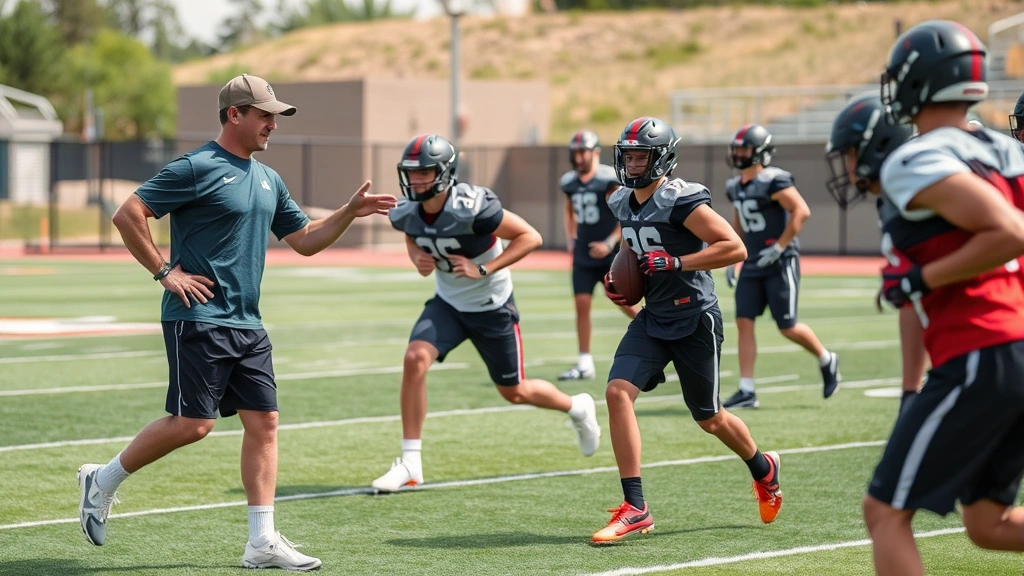
The first 10 yards matter more in football than anywhere else. A cornerback covering a receiver, a linebacker diagnosing a play, a running back hitting the edge—all depend on explosive first-step acceleration. Florida State’s strength coaches implement weighted sled pushes, resisted sprints, and specialized plyometric progressions that target the neuromuscular system’s ability to generate force rapidly. This isn’t casual training; it’s precision work grounded in exercise physiology principles.
Maximum velocity development represents the second pillar. While acceleration determines who gets off the ball first, maximum velocity determines who catches the ball carrier. Florida State’s coaching staff incorporates overspeed training—allowing athletes to run faster than they can produce force—which teaches the central nervous system to tolerate higher velocities. Downhill sprints, assisted sprints with harnesses, and sport-specific position drills all contribute to this development phase.
Change-of-direction speed, often called agility, requires a different training stimulus entirely. This involves deceleration strength, lateral power, and reactive decision-making. Understanding the football defense positions helps clarify why this matters—defensive backs must decelerate explosively to plant and cut, while linebackers need omnidirectional power. Florida State’s coaches don’t treat all athletes identically; they customize training based on positional demands.
Strategic Depth Chart Construction: More Than Just Ranking Players
The Florida State football depth chart represents far more than a simple ranking system. It’s a strategic document that reflects coaching philosophy, athlete development timelines, and tactical decision-making. When examining how elite programs structure their depth charts, you see intentional layering that maximizes both short-term performance and long-term program sustainability.
Florida State’s approach involves identifying complementary skill sets at each position. Rather than simply stacking the fastest players, their coaching staff considers versatility, football intelligence, and injury resilience. A player might rank lower in pure speed metrics but offer superior coverage skills or run-stopping ability, changing their value within the system. This sophisticated evaluation process mirrors what you’ll discover when exploring college football team builder principles—context matters as much as individual metrics.
The depth chart also serves as a development roadmap. Florida State uses their depth structure to identify which players are ascending, which are plateauing, and where gaps exist. Coaching staff can target specific athletes for enhanced training focus, knowing exactly what attributes need improvement for advancement. This creates accountability while providing clear pathways for player progression.
Understanding positional demands is crucial here. The flag football positions and tackle football positions share fundamental requirements despite rule differences. Speed, agility, and acceleration matter across contexts. Florida State’s depth chart reflects this understanding by ensuring position groups feature athletes with complementary attributes—some excelling at straight-line speed, others at lateral quickness, still others at reactive agility.
Coach’s Training Methodology: Science Meets Practice
Florida State’s coaching staff employs a periodized training approach that aligns with competitive demands. Rather than maintaining constant intensity, they strategically vary training stress to ensure peak performance during critical games while preventing overtraining during lower-priority contests.
The training year breaks into distinct phases: general preparation, specific preparation, competition, and transition. During general preparation, coaches emphasize foundational strength and power development. Athletes perform heavy resistance training, plyometric progressions, and extensive speed work. This phase builds the physiological platform everything else depends on.
Specific preparation phase involves integrating speed development with football-specific movements. Athletes perform acceleration work from football positions, change-of-direction drills matching defensive responsibilities, and reactive training scenarios. The coaching staff begins reducing training volume while maintaining intensity, allowing the nervous system to consolidate adaptations.
The competition phase emphasizes maintenance and tactical preparation. While less overall training volume occurs, intensity remains high. Florida State’s coaches understand that athletes can’t improve maximally during heavy competition; instead, they focus on maintaining acquired attributes while optimizing tactical execution. This aligns with principles from sports science research on periodization effectiveness.
Recovery protocols receive equal attention to training stimulus. Florida State’s program includes structured sleep optimization, nutrition timing, mobility work, and strategic deload weeks. Coaches recognize that adaptation happens during recovery, not during the training session itself. Elite athletes need 8-10 hours of sleep; the coaching staff monitors this through wearable technology and emphasizes sleep hygiene.
Position-Specific Speed Development: Tailoring Training to Role Demands
Not all speed development looks identical at Florida State. Wide receivers need different speed attributes than defensive ends, who differ from safeties. The coaching staff recognizes these distinctions and customizes training accordingly.
Wide receivers emphasize sustained velocity and change-of-direction ability. Their training includes extensive acceleration work to create separation, deceleration strength for route breaks, and reactive agility for catching balls away from the body. Florida State’s receiver coaches incorporate sport-specific drills where athletes accelerate into routes, decelerate explosively, and redirect based on ball flight.
Defensive backs require exceptional lateral speed and backward acceleration. Their training emphasizes lateral bounds, backward sprints, and reactive drills where they move based on offensive cues. The coaching staff incorporates mirror drills, pedal-and-plant progressions, and sport-specific conditioning that matches game demands. These athletes need reactive speed—the ability to accelerate in response to stimuli—rather than predetermined acceleration.
Defensive linemen focus on explosive first-step acceleration and lateral power. Their training emphasizes heavy resistance work combined with explosive movements, sled drills, and pad-level development. While absolute speed matters less than at skill positions, explosive first-step quickness determines whether they escape blocks or get sealed. Understanding flag football plays and how defenders must react quickly helps clarify why even linemen need rapid acceleration.
Linebackers require the most versatile speed attributes. They need explosive acceleration to fill gaps, change-of-direction ability to pursue ball carriers, and reactive agility to cover passing lanes. Florida State’s linebacker training integrates all speed components, with emphasis on omnidirectional power and reactive decision-making. These athletes must process information quickly and react explosively in any direction.
Recovery and Performance Optimization: The Hidden Advantage
While training stimulus captures attention, recovery determines whether adaptation occurs. Florida State’s coaching staff treats recovery as non-negotiable, understanding that elite performance emerges from the combination of appropriate stress and sufficient recovery.
Sleep represents the cornerstone of recovery protocols. Florida State’s program emphasizes 8-10 hours nightly, with coaching staff monitoring sleep through wearable devices. Athletes receive education on sleep hygiene—consistent sleep schedules, dark sleeping environments, limited blue-light exposure—that enhances sleep quality. Research from sleep science organizations confirms that athletes sleeping less than 7 hours experience significant performance decrements.
Nutrition timing supports recovery and performance. Florida State’s sports nutritionists ensure athletes consume adequate carbohydrates and protein around training sessions, optimizing glycogen replenishment and muscle protein synthesis. Post-training nutrition windows receive particular attention, with athletes consuming protein and carbohydrates within 30-60 minutes of training completion.
Active recovery days include low-intensity movement, mobility work, and parasympathetic nervous system activation. Rather than complete rest days, athletes perform gentle yoga, swimming, or walking—activities promoting blood flow and recovery without imposing significant training stress. This approach maintains movement quality while allowing physiological systems to recover.
Mobility and flexibility work prevents injury while maintaining movement quality. Florida State’s coaching staff implements comprehensive mobility protocols addressing common football movement restrictions. Athletes perform dynamic stretching before training, static stretching after training, and dedicated mobility sessions addressing position-specific limitations. This prevents the movement compensations that lead to injuries.
Recruiting Philosophy for Speed Athletes: Identifying Future Elites
Florida State’s recruiting strategy emphasizes identifying athletes with speed potential rather than solely focusing on current performance. Coaches understand that speed development responds to training; they evaluate athletes’ learning capacity, movement quality, and growth trajectory alongside raw performance metrics.
The coaching staff assesses acceleration mechanics, examining whether athletes demonstrate efficient movement patterns that will respond to training. Poor mechanics can be corrected; some athletes possess natural advantages that targeted training will amplify. Florida State’s scouts identify athletes demonstrating good movement patterns combined with measurable speed improvements during high school careers—indicators of trainability.
Body composition and relative strength provide additional insights. Athletes carrying excess body weight might demonstrate exceptional speed potential once they develop strength and lose unnecessary mass. Florida State targets athletes showing improvement trajectories, recognizing that current performance doesn’t necessarily predict future capability.
Football intelligence matters enormously. Speed without understanding how to apply it provides limited value. Florida State prioritizes athletes demonstrating football awareness, the ability to process information quickly, and reactive decision-making capacity. These attributes predict success at the collegiate level where defensive schemes grow more complex.
Exploring fantasy football trophies and award systems helps understand how programs recognize excellence. Florida State’s recruiting similarly emphasizes recognizing complete athletes rather than single-dimensional performers. They seek players excelling across multiple attributes—speed, intelligence, versatility, and character—rather than athletes dominant in one area.
FAQ
How long does speed development take in college football?
Significant speed improvements typically emerge over 8-12 weeks of consistent training. However, elite-level speed development continues throughout an athlete’s career. Florida State’s coaching staff implements continuous progression, with athletes demonstrating measurable improvements year after year through sophisticated training design.
What’s the difference between acceleration and maximum velocity?
Acceleration represents how quickly athletes increase speed from a standstill, typically measured over the first 10-20 yards. Maximum velocity is the highest speed achieved, usually occurring after 40-60 yards. Football demands exceptional acceleration; most plays conclude before athletes reach maximum velocity. Florida State prioritizes acceleration development while maintaining maximum velocity capacity.
Can athletes improve speed after high school?
Absolutely. While some speed attributes have genetic components, trainability remains high throughout college. Florida State’s program demonstrates that systematic training produces measurable speed improvements even in collegiate athletes. Proper coaching, appropriate volume progression, and recovery emphasis unlock speed potential many athletes haven’t developed.
How does Florida State’s depth chart reflect speed development priorities?
The depth chart represents a strategic tool showing which athletes have developed position-specific speed attributes. Players ranking higher typically demonstrate superior speed relevant to their position, combined with other valuable attributes. The chart also reveals development trajectories, showing which athletes are improving rapidly and might earn starting positions.
What role does nutrition play in speed development?
Nutrition directly impacts training quality, recovery capacity, and adaptation. Athletes lacking adequate carbohydrates perform poorly during high-intensity speed work. Insufficient protein impairs muscle adaptation. Florida State’s nutritionists ensure athletes consume properly timed nutrition supporting speed development, recognizing that training stimulus alone produces minimal results without nutritional support.


