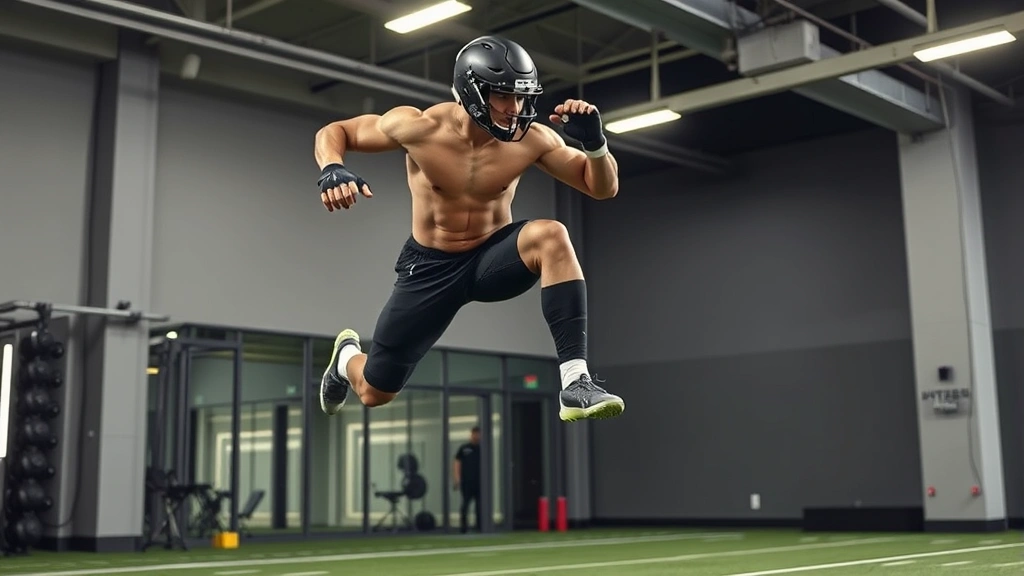
Best Football Workouts? Athlete Insights
Football demands explosive power, cardiovascular endurance, lateral agility, and mental resilience. Whether you’re a high school athlete chasing a college scholarship or a seasoned player aiming for professional recognition, your training regimen directly determines your performance on the field. The best football workouts combine sport-specific movements with strength development, conditioning protocols, and injury prevention strategies backed by exercise science research.
Elite football players don’t just show up on game day—they’ve invested countless hours perfecting their craft through strategic, periodized training programs. This comprehensive guide reveals the science-backed workouts that transform athletic ability into championship-level performance, drawing insights from professional athletes, strength coaches, and sports science experts.
Strength and Power Development for Football
Football is fundamentally a power sport. The ability to generate force quickly separates elite athletes from average competitors. According to the American College of Sports Medicine (ACSM), power development requires progressive resistance training combined with explosive movements performed at high velocity.
The foundation of any football strength program includes compound lifts: squats, deadlifts, bench presses, and Olympic lifting variations. These exercises recruit multiple muscle groups simultaneously, mimicking the demands of football movements. A study published in the Journal of Strength and Conditioning Research demonstrated that athletes performing Olympic lifts showed 23% greater vertical jump improvements compared to traditional strength training alone.
Essential strength exercises for football athletes:
- Back Squats: Build lower body power essential for acceleration and jumping. Perform 3-5 sets of 3-6 repetitions at 85-95% of your one-rep max twice weekly.
- Deadlifts: Develop posterior chain strength crucial for tackling and explosive movements. Execute 3-4 sets of 3-5 reps with 2-3 minutes rest between sets.
- Power Cleans: Generate explosive hip extension power transferable to football movements. Complete 5-6 sets of 2-3 reps focusing on technique and velocity.
- Bench Press: Strengthen chest, shoulders, and triceps for upper body dominance. Perform 4 sets of 4-6 reps at moderate-heavy intensity.
- Front Squats: Target quadriceps and core stability while maintaining upright posture. Execute 3-4 sets of 4-6 reps.
Beyond traditional strength work, plyometric exercises amplify power output. Box jumps, broad jumps, and medicine ball throws teach your neuromuscular system to produce force explosively—exactly what happens during game situations. Research from the National Strength and Conditioning Association confirms that combining strength training with plyometrics produces superior athletic performance gains compared to either training method alone.
Speed, Agility, and Lateral Movement Training
Football success depends heavily on change-of-direction ability and linear speed. Defensive backs must plant their foot and explode laterally; running backs need to cut at full speed; linebackers require rapid lateral movements to pursue ball carriers across the field. These demands necessitate specialized agility and speed work beyond general conditioning.
Linear speed development involves low-rep, high-intensity sprinting work. Short bursts of 10-40 yards at maximum effort, with complete recovery between reps, train your fast-twitch muscle fibers and nervous system for explosive acceleration. Most football movements occur within this distance range, making it the most sport-specific speed work.
Agility training protocol structure:
- Dynamic warm-up: 5-10 minutes of movement preparation including leg swings, walking lunges, and activation drills.
- Linear speed work: 6-8 repetitions of 20-40 yard sprints at 90-100% effort with full recovery (3-5 minutes between reps).
- Change-of-direction drills: T-drills, L-drills, and shuttle runs emphasizing deceleration and foot plant mechanics.
- Lateral movement circuits: Lateral shuffles, carioca drills, and backpedal sprints at game-speed intensity.
- Sport-specific agility: Cone drills simulating actual football movements—defensive coverage patterns, receiver route running, linebacker pursuit angles.
The American College of Sports Medicine emphasizes that agility improvement requires sport-specific training patterns. Generic agility drills produce minimal transfer to football performance. Instead, replicate actual game movements at training intensity to maximize neural adaptation.
Proprioceptive training—balance and body awareness exercises—complements agility work by improving ankle stability and injury resilience. Single-leg stance variations, balance board exercises, and unstable surface training strengthen stabilizer muscles, reducing ankle and knee injury risk during rapid direction changes.
Sport-Specific Conditioning Programs
Football conditioning differs significantly from traditional endurance training. The sport features repeated high-intensity efforts separated by brief recovery periods. A cornerback might sprint at maximum effort for 5 seconds, walk for 15 seconds, then repeat this pattern 30+ times during a game. This interval-based demand requires specific conditioning strategies.
High-Intensity Interval Training (HIIT) mimics football’s metabolic demands better than steady-state running. Alternating between maximum-effort work intervals and incomplete recovery periods trains both aerobic and anaerobic systems simultaneously, improving your ability to maintain explosive performance throughout games.
Football-specific HIIT workout:
- Warm-up: 5 minutes easy jogging and dynamic stretching
- Work intervals: 30 seconds at 95-100% maximum effort (sprinting, shuttle runs, or sport-specific movements)
- Recovery intervals: 30-45 seconds at 50-60% effort (walking or light jogging)
- Repeat 12-15 rounds
- Cool-down: 5 minutes easy movement and static stretching
Perform HIIT workouts 2-3 times weekly, allowing 48 hours recovery between sessions. The intensity demands significant central nervous system stress; excessive frequency impairs recovery and increases injury risk. Check our Peak Play Arena Blog for additional training insights.
Position-specific conditioning matters significantly. Offensive and defensive linemen require different conditioning stimulus than skill position players. Linemen benefit from shorter, higher-intensity intervals reflecting their frequent explosive efforts followed by brief recovery. Wide receivers and defensive backs need longer work intervals reflecting extended coverage responsibilities and route running demands.
Injury Prevention and Mobility Work
Football’s collision-based nature demands proactive injury prevention. The most successful training programs integrate mobility work, stability exercises, and movement quality assessment into every session. Neglecting these components inevitably leads to compensatory movement patterns and injury.
Dynamic mobility work performed pre-training prepares tissues for upcoming demands while improving movement quality. Walking lunges with rotation, leg swings in multiple planes, and arm circles activate muscles and joints through their full range of motion. This warm-up approach enhances performance while reducing injury risk compared to static stretching before intense activity.
Essential injury prevention work:
- Ankle stability: Single-leg balance progressions, ankle alphabet exercises, and proprioceptive training prevent ankle sprains—the most common football injury.
- Hip mobility: Pigeon stretches, 90-90 stretches, and deep bodyweight squats improve hip range of motion, reducing knee and lower back stress.
- Shoulder stability: Band pull-aparts, face pulls, and rotational core work strengthen rotator cuff muscles protecting the shoulder joint.
- Spinal stability: Dead bugs, bird dogs, and anti-rotation exercises develop core strength preventing lower back injuries during tackle execution and direction changes.
- Glute activation: Clamshells, lateral band walks, and single-leg deadlifts activate gluteal muscles, improving hip stability and knee alignment.
Post-training flexibility work addresses accumulated tightness. Static stretching performed after workouts when muscles are warm increases range of motion without impairing strength. Hold each stretch 30-60 seconds, breathing deeply to enhance parasympathetic nervous system activation and facilitate recovery.
Periodized Training Cycles
Periodization—strategically varying training variables over time—prevents plateaus and optimizes performance timing. Rather than performing identical workouts indefinitely, elite football programs systematically manipulate intensity, volume, and exercise selection to maximize adaptation.
The traditional periodization model features three phases:
Off-Season Phase (12-16 weeks): Emphasis on strength development, hypertrophy, and work capacity. Higher training volume with moderate intensity. Athletes perform 4-5 weekly training sessions incorporating strength work, conditioning, and skill development. This phase builds the physical foundation supporting later intensity.
Pre-Season Phase (6-8 weeks): Transition from strength emphasis to power and sport-specific conditioning. Intensity increases while volume decreases. Training frequency remains high (4-5 sessions weekly) with greater emphasis on position-specific drills and competitive situations. Explosive movements and high-intensity intervals dominate this phase.
In-Season Phase (16-18 weeks): Maintenance of strength and power while prioritizing recovery and injury prevention. Training frequency reduces to 2-3 weekly sessions, emphasizing movement quality and positional demands. Volume decreases significantly as game competition becomes primary training stimulus. See our College Football Predictions This Week for competitive insights.
Within each phase, implement micro-cycles (weekly training variations) preventing adaptation plateaus. Vary exercise selection, rep ranges, and intensity every 2-3 weeks. This variation maintains nervous system engagement while allowing specific adaptations to accumulate.

Nutrition and Recovery Protocols
Training stimulus triggers adaptation, but recovery determines whether adaptation occurs. Nutrition, sleep, and stress management directly influence whether your body capitalizes on training stress.
Football athlete nutrition priorities:
- Protein intake: Consume 1.6-2.2 grams per kilogram bodyweight daily, distributed across 4-5 meals. Protein supports muscle repair and adaptation following training.
- Carbohydrate timing: Consume carbohydrates before and after intense training to fuel high-intensity work and replenish depleted glycogen stores.
- Hydration: Drink adequate fluids throughout the day and during training. Even 2% bodyweight fluid loss impairs performance and recovery.
- Micronutrient density: Consume abundant vegetables, fruits, and whole grains providing vitamins and minerals supporting recovery and immune function.
- Anti-inflammatory foods: Fatty fish rich in omega-3 fatty acids, berries, and leafy greens reduce inflammation and support tissue recovery.
Sleep represents the most powerful recovery tool. During deep sleep, growth hormone secretion peaks, facilitating muscle repair and adaptation. Elite athletes prioritize 7-9 hours nightly. Consistent sleep schedules, dark sleeping environments, and limiting screen time before bed optimize sleep quality.
Active recovery days—low-intensity training emphasizing movement quality and mobility—enhance recovery while maintaining training frequency. Light jogging, swimming, or yoga on recovery days promotes blood flow facilitating nutrient delivery and waste product removal without creating additional training stress.

Stress management significantly impacts recovery. Chronic psychological stress elevates cortisol, impairing muscle protein synthesis and recovery. Meditation, deep breathing exercises, and time in nature reduce stress while supporting parasympathetic nervous system activation. Many elite football programs incorporate mental training and stress management techniques alongside physical training.
Consider consulting with certified exercise physiologists to develop personalized nutrition and recovery strategies. Individual factors including age, training phase, and performance goals necessitate customized approaches.
FAQ
How often should football athletes train weekly?
Off-season programming typically involves 4-5 training sessions weekly, combining strength work, conditioning, and skill development. Pre-season maintains similar frequency with increased intensity emphasis. In-season reduces to 2-3 sessions weekly, prioritizing recovery and injury prevention. Always include at least one complete rest day weekly for nervous system recovery.
What’s the best exercise for football-specific power?
Power cleans and their variations (hang cleans, power clean from blocks) most directly transfer to football movements, combining rapid hip extension with upper body coordination. Box jumps and broad jumps develop lower body power effectively. The most effective approach combines multiple power exercises throughout training cycles, preventing adaptation plateaus.
Should football athletes do cardio?
Yes, but football-specific cardio differs from traditional distance running. High-intensity interval training better matches football’s metabolic demands than steady-state cardio. However, maintaining aerobic base capacity supports recovery and provides foundation for high-intensity work. Include 1-2 HIIT sessions weekly alongside low-intensity recovery work.
How important is mobility for football performance?
Mobility work directly impacts performance and injury prevention. Improved range of motion allows deeper squats, better acceleration mechanics, and improved agility. Integrate 10-15 minutes daily dynamic mobility work pre-training and 5-10 minutes static flexibility post-training. This modest time investment significantly impacts long-term performance and durability.
What supplements help football performance?
Evidence-based supplements include creatine monohydrate (improves strength and power output), caffeine (enhances alertness and performance), and beta-alanine (buffers muscle fatigue during high-intensity efforts). However, prioritize nutrition fundamentals before supplementation. Consult sports nutritionists before beginning any supplement protocol, ensuring safety and legality under competitive rules.
How do position-specific demands affect training?
Linemen emphasize explosive power and strength endurance for repeated short-duration efforts. Skill position players develop speed, agility, and sport-specific conditioning for extended performance. Customize training specifically for position demands while maintaining foundational strength and conditioning for all athletes. Check our Sports Team Bonding Activities guide for team development strategies complementing individual training.
What’s the ideal training-to-competition ratio?
Research suggests 2-3 weeks of progressive training stimulus followed by one deload week optimizes adaptation while preventing overtraining. In-season, reduce training volume by 40-50% compared to off-season, allowing competition to serve as primary training stimulus. This ratio prevents fatigue accumulation while maintaining performance throughout long seasons.
How quickly can athletes expect performance improvements?
Initial nervous system adaptations appear within 2-3 weeks, improving strength and power expression. Structural adaptations including muscle hypertrophy require 6-8 weeks. Significant performance improvements typically emerge after 8-12 weeks of consistent, properly periodized training. Long-term athletic development requires multi-year progression, not short-term quick fixes.
Football excellence demands comprehensive training addressing strength, power, speed, agility, conditioning, and recovery. The best football workouts integrate science-backed principles with sport-specific demands, delivered through periodized programming adapted to individual needs and competition phases. Consistency, progressive overload, and attention to recovery determine whether training translates to on-field performance. Start implementing these evidence-based strategies today, and watch your football performance transform. For additional athlete motivation, explore our Football Quotes collection and visit our Fantasy Football Draft Strategy guide for competitive insights beyond physical preparation.


