Table Football Strategies: Expert Advice for Winning Play
Table football, also known as foosball or table soccer, is a fast-paced game that demands strategic thinking, precise ball control, and exceptional hand-eye coordination. Whether you’re a casual player looking to improve your skills or a competitive enthusiast aiming for tournament success, mastering advanced strategies can dramatically elevate your performance. This comprehensive guide explores proven techniques, defensive tactics, and offensive formations that separate champions from novices.
The beauty of table football lies in its perfect balance between luck and skill. While the ball’s unpredictable bounces add excitement, superior positioning, rod manipulation, and tactical awareness consistently determine winners. By understanding the psychological elements of play, practicing deliberate skill development, and studying opponent patterns, you’ll develop the competitive edge needed to dominate any match. Let’s dive into the strategies that transform casual players into formidable competitors.
Fundamental Grip and Rod Control Techniques
Mastering proper grip fundamentals forms the foundation of all advanced table football strategies. Your grip directly influences shot accuracy, ball control responsiveness, and sustained performance during marathon matches. The most effective grip combines relaxed fingers with firm wrist control, allowing rapid micro-adjustments without tension-induced errors.
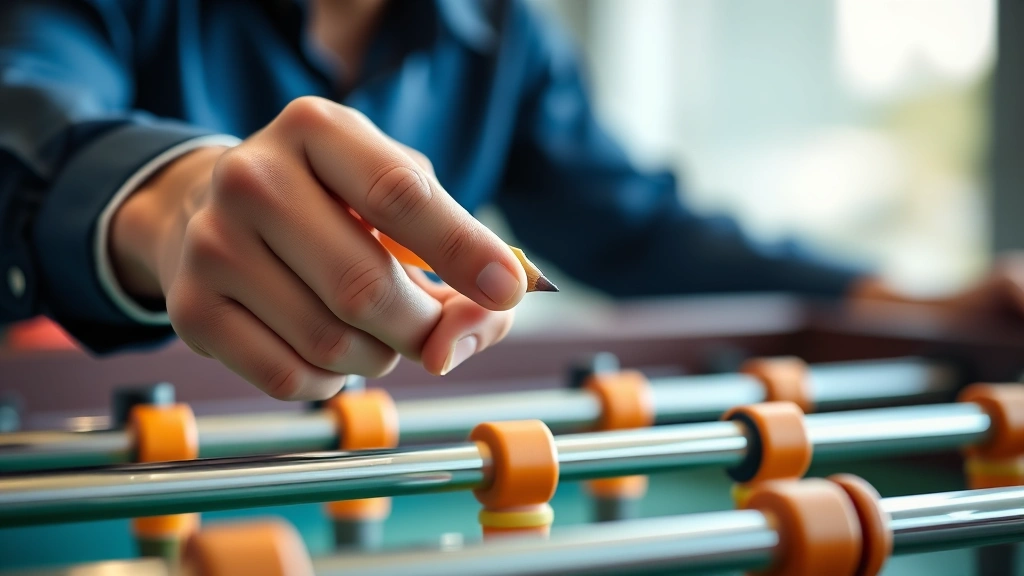
The pencil grip dominates competitive play because it maximizes rotational speed and precision. Hold the rod between your thumb and index finger as if gripping a pencil, with your remaining fingers naturally curled underneath for stability. This configuration enables explosive flicking motions while maintaining delicate touch control for banking passes and defensive interceptions.
Wrist positioning proves equally critical. Keep your wrist slightly elevated above the rod, creating a natural angle that facilitates both pushing and pulling motions. This neutral position prevents compensatory tension that accumulates during extended play sessions. Practice maintaining this alignment for 30-minute intervals, gradually building muscular endurance without developing counterproductive habits.
Rod control encompasses push-pull mechanics, banking angles, and defensive positioning. The most skilled players develop ambidextrous capabilities, switching hands seamlessly based on tactical requirements. If you’re serious about competitive improvement, dedicate equal training time to both sides of the table. This symmetrical development prevents predictable patterns that astute opponents exploit.
Understand that football rules and regulations sometimes specify legal grip techniques and rod movements. Familiarizing yourself with official standards ensures your training aligns with competitive requirements.
Defensive Wall Positioning and Strategy
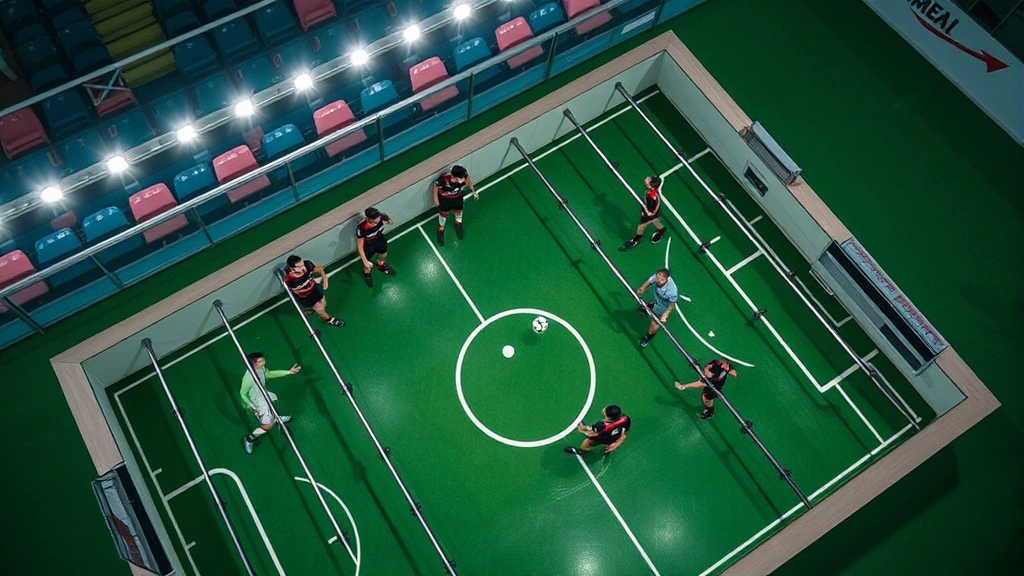
Defense wins championships in table football. A properly organized defensive structure neutralizes even the most explosive offensive attacks. The defensive wall—typically your 2-rod formation—serves as your primary barrier against scoring opportunities.
Optimal wall positioning requires understanding spacing and coverage angles. Position your defensive figures to create maximum coverage while maintaining the ability to track ball movement laterally. Most elite players maintain approximately 2-3 inches between figures, allowing defensive interception without creating exploitable gaps.
Defensive wall positioning strategies include the “flat wall” formation for standard play and the “angled wall” configuration when opponents employ specific attacking patterns. The flat wall provides balanced coverage across the goal width, while the angled wall shifts defensive weight toward your opponent’s dominant side, forcing them into uncomfortable shooting angles.
Anticipation separates elite defenders from average players. Study your opponent’s passing patterns during early match minutes. Do they consistently attack down the left side? Do they favor certain rod angles for scoring attempts? Experienced defenders adjust wall positioning based on these observations, effectively cutting off attacking lanes before the offense executes their planned attack.
Practice defensive wall drills by having partners execute predetermined attacking sequences. Defend against 50 consecutive shots from identical positions, focusing on reaction speed and consistency. This repetitive training builds automatic defensive responses, allowing your conscious mind to track broader match strategy.
Offensive Formation Mastery
Effective offense requires understanding multiple formation options and the specific advantages each provides. The three-rod attacking system offers distinct tactical possibilities depending on positioning and player spacing.
The spread formation maximizes shooting opportunities by positioning attacking figures across the table width. This approach creates multiple passing lanes and shooting angles, forcing defenders into difficult coverage decisions. Spread formations work exceptionally well against passive defensive strategies but struggle against aggressive wall formations.
The concentrated formation focuses attacking resources on a single high-percentage scoring area. By stacking figures near one side, you create overwhelming numerical advantages in that zone, making defensive coverage mathematically impossible. Opponents must choose between allowing high-probability shots or abandoning other table areas.
Transition play—moving from defensive to offensive action—determines match momentum. The fastest teams capitalize on defensive turnover situations, immediately shifting attacking focus before opponents reset defensive positioning. Practice rapid ball advancement from defensive rods, executing quick one-touch passes that catch defenders in transition chaos.
Incorporate football training equipment principles into your offensive development. While table football uses miniature components, the core training philosophy emphasizes repetition, muscle memory development, and progressive challenge increases.
Ball Control and Passing Mechanics
Superior ball control separates championship players from competitors. Mastering passing mechanics enables executing complex offensive sequences that opponents cannot defend.
The push pass represents the fundamental passing technique. Position the ball slightly ahead of your figure, then execute a controlled pushing motion that imparts gentle forward momentum. Push passes excel for short-range accuracy and allow immediate shot execution from receiving rods.
The pull pass involves drawing the ball backward using rod rotation, creating passing angles unavailable through push mechanics. Pull passes generate more velocity and enable longer-distance ball advancement. However, they require precise timing and increased technical proficiency.
Bank passing—using table walls to redirect ball movement—adds unpredictability to your passing sequences. Opponents struggle defending against angles they cannot anticipate. Bank passes work exceptionally well for advancing balls through congested defensive areas where direct passing routes are blocked.
One-touch passing—executing passes without hesitation—accelerates match tempo dramatically. Develop this capability by practicing rapid pass sequences. Partner drills where you execute 10-pass combinations build the instinctive recognition patterns necessary for true one-touch mastery.
Ball control during defensive phases involves trapping and directing incoming shots. Position your defensive figures to absorb incoming balls, immediately redirecting them toward your attacking rods. This “trap and pass” technique transforms defensive actions into offensive opportunities, shifting momentum instantly.
Reading Opponent Patterns and Adaptation
Match awareness and opponent analysis determine your tactical adjustments. Every player develops signature patterns—preferred shooting angles, favored passing sequences, and predictable timing rhythms.
During early match minutes, focus on observation rather than aggressive play. Watch how your opponent positions their attacking figures. Do they favor the 3-rod for shooting or prefer 5-rod attacks? Do they execute passes immediately or hold the ball, building pressure? This information reveals their tactical preferences and skill strengths.
Identify your opponent’s weak defensive areas. Most players struggle defending specific zones due to their grip preference, rod control limitations, or positioning habits. If your opponent’s left side appears vulnerable, concentrate your offensive attacks there. Exploit weaknesses relentlessly rather than distributing attacks across the entire table.
Adaptation requires confidence in your alternative strategies. If your primary offensive approach isn’t generating scoring opportunities, shift to backup tactics. Perhaps your concentrated formation attacks are being neutralized; switch to spread formations that distribute defensive responsibility. Flexibility prevents opponents from completely shutting down your game.
Mental resilience matters tremendously. When opponents adapt to your strategies, maintain composure and execute counter-adaptations. The player who adapts most effectively to changing circumstances typically wins close matches.
Understanding college football predictions analytics can inform your pattern recognition abilities, as both involve studying historical performance data and identifying predictable tendencies.
Mental Game and Pressure Management
Table football’s psychological dimension rivals its technical requirements. Champions maintain composure during critical moments when casual players crumble.
Pressure situations—tournament finals, match-point scenarios, comeback attempts—separate elite competitors from average players. Develop mental resilience through pressure training. Practice match scenarios where a single shot determines victory. This artificial pressure builds psychological capacity for handling genuine competitive stress.
Breathing techniques manage adrenaline responses during high-pressure moments. Before critical shots, implement deliberate breathing: inhale for four counts, hold for four counts, exhale for four counts. This physiological regulation calms your nervous system, enabling precise execution when stakes are highest.
Visualization prepares your mind for competitive scenarios. Before matches, mentally execute successful shot sequences and defensive positioning. This mental rehearsal activates identical neural pathways as physical practice, enhancing confidence and reducing performance anxiety.
Maintain emotional neutrality regardless of match circumstances. Celebrate successes briefly, but immediately refocus on the next point. Similarly, minimize frustration when mistakes occur. Elite competitors compartmentalize emotions, treating each point independently without allowing previous outcomes to influence current focus.
Develop pre-match routines that establish psychological consistency. This might involve specific warm-up sequences, breathing patterns, or focus statements. These rituals reduce uncertainty and create mental anchors that stabilize performance across varying match conditions.
Tournament Preparation and Match Strategy
Tournament success requires comprehensive preparation extending far beyond match-day play. Elite competitors approach tournaments as multi-phase projects involving conditioning, tactical study, and logistical planning.
Physical conditioning deserves serious attention. Table football demands sustained focus, rapid hand movements, and muscular endurance. Incorporate hand-grip strengthening exercises, wrist stability training, and forearm endurance work into your fitness regimen. These targeted exercises prevent fatigue-related performance degradation during extended tournament days.
Study tournament brackets and potential opponents before competition begins. Review available match footage or statistics revealing their preferred strategies. Develop specific game plans addressing their strengths while exploiting identified weaknesses. This preparation provides psychological advantages before you even begin playing.
Arrive early for warm-up sessions. Extended warm-ups allow your hands, eyes, and nervous system to adapt to specific table conditions. Table variations—slightly different ball dynamics, unique rod resistance, or distinct surface friction—require adjustment time. Early arrival provides this adaptation window.
Match strategy within tournaments differs from casual play. Early-round matches against unfamiliar opponents require conservative play, emphasizing fundamental execution and defensive stability. Later matches against known competitors allow more experimental approaches, testing tactical variations in lower-stakes situations.
For broader competitive context, understanding how long a football game lasts helps you appreciate the endurance demands of competitive sports, which translates to table football tournament preparation.
Recovery strategies matter tremendously during multi-day tournaments. Between matches, rest your hands, hydrate thoroughly, and refocus mentally. Some players employ ice baths or massage for hand recovery, while others use meditation for mental restoration. Develop personalized recovery protocols that maximize your readiness for subsequent matches.
Tournament psychology involves managing expectations realistically. While winning is the ultimate goal, focus on executing your prepared strategies rather than obsessing over results. This outcome-independent focus paradoxically improves actual performance by reducing pressure-induced tension.
Table football strategy encompasses far more than basic game mechanics. The most successful competitors master technical fundamentals while developing sophisticated tactical awareness and psychological resilience. By implementing these evidence-based strategies, you’ll experience dramatic performance improvements regardless of your current skill level.
FAQ
What’s the best grip for table football beginners?
The pencil grip offers the optimal balance of control and speed for beginners. Hold the rod between your thumb and index finger with remaining fingers curled underneath. This configuration enables both precise touch control and explosive power development as your skills advance.
How can I improve my defensive wall positioning?
Practice defensive wall drills with partners executing predetermined attacks. Defend against 50 consecutive shots from identical positions, focusing on consistency and reaction speed. Study opponent patterns during early match minutes, then adjust wall positioning to cut off their preferred attacking lanes.
Should I develop ambidextrous table football skills?
Absolutely. Elite competitors develop equal proficiency with both hands, preventing predictable patterns that opponents exploit. Dedicate equivalent training time to both sides of the table, gradually building symmetrical hand-eye coordination and rod control capabilities.
What mental techniques help during pressure situations?
Implement deliberate breathing (inhale four counts, hold four, exhale four), visualization of successful sequences before competition, and emotional neutrality regardless of circumstances. Develop pre-match routines that establish psychological consistency, reducing uncertainty during high-stakes moments.
How should tournament preparation differ from casual play?
Tournament preparation includes physical conditioning, studying potential opponents’ strategies, extended warm-up sessions, and personalized recovery protocols. Arrive early to adapt to specific table conditions, and focus on executing prepared strategies rather than obsessing over results. This outcome-independent focus improves actual performance.
What’s the most effective offensive formation?
The optimal formation depends on opponent defensive strategies. Spread formations maximize shooting opportunities against passive defenses, while concentrated formations create overwhelming numerical advantages in specific zones. Develop proficiency with multiple formations, adapting based on opponent adjustments and match circumstances.
How do I read and adapt to opponent patterns?
During early match minutes, observe your opponent’s positioning preferences, shot angle selections, and passing timing. Identify weak defensive areas and concentrate attacks there. When primary offensive approaches aren’t generating opportunities, shift to alternative strategies. Flexibility and adaptation determine success in competitive matches.


