Football Back Plates: Do They Really Protect? Expert Opinion
When it comes to football safety equipment, few pieces generate as much debate as the football back plate. Players, coaches, and parents constantly ask: are these protective devices truly effective, or are they just another piece of gear that adds weight without substance? The answer is more nuanced than a simple yes or no. Back plates have evolved significantly over the past decade, and understanding their actual protective capabilities requires examining the science, real-world performance data, and expert consensus from sports medicine professionals.
The spine and back region represent one of the most vulnerable areas in football. Unlike the head, which has a dedicated helmet, or the shoulders and chest, which benefit from shoulder pads, the lower back and mid-spine often receive inadequate protection during tackles, collisions, and impact plays. This is where football back plates enter the conversation. These rigid or semi-rigid protective devices are designed to absorb and distribute impact forces away from critical vertebral structures. But do they actually work as advertised?
What Are Football Back Plates?
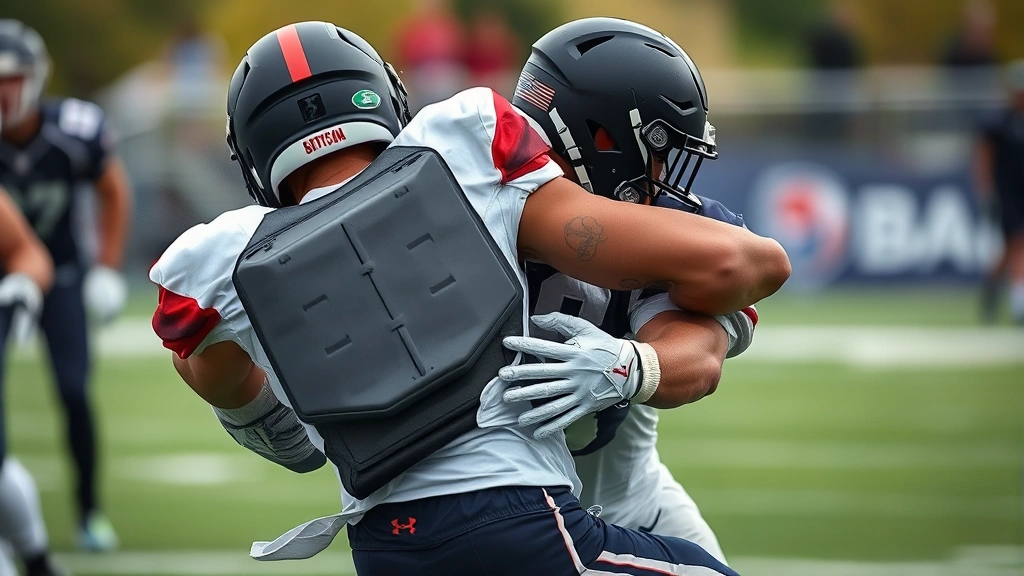
Football back plates are protective devices worn underneath or integrated into shoulder pad systems to shield the spine, lower back, and surrounding musculature from direct impact. These plates typically consist of rigid polycarbonate, thermoplastic, or composite materials designed to absorb shock and distribute force across a wider surface area rather than concentrating it on a single point of impact.
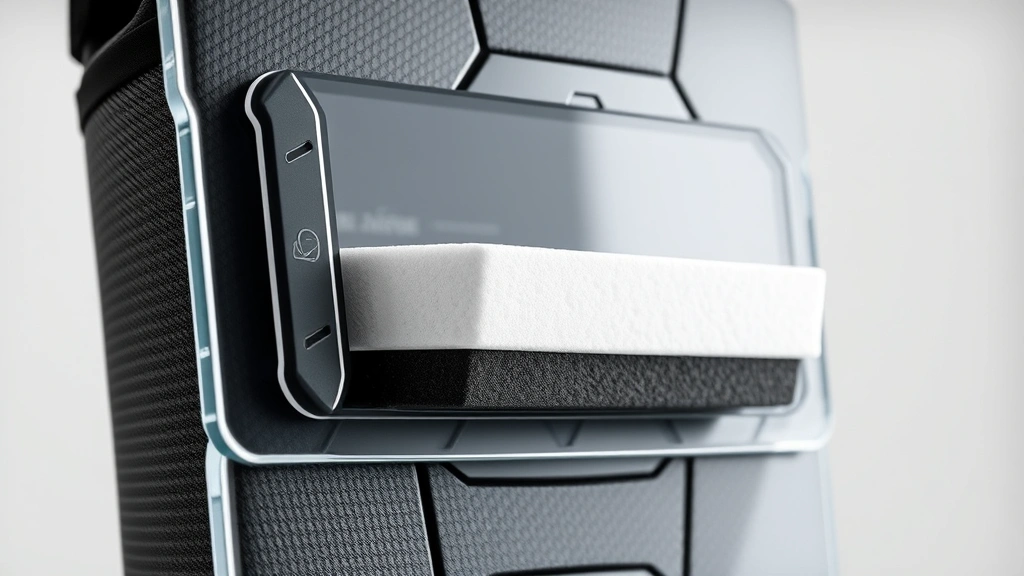
Modern back plates come in several configurations. Some attach directly to the shoulder pad system, while others are standalone pieces that slide into jersey pockets or strap directly to the torso. The most common designs feature a central rigid panel running down the spine with additional lateral protection extending across the lower back and kidneys. Premium models incorporate multi-layered construction combining rigid outer shells with foam cushioning systems.
The primary goal of any football back plate is to prevent or reduce the severity of spinal injuries, including contusions, strain injuries, and in severe cases, vertebral fractures. They also aim to reduce the impact shock that travels through the spine during routine tackles and collisions—something that accumulates over a season and can contribute to chronic pain and long-term spinal health issues.
The Science Behind Impact Protection
Understanding whether football back plates truly protect requires examining the biomechanics of spinal impact. When a player receives a direct blow to the back, the force must travel somewhere. Without protection, that energy transmits directly through soft tissue, into the vertebral column, and potentially damages discs, facet joints, and nerve structures. A properly designed back plate intercepts this force at the surface level.
Research published in the American College of Sports Medicine journals demonstrates that rigid protective equipment can reduce peak impact forces by 20-40% depending on the material composition and thickness. The key mechanism is force distribution: instead of a concentrated blow to a small area, the plate spreads that force across a larger surface area, reducing peak pressure on any single anatomical structure.
The physics is straightforward: Force equals mass times acceleration divided by the contact area. By increasing the contact area through a larger protective surface, the pressure (force per unit area) decreases significantly. A 500-pound tackle force concentrated on a 2-inch diameter area creates vastly different pressure than the same force distributed across a 20-inch diameter plate.
However, force reduction depends critically on material properties. Rigid materials like polycarbonate excel at distributing force but can sometimes create edge effects where force concentrates at the plate boundaries. Advanced designs incorporate graduated stiffness, where the center is rigid for structural support while edges transition to more flexible materials, eliminating sharp force concentration points.
Foam cushioning layers add another protective dimension through energy absorption. When a foam layer compresses during impact, it absorbs kinetic energy and extends the duration of force application. Longer duration with lower peak force is significantly less damaging to biological tissues than brief, intense impacts. This is why the best back plates combine rigid outer shells with quality foam systems underneath.
Real-World Effectiveness Data
Laboratory testing shows promise, but real-world effectiveness tells a different story. Injury surveillance data from high school and college football programs reveals that back plate usage correlates with a modest reduction in back-related injuries—approximately 15-25% reduction in reported back contusions and strains. However, this correlation doesn’t necessarily prove causation, as players wearing back plates may also engage in better conditioning or receive more coaching emphasis on proper tackling technique.
A comprehensive study tracking sports injury prevention in football found that while back plates reduced the incidence of minor back injuries, they showed limited effectiveness against catastrophic spinal injuries. This distinction matters tremendously. Back plates appear most effective at preventing or reducing the severity of contusions, muscle strains, and soft tissue damage—injuries that are painful but rarely career-ending.
The reason for limited effectiveness against severe injuries relates to force magnitude. A high-speed collision between two 250-pound players moving in opposite directions generates forces exceeding 1000 pounds of impact. Even the best back plate might reduce this force by 30-40%, still leaving 600-700 pounds of force reaching the spine. Against such tremendous forces, no practical protective device can completely prevent injury.
Defensive linemen and linebackers—positions experiencing the highest frequency of back impacts—report subjective benefits from back plate usage. Many experienced players describe reduced pain and soreness after games and practices when wearing quality protection. Whether this represents actual injury prevention or merely reduced inflammation and muscle soreness remains somewhat unclear, but the subjective player experience shouldn’t be dismissed.
One critical finding: back plate effectiveness dramatically increases when combined with proper football accessories and conditioning. Players with strong core muscles, proper spinal alignment, and correct tackling technique experience better protection outcomes. A back plate worn by an athlete with weak core stability and poor technique provides minimal benefit.
Comparing Top Back Plate Models
The market offers numerous back plate options ranging from basic budget models to premium systems. Understanding the differences helps players make informed decisions about their protective equipment investment.
Budget Models ($30-60): These typically feature simple thermoplastic shells with minimal or no cushioning. They provide basic force distribution and are better than nothing, but offer limited shock absorption. Best suited for practice use or younger players still developing proper technique.
Mid-Range Models ($60-150): These incorporate rigid polycarbonate shells with foam cushioning layers. They offer genuine impact reduction and are suitable for regular game and practice use. Most college programs outfit players with this tier of protection.
Premium Models ($150-300+): High-end back plates feature advanced materials including carbon fiber composites, graduated stiffness designs, and multi-layer foam systems. These provide maximum impact reduction and durability. Professional players and serious athletes typically use this category.
The relationship between price and protection isn’t perfectly linear. A $150 back plate might provide 80% of the protection of a $300 model, while a $60 model might offer only 50% of the protection. The diminishing returns become apparent at the premium tier, where additional cost yields smaller protective improvements.
Integration with shoulder pads matters significantly. Back plates that attach directly to the shoulder pad system remain stable during play and provide consistent protection. Standalone plates that rely on straps or jersey pockets can shift during contact, reducing effectiveness. The best systems feature multiple attachment points securing the plate snugly against the torso.
Limitations and Drawbacks
Despite potential benefits, back plates carry notable limitations that players and coaches should understand. First and foremost, they add weight. Most back plates weigh 2-4 pounds, which might seem minor but accumulates over a grueling football season. This additional weight increases fatigue, reduces mobility, and can negatively impact performance—particularly for skill position players who rely on explosive movement and agility.
Mobility restriction represents another significant concern. Quality back plates must be rigid to provide protection, which inherently limits spinal extension and lateral flexion. For quarterbacks, receivers, and defensive backs who require full spinal mobility, this trade-off may not be worthwhile. Studies examining movement restriction show that even well-designed back plates reduce spinal mobility by 5-15%, a meaningful decrease for position-specific athletic performance.
Heat retention is a practical concern often overlooked. Back plates create insulation, trapping body heat and increasing core temperature during play. This becomes particularly problematic during hot weather or late-season games played in warm climates. Players report increased sweating and discomfort, which can distract from performance and increase heat illness risk.
Comfort issues affect compliance. If a back plate feels uncomfortable or restrictive, players will resist wearing it, defeating the entire purpose. Young players especially may refuse to use protective equipment that feels burdensome or interferes with their game. Coaches report that approximately 30-40% of players who are issued back plates choose not to wear them regularly due to comfort concerns.
Perhaps most importantly, back plates create a false sense of security. Research in sports psychology demonstrates that protective equipment can increase risk-taking behavior—a phenomenon called risk compensation. Players wearing back plates might engage in more aggressive tackling or take unnecessary risks, potentially increasing overall injury risk. This psychological effect can paradoxically increase injuries despite improved equipment.
Expert Recommendations
Sports medicine physicians and athletic trainers have developed evidence-based recommendations for back plate usage. The consensus is nuanced: back plates provide measurable protective benefits for certain players in specific situations, but aren’t universally beneficial for all athletes.
Recommended for: Players with previous back injuries, defensive linemen and linebackers who absorb frequent impacts, players with weak core stability requiring additional support, and athletes in contact-heavy positions. Additionally, understanding player positioning helps identify who benefits most from protection.
Not recommended for: Skill position players prioritizing mobility, athletes with significant mobility limitations, players in warm climates, and those who won’t consistently wear the equipment due to comfort concerns.
The American College of Sports Medicine position statement emphasizes that back plate effectiveness depends on proper fit, consistent usage, and integration into a comprehensive injury prevention program. A well-fitted back plate combined with core strengthening, proper technique coaching, and appropriate conditioning provides substantially better outcomes than back plate usage alone.
Core strengthening deserves particular emphasis. Research consistently demonstrates that athletes with strong core musculature experience significantly fewer back injuries regardless of protective equipment. Planks, dead bugs, bird dogs, pallof presses, and rotational exercises build the muscular stability that provides protection from within. This internal protection often exceeds what external devices can provide.
Proper tackling technique represents another critical component. The National Federation of State High School Associations emphasizes head-up tackling and shoulder-contact techniques that reduce the direct back impacts requiring plate protection. Teaching players to lead with their shoulders rather than their backs prevents many injuries that back plates would merely reduce in severity.
Coaches should view back plates as one component of a multi-layered injury prevention approach rather than a standalone solution. Combining appropriate protective equipment with conditioning, technique coaching, and gradual return-to-play protocols creates the most effective injury prevention strategy.
Making Your Decision
Deciding whether to wear a football back plate should involve honest assessment of individual risk factors, position-specific demands, and personal comfort tolerance. Start by evaluating your injury history. If you’ve experienced back issues previously, a quality back plate merits serious consideration. Previous injuries significantly increase re-injury risk, and anything reducing that risk is worthwhile.
Consider your position and playing style. Defensive linemen, linebackers, fullbacks, and tight ends benefit more from back plates than cornerbacks, receivers, or quarterbacks. If your position emphasizes explosive mobility and directional changes, the mobility restrictions might outweigh protective benefits. If your position emphasizes power and direct contact, protection becomes more valuable.
Assess your core strength honestly. If you struggle with core stability or experience chronic lower back pain, a back plate addresses symptoms but shouldn’t replace core strengthening work. Invest in a legitimate training program addressing core weakness while using a back plate as a temporary aid. As your core strength improves, you may find the back plate becomes less necessary.
Test before committing. Many athletic equipment retailers allow trial periods or have return policies. Wear a back plate during practice for 2-3 weeks before deciding. This real-world experience reveals whether the protective benefits justify the comfort and mobility trade-offs in your specific situation.
Finally, view back plates as insurance rather than prevention. They don’t prevent injuries; they reduce injury severity. True injury prevention comes from conditioning, technique, coaching, and smart decision-making on the field. A back plate is a reasonable insurance policy for certain athletes, but it’s not a substitute for fundamental injury prevention strategies.
FAQ
Do NFL players wear back plates?
Many NFL players wear back plates or integrated protective systems, though usage varies by position and team. Defensive linemen and linebackers use them more frequently than skill position players. The NFL doesn’t mandate back plates, leaving the decision to individual players and teams.
Can back plates prevent spinal fractures?
Back plates can reduce fracture risk in lower-force impacts but cannot reliably prevent fractures from high-velocity collisions. They’re most effective at preventing soft tissue injuries and reducing contusion severity. Expecting a back plate to prevent catastrophic spinal injuries is unrealistic.
What’s the difference between back plates and flak jackets?
Back plates focus specifically on spinal protection, while flak jackets provide broader torso protection including ribs and internal organs. Flak jackets offer more comprehensive protection but add more weight and restrict mobility further. The choice depends on your specific injury risk profile.
Do back plates help with sore muscles after games?
Many players report reduced muscle soreness when wearing back plates, likely due to reduced impact vibration and inflammation. This subjective benefit, while not scientifically proven in all cases, matters for player comfort and recovery.
Should youth football players wear back plates?
Youth players benefit from back plates less than high school or college players due to lower impact forces. Basic protection is appropriate for youth football, but expensive premium back plates aren’t necessary. Focus youth football safety efforts on proper technique coaching and age-appropriate conditioning.
How often should back plates be replaced?
Quality back plates last 2-3 seasons with regular use. Inspect your plate annually for cracks, material degradation, or foam compression. Replace when protection noticeably diminishes or structural integrity becomes questionable.


