
Build a Football Team: Coach Insights for College Football Success
Building a championship college football team requires far more than talent alone. It demands strategic planning, player development, organizational structure, and a deep understanding of what separates winning programs from the rest. Whether you’re a coach starting fresh, an athletic director evaluating program potential, or a fan curious about team construction, understanding the fundamentals of team building can transform how you approach the sport.
The best college football teams aren’t built overnight. They’re constructed through deliberate recruitment, systematic skill development, defensive and offensive philosophy alignment, and creating a culture where excellence becomes the standard. In this comprehensive guide, we’ll explore the insider strategies that coaches use to build sustainable, winning programs—backed by sports science and proven methodologies.
Recruitment Strategy and Talent Acquisition
The foundation of any successful college football program begins in recruitment. Coaches must identify talent early, evaluate potential accurately, and convince top athletes to commit to their program. This process starts years before a player steps foot on campus.
Film evaluation is the cornerstone of modern recruitment. Elite coaches watch thousands of hours of high school film, analyzing not just what players do, but how they think. They look for:
- Instinctive decision-making under pressure
- Consistency across multiple game situations
- Physical traits that align with position requirements
- Coachability demonstrated through technique adjustments
- Character indicators through leadership and communication
According to the American College of Sports Medicine, player development begins with accurate talent assessment. Top programs create detailed evaluation rubrics that go beyond raw athleticism, measuring football intelligence and adaptability.
Building relationships with high school coaches, scouts, and families is equally critical. The best recruiters understand that trust is currency. They maintain consistent communication, provide honest feedback, and demonstrate genuine investment in player development long-term.
When reviewing the College Football 26 review, you’ll notice that game simulations highlight how early recruitment decisions impact four-year program trajectories. Strategic recruitment compounds over time.
Elite programs also focus on transfer portal strategy. Rather than viewing transfers negatively, winning coaches use the portal strategically to fill specific positional needs, add depth in crucial areas, and occasionally acquire a missing piece for championship runs. This requires understanding roster composition needs two years in advance.
Organizational Structure and Coaching Staff
No head coach succeeds alone. Building a championship program requires assembling a coaching staff with complementary expertise, clear hierarchies, and unified philosophy. The organizational structure matters tremendously.
Positional coaches are specialists. They understand their position’s technical requirements at elite levels. A great wide receivers coach knows footwork nuances, release techniques, and how to develop route running progressively. A defensive line coach understands gap assignments, leverage principles, and hand placement techniques that separate college from professional levels.
The coordinator roles—offensive and defensive—are critical decision-making positions. They must translate the head coach’s philosophy into executable schemes, adjust in real-time during games, and develop game plans that exploit opponent weaknesses. Research from sports psychology journals shows that defensive coordinators who emphasize strategic football analysis consistently outperform those relying solely on talent.
Supporting staff—strength coaches, nutrition specialists, medical personnel, and sports psychologists—form the infrastructure that keeps players healthy and mentally sharp. A top-tier strength and conditioning program can provide 5-10% performance advantages through proper periodization and injury prevention.
Clear communication lines prevent confusion. When every coach knows their responsibility and how their area impacts others, execution improves dramatically. Weekly staff meetings analyzing game film, discussing player development, and adjusting strategies keep everyone aligned.
Offensive System Development
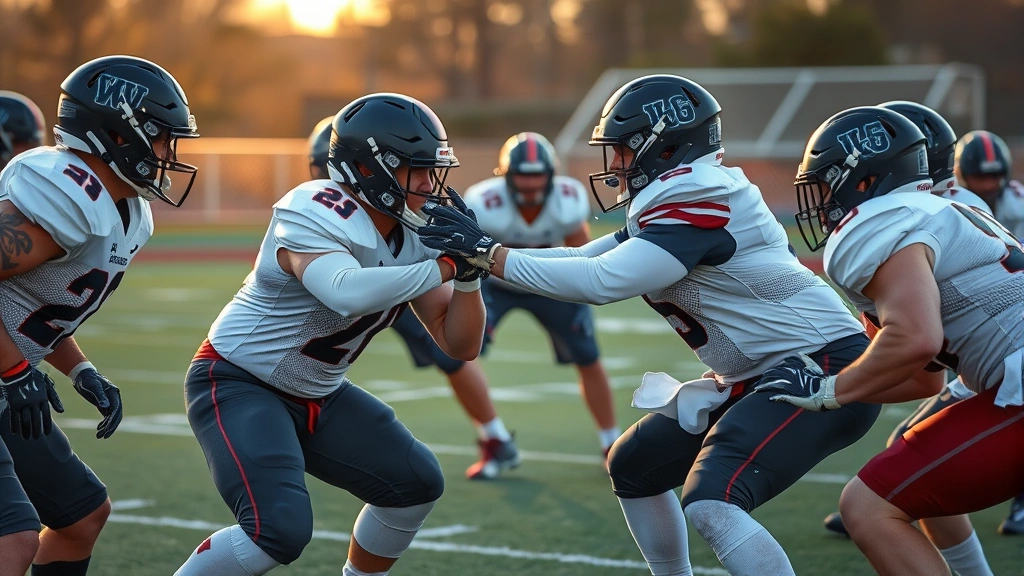
Offensive philosophy dictates how a team attacks defenses. Championship programs develop systems that maximize their personnel while creating problems for opponents.
System fit matters more than individual talent alone. A quarterback might be elite in one system but mediocre in another. The same applies to running backs, receivers, and linemen. Successful coaches build offenses around their player strengths rather than forcing talent into incompatible schemes.
Modern college football offenses typically fall into categories:
- Spread offense: Uses multiple receivers, creates space through personnel alignment, emphasizes passing and tempo
- Pro-style offense: Emphasizes multiple tight ends, play-action passes, and balanced run-pass approaches
- Option-based offense: Uses read-option and triple-option principles to create numerical advantages
- Hybrid systems: Combines elements from multiple approaches based on roster composition
The quarterback is the system’s engine. Elite quarterbacks process information quickly, understand coverage reads, and execute with accuracy. When evaluating college football playoff simulations, notice that teams with superior quarterback play consistently advance further.
Play-calling philosophy separates good offenses from great ones. The best offensive coordinators:
- Establish the run game early to set up play-action
- Create rhythm with quick, high-percentage throws
- Attack defenses’ weaknesses systematically
- Adjust schemes based on defensive tendencies
- Manage field position and clock efficiently
Research from NCAA Sports Science confirms that offenses executing systematic approaches with 70%+ personnel fit significantly outperform those with talent mismatches. Consistency beats complexity every time.
Defensive Philosophy and Implementation
Defense wins championships. This isn’t just motivation—it’s strategic reality. Championship teams consistently rank in the top 20 nationally for defensive efficiency.
Defensive scheme selection depends on personnel and opponent tendencies. Common frameworks include:
- 4-3 defense: Four defensive linemen, three linebackers, provides front-seven stability
- 3-4 defense: Three defensive linemen, four linebackers, emphasizes linebacker versatility
- Nickel/Dime packages: Extra defensive backs for passing situations, prioritizes coverage
- Pressure packages: Designed to attack offensive line, create negative plays
Elite defenses share common characteristics: gap discipline (each defender accountable for assigned gaps), communication (constant callouts to adjust alignments), and film study (understanding opponent tendencies before games begin).
The defensive line is the foundation. Linemen who win at point of attack control the line of scrimmage, free linebackers to make plays, and create pressure on quarterbacks. Defensive line development through proper technique and strength training provides foundational advantages.
Secondary coverage has evolved dramatically. Modern defenses must handle multiple receiver sets, tight end threats, and creative offensive schemes. Cornerbacks need exceptional athleticism and competitive toughness. Safeties must be chess pieces—capable of playing multiple roles.
According to National Football Coaches Association research, defensive programs emphasizing communication and accountability reduce explosive plays allowed by 20-30% compared to talent-only approaches.
Player Development and Training Programs
Recruiting talent is only the beginning. Player development determines whether recruited potential becomes on-field production. The best programs treat development systematically.
Strength and conditioning provides the foundation for on-field excellence. Elite programs implement periodized training that:
- Builds power and explosiveness specific to football movements
- Develops injury-resistant durability through balanced strength
- Maintains peak performance throughout 12-14 week seasons
- Emphasizes core stability and rotational power
- Incorporates sport-specific movement patterns
Research from exercise physiology confirms that properly structured strength programs improve athletic performance metrics by 8-15%, with corresponding injury reduction of 20-40%.
Technical skill development occurs through deliberate practice. Players don’t improve through repetitions alone—they improve through intentional, coached repetitions with feedback. A receiver catching 100 passes poorly improves less than catching 30 passes with specific technique focus.
Position-specific development tracks include:
- Offensive linemen: Footwork mechanics, hand placement, angles, lateral movement
- Running backs: Vision development, lateral agility, contact balance, pass-catching techniques
- Receivers: Route precision, release techniques, body control, situational awareness
- Quarterbacks: Footwork consistency, decision-making under pressure, ball security
- Defensive linemen: Gap control, pad level, hand usage, pursuit angles
- Linebackers: Lateral movement, tackling technique, coverage responsibilities
- Defensive backs: Footwork efficiency, coverage understanding, ball skills
Mental development complements physical training. Sports psychologists work with players on confidence building, pressure management, and focus techniques that separate elite performers from good ones. Championship mentality is developed, not inherited.
Building Team Culture and Leadership
Culture is the invisible architecture that determines whether players execute under pressure. Programs with strong cultures outperform talent-only programs consistently.
Championship culture includes:
- Accountability systems: Clear consequences for effort/attitude, regardless of talent level
- Leadership development: Identifying and developing captains who exemplify team values
- Team identity: Clear understanding of what the program stands for
- Communication standards: Honest feedback, constructive criticism, celebration of progress
- Work ethic emphasis: Valuing preparation and consistency over natural talent
Senior leadership is critical. When veteran players embrace development culture, younger players follow. Conversely, talented players cutting corners send poison messages. The best coaches identify culture carriers—players who influence teammates positively—and empower them as informal leaders.
Team bonding serves practical purposes beyond morale. Research shows that teams with strong interpersonal connections execute more efficiently, communicate better in games, and maintain focus during adversity. Fantasy football rankings and individual statistics matter less than team cohesion when evaluating championship potential.
The locker room environment reflects culture. Winning programs maintain standards: punctuality, professional communication, mutual respect, and commitment to team goals over individual accolades. These seemingly small standards compound into cultural advantages.
Evaluating Performance Metrics
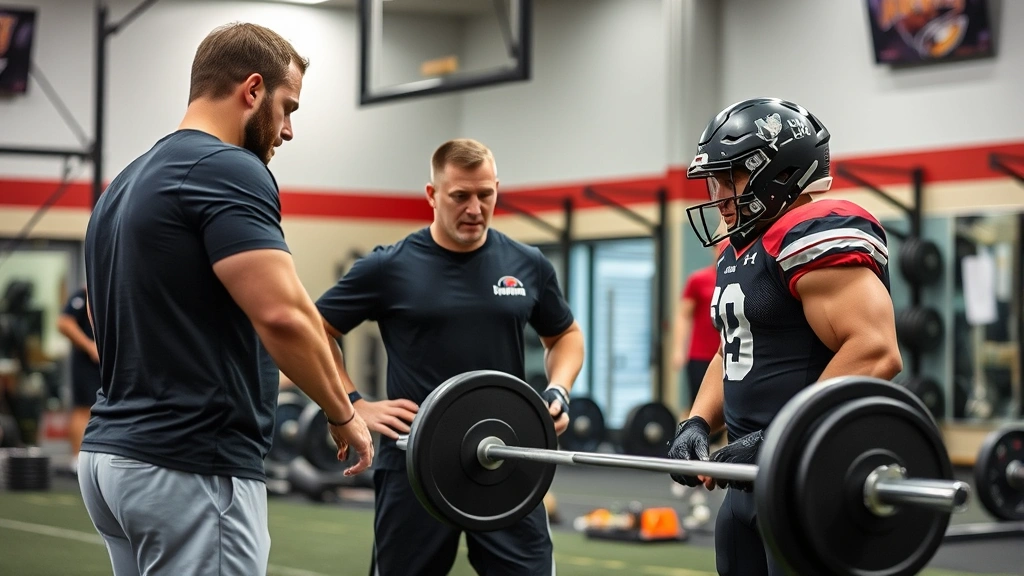
Data-driven decision-making separates modern championship programs from outdated approaches. Successful coaches understand which metrics matter.
Offensive efficiency metrics include:
- Yards per play: Overall offensive productivity
- Third-down conversion rate: Efficiency in critical situations
- Red zone efficiency: Scoring percentage inside opponent’s 20-yard line
- Turnover margin: Ball security and opportunistic takeaways
- Time of possession: Ball control and drive sustainability
Defensive efficiency metrics include:
- Yards per play allowed: Overall defensive productivity
- Explosive play rate: Percentage of plays gaining 10+ yards
- Sack rate: Pressure generation efficiency
- Interception rate: Coverage effectiveness and opportunism
- Red zone defense: Scoring prevention in critical areas
Beyond traditional statistics, elite programs track:
- Snap efficiency: Proper execution percentage on designed plays
- Personnel substitution speed: Reducing errors in transition
- Communication accuracy: Audible execution and alignment adjustments
- Pressure to sack rate: Defensive efficiency in creating and converting pressure
- Coverage-sack balance: Defensive strategy effectiveness
Video analysis technology allows coaches to identify tendencies, evaluate player technique, and develop opponent game plans with precision previously impossible. Sports analytics increasingly inform coaching decisions at elite programs.
The best programs also track effort metrics: tackle efficiency (missed tackles percentage), pursuit angles, and coverage responsiveness. These effort-based metrics often predict success better than raw statistical output.
FAQ
How long does it take to build a championship program?
Most successful coaches require 3-4 years to establish culture and recruit talent aligned with their system. Championship contention typically arrives in years 4-6. This timeline allows proper talent acquisition, player development, and system implementation.
What’s more important: offense or defense?
Elite programs excel in both, but defense typically provides championship foundation. Defensive excellence limits opponent scoring; offensive excellence maximizes your own. The combination of elite defense with competent offense wins championships more consistently than the reverse.
How do you handle star players who don’t fit your system?
Successful coaches either develop systems showcasing star talent or acknowledge the mismatch. Forcing talented players into incompatible roles creates frustration and underperformance. The best coaches either adapt systems (within reason) or recognize they need different personnel.
What role does recruiting rankings play in team building?
Rankings provide useful information but aren’t deterministic. Programs have consistently succeeded with lower-ranked classes through superior development. Conversely, highly-ranked classes underperform when development systems are inadequate. Recruiting provides starting materials; development determines outcomes.
How important is the transfer portal to modern team building?
The portal has become increasingly important for addressing specific needs and adding experienced depth. However, portal dependence can create roster instability. Elite programs balance portal acquisitions with developing recruited talent, creating sustainable rosters.
What’s the biggest mistake coaches make when building teams?
Pursuing talent without system fit. Acquiring talented players who don’t align with your offensive/defensive philosophy creates inefficiency. The best programs ensure recruitment targets fit their system requirements first, talent level second.
How do you measure coaching staff effectiveness?
Measure player development (year-over-year improvement), system execution (efficiency metrics), recruiting class development (percentage of recruits reaching potential), and player retention (development creating loyalty). Great coaching staffs develop talent systematically, not just identify it.


