
Football vs Netball: Sports Science Insights for Club Athletes
When it comes to choosing between football and netball at your local football netball club, understanding the physiological demands of each sport is crucial for optimizing athletic performance and injury prevention. Both sports demand exceptional cardiovascular fitness, explosive power, and tactical intelligence, yet they challenge the human body in distinctly different ways. This comprehensive guide explores the sports science behind these two beloved team sports, helping you make informed decisions about training protocols, recovery strategies, and long-term athletic development.
Whether you’re a recreational athlete, competitive player, or coaching staff member at a football netball club, the science-backed insights in this article will transform how you approach conditioning, injury mitigation, and performance enhancement. From metabolic demands to biomechanical considerations, we’ll dissect what makes each sport unique and how elite athletes prepare their bodies for peak performance in either discipline.
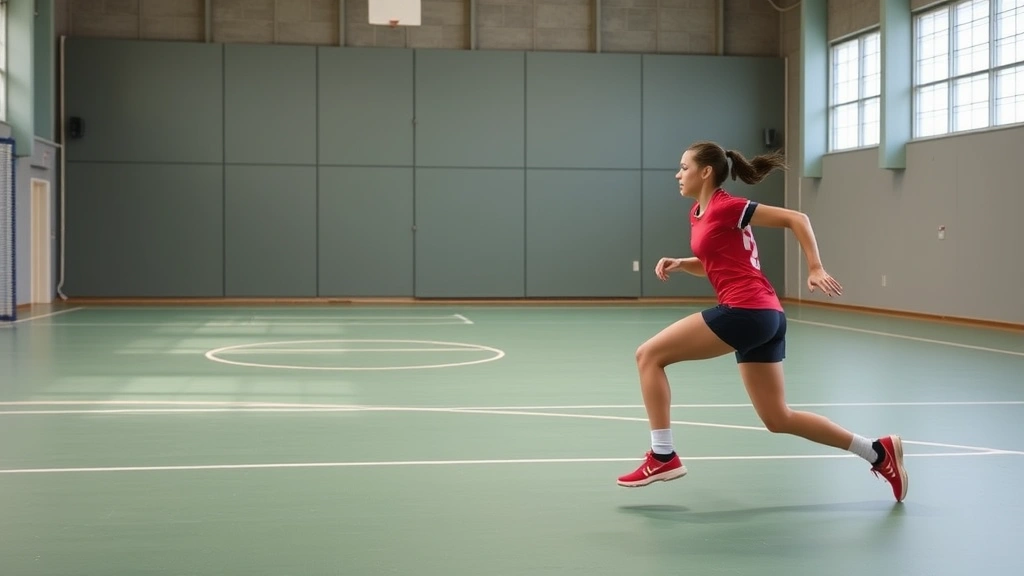
Cardiovascular Demands: Heart Rate Zones and Aerobic Capacity
Football and netball present remarkably different cardiovascular challenges that demand tailored conditioning approaches. Research from the American College of Sports Medicine (ACSM) indicates that football players experience sustained heart rates between 160-180 beats per minute during competitive matches, with repeated high-intensity efforts punctuated by brief recovery periods. This pattern reflects the sport’s intermittent nature, where explosive sprints are followed by relative recovery phases.
Netball, conversely, demands more consistent aerobic output with less extreme peak intensity. Players maintain heart rates in the 150-170 bpm range throughout matches, reflecting continuous court coverage and rapid directional changes. The key distinction lies in the pattern of exertion: football features pronounced intensity fluctuations, while netball requires steadier aerobic maintenance with shorter, more frequent acceleration bursts.
VO2 max development—your maximum oxygen utilization capacity—differs significantly between sports. Football athletes typically develop VO2 max values of 50-60 ml/kg/min through training regimens emphasizing varied conditioning protocols, while netball athletes often achieve 45-55 ml/kg/min through continuous court movement patterns. Both represent elite aerobic fitness, but the training stimulus varies considerably.
For football netball club athletes training in both disciplines, periodizing cardiovascular work becomes essential. Weeks emphasizing football preparation should incorporate interval training with longer recovery periods between efforts, while netball-focused blocks benefit from sustained tempo work and repeated sprint ability (RSA) training.
Metabolic Energy Systems Comparison
Understanding energy system utilization separates elite clubs from recreational programs. Football matches demand sophisticated orchestration of all three energy systems: the phosphocreatine system (0-10 seconds), anaerobic glycolytic pathway (10 seconds to 2 minutes), and aerobic oxidative system (2+ minutes). A professional football player executes approximately 1,400 individual movements during 90 minutes, with roughly 250 of these being high-intensity efforts requiring phosphocreatine and anaerobic contributions.
Netball similarly engages multiple energy systems but with different temporal distribution. The sport’s continuous movement pattern emphasizes aerobic metabolism more heavily, with approximately 60-70% of total energy coming from oxidative sources. However, the frequent explosive changes—rapid acceleration, jumping for interception, defensive pressure—still demand substantial phosphocreatine and anaerobic glycolytic system contribution.
Research published in the Journal of Sports Sciences demonstrates that football players accumulate greater lactate concentrations during matches (8-12 mmol/L) compared to netball athletes (6-9 mmol/L), indicating higher reliance on anaerobic pathways. This biochemical distinction has profound training implications: football athletes require more emphasis on lactate threshold development and tolerance training, while netball athletes benefit from aerobic base building with strategic anaerobic capacity work.
Smart football netball club programs periodize energy system development strategically. During pre-season, athletes build aerobic foundations through base-building phases. Mid-season transitions emphasize sport-specific energy system work matching competitive demands. This scientific approach prevents overtraining while maximizing adaptations.
Muscular Power and Explosiveness Requirements
Both sports demand exceptional lower-body power, yet the specific force production requirements differ meaningfully. Football athletes require sustained power endurance—the ability to generate force repeatedly across 90 minutes. Elite midfielders perform 30-40 sprints per match, each requiring rapid force development from relatively static positions. This demands robust phosphocreatine system capacity and well-developed muscle fiber type distribution favoring type IIx fibers.
Netball emphasizes directional power diversity. Players execute frequent lateral explosions, vertical jumps for intercepts and shooting, and rapid deceleration-acceleration sequences. A netball player changes direction every 5-7 seconds on average, demanding multi-planar power development. The sport requires exceptional rotational core stability and frontal/sagittal plane power generation.
Strength training protocols reflect these distinctions. Football athletes benefit from traditional lower-body power development: heavy back squats (3-5 RM), Olympic lifting variations, and plyometric progressions emphasizing horizontal force production. Netball programs should emphasize lateral bounds, rotational medicine ball work, single-leg stability exercises, and vertical power development through trap bar deadlifts and box jumps.
Peak force production measurements reveal interesting patterns: elite football players generate 2.5-3.2 times bodyweight force during sprinting, while netball athletes achieve similar peak forces but distribute them across more varied movement patterns. Understanding these biomechanical demands prevents injury while optimizing training stimulus.
For dual-sport athletes at a football netball club, concurrent strength training addressing both linear and multi-directional power prevents imbalances and reduces injury risk. Programming should emphasize asymmetry assessment and targeted corrective work.
Injury Prevention and Biomechanical Considerations
Sports science reveals distinct injury profiles between football and netball, demanding tailored prevention strategies. Football athletes experience higher rates of muscle strain injuries—hamstring strains, adductor injuries, and quadriceps strains—due to high-speed sprinting demands and rapid force production requirements. Research indicates 12-16 muscle strains per 1,000 hours of football exposure, with hamstring injuries accounting for approximately 15-20% of all football injuries.
Netball presents a contrasting injury pattern emphasizing lower-limb joint injuries. Ankle sprains, anterior cruciate ligament (ACL) injuries, and patellofemoral pain syndrome occur at elevated rates due to rapid multidirectional movements and frequent jumping. Injury epidemiology studies show 2-3 ACL injuries per 1,000 player hours in netball, significantly higher than football’s ACL injury rate.
Biomechanical analysis reveals why these patterns emerge. Football sprinting creates extreme hip flexor and hamstring demands during the swing phase, particularly when accelerating from stationary positions. Netball’s rapid lateral movements create substantial knee valgus stress—inward knee collapse—especially during cutting maneuvers and jump-landing sequences. The National Institutes of Health research on movement screening emphasizes identifying these movement dysfunction patterns early.
Effective prevention requires sport-specific corrective strategies. Football clubs should implement comprehensive hamstring injury prevention programs, including Nordic hamstring exercises (3 sets of 8-10 eccentric repetitions, 2-3 times weekly) and dynamic hip mobility work. Netball programs must prioritize knee stability through terminal knee extension exercises, lateral step-down control drills, and proprioceptive training emphasizing cutting mechanics.
Both sports benefit from comprehensive movement screening using tools like the Functional Movement Screen (FMS) and Y-Balance Test. Athletes demonstrating movement dysfunction require targeted intervention before progression to higher-intensity training. Comprehensive injury prevention strategies represent the cornerstone of sustainable athletic development.
Training Periodization for Football and Netball Athletes
Scientific periodization principles guide optimal performance development for both sports. The traditional macrocycle structure—preparation phase, competition phase, and transition phase—applies to both, but specific emphasis varies considerably. Football’s seasonal structure typically spans 8-9 months of competitive fixtures, demanding extended maintenance phases with periodic intensity peaks. Netball seasons often compress into 5-6 months of intense competition, requiring different periodization architecture.
For football athletes, effective periodization emphasizes base-building during pre-season (8-12 weeks), establishing aerobic foundations and muscular endurance capacity. The competitive phase then alternates between fixture-week recovery blocks and mid-week training intensification. This pattern maintains fitness while preventing cumulative fatigue and injury risk. Advanced programs implement undulating periodization, varying intensity and volume daily within microcycles to optimize adaptation.
Netball periodization often requires more compressed timelines. Pre-season phases (6-8 weeks) must efficiently develop aerobic capacity and sport-specific power. During competition, weekly microcycles typically feature fixture-day recovery, low-intensity skill work, and mid-week intensity emphasis. Careful load management prevents overtraining while maintaining competitive edge.
Dual-sport athletes at a football netball club face unique periodization challenges. Strategic timing prevents conflicting adaptation signals. Ideally, separate periodization cycles exist for each sport, with deliberate transition phases minimizing interference. For example, football-focused blocks might emphasize linear power and anaerobic capacity, while subsequent netball blocks stress multi-directional power and aerobic maintenance.
Research from exercise physiology demonstrates that concurrent training of contradictory qualities (e.g., extreme strength and extreme endurance) produces suboptimal adaptations. Smart programming sequences training blocks strategically, maximizing specific adaptations while maintaining previously developed qualities through maintenance work.
Recovery Protocols and Regeneration Strategies
Recovery science distinguishes elite athletes from recreational players. Both football and netball demand substantial recovery investment, yet specific protocols vary based on physiological demands. Football’s high-intensity nature and muscle strain injury risk necessitate targeted recovery emphasizing muscle damage mitigation and neuromuscular restoration. Netball’s continuous movement pattern and joint stress demands emphasize systemic recovery and mobility restoration.
Immediate post-match recovery (0-4 hours) should follow evidence-based protocols regardless of sport. Active recovery—easy walking or light cycling at 40-50% maximum heart rate—enhances blood flow, facilitates lactate clearance, and initiates recovery signaling. Research demonstrates that 10-15 minutes of active recovery significantly improves subsequent performance compared to complete rest.
Nutrition timing becomes critical within 30-60 minutes post-competition. Consuming 1.2 grams carbohydrate per kilogram bodyweight plus 0.3-0.4 grams protein per kilogram optimizes glycogen repletion and muscle protein synthesis. For football netball club athletes managing multiple matches weekly, this becomes non-negotiable. Advanced programs implement real-time monitoring of recovery status through heart rate variability (HRV), sleep quality assessment, and subjective wellness scales.
Sleep represents the most powerful recovery modality, yet often receives insufficient emphasis. Elite athletes require 8-10 hours nightly to support neuromuscular recovery and immune function. During competition phases, even 1-2 hours sleep loss significantly impairs performance and injury risk. Strategic napping (20-30 minutes) during competition phases provides additional recovery benefit.
Mobility and flexibility protocols differ between sports. Football athletes benefit from sustained stretching emphasizing hip flexor, hamstring, and adductor length, addressing chronic tightness from repeated sprinting. Netball athletes require comprehensive mobility addressing all planes of motion, with particular emphasis on ankle mobility, hip internal rotation, and thoracic spine extension for jumping mechanics.
Agility, Speed, and Change of Direction Science
Agility—the ability to rapidly change direction while maintaining speed—separates elite players from competent ones. Despite common usage conflating agility with speed, these represent distinct qualities requiring different training approaches. Speed development emphasizes maximum velocity attainment over 10-40 meters, while agility specifically addresses rapid directional change efficiency.
Football demands exceptional linear speed with moderate agility requirements. Match analysis reveals that most sprints occur in relatively straight lines, with directional changes comprising approximately 20-25% of total sprinting efforts. This physiological reality demands primary emphasis on acceleration (0-5 meters) and maximum velocity (20-40 meters) development. Elite football players achieve 30+ km/h maximum speeds, requiring well-developed force production and running mechanics.
Netball emphasizes agility and change of direction substantially more than football. The confined court space (30.5m x 15.25m) and rapid passing game demand frequent direction changes at varying speeds. Players change direction every 5-7 seconds on average, often from decelerated states. This demands exceptional eccentric strength, rotational stability, and proprioceptive acuity. Netball athletes typically achieve slightly lower maximum velocities (25-28 km/h) but superior change-of-direction efficiency.
Training specificity demands different approaches. Football speed development emphasizes traditional sprint mechanics work—block starts from various positions, acceleration runs over 10-20 meters, and maximum velocity runs over 30-40 meters. Strength-speed development through heavy back squats and Olympic lifting variations transfers directly to sprinting performance.
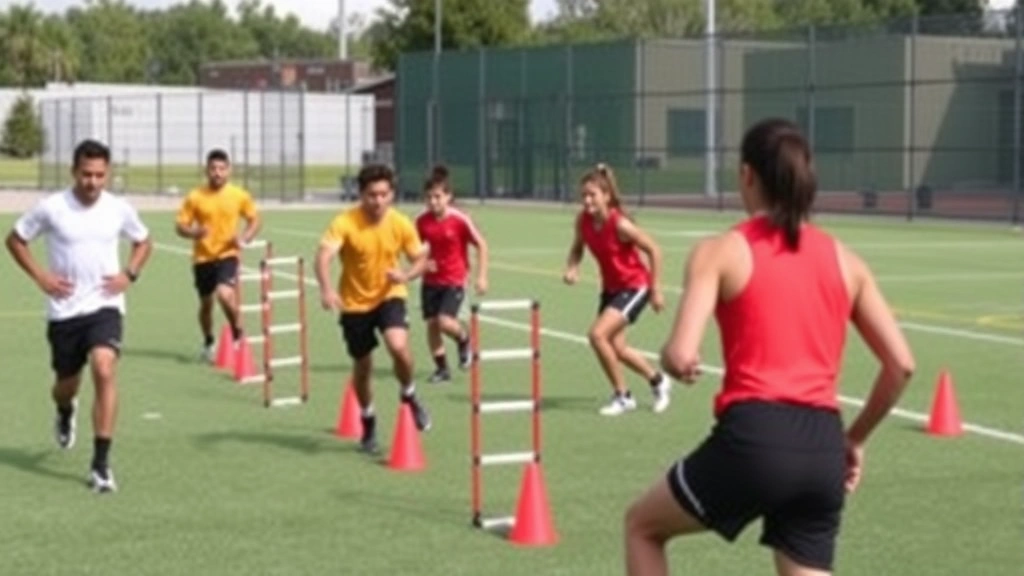
Netball agility training emphasizes reactive change-of-direction work—responding to visual stimuli, executing planned cutting maneuvers at varying angles and speeds, and ladder drills promoting rapid foot placement. Rotational strength development—Pallof presses, landmine rotations, and anti-rotation holds—specifically addresses the core stability demands of rapid directional change.
For athletes training at a football netball club, periodizing speed and agility development prevents interference. Football-focused blocks should emphasize linear speed development, while netball blocks stress reactive agility and change-of-direction mechanics. This strategic sequencing maximizes adaptation while preventing contradictory training signals.
Video analysis of elite players reveals that superior agility doesn’t simply reflect faster execution—it reflects superior decision-making and anticipation. Cognitive training emphasizing pattern recognition, opponent reading, and spatial awareness complements physical agility development, creating truly elite change-of-direction performers.
Sport-Specific Training Integration and Performance Optimization
Integrating football and netball training within a single football netball club framework requires sophisticated periodization and programming. The most successful dual-sport programs implement distinct training cycles for each sport, with careful transition phases minimizing interference. This approach recognizes that optimal football performance requires different training emphasis than optimal netball performance.
Smart clubs implement position-specific training reflecting unique demands. Football forwards require different conditioning emphasis than midfielders or defenders. Similarly, netball shooters demand different training stimulus than wing defense players. Advanced programs conduct comprehensive needs analysis for each position within each sport, creating truly tailored development pathways.
Monitoring systems become essential for managing athlete workload across multiple sports. Session Rating of Perceived Exertion (sRPE) methodology provides quantifiable load measurement, enabling coaches to track cumulative fatigue and prevent overtraining. Advanced clubs utilize wearable technology measuring distance, acceleration, heart rate, and recovery metrics, creating data-driven periodization decisions.
Talent identification and development pathways should acknowledge that success in one sport doesn’t guarantee success in the other. The specific demands create different performance phenotypes. Following elite performance benchmarks helps identify athletes demonstrating particular promise in each discipline.
Coaching education becomes paramount—staff must understand the distinct physiological demands, training principles, and injury prevention strategies specific to each sport. Staying current with performance research ensures your football netball club implements cutting-edge methods rather than outdated practices.
FAQ
What are the primary physiological differences between football and netball?
Football emphasizes repeated high-intensity efforts with recovery periods, demanding strong phosphocreatine system capacity and anaerobic power. Netball requires steadier aerobic output with frequent rapid direction changes, emphasizing aerobic capacity and multi-directional power. Football athletes experience higher peak lactate concentrations, while netball players maintain more consistent heart rates throughout matches.
Can athletes successfully train for both football and netball simultaneously?
Yes, with strategic periodization. Implementing separate training cycles for each sport, with careful transition phases, prevents interference. However, concurrent training of contradictory qualities produces suboptimal adaptations. The most successful approach sequences football and netball training blocks, maximizing specific adaptations while maintaining previously developed qualities through maintenance work.
Which sport carries greater injury risk?
Both carry distinct injury patterns. Football athletes experience higher muscle strain rates, particularly hamstring injuries, due to high-speed sprinting. Netball athletes suffer more joint injuries, especially ACL injuries and ankle sprains, due to rapid multidirectional movements. Effective prevention requires sport-specific corrective strategies addressing these distinct risk profiles.
How should recovery strategies differ between the sports?
Football recovery should emphasize muscle damage mitigation and neuromuscular restoration through targeted stretching addressing hip flexors, hamstrings, and adductors. Netball recovery should focus on comprehensive mobility addressing all movement planes, with particular emphasis on ankle and hip mobility. Both sports benefit from identical immediate post-match protocols: active recovery, strategic nutrition, and adequate sleep.
What training methods best develop sport-specific agility for each sport?
Football speed development emphasizes acceleration and maximum velocity through traditional sprint mechanics and heavy strength training. Netball agility training emphasizes reactive change-of-direction work responding to visual stimuli, ladder drills, and rotational strength development. These distinct approaches reflect each sport’s unique movement demands.
How should football netball club programs structure pre-season preparation?
Effective pre-season establishes aerobic foundations through base-building phases (8-12 weeks for football, 6-8 weeks for netball), develops sport-specific power and agility through progressive training blocks, and implements comprehensive movement screening identifying dysfunction requiring corrective work. Strategic periodization prevents overtraining while maximizing adaptation efficiency.


