How to Boost Endurance? Coach Insights for Football Players
Endurance is the cornerstone of athletic excellence, especially for football players at every level—from Valdosta High School Football to collegiate programs. Whether you’re a defensive lineman battling through four quarters or a wide receiver sprinting downfield repeatedly, your cardiovascular capacity and muscular endurance directly determine your performance when it matters most. Coaches across the nation understand that games are won in the fourth quarter, and that’s where superior endurance separates champions from the rest.
Building exceptional endurance isn’t about running mindlessly for hours. It’s a science-backed approach combining strategic aerobic development, anaerobic conditioning, sport-specific training, and intelligent recovery. This comprehensive guide reveals the exact methods that elite football programs use to transform their athletes into endurance machines. Whether you’re preparing for competitive season schedules or trying to earn a starting position, these coach-approved strategies will elevate your game.
Building Your Aerobic Foundation
The aerobic system is your endurance engine. It’s the metabolic pathway that sustains effort over extended periods, allowing your body to deliver oxygen-rich blood to working muscles efficiently. For football players, a strong aerobic base enables you to maintain intensity throughout all four quarters without experiencing premature fatigue.
Start with steady-state cardio performed at 60-70% of your maximum heart rate. This intensity allows you to sustain effort while maintaining conversation ability—coaches call this the “talk test.” Implement three to four sessions weekly, ranging from 20-45 minutes depending on your current fitness level. Running, cycling, swimming, and rowing all build aerobic capacity effectively. Many elite high school programs, including those in the Valdosta area, incorporate long-distance running circuits as foundational conditioning.
Long, slow distance (LSD) training develops mitochondrial density—the powerhouses of your cells that produce energy. According to the American College of Sports Medicine, consistent aerobic training increases capillary density, allowing better oxygen delivery to muscles. This adaptation is crucial for football, where sustained effort is interrupted by brief recovery periods.
Progressive overload is essential. Increase duration by 10% weekly rather than jumping dramatically. A typical progression: week one at 25 minutes, week two at 27-28 minutes, week three at 30 minutes. This gradual approach prevents injury while building aerobic capacity systematically. Your training program should emphasize consistency over intensity during aerobic base-building phases.
Developing Anaerobic Capacity
Football isn’t purely aerobic—it’s an intermittent sport with explosive demands. Anaerobic capacity allows you to perform at maximum intensity for brief periods, recover partially, then repeat. This mirrors football perfectly: sprint to the ball, recover during huddles, sprint again on the next play.
High-intensity interval training (HIIT) is the gold standard for anaerobic development. Structure these sessions with work-to-rest ratios matching football demands. A proven format: 30 seconds of maximum-effort sprinting followed by 90 seconds of active recovery (walking or jogging). Complete 8-10 rounds. Research from sports science journals demonstrates that HIIT sessions lasting 15-20 minutes produce significant anaerobic adaptations comparable to much longer steady-state sessions.
Incorporate tempo runs into your weekly routine. These sustained efforts at 85-90% maximum heart rate last 15-25 minutes. Tempo training develops lactate threshold—the intensity where lactate accumulates faster than your body can clear it. Improving lactate threshold means you can perform at higher intensities before fatigue accumulates. Complete one tempo session weekly, maintaining consistent pace throughout.
Repeat sprint training is particularly valuable for football. Perform 6-8 all-out sprints of 20-40 meters with complete recovery between efforts (2-3 minutes). These sprints develop your phosphocreatine system, which powers the explosive movements football demands. Track your performance: if sprint times slow significantly, you need more recovery before the next set. Proper equipment and training surfaces enhance sprint development safely.
Sport-Specific Endurance Training
Generic endurance training is helpful, but sport-specific conditioning is superior. Football requires directional changes, lateral movement, explosive acceleration, and deceleration—not just straight-line running.
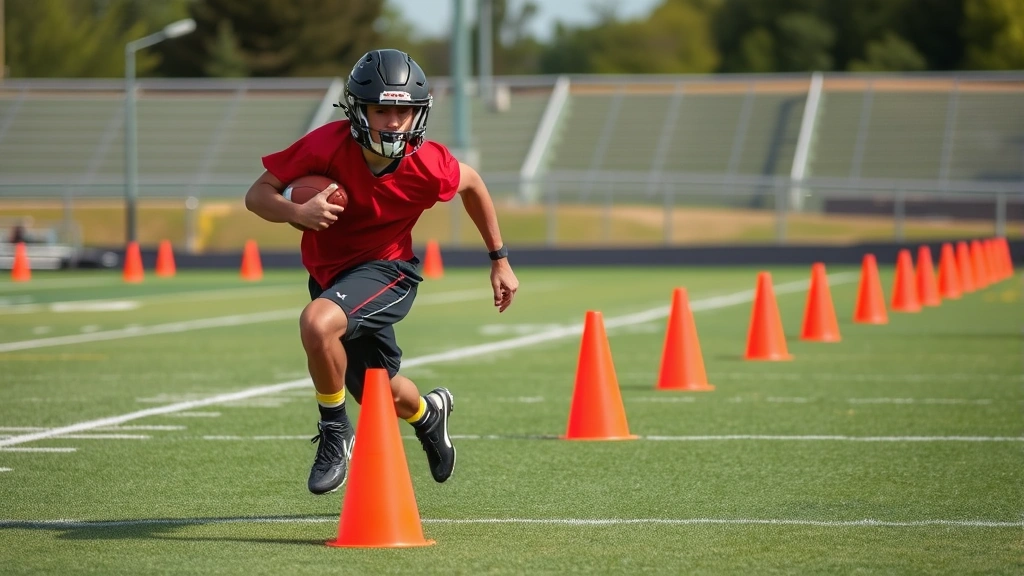
Shuttle runs and agility drills build endurance while developing football-relevant movement patterns. Set up cones 10 yards apart and sprint back and forth for 40 seconds, then recover for 20 seconds. Complete 8-10 rounds. These drills mimic the constant directional changes you’ll experience during games. Valdosta High School Football coaches frequently incorporate shuttle variations to condition athletes for game-realistic demands.
Position-specific conditioning matters tremendously. Offensive linemen need sustained lower-body power and stability, so sled pushes and farmer carries for 30-45 seconds with 30-second recovery periods are valuable. Wide receivers and defensive backs need repeated sprint capacity, so interval sprints with various distances (10, 20, 30 yards) develop position-specific endurance. Linebackers benefit from lateral shuffle drills combined with explosive jump movements.
Incorporate football drills into conditioning sessions. Practice running routes at game intensity, performing defensive coverage responsibilities, or executing blocking assignments while fatigued. This teaches your nervous system to maintain technique when tired—a critical skill that separates good players from great ones. Many elite programs structure entire practices around developing endurance through football-specific movements rather than isolated conditioning.
Sled training deserves special attention. Pushing a weighted sled develops lower-body power and work capacity simultaneously. Start with moderate weights (50-75 pounds) and push for 20-30 seconds, then walk back for recovery. Complete 6-8 sets. Sled work builds the type of strength-endurance that translates directly to physical dominance in games.
Nutrition and Hydration Strategies
Your nutrition strategy directly impacts endurance development. You cannot build exceptional conditioning on a poor diet. Adequate carbohydrate intake fuels your training, protein supports muscle adaptation, and healthy fats support hormone production and recovery.
Carbohydrate timing is critical for endurance athletes. Consume complex carbohydrates 2-3 hours before training to ensure available energy. During extended training sessions (90+ minutes), consume 30-60 grams of carbohydrates per hour through sports drinks, energy gels, or solid foods. Post-training, consume carbohydrates with protein within 30-60 minutes to replenish glycogen stores and initiate muscle protein synthesis. A typical post-workout meal: 40-50g carbohydrates with 20-30g protein.
Protein supports the muscle adaptations your endurance training creates. Aim for 1.6-2.2 grams per kilogram of body weight daily, distributed across four to five meals. This consistent protein intake optimizes muscle protein synthesis, enabling faster recovery and adaptation. Include complete protein sources: chicken, fish, eggs, Greek yogurt, and legumes.
Hydration status profoundly affects endurance performance. Even 2% dehydration impairs thermoregulation and reduces performance capacity. Develop a hydration strategy: drink 16-20 ounces of fluid two to three hours before exercise, then 7-10 ounces every 10-20 minutes during training. For sessions longer than 60 minutes, include electrolytes (sodium, potassium) in your drink to enhance absorption and maintain sodium balance.
Micronutrients support endurance development. Iron carries oxygen in red blood cells; zinc supports immune function; magnesium aids muscle relaxation and recovery. Eat colorful vegetables, whole grains, and diverse protein sources to ensure adequate micronutrient intake. Consider periodic blood testing to identify any deficiencies limiting your performance.
Recovery and Adaptation Protocols
Endurance adaptations occur during recovery, not during training. Hard training breaks down tissue and depletes energy stores; recovery rebuilds stronger, more resilient systems. Neglecting recovery is the most common mistake athletes make when pursuing endurance gains.
Sleep is non-negotiable. Aim for 7-9 hours nightly, with consistent sleep-wake times. During sleep, growth hormone peaks, facilitating muscle repair and adaptation. Deep sleep stages (stages 3-4) are when most physical recovery occurs. Poor sleep impairs immune function, increases injury risk, and blunts endurance adaptations. Establish a sleep routine: keep your bedroom cool (65-68°F), eliminate blue light exposure one hour before bed, and avoid caffeine after 2 PM.
Active recovery days are equally important as hard training days. On recovery days, perform low-intensity activities like walking, easy cycling, or swimming for 20-30 minutes. This promotes blood flow, facilitates nutrient delivery, and accelerates waste product removal without creating additional training stress. Many high-performing athletes structure their weeks with hard-easy-hard-easy patterns rather than consecutive hard days.
Foam rolling and stretching improve recovery. Spend 10-15 minutes post-training on foam rolling major muscle groups (quadriceps, hamstrings, calves, IT band). This self-myofascial release improves tissue quality and reduces soreness. Follow with 10 minutes of static stretching, holding each stretch 30 seconds. Improved flexibility reduces injury risk and enhances movement efficiency.
Consider ice baths or contrast water therapy (alternating hot and cold water) following extremely intense training sessions. Research shows mixed results, but many elite athletes report subjective improvement in recovery. The mechanism: cold exposure reduces inflammation and metabolic rate temporarily, while subsequent rewarming triggers enhanced blood flow and nutrient delivery.
Mental Toughness and Psychological Resilience
Endurance is as much psychological as physical. The ability to push through discomfort when fatigued separates elite athletes from those who plateau. Mental toughness is developed through deliberate practice in challenging conditions.
Visualization training enhances endurance performance. Spend 5-10 minutes daily visualizing yourself performing at your best when fatigued. See yourself maintaining technique, accelerating late in games, and outlasting opponents. Mental imagery activates similar neural pathways as physical training, priming your nervous system for success.
Implement goal-setting strategies. Set specific, measurable endurance goals: “Complete 12 rounds of 30-second sprints at 95% effort with 90-second recovery” or “Maintain sub-5-minute pace for 3 miles.” Track progress weekly. Achieving incremental goals builds confidence and motivation, making the overall endurance journey feel manageable rather than overwhelming.
Practice self-talk strategies during difficult training moments. When fatigue peaks, deploy prepared affirmations: “I am strong,” “My legs are powerful,” “I am outworking my competition.” Positive self-talk reduces perceived effort and enhances pain tolerance. Develop your personal mantras aligned with your values and goals.
Embrace discomfort strategically. Seek training sessions that push your limits safely. Endurance development requires regular exposure to challenging conditions where you learn to perform while uncomfortable. This builds the psychological resilience that translates to fourth-quarter dominance in games. Many coaches intentionally schedule conditioning at the end of practice when athletes are already fatigued, teaching them to perform under realistic game conditions.
Training Periodization for Peak Performance
Strategic periodization—organizing training into distinct phases—optimizes endurance development while preventing overtraining and injury. Rather than random training, structure your year around competition schedules.
Off-season phase (12-16 weeks): Emphasize aerobic base building and general strength development. Perform three to four steady-state cardio sessions weekly (25-45 minutes each), incorporate two to three strength training sessions, and include one HIIT session. This phase builds foundational fitness supporting later, more intense work.
Pre-season phase (6-8 weeks): Transition toward sport-specific conditioning. Reduce steady-state volume slightly but increase intensity through tempo runs and interval training. Incorporate position-specific conditioning and football-specific drills. Maintain strength training but emphasize power development and explosive movements.
In-season phase (12-16 weeks): Prioritize maintenance over development. Reduce overall training volume significantly—games provide substantial conditioning stimulus. Focus on brief, intense sessions (15-20 minutes) once or twice weekly, emphasizing sport-specific movements. Prioritize recovery and injury prevention. Many elite programs, including competitive college football programs, reduce conditioning volume 40-50% during the season.
Deload weeks every third or fourth week reduce training stress by 40-50%, allowing accumulated fatigue to dissipate. Perform light cardio (20-30 minutes at 60% effort), reduce strength training volume, and emphasize recovery. These strategic breaks prevent overtraining syndrome and paradoxically accelerate long-term progress.
Track your training systematically. Record workouts, including distance, time, intensity, and how you felt. Review data weekly to ensure progressive overload and identify patterns. If performance plateaus, adjust variables: increase volume, increase intensity, add variety, or extend recovery periods. Understanding game duration and demands helps structure training appropriately.
Advanced Endurance Development Techniques
Beyond fundamental training, elite programs implement advanced techniques maximizing endurance gains. Threshold training operates at intensities just below your lactate threshold. Perform 2-3 sustained efforts of 8-12 minutes at 88-92% maximum heart rate with 3-4 minutes recovery between efforts. This improves your ability to sustain high intensity, directly translating to football performance.
Polarized training emphasizes either low-intensity (60-70% max heart rate) or high-intensity (85%+ max heart rate) work, minimizing moderate intensity. Research demonstrates that 80% of training at low intensity with 20% at high intensity optimizes endurance development. This approach prevents the “gray zone” where training stress is substantial but adaptation stimulus is suboptimal.
Altitude training increases red blood cell production, enhancing oxygen-carrying capacity. Training at 5,000-8,000 feet elevation for 2-3 weeks stimulates erythropoietin production, increasing hemoglobin and hematocrit. Even if altitude training isn’t accessible, altitude mask training during high-intensity efforts provides some adaptation stimulus through increased respiratory demand.
Implement concurrent training combining strength and endurance work strategically. Perform strength training in the morning (emphasizing power, strength, and muscle development) and endurance training in the afternoon (emphasizing aerobic or anaerobic capacity). This sequencing allows each system adequate recovery while maximizing total training stimulus. Separate these sessions by at least 4-6 hours.

Monitoring and Assessing Endurance Progress
Objective assessment ensures your training is producing desired adaptations. Regular testing reveals what’s working and what needs adjustment. Field tests are practical for football programs: the 12-minute run (distance covered at steady effort), the Yo-Yo intermittent recovery test (shuttle runs with progressive intensity), or the Cooper test (distance covered in 12 minutes).
Track resting heart rate weekly. As aerobic capacity improves, your resting heart rate decreases because your heart becomes more efficient. A decrease of 5-10 beats per minute over 8-12 weeks indicates solid aerobic development. Measure resting heart rate immediately upon waking before any activity.
Monitor heart rate variability (HRV)—the variation in time between heartbeats. Higher HRV indicates better recovery and parasympathetic nervous system activation. Many athletes use wearable devices tracking HRV to determine if they’re ready for hard training or need additional recovery. Low HRV suggests incomplete recovery and increased injury risk.
Assess performance metrics during training. Track sprint times, distances covered in fixed time periods, and rounds completed in interval sessions. Consistent improvement in these metrics validates that your endurance is developing. If performance plateaus despite consistent training, it’s time to adjust variables: increase intensity, modify volume, change exercise selection, or extend recovery.
FAQ
How long does it take to build endurance for football?
Significant endurance improvements appear within 3-4 weeks of consistent training. However, foundational aerobic adaptations continue improving for 8-12 weeks. Peak endurance development requires 16-24 weeks of consistent, progressive training. For maximum benefits, begin endurance training 12-16 weeks before competitive season.
Can I build endurance while building muscle?
Yes, concurrent training develops both simultaneously. Prioritize strength training for power and muscle development, then perform endurance training in separate sessions. Ensure adequate nutrition (sufficient calories and protein) and recovery to support both adaptations. Many elite football players successfully build strength and endurance simultaneously through strategic periodization.
What’s the best endurance training for my position?
Position-specific demands dictate training emphasis. Linemen benefit from sustained power and work capacity (sled pushes, farmer carries). Skill position players need repeated sprint capacity (interval sprints, shuttle runs). Linebackers require lateral movement endurance (lateral shuffles, directional changes). Tailor your conditioning to match your position’s demands.
How often should I perform high-intensity training?
Perform HIIT or high-intensity interval training 1-2 times weekly. More frequent high-intensity work increases injury risk and overtraining risk without additional benefits. Balance hard sessions with easy recovery sessions. A typical week includes one HIIT session, one tempo session, two to three steady-state sessions, and recovery days.
Should I run long distances to build football endurance?
Long, slow distance running builds aerobic base but isn’t sport-specific for football. Combine steady-state cardio (20-45 minutes, 2-3 times weekly) with high-intensity interval training and sport-specific conditioning. This combination develops both aerobic capacity and the ability to perform repeatedly at high intensity, matching football demands perfectly.
How does endurance training prevent injuries?
Improved aerobic capacity enhances tissue quality, reduces fatigue-induced technique breakdown, and improves recovery. Adequate sleep and nutrition support tissue repair. Proper periodization prevents overtraining syndrome. Consistent conditioning improves movement efficiency and reduces compensation patterns. Together, these factors significantly reduce injury risk, especially late-game injuries when fatigue typically increases injury likelihood.
What supplements enhance endurance?
Consistent training, proper nutrition, and adequate sleep are foundational. Beta-alanine may improve high-intensity exercise performance, though effects are modest. Caffeine enhances endurance performance (3-6 mg/kg body weight taken 30-60 minutes before exercise). Beetroot juice contains nitrates improving blood flow. However, no supplement replaces fundamental training and nutrition. Prioritize training consistency and dietary quality before considering supplements.
Can genetics limit my endurance potential?
Genetics influence endurance capacity, but training dramatically improves performance regardless of genetic predisposition. Consistent training produces 15-25% performance improvements in most athletes. While some individuals may achieve slightly higher ceilings due to genetics, nearly everyone significantly improves endurance through dedicated training. Focus on controllable factors: training consistency, nutrition quality, recovery prioritization, and mental toughness.
Building exceptional endurance is a systematic process combining science-backed training, strategic nutrition, prioritized recovery, and mental toughness. Whether you’re competing for Valdosta High School Football or pursuing collegiate opportunities, these proven strategies will transform your conditioning and elevate your performance. Start implementing these principles today, stay consistent through challenges, and embrace the fourth-quarter dominance that superior endurance provides. Your competition won’t outlast you—guaranteed.