
Northwood Football: Strength Training Secrets That Transform Athletes
The gridiron demands more than talent—it demands a body forged through strategic strength training. Northwood football programs have built a reputation on developing elite athletes through scientifically-backed conditioning protocols. Whether you’re a player aspiring to compete at the collegiate level or a coach seeking to maximize your team’s performance, understanding the strength training methodologies employed by successful programs is essential.
Northwood’s approach to strength development isn’t about random weightlifting sessions. It’s a comprehensive system designed to build functional power, prevent injuries, and create competitive advantages on game day. This guide reveals the exact training secrets that transform ordinary athletes into championship-caliber football players, backed by exercise physiology research and proven results on the field.
The Foundation: Periodized Strength Training Systems
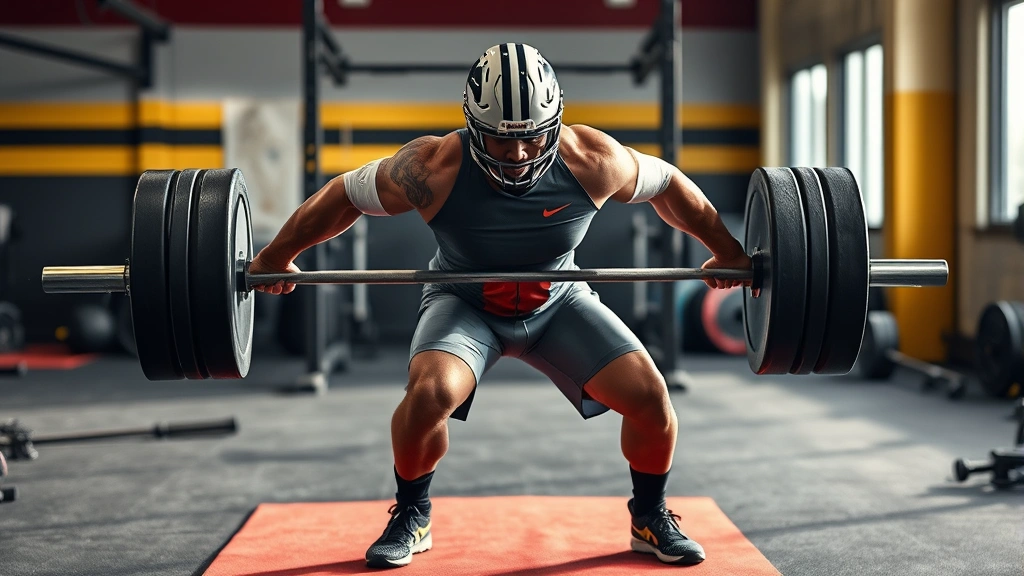
Northwood football’s strength philosophy begins with periodization—the strategic manipulation of training variables throughout the year to maximize gains while minimizing plateaus and overtraining. Rather than maintaining the same workout intensity year-round, elite programs cycle through distinct phases, each serving a specific purpose in athlete development.
The macrocycle typically spans 52 weeks and divides into four primary phases: anatomical adaptation, hypertrophy, strength, and power. During the anatomical adaptation phase (typically 4-6 weeks), athletes perform higher-rep exercises with moderate weights to prepare connective tissues and establish baseline strength. This foundation prevents injuries that commonly occur when untrained athletes jump into heavy lifting.
Hypertrophy phase training (8-12 weeks) emphasizes muscle growth through moderate to heavy loads with 6-12 repetition ranges. Football players require muscular size for collision sport demands, but not the extreme mass of bodybuilders. Northwood programs target functional hypertrophy—building muscle that translates directly to on-field performance. Exercises include squats, deadlifts, bench presses, and rowing variations performed for 8-10 reps across 3-4 sets.
The strength phase (6-8 weeks) reduces repetitions to 3-6 per set while increasing loads to 85-95% of one-rep max. This phase develops the neural adaptations necessary for explosive power—the ability to generate maximum force in minimal time. Proper equipment selection becomes critical during this phase to ensure safe execution of heavy compound movements.
Power phase training (4-6 weeks) focuses on velocity and explosiveness. Athletes perform Olympic lifts, plyometrics, and ballistic movements with lighter loads moved at maximum speed. This phase directly transfers to football performance, as game situations demand rapid force production rather than slow, grinding strength.
The American College of Sports Medicine research confirms that periodized training produces superior strength gains compared to non-periodized approaches. Northwood programs integrate this science directly into their annual planning, ensuring athletes peak during competition season while maintaining durability throughout the demanding 12-month cycle.
Explosive Power Development for Football Performance
Football is fundamentally a sport of explosive power. A lineman’s ability to drive off the snap, a linebacker’s lateral quickness, and a running back’s acceleration—all depend on rapid force production. Northwood strength coaches prioritize power development through Olympic lifting variations and plyometric training.
Power cleans and power snatches form the cornerstone of explosive development. These movements teach athletes to accelerate through their entire body, generating force from the ground up. A properly executed power clean involves triple extension—simultaneous extension of ankles, knees, and hips—creating the coordinated whole-body power that translates perfectly to football movements.
Northwood programs implement power clean progressions systematically. Beginners start with hang cleans from the knee, focusing on technique before loading. Intermediate athletes perform full power cleans from the floor. Advanced competitors execute power cleans with weights exceeding their bodyweight, demonstrating the neural efficiency developed through consistent training.
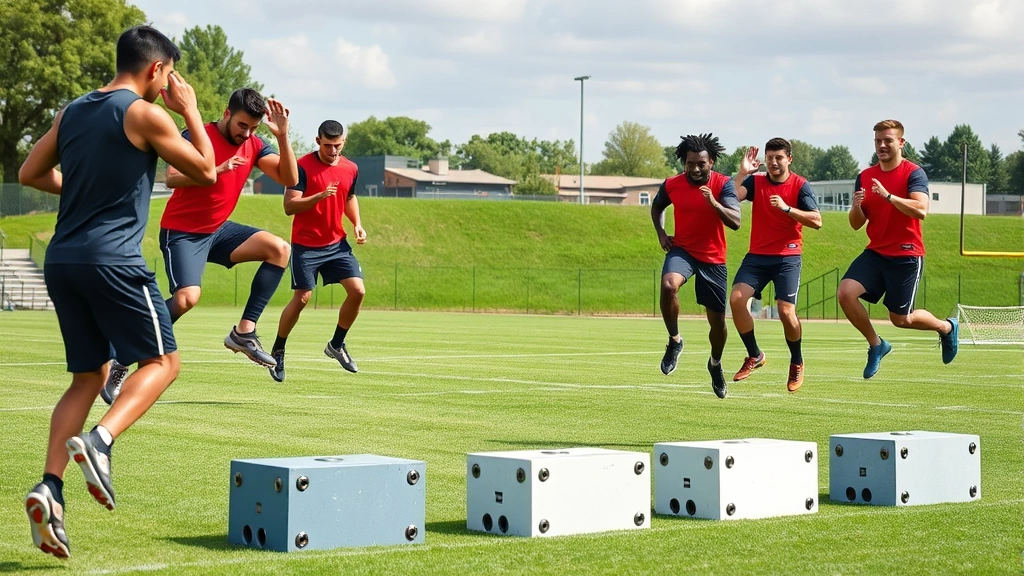
Plyometric training complements Olympic lifting by developing reactive strength—the ability to use elastic energy stored in muscles and tendons. Box jumps, broad jumps, and bounding exercises train the stretch-shortening cycle, which occurs constantly during football games. When a linebacker decelerates from a sprint to plant and change direction, they’re utilizing the same neuromuscular qualities developed through plyometric training.
Research from the National Strength and Conditioning Association demonstrates that plyometric training increases vertical jump height by 8-15% and improves sprint acceleration significantly. Northwood implements plyometrics 1-2 times weekly during power phases, always on fresh legs and with complete recovery between sets to maximize neural adaptation.
The relationship between strength and power proves critical. Athletes must first develop adequate strength foundation (minimum bodyweight back squat of 1.5x bodyweight) before emphasizing power development. Attempting power work on weak foundation creates injury risk without proportional performance gains. Northwood’s periodized approach ensures this progression occurs naturally and safely.
Position-Specific Strength Protocols
While all football players benefit from foundational strength work, position-specific demands require tailored training approaches. Northwood’s coaching staff designs customized protocols addressing each position’s unique demands.
Offensive and Defensive Linemen: These positions demand maximum strength and muscular power in a confined space. Linemen prioritize heavy compound movements—squats, deadlifts, bench presses, and close-grip variations. Training emphasizes the 3-6 rep range at 85%+ of one-rep max. Linemen often perform box squats and Anderson squats (squats from bottom position) to develop starting strength—critical for explosive snap execution. Northwood linemen typically achieve squats exceeding 500 pounds and deadlifts surpassing 600 pounds, translating directly to dominance in trenches.
Linebackers: These athletes require balanced development of strength, power, and lateral quickness. Linebackers perform heavy bilateral movements (squats, deadlifts) but also emphasize unilateral exercises—single-leg squats, split squats, single-arm rows—developing the stability needed for unpredictable lateral movements. Medicine ball throws and rotational power work develop the explosive torso strength necessary for shedding blocks and pursuing ball carriers across the field.
Defensive Backs and Wide Receivers: Speed and agility demands require different emphasis than linemen. These athletes focus on lower repetition hypertrophy work (6-10 reps) to build functional muscle without excess mass that impairs speed. Single-leg exercises predominate, developing the stability and control necessary for cutting and directional change. Plyometric training and Olympic lift variations emphasize speed of movement over absolute load.
Running Backs and Quarterbacks: These positions demand explosive lower body power combined with core stability. Running backs perform heavy squats and deadlifts (achieving bodyweight squats of 1.75-2.0x) while emphasizing single-leg power development for directional change. Quarterbacks prioritize rotational core strength and shoulder stability through medicine ball work and single-arm pressing variations.
The Journal of Sports Medicine research confirms that position-specific training produces superior performance outcomes compared to generic strength programs. Northwood’s detailed position analysis ensures every athlete receives training directly applicable to their role.
Injury Prevention Through Corrective Strength Work
Football’s collision demands create constant injury risk. Rather than simply treating injuries after occurrence, Northwood implements proactive injury prevention through targeted corrective strength work. This approach reduces injuries while simultaneously improving performance—a rare scenario where injury prevention and performance enhancement align perfectly.
Anterior knee pain, a common complaint among football players, often stems from quadriceps-hamstring imbalance or glute weakness. Northwood coaches assess each athlete’s muscle balance ratios and implement corrective work addressing imbalances before they become injuries. Hamstring-focused exercises—Nordic hamstring curls, good mornings, and single-leg deadlifts—strengthen posterior chain muscles often underdeveloped relative to quadriceps.
Shoulder health proves critical for throwing athletes and those engaging in frequent throwing motions. Internal rotation deficits, common in quarterbacks and baseball-style throwers, increase rotator cuff injury risk. Corrective protocols emphasize external rotation strengthening through band work, light dumbbell exercises, and scapular stability training. Northwood implements these interventions systematically, identifying athletes at risk through movement screening before problems develop.
Lower back pain, affecting 30-50% of football players annually, often results from core weakness and poor movement patterns. Rather than generic core training, Northwood emphasizes anti-rotation work—resisting rotational forces—and anti-lateral flexion exercises that stabilize the spine during football movements. Pallof presses, sled pushes, and loaded carries develop true functional core stability.
The American College of Sports Medicine research database documents that comprehensive injury prevention programs reduce non-contact injury rates by 25-50%. Northwood’s integration of corrective strength work into daily training represents evidence-based injury management that simultaneously enhances performance.
Nutrition and Recovery: The Strength Training Multipliers
Strength training represents only one component of athletic development. Nutrition and recovery determine whether training stimulus translates into actual strength gains. Northwood’s integrated approach recognizes that training creates the stimulus; nutrition and recovery provide the resources for adaptation.
Protein consumption proves foundational for strength athletes. Northwood targets 1.6-2.2 grams of protein per kilogram of bodyweight daily for athletes in hypertrophy and strength phases. A 200-pound lineman therefore requires 145-200 grams of protein daily, distributed across multiple meals to optimize muscle protein synthesis. Quality protein sources—lean meats, fish, eggs, and dairy—provide complete amino acid profiles and micronutrients supporting recovery.
Carbohydrate intake fuels intense training sessions and replenishes muscle glycogen depleted during strength work. Rather than generic recommendations, Northwood tailors carbohydrate intake to training volume. Heavy training days (>90 minutes) warrant higher carbohydrate intake (5-7 grams per kg bodyweight), while lighter days require less. This periodization of nutrition intake mirrors periodization of training stress.
Sleep represents the most underrated recovery tool. During sleep, growth hormone secretion peaks and muscle protein synthesis accelerates. Northwood mandates 8-10 hours nightly for athletes in heavy training phases, recognizing that sleep deprivation impairs strength gains regardless of training quality. The demanding schedule of football makes sleep prioritization challenging but essential.
Active recovery days, integrated into periodized programs, accelerate recovery through light movement increasing blood flow without creating training stress. Northwood schedules 1-2 active recovery days weekly during heavy training phases—typically involving 20-30 minutes of light cardiovascular work, mobility training, and stretching.
Supplementation plays a supporting role when foundational nutrition and sleep are optimized. Creatine monohydrate supplementation (5 grams daily) increases strength gains by 5-10% and supports power development. Caffeine intake (3-6 mg per kg bodyweight) enhances strength performance and power output during training sessions. Northwood implements evidence-based supplementation only after establishing solid nutritional foundations.
Game Day Strength Maintenance Strategies
The transition from training to competition requires strategic adjustments ensuring athletes maintain strength while recovering adequately for game performance. Northwood’s in-season programming maintains strength through reduced volume and frequency while emphasizing power and movement quality.
In-season training typically involves 2-3 strength sessions weekly versus 4-5 during off-season phases. Each session emphasizes compound movements but with reduced volume—typically 2-3 sets of 3-6 reps at 85%+ intensity. This frequency maintains strength adaptations while allowing adequate recovery for game preparation and competition.
Game week training follows specific progression. Monday and Tuesday emphasize strength maintenance with heavier loads. Wednesday features lighter power work. Thursday involves only movement preparation and mobility work. Friday rest allows complete recovery. Game day itself focuses on dynamic warm-up and movement preparation, avoiding any fatigue-inducing training.
Northwood recognizes that football competition demands peak performance on specific dates. Rather than maintaining training intensity that impairs game readiness, strategic deloading ensures athletes arrive at competition fresh, strong, and explosive.
Post-game recovery emphasis increases substantially. Athletes perform active recovery within 24 hours of competition—light movement and mobility work accelerating recovery. Nutrition emphasis increases, with additional protein and carbohydrates supporting tissue repair from competition-induced damage. Sleep extension during post-game weeks facilitates complete recovery before returning to heavy training.
FAQ
What is the most important strength exercise for football players?
The back squat represents the single most important strength exercise for football players. It develops lower body strength and power, improves athletic position mechanics, and translates directly to performance in jumping, sprinting, and directional change. Northwood prioritizes squats in every training phase, making them non-negotiable for serious football development.
How often should football players perform strength training?
Off-season training involves 4-5 strength sessions weekly during periodized phases, gradually reducing to 2-3 sessions during competition season. Frequency depends on training phase—higher frequency during hypertrophy and strength phases, lower frequency during power phases when recovery demands increase. Individual recovery capacity and sport-specific demands should inform frequency decisions.
Can strength training improve football speed and agility?
Yes. Strength and power development directly improve sprint acceleration and lateral quickness. Research demonstrates that athletes who increase lower body strength by 20% typically improve 10-yard sprint times by 3-5%. The relationship proves strongest for acceleration (0-10 yards) rather than top-end speed, which matters most in football.
How should players balance strength training with sport-specific practice?
Northwood implements strategic scheduling ensuring strength training and sport practice complement rather than compete for recovery resources. Strength training typically occurs early in the day or on separate days from intense football practice. During competition season, reduced strength training volume ensures adequate recovery for football-specific demands.
What distinguishes Northwood’s strength approach from other programs?
Northwood emphasizes periodization, position-specific programming, corrective strength work, and integration of nutrition and recovery. Rather than generic strength training, Northwood tailors programs to individual positions, addresses injury risk through movement screening, and recognizes that training represents only one component of athletic development alongside nutrition, sleep, and recovery.


