
Boost Flag Football Skills: Expert Tactics to Take Your Game to the Next Level
Flag football has exploded in popularity as a dynamic, accessible sport that combines the strategic depth of traditional football with a non-contact format that prioritizes agility, precision, and tactical intelligence. Whether you’re competing in recreational leagues or aiming for competitive tournaments, elevating your flag football skills requires a combination of physical conditioning, technical mastery, and strategic understanding. This comprehensive guide reveals expert tactics and training methodologies that elite players use to dominate on the field and consistently perform at peak levels.
The difference between average flag football players and those who truly excel lies not just in raw athleticism but in their ability to read defenses, execute precise route running, and maintain explosive power throughout extended play. By implementing the science-backed training protocols and tactical frameworks outlined in this article, you’ll develop the competitive edge necessary to advance your game and achieve results that match your ambitions.
Master Footwork and Agility Foundations
Elite flag football performance begins with exceptional footwork. Your feet are the foundation of every movement—from explosive acceleration to precise cuts that create separation from defenders. The most dominant flag football athletes spend considerable time perfecting their footwork mechanics because these fundamentals directly translate to game-changing plays.
Quick Feet Development Drills
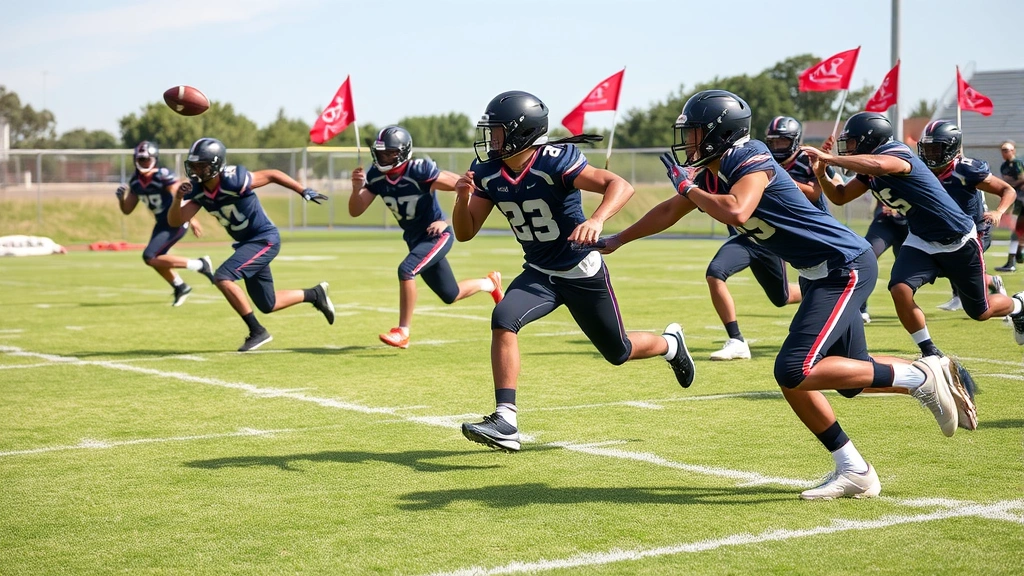
High-frequency footwork drills build the neuromuscular coordination necessary for rapid direction changes. Ladder drills, performed with proper form, develop the ankle stability and fast-twitch muscle activation that enables explosive lateral movement. Execute ladder drills three times weekly, focusing on maintaining consistent foot contact with each rung while driving your knees high. Progress from basic linear patterns to lateral shuffles and crossover steps that mimic actual game movements.
Cone drills specifically designed for flag football develop cutting ability. The T-drill, L-drill, and pro-agility shuttle all train your nervous system to decelerate rapidly, plant your foot, and accelerate in a new direction—precisely the movements required when running routes against quality defenders. Research from the American College of Sports Medicine confirms that sport-specific agility training produces superior transfer to competitive performance compared to general conditioning.
Directional Change Mechanics
The mechanics of how you execute cuts fundamentally impact your effectiveness. When approaching a break point in a route, reduce your speed gradually rather than abruptly stopping. Plant your outside foot (the foot away from your target direction) with your toes pointing toward your new direction. Drive off this foot explosively while keeping your hips low and shoulders square to your new path. This technique reduces deceleration time and maintains momentum through the cut, making you nearly impossible to cover.
Practice these mechanics daily through isolated drills before incorporating them into full-speed route running. Video analysis of your footwork reveals technical deficiencies that feel invisible during live execution. Compare your cutting mechanics against elite flag football athletes to identify areas requiring refinement.
Balance and Body Control
Superior balance enables you to maintain top speed while executing sharp cuts and adjusting to contested catches. Single-leg stance exercises, balance board training, and proprioceptive work strengthen the stabilizer muscles that keep you upright during dynamic movements. These exercises might seem basic, but they directly improve your ability to stay on your feet when defenders attempt to knock you off balance.
[IMAGE_1]
Advanced Route Running Techniques
Route running separates elite flag football players from the competition. Your ability to run precise routes at game speed while maintaining awareness of the quarterback and defensive coverage determines how effectively your offense operates. Master the technical execution of every route in your playbook, then learn to adjust based on defensive positioning.
Precision Route Execution
Every route has specific depth and width parameters. A slant route should reach five yards downfield and cut inside at a precise angle. A dig route reaches ten yards and breaks perpendicular to the sideline. Execute these routes identically every single time, so your quarterback develops complete confidence in your positioning. This consistency creates throwing windows that defenders cannot close.
Develop your route running by practicing against air initially, then against stationary defenders, and finally against defensive coverage that reacts to your movements. This progression ensures you master technical execution before adding the complexity of live defense. Run each route minimum fifty repetitions weekly to develop the muscle memory that enables perfect execution under game pressure.
Reading Defensive Coverage
Advanced flag football players recognize defensive coverage pre-snap and adjust their routes accordingly. Man coverage requires vertical separation and creating space through precise cuts. Zone coverage demands finding soft spots between defenders and settling in those areas. Study film extensively to recognize coverage tendencies, and communicate with your quarterback about adjustments before the play begins.
Learn to identify coverage keys—specific defenders whose positioning reveals the coverage type. Safety positioning indicates whether the defense is playing two-high or single-high. Cornerback alignment shows whether they’re playing press coverage or off coverage. These reads take milliseconds but enable intelligent route adjustments that consistently move your chains.
Separation Techniques
Creating separation from defenders determines whether you become an elite receiving threat. Develop explosive first steps that gain immediate advantages on the snap. Use your body positioning strategically—positioning your frame between the defender and the quarterback makes you a difficult target to defend. Sell your routes with your eyes and body language, making defenders commit to your initial movement before breaking in your true direction.
Practice contested catch techniques extensively. The ability to adjust your route and catch balls away from your body transforms you into a high-percentage target. Work with your quarterback on back-shoulder throws, allowing you to catch passes with your body shielding the defender from the ball.
Defensive Strategy and Coverage Recognition
Flag football demands defensive excellence that matches offensive sophistication. Understanding defensive schemes, coverage principles, and tactical positioning enables you to shut down opposing offenses and create turnovers that swing games decisively.
Coverage Fundamentals
Master the two primary coverage types: man-to-man and zone defense. In man coverage, you’re responsible for a specific receiver, following them wherever they move on the field. In zone coverage, you’re responsible for a specific area of the field, defending whoever enters your zone. Each approach requires different techniques, positioning, and communication.
Man coverage demands intense focus and fluid hips that allow you to mirror receiver movements. Position yourself slightly inside your receiver’s body, denying inside routes while remaining ready to react to outside breaks. Maintain proper cushion distance—typically three to five yards—that allows you to react to breaks while preventing easy completions.
Zone coverage requires constant communication and helping responsibilities. Identify your zone pre-snap and position yourself to defend multiple potential receivers within that area. Shift your positioning based on quarterback location and receiver movement, always remaining between the ball and potential receivers in your zone.
Flag Pulling Technique
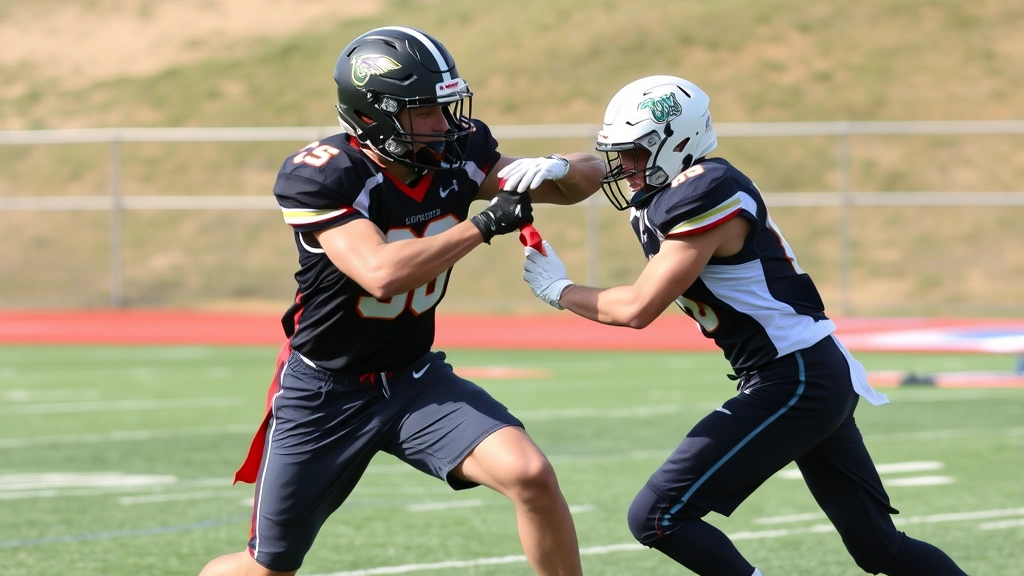
Flag pulling is the art of removing an opponent’s flag belt, and superior technique separates elite defenders from average ones. Approach ball carriers from their sides or behind whenever possible, as these angles make flag pulling significantly more difficult. Time your approach to coincide with the ball carrier’s commitment to a specific direction, when they’re least able to adjust their movement.
Execute flag pulls with quick, decisive motions. Grab the flag belt cleanly and pull it away from the carrier’s body in one fluid movement. Many defenders hesitate or tug tentatively, allowing carriers to escape. Commit fully to each flag pull attempt, and don’t give carriers opportunities to evade you through hesitation.
Blitz Packages and Pressure
Coordinated blitzing creates confusion and disrupts offensive timing. Work with your defensive coordinator to develop blitz packages that attack the quarterback before receivers complete their routes. Communicate blitz assignments clearly before each play, ensuring everyone executes simultaneously.
Effective blitzing requires gap discipline. Identify your gap assignment and attack it directly, avoiding freelancing that leaves holes in coverage. Time your blitz to penetrate the line of scrimmage before offensive players react, generating pressure that forces hurried throws and bad decisions.
Conditioning for Flag Football Excellence
Flag football demands explosive power, rapid acceleration, and the aerobic capacity to maintain intensity throughout extended games. Superior conditioning provides the physical foundation for executing advanced tactics consistently, even when fatigued late in games when championships are decided.
Explosive Power Development
Plyometric training builds the explosive power that enables dominant flag football performance. Box jumps, broad jumps, and bounding exercises develop the elastic strength and rate of force development necessary for explosive acceleration and dynamic deceleration. Perform plyometric training twice weekly with adequate recovery between sessions, as these demanding exercises require complete nervous system recovery.
Include lower-body strength work that builds the muscular foundation supporting explosive movements. Squats, lunges, and single-leg exercises develop the strength that prevents injury while enabling powerful movements. Progressive overload—gradually increasing weight, volume, or difficulty—ensures continuous adaptation and improvement.
Speed and Acceleration Training
Flag football rewards players with superior straight-line speed and acceleration ability. Develop these qualities through sport-specific sprinting. Short sprints of ten to forty yards train the acceleration that creates immediate separation from defenders. Longer sprints of sixty to one hundred yards develop the top-end speed that allows you to run away from coverage.
Incorporate hill sprints and resistance sprinting to develop power and force production. These variations increase training demands, forcing greater adaptation. Research from sports science institutions demonstrates that varied sprint training produces superior speed development compared to traditional flat-ground sprinting alone.
Aerobic Capacity and Work Capacity
Flag football games demand sustained intensity across multiple possessions. Develop aerobic capacity through longer-duration, moderate-intensity work that improves your ability to maintain high performance throughout games. Continuous running, cycling, or swimming at conversational intensity builds the aerobic base that supports repeated high-intensity efforts.
Incorporate interval training that mimics game demands—short bursts of intense effort followed by brief recovery periods. These workouts develop your ability to recover quickly between plays while maintaining the intensity necessary to dominate. High-intensity interval training (HIIT) produces superior cardiovascular adaptations compared to steady-state cardio, according to research from the National Strength and Conditioning Association.
Recovery and Injury Prevention
Elite athletes recognize that recovery is when adaptation occurs. Prioritize sleep, nutrition, and active recovery to allow your body to adapt to training demands. Foam rolling, stretching, and mobility work maintain the flexibility and range of motion necessary for injury prevention and optimal performance.
Implement periodized training that cycles between high-intensity work and recovery phases. This approach prevents overtraining while maximizing adaptation. Listen to your body and adjust training intensity based on fatigue levels and performance metrics, preventing the accumulation of fatigue that leads to injury and performance decline.
Game Intelligence and Decision-Making
The most dominant flag football athletes combine physical abilities with exceptional game intelligence. Your ability to read situations, make split-second decisions, and execute under pressure separates truly elite players from those with merely average abilities.
Film Study and Preparation
Dedicate significant time to studying opponent tendencies and refining your own execution. Watch film of opposing defenses to identify coverage preferences, blitz packages, and individual defender tendencies. This knowledge allows you to anticipate defensive reactions and adjust your routes accordingly. Check out the Peak Play Arena Blog for football news and updates to stay current on competitive trends.
Record your own performances and analyze execution objectively. Identify technical deficiencies, missed opportunities, and areas for improvement. This self-assessment accelerates development by focusing your practice time on areas requiring the most work.
Pre-Snap Recognition
Elite players recognize defensive schemes pre-snap and communicate adjustments to teammates. Develop the ability to identify coverage type, blitz packages, and defensive alignment in the seconds before the play begins. This recognition enables route adjustments that exploit defensive weaknesses before the play even starts.
Communicate constantly with your quarterback and fellow receivers. Efficient communication ensures everyone understands coverage adjustments and can execute coordinated responses. This teamwork multiplies individual talent, creating an offense that functions as a unified system rather than isolated individual efforts.
Pressure Management and Clutch Execution
Flag football games are decided by clutch performances in high-pressure moments. Develop the mental resilience and focus that enable peak performance when the stakes are highest. Practice visualization techniques that rehearse successful execution in challenging situations. This mental preparation primes your nervous system for optimal performance when pressure is maximum.
Maintain emotional control throughout games, responding to setbacks with renewed focus rather than frustration. Elite athletes understand that single plays don’t determine outcomes—consistent execution across all plays does. Maintain this perspective and execute each play with complete focus, regardless of previous results.
Equipment and Preparation Strategies
Proper equipment and preparation maximize your physical capabilities while preventing injuries that derail performance. Invest in quality gear specifically designed for flag football, and develop preparation routines that optimize your physical state before competition.
Flag Football Footwear
Quality footwear dramatically impacts your ability to execute the rapid cuts and explosive movements that define flag football excellence. Choose shoes with excellent lateral support, responsive cushioning, and outsoles designed for multidirectional movement. Properly fitted footwear prevents ankle injuries and enables the confidence necessary for aggressive movement.
Protective Equipment
While flag football minimizes contact compared to tackle football, protective equipment remains important for injury prevention. Mouthguards protect your teeth and reduce concussion risk. Padded compression sleeves protect your arms during incidental contact. These items represent minimal investment for significant injury prevention benefits.
Pre-Competition Preparation
Develop a consistent warm-up routine that prepares your body for peak performance. Dynamic stretching and movement preparation activate your nervous system and increase core temperature. Sport-specific movements like acceleration drills and route running at increasing intensity prepare your muscles and nervous system for game demands.
Consume appropriate nutrition and hydration before competition to optimize energy availability. Eat familiar foods that your digestive system tolerates well, providing sustained energy without causing discomfort. Hydrate consistently throughout the day leading up to competition, ensuring optimal fluid status that supports performance and prevents heat illness.
Develop mental preparation routines that enhance focus and confidence. This might include visualization, motivational music, or specific breathing techniques that calm your nervous system. Consistency in these routines creates associations that trigger optimal mental states when you need them most.
Continuous Development Mindset
The most successful flag football athletes maintain a growth mindset, constantly seeking improvement through deliberate practice and skill refinement. Attend camps, work with qualified coaches, and analyze elite performers to identify techniques you can incorporate into your game. This commitment to continuous improvement ensures you’re always advancing rather than plateauing at your current level.
Remember that taking your flag football game to the next level requires sustained effort across multiple domains—physical conditioning, technical skill development, tactical understanding, and mental preparation. When you commit fully to excellence in each area, the compound effect produces transformational improvements that fundamentally elevate your competitive capability. For additional insights on athletic performance, explore college football predictions and competitive analysis that reveal how elite athletes approach their sport.
FAQ
What’s the most important skill for flag football success?
While all skills matter, route running and receiving ability create the foundation for offensive success. Players who run precise routes and create separation consistently become dominant receivers that opposing defenses cannot adequately cover. On defense, the ability to read coverage and execute sound tackling technique creates impact plays that shift momentum.
How often should I practice flag football skills?
Competitive players benefit from four to five practice sessions weekly, including dedicated skill work, strength training, conditioning, and game competition. Each practice should target specific skill development rather than general activity. This focused approach maximizes improvement within the time invested.
Can I improve my speed and agility at any age?
Yes, speed and agility improvements occur at any age through proper training. While younger athletes typically develop faster, athletes in their thirties and beyond consistently improve through structured training. The key is consistent, progressive training that challenges your current capabilities.
What’s the best way to prevent injuries in flag football?
Comprehensive injury prevention includes proper warm-up, strength training that builds muscular balance, flexibility work, and technical execution that reduces injury risk. Additionally, adequate recovery between training sessions allows your body to adapt without accumulating fatigue that increases injury vulnerability.
How important is game film study?
Film study is absolutely essential for competitive success. Players who understand opponent tendencies and refine their execution through video analysis consistently outperform those relying solely on natural ability. Dedicate significant time to film study to accelerate your competitive development and maintain advantages over opponents.
What mental skills matter most in flag football?
Focus, emotional control, and confidence separate elite performers from average players. Develop these through visualization, pressure practice situations, and mental preparation routines. The ability to execute your best performance when stakes are highest determines championship outcomes.
How can I take my flag football game to the next level?
To reach the next level, commit to comprehensive development across physical conditioning, technical skill refinement, tactical understanding, and mental preparation. Seek quality coaching, study elite performers, and maintain deliberate practice that targets specific improvement areas. This multifaceted approach produces the transformational improvements necessary for truly elite performance. For additional competitive insights, explore Nebraska Cornhuskers vs Indiana Hoosiers football stats and other competitive analysis that reveals how elite teams achieve sustained success.


