
Football Training: Boost Performance? Coach Insights from Elite Programs
Football training separates champions from competitors. At institutions like Johnson C Smith University, athletes push beyond conventional limits, implementing scientifically-proven methods that transform raw talent into elite performance. Whether you’re a high school prospect, collegiate player, or aspiring professional, understanding the principles behind effective football training can revolutionize your game.
The modern football landscape demands more than basic conditioning. Today’s coaches integrate sports science, biomechanics, and recovery protocols into comprehensive training systems. This article explores evidence-based football training strategies that deliver measurable results, drawing insights from successful college programs and certified strength coaches who’ve trained thousands of athletes.
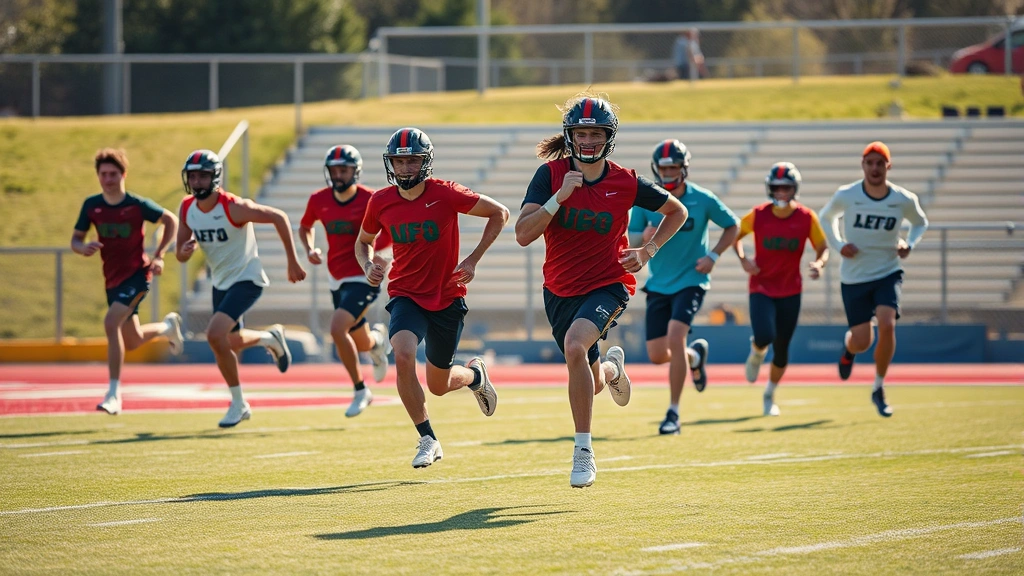
The Science Behind Football Training Excellence
Effective football training starts with understanding the sport’s physiological demands. Football combines explosive power, sustained endurance, rapid direction changes, and repeated high-intensity efforts separated by brief recovery periods. Research from the American College of Sports Medicine confirms that successful football athletes require periodized training addressing multiple energy systems.
The average football player performs 40-60 high-intensity plays per game, with each play lasting 4-6 seconds followed by 30-40 seconds of relative rest. This unique metabolic demand requires training that develops both aerobic capacity and anaerobic power. Programs like those at Johnson C Smith University structure training cycles that systematically build these capacities while minimizing overtraining and injury risk.
Periodization—dividing the training year into specific phases—remains the gold standard approach. Macrocycles typically span 12 months, mesocycles last 4-6 weeks, and microcycles represent individual training weeks. Each phase emphasizes different adaptations: hypertrophy in offseason, strength during preseason, and power maintenance during competitive season.
Studies published in the Journal of Strength and Conditioning Research demonstrate that athletes following periodized programs show 15-25% greater performance improvements than those using random training approaches. The key is strategic variation that prevents plateaus while building upon previous adaptations.
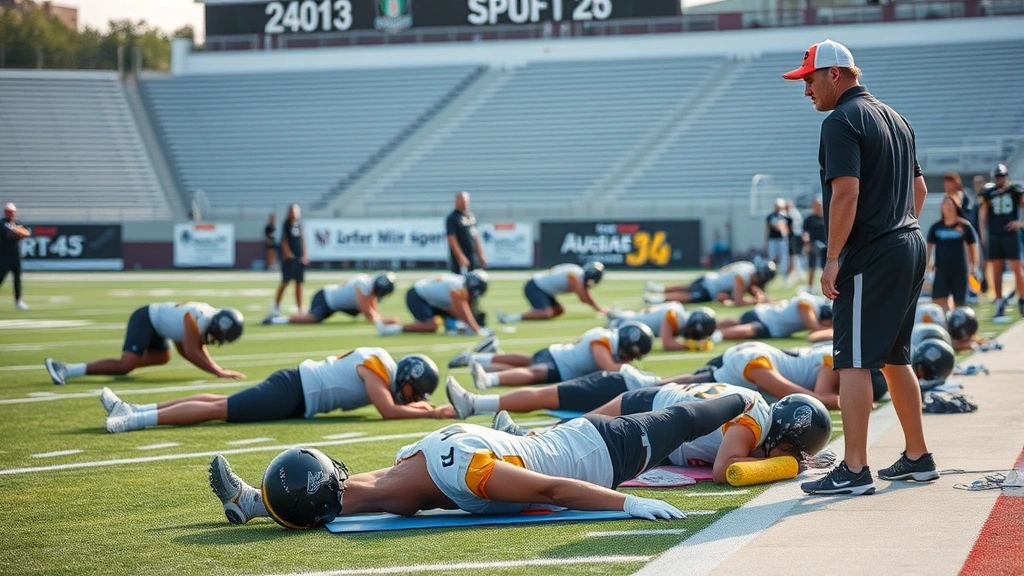
Strength Training Protocols for Football Athletes
Strength forms the foundation of football performance. Elite programs implement compound movements that develop functional strength applicable to game situations. The primary lifts—squat, deadlift, bench press, and overhead press—remain non-negotiable components of serious football training.
Lower Body Strength Development: Squats and deadlifts build the leg power essential for acceleration, deceleration, and collision resistance. Football athletes benefit from variations including back squats, front squats, trap bar deadlifts, and single-leg exercises. A well-designed football training program progresses athletes through phases: hypertrophy (8-12 reps, 3-4 sets), strength (3-6 reps, 4-5 sets), and power (3-5 reps with explosive intent).
Upper Body Strength and Power: Bench press, incline press, and rows develop the upper body strength needed for blocking, tackling, and pushing opponents. Defensive linemen and linebackers particularly benefit from upper body strength emphasis. Include horizontal and vertical pressing variations to address multiple angles of force production.
Core Stability and Anti-Rotation Work: The core transfers force between upper and lower body while maintaining stability during contact. Incorporate planks, dead bugs, Pallof presses, and landmine rotations. Strong core musculature reduces injury risk and improves force transmission during explosive movements.
Rest periods matter significantly in strength training. Heavy compound movements require 2-3 minutes between sets to allow nervous system recovery. Accessory exercises can use shorter rest periods of 60-90 seconds. Progressive overload—gradually increasing weight, reps, or volume—drives continuous adaptation and prevents plateaus.
Speed and Agility Development
Football is fundamentally a game of relative speed. Athletes who accelerate faster, change direction quicker, and maintain top-end velocity gain decisive advantages. Speed development requires specific training distinct from general conditioning.
Acceleration Training: Most football plays involve distances of 10-20 yards, making acceleration more important than top-end speed. Sprints of 10, 20, and 40 yards develop acceleration capacity. Start with technical work emphasizing proper mechanics: aggressive arm drive, forward lean, ground contact quality, and knee drive. High-quality repetitions (3-6 sprints per session) produce better results than high-volume, low-quality work.
Agility and Change of Direction: True agility involves deceleration, plant, and redirection—not just cone drills. Incorporate T-drills, L-drills, and shuttle runs that demand rapid deceleration before directional change. These movements stress the eccentric (lengthening) phase of muscle contraction, building the strength needed to control body position during cuts.
Sport-Specific Movement Patterns: The best agility training mimics football movements. Defensive backs need lateral quickness and backwards acceleration. Receivers require explosive vertical ability and directional changes. Offensive linemen benefit from lateral shuffles and forward-backward transitions. Design position-specific agility work addressing actual game demands.
Plyometric training—jumping, bounding, and explosive movements—develops power and elasticity. Box jumps, broad jumps, single-leg hops, and lateral bounds improve explosiveness. Perform plyometrics early in training sessions when the nervous system is fresh, using 3-5 reps per set with complete recovery between repetitions.
Positional Training Strategies
While all football players share common physical demands, positional differences require specialized emphasis. Elite coaching staffs at programs like Johnson C Smith University implement position-specific training blocks.
Defensive Line: Defensive linemen need explosive first-step quickness, sustained strength for gap control, and power to shed blocks. Emphasize heavy squats and deadlifts for raw power, combined with explosive movements and lateral drills. Include contact simulation with sleds and tackling dummies to develop game-specific strength patterns.
Linebackers: Linebackers demand versatility—speed for coverage, strength for run defense, and lateral quickness. Implement high-volume plyometric training, Olympic lift variations for explosive power, and agility drills emphasizing quick lateral transitions. Single-leg stability work prevents common linebacker injuries.
Secondary Defenders: Cornerbacks and safeties require exceptional lateral speed, vertical explosiveness, and backward acceleration. Incorporate high-volume speed work, extensive plyometric training, and agility drills emphasizing backwards movement and lateral transitions. Develop eccentric strength through deceleration-focused training.
Offensive Line: Offensive linemen need functional strength for sustained blocking, lateral quickness for pulling movements, and explosive power off the snap. Heavy compound lifts form the foundation, supplemented with lateral movement drills and explosive pressing variations. Address the unique demand of maintaining position against lateral forces.
Skill Position Players: Running backs, wide receivers, and quarterbacks benefit from high-velocity movement training, explosive vertical work, and sport-specific agility. Emphasize acceleration mechanics, change-of-direction ability, and power development. Include catching drills integrated with physical training.
Recovery and Injury Prevention
Recovery determines whether training stress produces positive adaptation or accumulated fatigue. Elite programs invest heavily in recovery protocols that maximize training benefit while minimizing injury risk.
Sleep Optimization: Sleep represents the most powerful recovery tool available. Research from sleep science institutions demonstrates that athletes sleeping 7-9 hours nightly show significantly better performance, faster recovery, and lower injury rates. Establish consistent sleep schedules, control room temperature and light exposure, and limit screen time before bed.
Active Recovery: Light movement on off-days or after intense training promotes blood flow and metabolic waste clearance. Implement easy walks, swimming, foam rolling, and mobility work. Active recovery accelerates adaptation without imposing additional training stress.
Soft Tissue Work: Foam rolling, massage, and myofascial release reduce muscle tension and improve mobility. Allocate 10-15 minutes daily to address problem areas. This prevents compensation patterns that lead to injury.
Mobility and Flexibility: Football demands specific mobility at the hip, ankle, and thoracic spine. Implement dynamic stretching before training, static stretching after, and dedicated mobility sessions addressing individual limitations. Improved mobility reduces injury risk and enhances movement quality.
Injury Prevention Protocols: Implement evidence-based prehabilitation exercises targeting common football injuries. Research on ACL injury prevention shows that neuromuscular training programs reduce non-contact ACL injuries by 50-80%. Include balance training, eccentric hamstring work, and dynamic stability exercises.
Nutrition for Peak Football Performance
Nutrition fuels training adaptations and supports recovery. Football players have elevated caloric and macronutrient demands due to high-intensity training and muscle-building goals.
Caloric Requirements: Competitive football players typically need 2,500-4,000+ daily calories depending on body weight, position, and training phase. Calculate individual needs based on body composition goals. Offseason building phases may require surplus calories, while preseason may use slight deficits for body composition optimization.
Protein for Muscle Development: Protein supports muscle repair and adaptation. Aim for 1.6-2.2 grams per kilogram of body weight daily, distributed across 4-5 meals. This supports the muscle protein synthesis necessary for strength and hypertrophy gains.
Carbohydrates for Performance: Carbohydrates fuel high-intensity training and replenish muscle glycogen. Time carbohydrate intake around training sessions to maximize performance and recovery. Emphasize whole grains, fruits, and vegetables for micronutrient density.
Hydration Strategy: Dehydration impairs performance, thermoregulation, and cognitive function. Implement systematic hydration: 16-20 ounces of fluid 2-3 hours before training, 7-10 ounces every 10-20 minutes during training, and 16-24 ounces per pound of body weight lost after training. Monitor urine color as a hydration indicator.
Supplementation Considerations: While whole food should form the foundation, strategic supplementation addresses specific needs. Creatine monohydrate improves strength and power. Beta-alanine enhances repeated sprint ability. Ensure supplements are third-party tested and appropriate for your sport’s rules.
Mental Training and Game Preparation
Physical preparation determines potential; mental training determines whether athletes achieve that potential in competition. Elite football programs integrate psychological skills training alongside physical development.
Visualization and Mental Rehearsal: Athletes who regularly visualize successful performance show improved execution under pressure. Spend 5-10 minutes daily visualizing game situations, perfect execution, and successful outcomes. Engage all senses—sight, sound, feeling—to maximize effectiveness.
Confidence Building: Confidence emerges from preparation. As you progress through understanding football game structure and demands, confidence naturally increases. Establish process goals focusing on controllable factors rather than outcome goals dependent on opponents.
Pressure Management: Teach athletes to view pressure as a challenge rather than threat. Implement breathing techniques (4-count inhale, 4-count hold, 4-count exhale) to activate parasympathetic nervous system and reduce anxiety. Practice these techniques during training so they become automatic during games.
Game Planning and Film Study: Thorough preparation reduces uncertainty and builds confidence. Study opponent tendencies, understand your responsibilities within team schemes, and anticipate likely situations. This preparation translates to faster decision-making during games.
Pre-Game Routines: Establish consistent routines in the hours before competition. Routines provide structure, control, and familiarity that reduce anxiety. Include physical warm-up, visualization, music, and mental preparation specific to your role.
FAQ
How often should football players train?
Most programs implement 4-5 training sessions weekly during offseason and preseason, with 2-3 sessions during competitive season to balance training stimulus with recovery needs. Include at least one complete rest day weekly. Listen to your body—excessive fatigue or declining performance indicates need for increased recovery.
What’s the best football training split?
Upper/lower splits work well for football players, alternating upper body days with lower body days. This allows adequate recovery while maintaining training frequency. A sample week: Monday (lower), Tuesday (upper), Wednesday (active recovery/speed), Thursday (lower), Friday (upper), Saturday (agility/position-specific), Sunday (rest).
How long does it take to see football training results?
Neurological adaptations appear within 2-3 weeks, with noticeable strength gains by 4-6 weeks. Significant hypertrophy and power improvements require 8-12 weeks. Speed improvements typically require consistent training over 6-8 weeks. Stay patient and trust the process—compound gains over time produce remarkable transformations.
Should football players do cardio training?
Yes, but strategically. Include 1-2 moderate-intensity sessions weekly (20-30 minutes) and interval work (2-3 times weekly) replicating football’s work-to-rest ratios. Avoid excessive steady-state cardio that can interfere with strength and power development. Prioritize training that mimics game demands.
What recovery methods are most effective?
Sleep ranks as the most important recovery factor. Supplement with active recovery, mobility work, and adequate nutrition. While ice baths, compression, and massage feel beneficial, sleep, movement, and nutrition provide the greatest measurable benefits. Focus your recovery efforts on these foundational strategies.
How do college programs like Johnson C Smith structure training?
Successful college programs implement periodized training organized around competition schedule. Offseason emphasizes building work capacity and addressing individual limitations. Preseason develops sport-specific power and game readiness. In-season maintains gains while prioritizing recovery and injury prevention. Coaching staffs constantly adjust based on athlete response and performance testing.
Can high school players use college training methods?
Absolutely, with age-appropriate modifications. High school athletes can implement the same training principles but with reduced volume and intensity. Emphasize proper technique, movement quality, and consistent effort. Consult with strength coaches familiar with adolescent training to ensure appropriateness for developmental level.


