
Boost Your Squat: Trainer’s Top Tips for Maximum Strength and Performance
The squat stands as one of the most powerful and transformative exercises in strength training, yet many athletes struggle to maximize their potential in this fundamental movement. Whether you’re a football player looking to enhance your lower body explosiveness like the athletes competing in high school football scores, or simply pursuing serious strength gains, mastering the squat technique is essential. This comprehensive guide reveals proven strategies that elite strength coaches use to help their athletes achieve breakthrough results, unlock hidden strength reserves, and build the powerful legs necessary for athletic dominance.
The squat isn’t just about moving weight from point A to point B—it’s a complex neuromuscular movement that demands precision, consistency, and intelligent programming. When executed properly, squats activate the largest muscle groups in your body, trigger hormonal responses that enhance overall strength development, and build the functional power that translates directly to athletic performance. This article synthesizes cutting-edge exercise science with practical coaching wisdom to provide you with actionable strategies that deliver measurable results.
Master Your Squat Foundation: Form and Technique
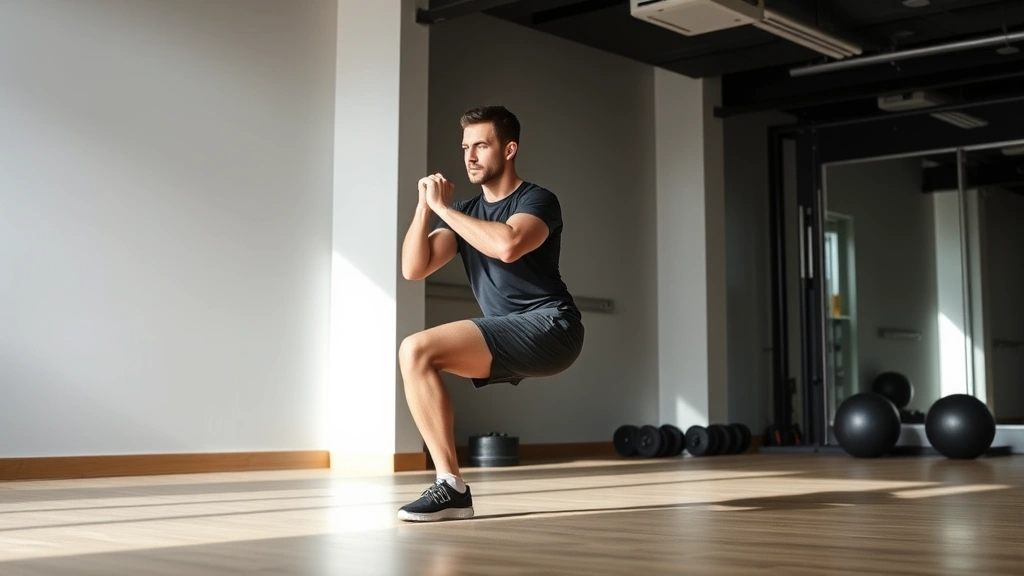
Perfect squat technique forms the bedrock upon which all strength gains are built. Without a solid foundation, you’ll plateau quickly, invite injury, and leave significant strength potential untapped. The proper squat mechanics involve several critical components working in harmony, and understanding each element ensures you’re training efficiently and safely.
Foot Positioning and Stance Width serves as your foundation. Your feet should be positioned at approximately shoulder-width apart, with toes pointed slightly outward—typically 5 to 15 degrees depending on your individual anatomy. This positioning allows for optimal biomechanical leverage while maintaining stability throughout the movement. Your weight should remain distributed across your entire foot, with particular attention to maintaining pressure through your heels and midfoot rather than shifting forward onto your toes.
Spinal Alignment and Core Engagement determines whether you’re training safely or setting yourself up for injury. Maintain a neutral spine throughout the entire movement—this means your natural lumbar curve should be preserved as you descend. Your core must remain braced and engaged from the moment you unrack the weight. Imagine you’re about to be punched in the stomach and tighten your abdominal muscles accordingly. This creates an internal pressure system that protects your spine and allows you to transfer force more efficiently from your lower body through your torso.
Hip and Knee Mechanics must work synchronously. As you initiate the descent, simultaneously break at both your hips and knees rather than allowing one to move excessively before the other. Your knees should track over your toes throughout the movement, neither caving inward nor excessively pushing outward. Descend under control until your hip crease reaches knee level—full depth is typically considered when your hip crease drops below parallel to the ground. This depth ensures maximum muscle activation and builds strength through the complete range of motion, which is crucial for athletes involved in intense sports like football gloves training.
According to research from the American College of Sports Medicine, proper squat depth and technique significantly enhance muscle recruitment patterns and force production capacity. The ascent phase requires driving through your heels while maintaining that neutral spine position, explosively extending your hips and knees simultaneously until you return to standing position.

Progressive Overload Strategies for Continuous Gains
Your muscles adapt rapidly to training stimuli, which means you must continuously challenge them with increased demands to continue progressing. Progressive overload—the systematic increase in training stress—is the fundamental principle that separates consistent gainers from those who plateau. Without progressive overload, your body adapts to the current stimulus and growth stagnates.
Weight Progression represents the most straightforward method of progressive overload. Increase the load by 2.5 to 5 pounds when you successfully complete all prescribed repetitions with proper form. This modest increment prevents dramatic jumps that compromise technique while still providing sufficient stimulus for adaptation. Track your workouts meticulously—record weights, reps, and sets so you can identify patterns and ensure you’re progressing systematically.
Volume Manipulation offers another powerful progression strategy. Volume equals sets multiplied by reps multiplied by weight. You can increase total volume by adding additional sets, increasing repetitions per set, or incorporating higher-frequency training sessions throughout the week. Many strength coaches find that increasing volume moderately while maintaining weight creates a powerful stimulus for hypertrophy and strength gains.
Tempo and Time Under Tension modifications provide progression without necessarily increasing weight. Slowing your descent to 3-4 seconds, pausing in the bottom position for 1-2 seconds, and controlling the ascent increases time under tension significantly. This creates metabolic stress and mechanical tension—two of the three primary drivers of muscle growth. Tempo training also reinforces perfect technique since you cannot use momentum to complete repetitions.
Exercise Variation prevents accommodation while addressing weak points. Front squats, safety bar squats, box squats, pause squats, and tempo squats all provide different stimulus angles and demand specific adaptations. Rotating variations every 4-6 weeks maintains nervous system engagement and continues challenging your muscles in novel ways. Check out our Peak Play Arena Blog for more training variations and strategies.
Advanced Programming and Periodization Methods
Haphazard training produces haphazard results. Strategic periodization—organizing your training into planned phases with specific objectives—ensures continuous progress while managing fatigue and preventing overtraining. Periodized programs align with your competitive schedule and physiological adaptation timeline.
Linear Periodization progressively increases intensity while decreasing volume across training phases. Early phases emphasize higher repetitions (8-12 reps) with moderate weight, building a hypertrophy foundation. Middle phases transition to moderate repetitions (5-8 reps) with heavier loads, developing strength. Final phases emphasize maximum strength through low repetitions (1-5 reps) with heavy loads. This approach allows athletes to peak for competition—particularly relevant for football athletes preparing for match days.
Undulating Periodization varies intensity and volume within each microcycle—typically each week. Monday might feature heavy strength work (3-5 reps), Wednesday emphasizes moderate loads and higher volume (6-8 reps), and Friday incorporates lighter weight with higher reps (10-12 reps). This approach prevents accommodation while allowing adequate recovery between heavy sessions.
Block Periodization organizes training into distinct blocks, each with specific adaptations. Accumulation blocks emphasize volume and technique refinement. Intensification blocks focus on heavy loads and maximum strength development. Realization blocks combine strength qualities with power and speed. This systematic approach maximizes each quality before moving to the next phase, creating comprehensive strength development.
Research from exercise physiology institutions demonstrates that periodized training produces significantly greater strength gains than non-periodized approaches. The systematic variation prevents plateaus and optimizes recovery between sessions, allowing you to train harder and accumulate greater total volume.
Nutrition and Recovery for Squat Performance
Training stimulus initiates adaptation, but adaptation occurs during recovery. Your nutrition, sleep quality, and recovery practices directly determine whether you’ll achieve the strength gains your training deserves. Neglecting these factors sabotages even perfectly executed training programs.
Protein Intake provides the building blocks for muscle repair and growth. Aim for 0.7 to 1 gram of protein per pound of bodyweight daily when pursuing strength development. Distribute protein throughout the day across 4-5 meals, consuming approximately 20-40 grams per meal. This distribution optimizes muscle protein synthesis throughout the day. Quality protein sources include lean meats, fish, eggs, dairy, legumes, and plant-based options.
Caloric Balance supports your training goals. Pursuing strength gains without adequate calories limits your progress—your body simply doesn’t have sufficient energy for muscle repair and growth. Consume enough calories to support your training while maintaining your desired body composition. Most strength athletes benefit from a slight caloric surplus (200-500 calories above maintenance) when prioritizing strength and muscle development.
Carbohydrate Timing fuels intense squat training sessions. Consume carbohydrates before and after training to maximize performance and recovery. Pre-training carbs provide immediate fuel, while post-training carbs replenish glycogen stores and facilitate nutrient delivery to muscles. This is especially important for athletes preparing for high-intensity competition like football match preparation.
Sleep Quality represents perhaps the most underrated recovery tool. During deep sleep, your body releases growth hormone, repairs muscle tissue, and consolidates neural adaptations from training. Target 7-9 hours of quality sleep nightly. Maintain consistent sleep schedules, keep your bedroom cool and dark, and minimize blue light exposure before bed.
Active Recovery between heavy sessions enhances adaptation without creating additional fatigue. Light walking, swimming, foam rolling, and stretching improve blood flow, reduce soreness, and prepare your nervous system for the next training session. Many elite athletes incorporate active recovery days between intense squat sessions.
Common Mistakes and How to Fix Them
Even experienced lifters often perpetuate technique errors that limit progress and increase injury risk. Recognizing and correcting these mistakes immediately accelerates your gains and ensures sustainable long-term development.
Knees Caving Inward represents one of the most common technical errors. Knees collapsing inward during the descent indicates weak hip abductors, poor motor control, or excessive load. Address this by reducing weight, performing single-leg variations to identify and correct asymmetries, and strengthening hip abductors through lateral band walks and side-lying leg raises. Focus on consciously driving your knees outward throughout the movement.
Forward Lean and Heel Lift often indicates limited ankle mobility, weak posterior chain muscles, or positioning errors. Ensure your feet are properly positioned, practice ankle mobility drills regularly, and strengthen your calves and plantar fascia. Heel lifts in specialized squat shoes can temporarily compensate while you build ankle mobility.
Rounding Your Lower Back compromises spinal safety and reduces force production. This typically results from insufficient core engagement, excessive forward lean, or premature fatigue. Reduce load, prioritize core bracing, and stop sets one or two reps before absolute failure to maintain perfect form throughout.
Inadequate Depth limits muscle activation and strength development. Training with partial range of motion creates strength gains only in that limited range, which doesn’t transfer to athletic performance. Reduce load if necessary to achieve full depth with perfect form. Box squats help you learn proper depth by providing a target.
Neglecting Unilateral Work allows asymmetries to develop unchecked. Single-leg variations—Bulgarian split squats, single-leg squats, and step-ups—identify and correct strength imbalances that bilateral training masks. Incorporate unilateral work weekly to ensure balanced development.
Accessory Exercises That Amplify Squat Strength
While the squat itself builds tremendous strength, strategic accessory work addresses weak points, prevents imbalances, and accelerates progress. These supplemental exercises target specific muscles and movement patterns that directly support squat performance.
Leg Press allows heavy loading with reduced technical demand and spinal compression. The leg press builds absolute strength in the quadriceps and entire lower body while providing a different stimulus than the barbell squat. Use leg press as a supplemental strength builder following heavy squat sessions.
Romanian Deadlifts and Deadlifts develop posterior chain strength—your glutes, hamstrings, and lower back. A strong posterior chain prevents forward lean during squats and builds the hip extension power crucial for athletic movements. Include deadlifts or Romanian deadlifts once or twice weekly.
Bulgarian Split Squats unilaterally load each leg, identifying and correcting strength asymmetries. The elevated rear foot increases range of motion and demands exceptional stability. Perform 8-12 reps per leg, focusing on perfect form rather than heavy load.
Leg Curls and Leg Extensions directly target individual muscles. Leg extensions build isolated quadriceps strength, while leg curls develop hamstring strength and prevent muscle imbalances. Include these after primary lower body work for 8-12 repetitions.
Calf Raises and Plantar Fascia Work strengthen ankle stabilizers and improve mobility. Strong calves support proper squat positioning and prevent ankle limitations from compromising technique.
Core and Anti-Rotation Work strengthens your midsection beyond traditional bracing. Planks, dead bugs, pallof presses, and anti-rotation band work build the core stability necessary for heavy squat loading. A strong core transfers force more efficiently and protects your spine.
Sled Pushes and Carries build lower body power and work capacity without the technical demand of barbell squats. These movements develop explosive leg drive while providing recovery-friendly training stimulus.
Learn more about how to avoid sports injuries through proper programming and technique.
For comprehensive understanding of athletic development, explore strength training research from the National Institutes of Health which details mechanisms of strength adaptation and optimal training methodologies.
Additional resources from Exercise Prescription on the Internet provide detailed exercise demonstrations and biomechanical analysis for proper movement execution.
Frequently Asked Questions
How often should I squat each week?
Most strength athletes benefit from squatting 2-3 times weekly. This frequency allows adequate stimulus for progress while permitting sufficient recovery. One session focuses on heavy strength work, while secondary sessions emphasize volume or variations. Beginners should start with 2 sessions weekly and progress as their recovery capacity improves.
Should I squat to full depth every set?
Yes—training exclusively with partial depth creates strength gains only in that limited range. Always prioritize full range of motion with weight that allows perfect form. If you cannot achieve full depth with proper technique, reduce the load. Box squats help establish proper depth by providing a consistent target.
How long until I notice significant strength gains?
Most lifters notice measurable strength improvements within 2-4 weeks of consistent, properly programmed training. Significant strength development typically requires 8-12 weeks of dedicated training. Patience and consistency matter more than rapid progression—sustainable progress compounds over months and years.
What’s the difference between strength and hypertrophy training?
Strength training emphasizes heavy loads with lower repetitions (1-5 reps), building maximum strength and neural efficiency. Hypertrophy training uses moderate loads with higher repetitions (6-12 reps), building muscle size. Both approaches build strength, but through different mechanisms. Comprehensive programs incorporate both.
Should beginners use supplements for squat training?
Beginners should prioritize whole food nutrition, consistent training, and adequate sleep before considering supplements. Creatine monohydrate and protein powder can support progress once fundamentals are established, but they’re not necessary for initial gains. Focus on basics first.
How do I know if I’m using too much weight?
If you cannot complete all prescribed repetitions with perfect form, the weight is too heavy. If your knees cave inward, your back rounds, or you cannot reach full depth, reduce the load. Your ego isn’t stronger than your progress—using appropriate weight builds long-term gains.
Can I squat if I have knee pain?
Mild discomfort during training differs from pain. Reduce volume and load, ensure perfect technique, and address any mobility restrictions. If pain persists or intensifies, consult a qualified medical professional before continuing. Consider variations like box squats or leg press as temporary alternatives while addressing underlying issues.


