
Best Cardio Workouts: Expert Advice for Peak Performance
Cardiovascular fitness forms the foundation of athletic excellence, whether you’re training for competitive sports or optimizing your overall health. Elite athletes understand that superior cardio conditioning separates champions from competitors. The science is clear: structured cardiovascular training enhances oxygen utilization, strengthens the heart, and builds the endurance necessary for sustained athletic performance at the highest levels.
Understanding what makes cardio workouts effective requires knowledge of exercise physiology, training principles, and sport-specific demands. Whether you’re preparing for intense competition like a sports training program, or building foundational fitness, the right cardio approach transforms your physical capabilities. This comprehensive guide reveals expert-backed strategies that elite coaches and sports scientists use to develop exceptional cardiovascular conditioning.

Why Cardio Training Matters for Athletes
Cardiovascular fitness directly impacts athletic performance across every sport. Strong aerobic capacity enables athletes to maintain intensity throughout competition, recover faster between efforts, and sustain mental focus when fatigue sets in. According to research from the American College of Sports Medicine (ACSM), athletes with superior cardiovascular conditioning demonstrate improved oxygen delivery to working muscles, enhanced lactate clearance, and superior thermoregulation during intense efforts.
The cardiovascular system adapts to training through specific physiological changes. Regular cardio workouts increase stroke volume—the amount of blood pumped per heartbeat—which elevates maximal oxygen uptake (VO2 max). This adaptation explains why elite endurance athletes possess such impressive aerobic capacities. For team sport athletes preparing for competitive matchups, cardio conditioning ensures you can execute tactical plays with precision throughout the entire game duration.
Beyond performance benefits, cardiovascular training strengthens your heart muscle, improves blood vessel function, and reduces cardiovascular disease risk. Athletes who maintain excellent cardio fitness establish health foundations that support longevity and quality of life after competitive careers end. The investment in proper cardio training yields immediate performance gains and long-term health dividends.
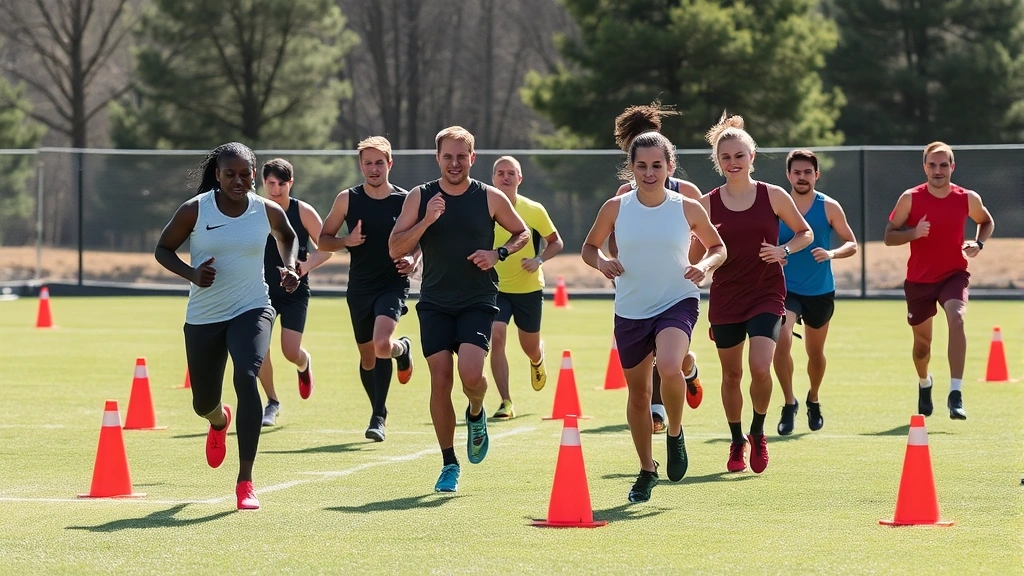
High-Intensity Interval Training (HIIT)
High-Intensity Interval Training represents one of the most efficient and effective cardio methodologies available to modern athletes. HIIT alternates between maximum-effort work intervals and recovery periods, creating metabolic stress that triggers powerful cardiovascular adaptations. Research published in sports science journals demonstrates that HIIT sessions improve VO2 max, enhance anaerobic capacity, and increase metabolic rate for hours post-exercise.
HIIT Protocol Examples:
- 30-30 Protocol: 30 seconds maximum effort followed by 30 seconds recovery. Repeat 10-15 rounds. This format develops anaerobic power and speed endurance crucial for explosive athletic movements.
- Tabata Method: 20 seconds all-out effort plus 10 seconds recovery, repeated 8 times (4 minutes total). Tabata training maximizes caloric expenditure and builds exceptional work capacity.
- Pyramid Intervals: Progressively increase work duration (30 sec, 60 sec, 90 sec, 60 sec, 30 sec) with equal recovery periods. This approach challenges different energy systems and builds mental toughness.
- Sport-Specific Sprints: Mimic competitive demands by performing sport-specific movements at maximum intensity. Football athletes might execute explosive 40-yard sprints with walking recovery.
The beauty of HIIT lies in time efficiency. A 20-30 minute HIIT session produces cardiovascular adaptations equivalent to much longer steady-state sessions. Athletes with demanding schedules benefit enormously from HIIT’s time-effectiveness. However, HIIT demands proper recovery between sessions—never perform maximum-intensity intervals on consecutive days. Your nervous system and musculature require adequate recovery to adapt and improve.
HIIT training also improves sport-relevant qualities like acceleration, deceleration, and repeated sprint ability. When you’re competing in soccer, basketball, football, or hockey, you’re constantly alternating between intense efforts and brief recovery periods. HIIT training specifically prepares your cardiovascular and metabolic systems for these demands. Consider implementing sport-specific training principles when designing your HIIT workouts.
Steady-State Cardio Workouts
While HIIT captures headlines, steady-state cardio remains foundational for comprehensive cardiovascular development. Steady-state training involves maintaining a consistent moderate intensity (typically 60-75% maximum heart rate) for extended durations. This approach builds aerobic base, improves fat oxidation, and develops the cardiovascular endurance necessary for sustained competition.
Steady-State Training Benefits:
- Develops robust aerobic base supporting all other training
- Enhances mitochondrial density in muscle cells
- Improves fat utilization as fuel source
- Supports recovery between high-intensity sessions
- Reduces injury risk through controlled intensity
- Builds mental resilience through sustained effort
The optimal steady-state session duration ranges from 30-90 minutes depending on your sport and training phase. Endurance athletes might perform 60-90 minute sessions regularly, while team sport athletes benefit from 30-45 minute sessions. The key distinction: steady-state cardio should feel conversational—you can speak in short sentences but not sing. This intensity level ensures you’re working aerobically while maintaining sustainability.
Modality selection matters significantly. Running, cycling, rowing, swimming, and elliptical training all develop cardiovascular fitness. Choose activities that complement your sport and minimize injury risk. Runners benefit from low-impact cross-training like cycling or swimming to reduce repetitive impact stress. Cross-training also prevents boredom while developing well-rounded cardiovascular fitness. Explore sport-specific training variations to enhance sport-relevant conditioning.
Sport-Specific Cardio Conditioning
Elite athletes recognize that generic cardio training, while beneficial, cannot fully prepare you for sport-specific demands. Sport-specific cardio training integrates competitive movement patterns, positional demands, and tactical requirements into cardiovascular conditioning.
Football Athletes: Football demands repeated short bursts of maximum effort separated by brief recovery periods. Effective conditioning includes shuttle runs, cone drills, and position-specific sprint patterns. A linebacker might perform 40-yard sprints followed by lateral shuffles and backpedaling—movements directly transferable to game situations. Understanding football game demands helps structure appropriate conditioning.
Basketball and Soccer Athletes: These sports demand constant movement with frequent directional changes and vertical demands. Conditioning should include cone drills, ladder work, and sport-specific agility circuits. High-low intervals—alternating between intense court/field movement and brief recovery—closely mirror actual competition.
Combat Sports Athletes: Boxing, MMA, and wrestling require exceptional work capacity within specific time domains. Round-based training mimicking competition duration builds sport-specific conditioning. A boxer might perform 3-minute rounds of intense bag work or pad work with 60-second recovery, matching competitive round structure.
The principle guiding sport-specific conditioning: train the energy systems and movement patterns your sport demands. This approach ensures your cardiovascular improvements directly translate to competitive performance. Consult sport-specific equipment guides when selecting training tools that enhance your conditioning work.
Recovery and Periodization Strategies
Cardiovascular training creates stress that your body adapts to during recovery periods. Without proper recovery and periodization, you’ll experience diminishing returns, increased injury risk, and overtraining symptoms. Elite coaches structure cardio training using periodized approaches that vary intensity and volume throughout training cycles.
Periodization Framework:
- Base Building Phase: Emphasize steady-state cardio to develop aerobic foundation. This phase typically spans 4-6 weeks with moderate volume and intensity.
- Development Phase: Introduce interval training and increase training volume. Alternate between HIIT and steady-state sessions.
- Competition Phase: Maintain cardiovascular fitness while emphasizing sport-specific conditioning and competitive preparation. Reduce volume while maintaining intensity.
- Recovery Phase: Reduce training stress after competition to facilitate physiological recovery and mental restoration.
Weekly Structure Example:
- Monday: HIIT session (20-30 minutes)
- Tuesday: Sport-specific conditioning
- Wednesday: Steady-state cardio (40-60 minutes)
- Thursday: Recovery-focused light activity
- Friday: Sport-specific intervals
- Saturday: Competition or simulated competition
- Sunday: Complete rest or gentle mobility work
Recovery quality determines training effectiveness. Prioritize sleep, nutrition, and stress management between sessions. Active recovery—gentle movement like walking, easy cycling, or swimming—enhances blood flow and facilitates adaptation without creating additional training stress. Listen to your body; excessive fatigue, elevated resting heart rate, or performance decrements signal inadequate recovery.
Equipment and Training Tools
Modern athletes benefit from various training modalities and equipment that enhance cardio conditioning. Strategic equipment selection optimizes training efficiency and prevents overuse injuries.
Primary Cardio Equipment:
- Treadmills: Ideal for running-based training with adjustable incline and speed control. Treadmill running produces greater impact than outdoor running, so balance with low-impact cross-training.
- Stationary Bikes: Excellent low-impact option developing leg power and aerobic capacity. Spin bikes enable high-intensity interval work, while upright bikes suit longer steady-state sessions.
- Rowing Machines: Develop full-body cardiovascular fitness engaging legs, core, and upper body. Rowing builds exceptional work capacity and mental toughness.
- Elliptical Trainers: Provide low-impact running-specific training. Effective for recovery sessions and athletes managing joint stress.
- Assault Bikes: Fan-resistance bikes that demand continuous effort adjustment. Excellent for HIIT and building anaerobic capacity.
Beyond traditional equipment, simple tools enhance sport-specific conditioning: cones for agility drills, medicine balls for explosive movements, resistance bands for movement variety, and jump ropes for footwork development. The most effective training often combines multiple modalities, preventing adaptation plateaus while maintaining engagement.
Technology integration—heart rate monitors, fitness trackers, and training apps—enables precise intensity monitoring and data-driven training adjustments. Tracking metrics like average heart rate, maximum heart rate, and heart rate recovery provides objective feedback on cardiovascular improvements. However, avoid becoming enslaved to metrics; perceived exertion and athletic intuition remain valuable training guides.
Remember that competitive athletes require comprehensive training approaches integrating strength, power, skill development, and tactical preparation alongside cardiovascular conditioning. Cardio training supports overall athletic development without replacing sport-specific skill work.
FAQ
How often should I perform high-intensity interval training?
Most athletes benefit from 2-3 HIIT sessions weekly with at least one rest day between sessions. HIIT creates significant physiological stress requiring adequate recovery. Excessive HIIT frequency increases injury risk and promotes overtraining. Beginners should start with 1-2 HIIT sessions weekly while building capacity.
What’s the ideal cardio duration for athletic performance?
Duration depends on your sport and training phase. Team sport athletes typically require 30-60 minute cardio sessions, while endurance athletes perform 60-120+ minute sessions. During competition phases, reduce duration while maintaining intensity. Quality matters more than quantity—a focused 30-minute HIIT session outperforms a disengaged 90-minute easy run.
Should I perform cardio before or after strength training?
The answer depends on your primary goal. Athletes prioritizing strength development should perform strength training first when neural capacity peaks, followed by cardio. Conversely, athletes prioritizing cardiovascular development should perform HIIT first, followed by lighter strength work. Many elite programs separate cardio and strength sessions entirely—strength in morning, cardio in evening—enabling maximum effort in both.
How do I measure cardiovascular improvement?
Track objective metrics: resting heart rate (lower indicates improvement), maximum heart rate during testing (should remain stable or decrease with fitness), VO2 max testing (professional assessment), and sport-specific performance (faster sprint times, improved endurance). Subjective measures matter equally—workouts feeling easier at previous intensities indicate genuine adaptation.
Can I build cardiovascular fitness without running?
Absolutely. Cycling, rowing, swimming, and elliptical training develop excellent cardiovascular fitness. Running creates impact stress unsuitable for some athletes, making alternative modalities preferable. Select activities you enjoy and can sustain consistently. The best cardio program is the one you’ll actually perform with consistency.
What’s the relationship between cardio training and muscle building?
Excessive cardio interferes with muscle development by creating energy deficit and promoting catabolic processes. However, moderate cardio (3-4 sessions weekly) supports muscle building by improving nutrient delivery and supporting recovery. The key: balance cardio volume with adequate nutrition and recovery to support both cardiovascular and muscular development.


