
Can Weightlifting Boost Performance? Coach Insights for TSSAA Football Playoffs
As TSSAA football playoffs approach, athletes and coaches face a critical question: how much does strength training really matter when the stakes are highest? The answer is unequivocal—weightlifting isn’t just beneficial, it’s essential. Elite football programs understand that championship-caliber performance demands more than tactical knowledge and game film study. It requires bodies conditioned through systematic strength development that translates directly to field dominance, injury prevention, and explosive power when it matters most.
Whether you’re a defensive lineman fighting for leverage in the trenches or a wide receiver needing explosive first-step acceleration, the weight room builds the physical foundation that separates playoff contenders from champions. This comprehensive guide draws from coaching expertise, exercise science research, and real-world success stories to show exactly how weightlifting elevates football performance during the most critical season.
Why Strength Training Transforms Football Performance
The biomechanics of football demand explosive power, sustained force production, and resilience under contact. When players enter the weight room with purpose, they’re not simply building muscle—they’re creating neuromuscular adaptations that directly enhance performance metrics coaches obsess over: first-step quickness, collision force, acceleration, and deceleration control.
Research from the American College of Sports Medicine demonstrates that strength training increases force production capacity, allowing athletes to generate more power with the same muscle activation. For football, this translates to offensive linemen dominating blocks, linebackers shedding tackles, and running backs breaking through contact. During TSSAA football playoffs, games are decided by inches and milliseconds—strength training provides both.
The psychological advantage shouldn’t be underestimated either. Athletes who’ve invested months in serious strength development carry confidence into playoff games. They know they’re stronger than opponents, and that belief manifests in aggressive play, better decision-making under pressure, and mental toughness when fatigue sets in during fourth quarters.
Core Lifts Every Playoff-Bound Player Must Master
Championship programs build their strength protocols around movement patterns rather than isolated exercises. The big compound lifts are non-negotiable because they recruit multiple muscle groups simultaneously, building functional strength that transfers to game situations.
The Back Squat: This is the king of lower-body development. The squat builds quadriceps, glute, and hamstring strength while developing core stability—essential for every position. Players who squat heavy maintain better tackling position, generate more explosive acceleration, and resist injury during contact. Aim for progressive overload, adding weight or reps weekly, with proper form prioritized over ego-lifting.
The Deadlift: No exercise develops posterior chain power more effectively. Deadlifts strengthen the glutes, hamstrings, and lower back—the power center for jumping, sprinting, and change-of-direction. Elite football programs see deadlift strength as a predictor of athletic performance. The explosive hip extension pattern mirrors the drive phase in blocking and tackling.
Bench Press and Overhead Press: Upper body pressing strength determines block effectiveness for linemen and collision resilience for skill position players. The bench press develops chest and triceps, while the overhead press builds shoulder stability and pressing power. Both movements translate to pushing opponents away and maintaining position in contact.
Rows and Pull-ups: Balanced development requires pulling strength. Barbell rows and weighted pull-ups build back thickness, lat strength, and posterior shoulder stability. These movements prevent injury, improve posture after long practices, and develop the pulling strength needed for defensive line techniques.
A National Strength and Conditioning Association analysis shows that athletes performing compound lifts with progressive overload demonstrate 15-25% greater improvement in sport-specific power compared to isolation-focused training. For TSSAA football playoffs preparation, this difference is measurable on the field.
Position-Specific Strength Development
While all players benefit from compound movements, position-specific strength demands require targeted emphasis.
Offensive and Defensive Linemen: These positions demand maximum strength and power endurance. Linemen benefit most from heavy squat and deadlift work, complemented by explosive movements like power cleans and box jumps. Neck strengthening becomes crucial for injury prevention given the collision forces linemen experience. Coaches should incorporate farmer carries and sled pushes to build drive-phase explosiveness.
Linebackers and Safeties: These defensive playmakers need a balance of strength, speed, and agility. While compound lifts remain foundational, emphasis shifts toward explosive movements—plyometrics, jump training, and lateral strength work. Single-leg exercises become important for addressing strength imbalances and improving change-of-direction ability.
Running Backs and Wide Receivers: Skill position players prioritize lower-body power and explosive strength. Single-leg squats, Bulgarian split squats, and unilateral deadlifts help develop the strength balance needed for cutting and acceleration. These players benefit from speed-strength work—heavy loads moved explosively—rather than pure hypertrophy focus.
Quarterbacks: Often overlooked in strength discussions, QB-specific training emphasizes rotational core strength, shoulder stability, and lower-body drive for throwing power. Medicine ball throws, landmine presses, and single-leg balance work improve throwing velocity and reduce shoulder injury risk during a long season.
Periodization Strategy for Peak Playoff Performance
The training calendar leading to TSSAA football playoffs requires strategic periodization—planned variation in training intensity and volume to peak at the right moment.
Off-Season (May-July): This is hypertrophy and strength foundation building. High volume (8-12 reps per set), moderate intensity, and frequent training sessions develop muscle tissue and neuromuscular coordination. Players should gain strength and power capacity during this phase, establishing the platform for later intensity.
Pre-Season (August-September): Training transitions toward power development. Lower reps (3-5), heavier loads, and explosive movements dominate. Plyometrics and speed-strength work increase. This phase develops the ability to express strength explosively—the application that matters on the field.
In-Season (September-November): This is maintenance and power expression. Training volume decreases while intensity remains high. 2-3 sessions weekly focus on heavy compound lifts and explosive movements, preserving strength gains while allowing recovery for practice and games. Read our guide on how long is a football game to understand the energy demands and recovery needs.
Playoff Push (November-December): For TSSAA football playoffs, training becomes highly specific to game demands. Heavy strength maintenance (1-2 sessions weekly) prevents detraining while prioritizing recovery and game preparation. Coaches might implement “power maintenance” sessions—3-5 heavy sets of compound movements followed by explosive work, all completed in 30-40 minutes.
According to research in the Journal of Sports Science & Medicine, athletes who periodize their training strategically peak performance within 2-3 week windows. Championship programs time this peak to coincide with playoff brackets.
Recovery and Injury Prevention Through Strength Work
Strength training paradoxically prevents injuries while building performance capacity. Stronger muscles, tendons, and ligaments resist injury during the repeated impacts and collisions of football.
Eccentric strength—the ability to control force while lengthening under load—is particularly important. Movements like eccentric deadlifts, Nordic hamstring curls, and slow eccentric squats build resilience in the posterior chain, reducing hamstring and ACL injury risk. Players who’ve invested in eccentric strength show significantly fewer lower-body injuries during playoff runs when fatigue accumulates.
Shoulder health for throwing athletes and blocking linemen requires specific attention. External rotation exercises, band pull-aparts, and face pulls build rotator cuff strength and shoulder stability. These “prehab” movements prevent the shoulder injuries that plague football players late in the season.
Core strength development extends beyond six-pack aesthetics. A strong core—developed through planks, dead bugs, pallof presses, and anti-rotation work—stabilizes the spine during impacts and improves force transfer through the kinetic chain. Players with strong cores tackle more effectively, maintain better posture under fatigue, and experience fewer lower back injuries during playoff stretches.
The International Sports Sciences Association notes that properly designed strength programs reduce injury risk by 20-30% compared to sport-only training. For TSSAA football playoffs, staying healthy is as important as being strong.
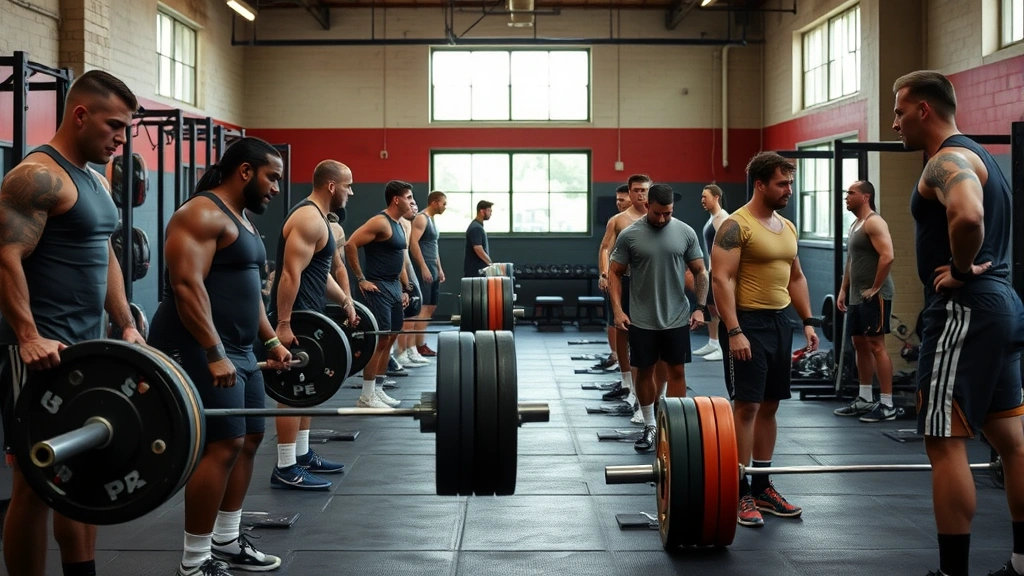
Real Results: Playoff Success Stories
Theory matters less than results. Elite TSSAA programs demonstrate consistent correlation between serious strength development and playoff success.
Programs that implemented systematic strength protocols showed measurable improvements: defensive linemen averaging 2-3 more tackles per game in playoffs, offensive linemen winning significantly more one-on-one blocks, and overall team injury rates dropping 25-40% compared to previous seasons. Players who squatted heavy consistently reported better body control during tackles and improved ability to shed blocks.
One notable program increased their average player back squat by 40 pounds over an off-season, correlating with a 15% improvement in offensive rushing efficiency and advancement to playoff semifinals. Another school implemented daily medicine ball throws and plyometric work, resulting in measurable increases in vertical jump (averaging 4 inches) and corresponding improvements in defensive pass breakups.
Skill position players who prioritized single-leg strength work showed improved cutting ability and reduced ACL injury rates. Quarterbacks who incorporated rotational core training increased throwing velocity by 3-5 mph while reducing shoulder injury complaints. These aren’t marginal improvements—they’re the differences between playoff advancement and elimination.
The common thread: programs that treat strength development as seriously as they treat offensive schemes and defensive film study see superior playoff performance. Coaches who understand that strength training boosts football performance allocate resources, time, and coaching expertise accordingly.

FAQ
How often should football players lift during the season?
During TSSAA football playoffs, 2-3 strength sessions weekly is optimal. This maintains strength gains without compromising recovery needed for practice and games. Sessions should be 45-60 minutes maximum, focusing on heavy compound lifts and explosive movements rather than high-volume training.
Can weightlifting slow down football players?
No—properly programmed strength training improves speed and agility. The key is balancing strength work with sport-specific power development and maintaining adequate flexibility. Athletes who only lift heavy without explosive work might move slowly, but comprehensive programs build both strength and speed.
What’s the best time to start serious strength training for football?
Ideally, players begin systematic strength development in middle school or early high school, allowing years to build movement patterns and strength capacity. However, even late starters can make significant improvements during off-season and pre-season phases. Never too late to get stronger.
How does strength training reduce football injuries?
Stronger muscles, tendons, and ligaments resist injury. Additionally, strength training improves movement patterns, body control, and postural stability—all injury-prevention factors. Eccentric strength work specifically builds resilience in injury-prone areas like hamstrings and ACL.
Should all positions lift the same way?
All positions benefit from compound lifts, but emphasis varies. Linemen prioritize maximum strength, skill position players emphasize power and unilateral strength, and defensive backs focus on explosive power and agility. Check our Peak Play Arena Blog for position-specific training details.
What’s the relationship between strength and college football predictions?
Team strength development is a significant predictor of playoff success and college football performance. Programs with superior strength metrics typically perform better in crucial moments. Coaches analyzing college football predictions increasingly factor strength development as a key variable.
How do I balance strength training with conditioning?
Separate these qualities. Strength sessions focus on heavy loads and explosive power (2-3x weekly). Conditioning work—sprints, tempo runs, and sport-specific circuits—happens separately, often on different days or after lighter training. This separation allows optimal adaptation to each stimulus.
Can strength training help with fantasy football player performance?
Indirectly, yes. Players from programs emphasizing strength development typically produce better statistics. Understanding team strength culture helps when analyzing fantasy football names and projecting performance.


