
Texas Football Workouts: Coach Insights for Building Championship Athletes
Texas high school football has produced some of the nation’s most dominant athletes, and it all starts with intelligent, science-backed training programs. Whether you’re a coach designing workouts for your team or a player looking to elevate your game, understanding the principles behind elite Texas football conditioning can transform your performance on the field. The Lone Star State’s competitive landscape demands athletes who combine explosive power, cardiovascular endurance, mental toughness, and sport-specific agility.
This comprehensive guide reveals the coaching insights and workout methodologies that have made Texas football a national powerhouse. We’ll explore evidence-based training protocols, periodization strategies, and the specific exercises that separate championship-caliber players from the rest. Whether you’re preparing for high school football scores that matter or building a program with long-term success, these insights will provide the foundation you need.
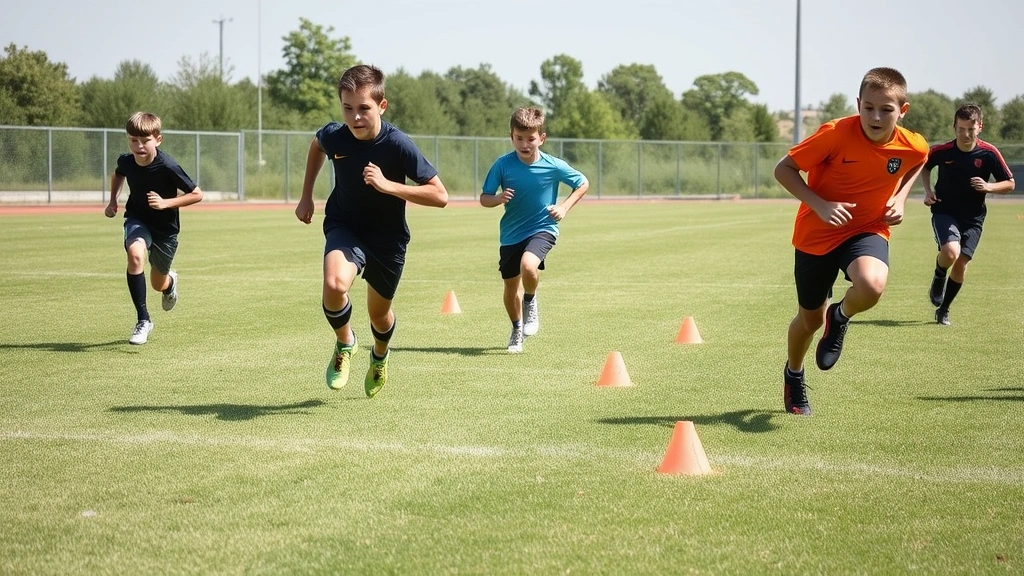
Foundation Principles of Texas Football Training
The most successful Texas football programs understand that championship performance doesn’t happen by accident—it’s built on a foundation of scientific principles and consistent execution. According to research from the American College of Sports Medicine, athlete development requires a systematic approach that addresses multiple performance domains simultaneously.
Texas coaches emphasize three foundational principles: specificity, progressive overload, and individual assessment. Specificity means training directly mimics the demands of football—explosive movements, multi-directional changes, and high-intensity intervals that match game situations. Progressive overload ensures athletes continuously challenge their bodies with incrementally harder demands, preventing plateaus and building adaptation. Individual assessment recognizes that each athlete has unique strengths, weaknesses, and developmental needs.
The best programs also integrate neuromuscular development early in training cycles. This means coaching athletes on proper movement patterns before adding heavy load. Young football players often lack the fundamental movement quality needed for safe, effective strength training. Coaches spend time teaching proper squat mechanics, hip hinge patterns, and upper body positioning before progressing to loaded exercises.
Mental toughness training is equally important. Elite Texas football programs embed psychological resilience into every workout. Athletes learn to push through discomfort, maintain focus under fatigue, and develop the competitive mindset that separates good players from great ones. This includes visualization techniques, goal-setting protocols, and deliberate practice methodologies backed by sports psychology research.
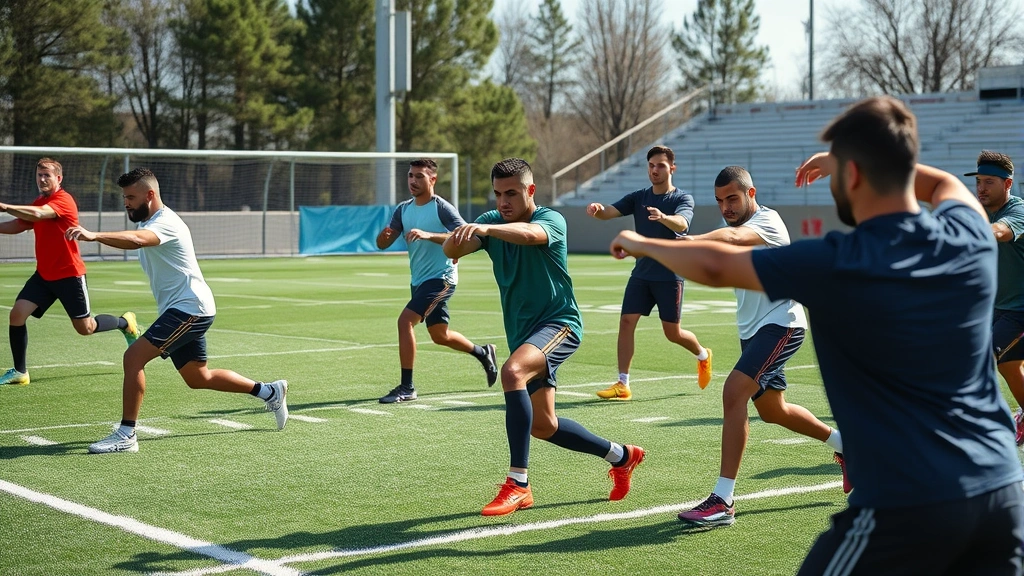
Periodization and Seasonal Programming
Championship Texas football programs structure their training around periodized models that align with the competitive season. Periodization divides the training year into distinct phases, each with specific objectives that build toward peak performance during games that matter most.
The typical high school football training calendar includes four phases: off-season (January-March), spring training (April-May), summer preparation (June-July), and in-season maintenance (August-November). Each phase emphasizes different adaptations and performance qualities.
Off-Season Phase (Strength Focus): This 12-week block prioritizes building absolute strength and muscle development. Athletes perform compound movements like squats, deadlifts, bench press, and Olympic lift variations with moderate to heavy loads (70-90% of one-rep max). Volume is moderate, typically 3-4 sets of 4-8 repetitions. Rest periods are longer (2-3 minutes) to allow nervous system recovery and heavy load management.
Spring Training Phase (Power Development): As the season approaches, programs shift toward power development while maintaining strength gains. This involves Olympic lift variations, plyometric exercises, and explosive movement patterns. Athletes perform medicine ball throws, box jumps, and speed-strength combinations. Sets are lower (3-4) with higher velocity emphasis and complete rest between efforts.
Summer Preparation Phase (Sport-Specific Conditioning): This critical phase integrates strength, power, speed, and conditioning into football-specific movements. Athletes perform drill combinations that simulate game demands: change-of-direction work, agility ladders, shuttle runs, and positional-specific drills. Conditioning becomes more intense with interval training replacing steady-state cardio.
In-Season Maintenance Phase (Preservation): During the competitive season, training shifts to maintenance and injury prevention. Volume decreases significantly while intensity remains moderate. Sessions are shorter (45-60 minutes) and focus on addressing movement deficiencies, maintaining strength qualities, and managing fatigue. Recovery becomes paramount.
Strength Development for Football Athletes
Building functional strength is non-negotiable for Texas football success. Unlike bodybuilding or powerlifting, football strength training emphasizes movement quality, power application, and injury resilience across multiple planes of motion.
Elite programs implement a hierarchical approach to strength development. The foundation begins with movement patterns rather than individual muscles:
- Lower Body Patterns: Squats, deadlifts, lunges, and step-ups develop the lower body strength essential for running, jumping, and change-of-direction movements
- Upper Body Push Patterns: Bench press, incline press, and overhead pressing build pushing strength needed for blocking and contact
- Upper Body Pull Patterns: Rows, pull-ups, and lat pulldowns develop pulling strength and posterior chain resilience
- Rotational and Anti-Rotation Patterns: Landmine exercises, Pallof presses, and rotational medicine ball work build core stability for football’s multi-directional demands
- Single-Leg Stability: Bulgarian split squats, single-leg deadlifts, and single-leg balance work develop unilateral strength and injury prevention
Research from the National Strength and Conditioning Association demonstrates that athletes who perform compound movements with proper progression show superior performance gains compared to isolated machine-based training. Texas coaches prioritize free weights and functional movements that require stabilizer muscle engagement.
Tempo training is another sophisticated technique employed by elite programs. By controlling the speed of movement—particularly eccentric (lowering) phases—coaches increase time under tension and strengthen connective tissues. A typical tempo might be 3 seconds down, 1 second pause, 2 seconds up, creating greater mechanical tension and metabolic stress.
Speed and Agility Training Systems
Speed and agility separate elite Texas football players from average competitors. While some athletes are naturally gifted with high velocity, coaching research shows that proper technique and deliberate training can improve speed significantly in most athletes.
Speed development requires understanding the distinction between maximum velocity and acceleration. Most football plays happen within 10-20 yards, making acceleration more game-relevant than top-end speed. Effective programs emphasize first-step quickness and initial acceleration through specialized drills.
Acceleration Development: Athletes perform short-distance sprints (10-20 yards) with technical precision. Coaches focus on proper body angle, arm drive, and ground contact patterns. Flying sprints—where athletes accelerate for 20 yards before timing a 20-yard sprint—help develop max velocity while maintaining acceleration mechanics. Sled pushes and resisted sprints build strength-speed qualities by increasing force application during acceleration.
Agility and Change-of-Direction: True agility involves rapid deceleration, plant, and redirection. The best programs use sport-specific drill patterns that simulate football movements. T-drills, 5-10-5 shuttles, and position-specific cutting patterns develop the neuromuscular control needed for explosive directional changes. Importantly, these drills emphasize eccentric strength—the ability to decelerate safely under high velocity.
Ladder drills and cone work develop foot coordination and proprioception. While these exercises shouldn’t dominate a training program, they’re valuable for athletes struggling with coordination or those returning from injury. The key is integrating ladder work into dynamic sequences rather than performing static, low-intensity patterns.
Plyometric training complements speed work perfectly. Box jumps, depth jumps, and bounding develop the stretch-shortening cycle—the ability to rapidly transition from eccentric to concentric muscle actions. This quality is essential for explosive football movements. Plyometrics require careful progression and excellent landing mechanics to prevent injury.
Conditioning Programs for Game Readiness
Conditioning separates elite programs from mediocre ones. Texas football demands athletes who can maintain explosive power and decision-making throughout four 12-minute quarters. Traditional steady-state cardio doesn’t replicate these demands.
Interval-based conditioning better mirrors football’s work-to-rest ratios. High-Intensity Interval Training (HIIT) involves alternating maximal-effort work periods with active recovery. A typical football conditioning session might include:
- Warm-up (5-10 minutes) of dynamic mobility and movement preparation
- 3-5 rounds of interval work: 30-40 seconds maximum effort (sprints, shuttle runs, or position-specific drills) followed by 60-90 seconds active recovery (walking, jogging)
- Cool-down with mobility work
Repeated Sprint Ability (RSA) training is particularly valuable for football. This involves performing multiple sprints with short recovery periods, training the body to maintain power output despite fatigue. Coaches might have athletes perform 8-10 x 20-yard sprints with 30-second recovery between efforts, simulating the repeated explosive demands of football.
Sport-specific conditioning combines conditioning demands with football skills. Drill circuits might include: sprint to cone, perform directional change, engage blocking dummy, return to start—all performed at game-speed intensity. This integrates physical conditioning with skill execution and decision-making under fatigue, making it more game-relevant than general conditioning.
The aerobic base shouldn’t be neglected entirely. A modest aerobic foundation (2-3 sessions weekly of moderate-intensity activity) supports recovery and provides a base for high-intensity work. Many programs use easy jogs, bike rides, or sport-specific movement at conversational intensity.
Sport-Specific Position Training
Elite Texas programs recognize that different positions require different physical qualities and training emphases. While all football players need general fitness, specialized training addresses position-specific demands.
Offensive and Defensive Linemen: These positions emphasize maximum strength, power, and collision tolerance. Training heavily emphasizes compound lower body and upper body strength movements. Sled work, loaded carries, and explosive pressing movements dominate. Conditioning focuses on repeated-effort capacity—the ability to generate force repeatedly despite fatigue. Positional drills involve contact and engagement patterns.
Linebackers and Defensive Backs: These positions require exceptional lateral agility, vertical jump, and multi-directional speed. Training emphasizes single-leg stability, reactive agility work, and vertical power development. Conditioning includes lateral shuttle patterns and change-of-direction emphasis. Coverage drills and backpedal mechanics receive specific attention.
Running Backs and Wide Receivers: These skill positions need maximum speed, acceleration, and body control. Training includes extensive speed work, plyometrics, and cutting drills. Strength work maintains injury resilience without excessive hypertrophy. Conditioning emphasizes repeated acceleration and deceleration patterns. Sport-specific drills integrate catching or ball-carrying with directional changes.
Quarterbacks: Beyond arm strength development, quarterback training emphasizes lower body power, rotational stability, and footwork precision. Medicine ball work, landmine rotations, and single-leg balance training support the explosive lower body movements needed for powerful throws. Conditioning maintains aerobic capacity for game duration.
Recovery and Injury Prevention
Championship Texas football programs understand that athletes don’t grow during training—they grow during recovery. Intelligent recovery strategies separate programs that sustain excellence from those that suffer recurring injuries.
Sleep Optimization: Research from sports science journals consistently shows that sleep is the most powerful recovery tool available. Elite athletes prioritize 8-10 hours nightly. Coaches educate athletes on sleep hygiene: consistent sleep schedules, dark sleeping environments, and limiting blue light exposure before bed.
Nutrition Timing: Post-workout nutrition supports muscle protein synthesis and glycogen replenishment. A meal or snack containing carbohydrates and protein within 1-2 hours after training optimizes recovery. Throughout the day, adequate protein intake (0.7-1.0 grams per pound of bodyweight) supports muscle adaptation.
Active Recovery Sessions: Light movement on off-days promotes blood flow and facilitates recovery. Easy walks, swimming, or sport-specific movements at low intensity enhance recovery without creating additional fatigue.
Mobility and Flexibility Work: Dynamic mobility before training prepares joints and muscles for work. Static stretching after training or on recovery days improves range of motion. Foam rolling and soft tissue work address muscular tension and support movement quality.
Injury Prevention Protocols: Evidence-based injury prevention programs reduce injury rates significantly. These include:
- Movement quality screening to identify deficiencies before they cause injury
- Eccentric training to strengthen connective tissues and improve deceleration capacity
- Ankle stability work and proprioceptive training
- Rotator cuff strengthening for shoulder health
- Hip and glute activation to support knee and lower back health
Monitoring athlete readiness is crucial. Many programs use recovery metrics: resting heart rate, heart rate variability, sleep quality tracking, and subjective wellness surveys. When athletes show signs of excessive fatigue, training volume decreases to prevent overtraining and injury.
Proper warm-up protocols are non-negotiable. A comprehensive warm-up includes 5-10 minutes of light cardiovascular activity, dynamic mobility addressing major joints, movement pattern preparation, and gradual intensity progression. This preparation activates the nervous system, increases core temperature, and prepares tissues for training demands.
FAQ
How often should Texas high school football players train?
Elite programs typically implement 4-5 training sessions weekly during off-season and spring phases, with 3-4 sessions during summer preparation. During the competitive season, maintenance training involves 2-3 sessions weekly. Each session lasts 60-90 minutes, including warm-up and cool-down. Rest days are essential for recovery and adaptation.
What’s the best age to start serious strength training for football?
Athletes can begin bodyweight-based strength training and movement pattern development in middle school (ages 12-13). Loaded resistance training with proper supervision can begin around age 14-15 after demonstrating movement competency. Young athletes should never sacrifice movement quality for load. Coaching and supervision are essential.
How do Texas coaches balance strength training with skill development?
Elite programs integrate both simultaneously. Strength sessions (45-60 minutes) occur 3-4 times weekly, while skill and position work happens separately or on different days. During the competitive season, this balance shifts toward more skill work and less strength emphasis. The integration of sport-specific conditioning bridges both domains.
What nutrition strategies support football training?
Adequate calories support training adaptations—athletes should eat enough to fuel training while maintaining appropriate body composition. Protein intake of 0.7-1.0 grams per pound of bodyweight supports muscle development. Carbohydrate intake fuels high-intensity training. Hydration is critical, with athletes consuming adequate fluids throughout training and competition days.
How important is mental training in Texas football programs?
Mental training is equally important as physical training. Elite programs embed psychological development throughout training: goal-setting, visualization, self-talk strategies, and competitive simulations. Athletes develop resilience, focus, and the mental toughness needed to perform under pressure. Check out Peak Play Arena Blog for additional insights on football excellence.
Can fantasy football trade evaluator tools help understand player performance metrics?
While fantasy tools focus on statistical analysis, understanding the physical demands and training requirements of different positions can inform appreciation for player performance. Athletes from strong training programs typically demonstrate superior consistency and durability throughout seasons.
What recovery tools provide the best return on investment?
The most impactful recovery tools are also the most basic: adequate sleep, proper nutrition, hydration, and active recovery movement. Additional tools like foam rolling, stretching, and ice baths provide modest benefits. Expensive recovery technologies are less important than these fundamentals. Consistency with basic recovery practices outperforms sporadic use of advanced tools.
How do coaches monitor training effectiveness for high school football scores improvement?
Effective programs track multiple metrics: strength tests (max lifts, jump height), speed assessments (40-yard dash, 10-yard sprint), agility tests (shuttle runs, pro-agility), and conditioning performance (repeated sprint ability). Game performance metrics—tackles, yards, completion percentage—ultimately measure training success. Regular testing (every 4-6 weeks) tracks progress and informs program adjustments.


