
Best Workouts for Athletes? Notre Dame Insights
Notre Dame football has built a legendary program on the foundation of elite athleticism, rigorous training protocols, and scientific conditioning methods. The Fighting Irish coaches understand that winning championships requires more than talent—it demands a comprehensive approach to athletic development that combines strength training, speed work, agility drills, and sport-specific conditioning. Whether you’re a college athlete aspiring to play at Notre Dame’s level or a competitive athlete seeking to elevate your performance, understanding the training philosophies that shape elite football programs provides invaluable insights into what truly separates the best from the rest.
The strength and conditioning staff at Notre Dame has refined their approach over decades of championship football, developing a system that transforms raw talent into explosive, durable athletes capable of competing at the highest level. This article explores the evidence-based workout strategies that Notre Dame football coaches employ, breaking down the specific training methodologies, periodization approaches, and performance benchmarks that define elite athletic preparation. You’ll discover how to implement these proven techniques into your own training regimen, regardless of your current fitness level or athletic background.

The Notre Dame Strength and Conditioning Philosophy
Notre Dame football coaches have established a comprehensive training philosophy that prioritizes functional strength, athletic power, and movement quality over simple weight room numbers. The program emphasizes that true athletic development requires understanding how the body moves in sport-specific contexts, not just how much weight an athlete can lift. This philosophy aligns with contemporary American College of Sports Medicine guidelines that emphasize integrated, multi-planar movement training for optimal athletic performance.
The foundation of Notre Dame’s approach rests on several core principles. First, every exercise must have a direct application to football performance. Second, athletes must develop strength across multiple planes of motion, not just vertical or horizontal movements. Third, the program recognizes that elite athletes require different stimulus at different times of the year, necessitating carefully structured periodization. Fourth, movement quality and injury prevention are non-negotiable components of every training session.
When you examine the Peak Play Arena Blog for football news and updates, you’ll find consistent emphasis on how elite programs structure their training around these principles. Notre Dame coaches understand that building a championship team requires systematic athlete development that begins in the offseason and continues throughout the competitive season. The program emphasizes that strength without speed is wasted potential, and speed without strength leads to injury.
Power Development and Explosive Strength Training
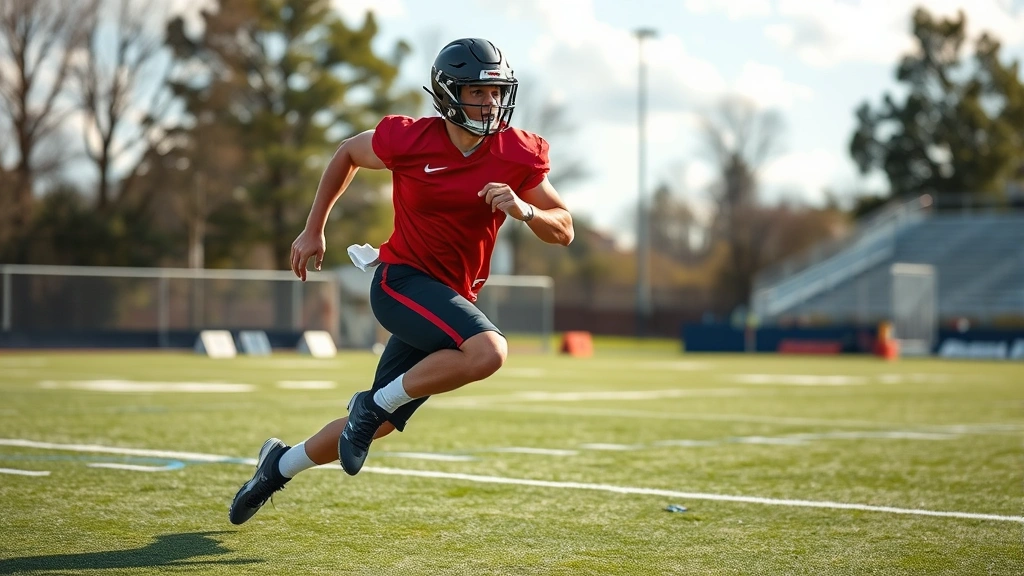
Explosive power separates elite football athletes from competent ones. Notre Dame’s strength coaches prioritize power development through carefully sequenced training blocks that build foundational strength before transitioning to power-specific exercises. The program utilizes Olympic lifting variations, plyometric exercises, and medicine ball throws to develop the elastic strength and rate of force development that football demands.
The most effective power development protocols follow a specific sequence. Athletes first build a solid strength foundation through compound movements like squats, deadlifts, and bench presses performed for moderate-to-high repetitions. Once this foundation is established, typically after 4-6 weeks, athletes transition to heavier weights with lower repetitions to increase maximum strength. Only after this preparation do coaches introduce Olympic lifting variations and explosive plyometric work, which requires a robust neuromuscular foundation to execute safely and effectively.
Key power-building exercises in Notre Dame’s system include:
- Power Cleans and Clean Variations: These Olympic lifting movements develop explosive hip extension and rapid force production, directly transferable to blocking, tackling, and acceleration.
- Box Jumps and Jump Variations: Performed explosively with proper landing mechanics, these develop lower body power and reinforce proper deceleration patterns to prevent injury.
- Medicine Ball Slams and Rotational Throws: These develop core power and rotational explosiveness critical for changing direction and generating force in multiple planes.
- Sled Pushes and Prowler Work: Building horizontal force production necessary for explosive starts and powerful movement through contact.
- Single-Leg Power Exercises: Unilateral movements develop balanced power between legs, essential for injury prevention and dynamic stability.
Research from exercise physiology demonstrates that power development requires adequate recovery between sets, typically 2-3 minutes for Olympic lifts and 1-2 minutes for plyometrics. Notre Dame coaches strictly enforce these recovery periods because power output decreases dramatically when the nervous system becomes fatigued. This principle explains why many athletes fail to develop genuine power—they don’t allow adequate recovery between maximum-effort sets.
Speed and Agility Work for Football Athletes
Speed training encompasses multiple distinct qualities: absolute speed (maximum velocity), acceleration (the ability to get to maximum velocity quickly), and change-of-direction speed (the ability to decelerate, reorient, and accelerate in new directions). Notre Dame’s program systematically develops all three because football success requires all three qualities in different contexts.
Acceleration training receives particular emphasis because most football plays occur within 5-10 yards. Athletes who can explode off the line and reach top velocity in the shortest distance gain significant competitive advantages. Acceleration development emphasizes proper starting position, low body angle during the drive phase, and powerful hip and leg extension. Coaches use resisted sprinting techniques—including sled drags, band resistance, and hill sprints—to build the strength necessary for explosive acceleration.
Change-of-direction training requires dedicated work on deceleration mechanics. Many athletes injure themselves during direction changes because they haven’t developed the eccentric strength necessary to decelerate their body mass safely. Notre Dame emphasizes cutting drills that teach proper body positioning: maintaining low center of gravity, engaging core musculature, and decelerating through the hips rather than the knees. This approach significantly reduces anterior cruciate ligament injury risk while improving cutting speed.
The program incorporates sport-specific agility work that mimics actual football movements rather than abstract cone drills. Linear sprints with directional changes, shuttle runs that develop lateral quickness, and open-field cutting drills that require decision-making all feature prominently. Research published in sports science journals demonstrates that context-specific agility training—drills that require athletes to respond to stimuli rather than simply execute predetermined patterns—produces superior transfer to actual game performance.
Sport-Specific Conditioning Protocols
Football conditioning differs fundamentally from running sports because it involves repeated high-intensity efforts separated by brief recovery periods. A football player might perform a maximum-effort sprint for 5-6 seconds, recover for 30-60 seconds while the offense or defense regroups, then repeat this effort 50-100 times during a game. This metabolic demand requires specific conditioning approaches that develop the energy systems football demands.
Notre Dame employs interval training protocols that replicate this work-to-rest ratio. Rather than traditional long-distance running, which develops aerobic capacity but fails to prepare athletes for repeated high-intensity efforts, the program emphasizes shorter intervals performed at near-maximum intensity with incomplete recovery. These sessions might include 10-15 repetitions of 40-yard sprints with 45-60 seconds recovery, or 20 repetitions of 20-yard sprints with 30-45 seconds recovery, depending on the position and training phase.
Position-specific conditioning receives careful attention because different positions require different metabolic demands. Linemen require sustained power output and the ability to generate force repeatedly through contact. Linebackers need explosive power combined with rapid directional changes. Wide receivers demand maximum speed sustainability and the ability to perform explosively after running multiple routes. Coaches structure conditioning to match these specific demands rather than applying a one-size-fits-all approach.
The program also incorporates competitive conditioning where athletes perform conditioning work in game-realistic scenarios. Small-sided scrimmages, position-group competitions, and team conditioning sessions that require tactical decision-making prove more effective than isolated running because they develop psychological toughness alongside physical conditioning. Athletes learn to perform at high intensity when fatigued and under pressure, a crucial requirement for fourth-quarter performance.
Injury Prevention and Durability Training
Notre Dame coaches recognize that the best training program produces no results if athletes spend time injured. Consequently, injury prevention receives equal emphasis with performance development. The program emphasizes movement quality, balanced strength development, and systematic progression rather than aggressive overloading that creates injury risk.
Mobility and flexibility work receives consistent attention, with athletes performing dynamic warm-ups before training and static stretching during cool-downs. However, the program avoids excessive flexibility work that compromises stability. The goal is functional mobility—the ability to move through a full range of motion with control—rather than maximum flexibility that might create instability.
Balanced strength development prevents many common football injuries. Rather than allowing athletes to emphasize their stronger side, coaches ensure that quadriceps and hamstring strength ratios remain within healthy ranges, that anterior and posterior shoulder strength stays balanced, and that left and right side strength development progresses symmetrically. Single-leg and single-arm exercises feature prominently to identify and address imbalances before they create injury risk.
The program implements systematic eccentric training that develops the muscle strength necessary for deceleration and impact absorption. Eccentric exercises—where the athlete lengthens the muscle under load—build greater strength gains than concentric movements and develop the tissue resilience necessary for injury prevention. Movements like eccentric hamstring curls, eccentric Nordic curls, and eccentric quad extensions prepare tissues for the demands of high-speed movement and rapid deceleration.
Core stability training goes beyond simple abdominal exercises to develop functional core strength that transfers to athletic performance. The program emphasizes anti-rotation exercises that teach the core to resist unwanted movement, anti-lateral flexion exercises that develop lateral stability, and anti-extension exercises that protect the lower back. These exercises develop the dynamic stability necessary for powerful movement and injury prevention.
Periodization Strategies for Peak Performance
Elite programs like Notre Dame structure training through periodization, dividing the year into distinct training phases with specific objectives. This approach prevents overuse injuries, manages fatigue, and ensures athletes peak during competition. When you review college football predictions, you’ll notice that programs with superior conditioning typically perform better late in the season when fatigue accumulates in competitors without proper periodization.
The offseason phase (typically January-April) emphasizes building strength and power. Athletes perform higher volume training with moderate-to-heavy loads, developing the muscular foundation necessary for competitive performance. This phase includes extensive Olympic lifting, maximum strength work, and basic power development.
The spring training phase focuses on translating strength into sport-specific power and speed. Training volume decreases while intensity increases. Athletes perform more plyometric work, Olympic lifting variations, and sport-specific conditioning. This phase bridges the gap between general strength development and competitive performance demands.
The preseason phase (typically July-August) emphasizes sport-specific conditioning and tactical preparation. Training becomes more football-specific, with higher emphasis on team conditioning, competitive drills, and position-group work. The program gradually introduces the metabolic demands of competition while maintaining strength and power through lower-volume, higher-intensity sessions.
The in-season phase requires careful management to maintain performance while managing fatigue. Training volume decreases significantly, focusing on maintenance of strength and power through brief, intense sessions. The program emphasizes recovery, managing practice volume, and addressing any movement compensations that develop through the competitive season.
This periodized approach prevents the common mistake of maintaining identical training intensity and volume year-round, which inevitably leads to overtraining, injury, and performance decrements. By strategically varying training emphasis across the year, Notre Dame maintains athlete health while ensuring peak performance during competition.
Recovery and Nutrition Integration
Notre Dame coaches understand that training provides the stimulus for adaptation, but recovery enables that adaptation to occur. The program integrates systematic recovery practices including sleep optimization, strategic nutrition timing, active recovery sessions, and psychological recovery strategies.
Sleep receives priority status because research demonstrates that sleep deprivation impairs athletic performance, slows recovery, and increases injury risk. The program educates athletes on sleep hygiene, recommends 7-9 hours nightly, and provides quiet recovery spaces for rest. Elite athletes recognize that sleep represents a legitimate training component, not wasted time.
Nutrition timing supports the adaptation process. Post-training meals combining protein and carbohydrates replenish muscle glycogen and provide amino acids for muscle protein synthesis. Pre-training nutrition ensures adequate fuel for high-intensity work. Throughout the day, consistent protein intake supports tissue repair and adaptation. Athletes working with fantasy football rankings sites might notice that players from programs with superior nutrition support consistently produce higher performance metrics.
Active recovery sessions—light movement, stretching, and mobility work—enhance blood flow, reduce soreness, and accelerate recovery between intense training sessions. These sessions typically occur 1-2 times weekly during heavy training phases, allowing athletes to recover actively rather than remaining sedentary.
The program implements recovery monitoring using heart rate variability, resting heart rate, and athlete-reported readiness to determine when athletes have recovered sufficiently for intense training. This approach prevents overtraining while maximizing training stimulus. Some athletes require more recovery time than others, and elite programs recognize this individual variation rather than forcing identical recovery protocols on all athletes.
FAQ
What makes Notre Dame’s training approach different from other college football programs?
Notre Dame emphasizes integrated athletic development rather than isolated strength or speed training. The program prioritizes movement quality, systematic periodization, injury prevention, and sport-specific application. Coaches focus on developing complete athletes capable of performing consistently at high intensity rather than optimizing single qualities like maximum strength or absolute speed.
Can high school athletes benefit from Notre Dame’s training methods?
Absolutely. While the intensity and complexity scale to athlete maturity, the foundational principles apply to all levels. High school athletes should emphasize movement quality, develop balanced strength, incorporate power work once strength foundations are established, and follow periodized training plans. Check high school football scores to identify programs emphasizing systematic training—they typically perform better across seasons. Starting these training methods early provides significant advantages for college recruitment and long-term athletic development.
How often should athletes train per week following Notre Dame’s approach?
During offseason phases, athletes typically train 4-5 days weekly, combining strength, power, speed, and conditioning work. During in-season, training frequency decreases to 2-3 days weekly to manage fatigue while maintaining performance. The specific frequency depends on the training phase and individual recovery capacity.
What’s the most important component of Notre Dame’s training system?
If forced to identify a single component, movement quality and injury prevention would rank highest. No training stimulus produces results if the athlete becomes injured. The program prioritizes sustainable training that develops athletes over years rather than maximizing performance in a single training block at the cost of long-term health.
How does Notre Dame integrate best football gloves and equipment into training?
Elite programs recognize that equipment affects movement patterns and performance. Athletes train in similar equipment to competition, allowing neuromuscular adaptation to the specific demands of game situations. However, training also includes movements without equipment to develop underlying strength and movement quality independent of external support.
What role does nutrition play in Notre Dame’s training success?
Nutrition represents a critical component equal to training stimulus. Athletes receive education on macronutrient requirements, meal timing, hydration strategies, and supplementation. The program ensures adequate energy availability for training demands while supporting recovery and adaptation. Many athletes fail to achieve training potential through inadequate nutrition, a mistake elite programs eliminate through systematic nutrition education and support.
How long does it take to see results from Notre Dame-style training?
Initial strength and power improvements typically appear within 4-6 weeks. Speed and conditioning improvements require 6-8 weeks of consistent training. However, significant athletic transformation—where athletes consistently perform at elite levels—requires 12-24 months of consistent, properly periodized training. Elite athletes recognize that sustainable improvement requires patience and consistency rather than expecting rapid transformations.
Can athletes over 25 benefit from these training methods?
Yes. While younger athletes may adapt more rapidly, adults consistently demonstrate significant strength, power, and conditioning improvements through systematic training. The principles remain identical regardless of age—appropriate progression, movement quality, adequate recovery, and consistent effort produce results. Masters athletes and adult competitive athletes benefit tremendously from applying elite training principles to their development.


