
Iowa High School Football: Top Workout Plans for Peak Performance
Iowa high school football demands exceptional physical conditioning, mental toughness, and sport-specific strength development. Whether you’re a linebacker pursuing ball carriers across the field or a quarterback dropping back for the perfect pass, your training regimen directly determines your performance on Friday nights. The Hawkeye State produces some of the nation’s most competitive high school football programs, and athletes who dedicate themselves to proven workout strategies gain the competitive edge needed to excel.
The difference between average players and all-state caliber athletes isn’t just talent—it’s the commitment to intelligent, progressive training. Iowa’s cold climate and demanding schedule require year-round preparation that builds explosive power, cardiovascular endurance, and injury resilience. This comprehensive guide reveals the top workout plans specifically designed for Iowa high school football athletes who refuse to settle for anything less than excellence.
Off-Season Strength Foundation Phase
The off-season represents your golden opportunity to build the muscular foundation that carries you through a grueling football season. For Iowa high school football players, the off-season typically spans January through April—critical months when competitors separate themselves from the pack. This phase focuses on building absolute strength, establishing proper movement patterns, and correcting muscular imbalances accumulated during the previous season.
Foundational Strength Training Structure:
- Training Frequency: 4-5 days per week with alternating upper/lower body splits
- Primary Lifts: Barbell back squats, deadlifts, bench press, and overhead press form the cornerstone
- Rep Ranges: 6-8 reps for compound movements to maximize strength gains
- Progressive Overload: Add 5-10 pounds weekly to major lifts when possible
A sample week includes Monday (lower body emphasis with squats, Romanian deadlifts, and leg press), Wednesday (upper body with bench press, rows, and pull-ups), and Friday (full-body power work). Tuesday and Thursday incorporate auxiliary exercises targeting weak points—glute activation, core stability, and shoulder health.
According to the American College of Sports Medicine, strength training 3-4 times weekly with progressive resistance produces measurable improvements in athletic performance within 8-12 weeks. Iowa football athletes should prioritize compound movements because they build functional strength applicable to game situations.
Incorporate accessory work strategically: dumbbell rows, Bulgarian split squats, trap bar deadlifts, and single-leg exercises build stabilizer muscles and prevent injuries. The hamstring-to-quadriceps ratio should be 0.6:1 or higher—deficiency here increases ACL injury risk, particularly dangerous for defensive backs and wide receivers cutting against their legs.
Pre-Season Power Development
Once spring football concludes, the pre-season phase (May-August) transitions from pure strength to explosive power. Iowa summers provide ideal conditions for outdoor conditioning, and elite programs leverage this window to develop the speed and agility that creates game-changing plays.
Power Development Characteristics:
- Reduce rep ranges to 3-5 repetitions with explosive intent
- Implement Olympic lifting variations: power cleans, hang cleans, and push presses
- Decrease rest periods between sets to build anaerobic capacity
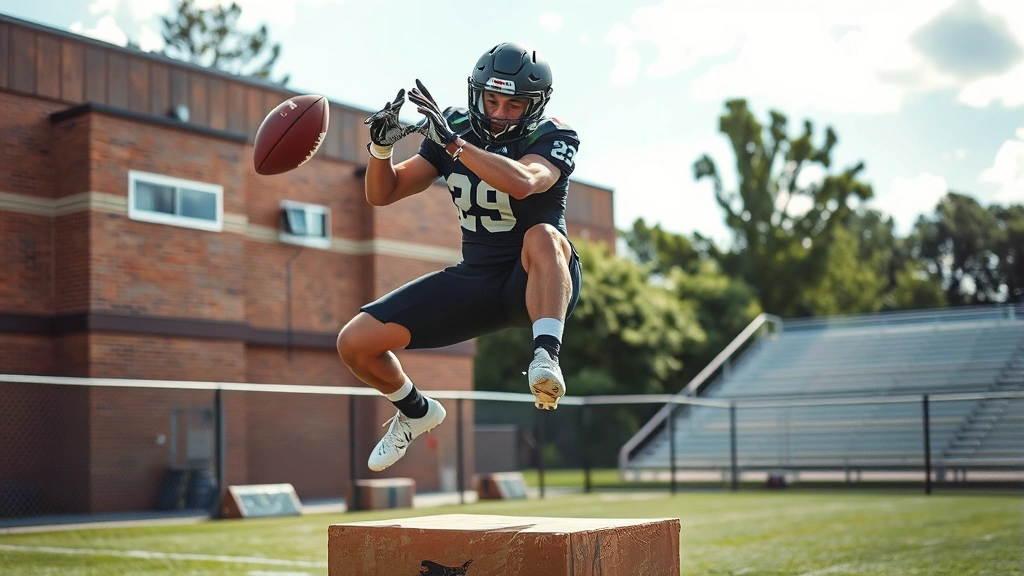
- Introduce plyometric work: box jumps, broad jumps, and medicine ball throws
- Emphasize rate of force development through ballistic movements
Olympic lifts deserve special attention for Iowa high school football development. The power clean teaches athletes to explosively extend their hips—the fundamental movement pattern in football. A player who can explosively drive through their legs generates superior blocking power, tackling force, and acceleration. The National Strength and Conditioning Association recommends Olympic lifting variations as superior for developing athletic power compared to traditional strength training alone.
Plyometric circuits build elastic strength and reactive ability. A sample session includes: box jumps (5 sets of 3 reps), broad jumps (5 sets of 3 reps), and bounding for distance (6 sets of 30 meters). These movements teach the nervous system to produce maximum force quickly—exactly what happens when a linebacker explodes toward the ball carrier.
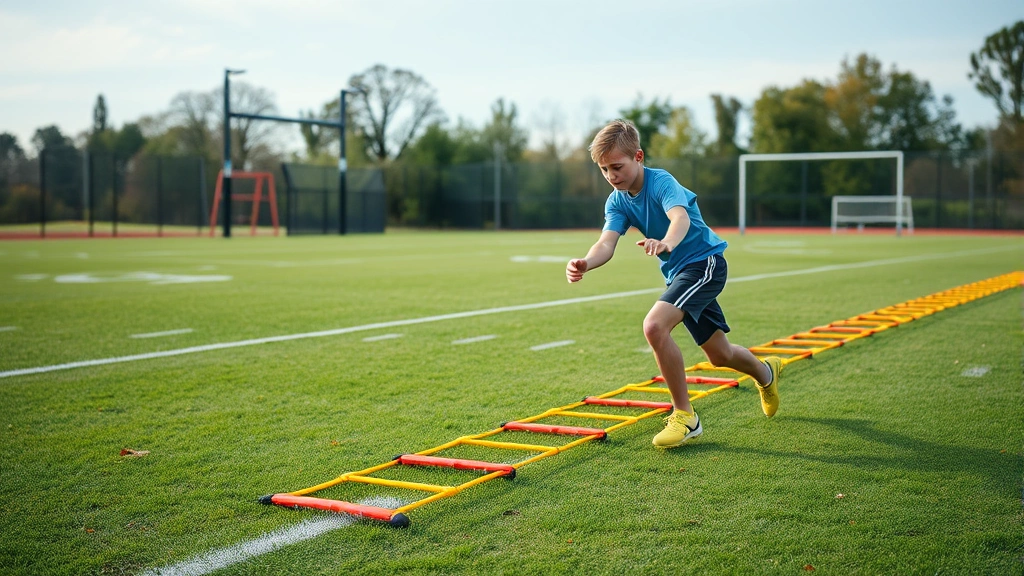
Agility ladder drills and cone drills develop foot speed and change-of-direction ability. Iowa programs should emphasize lateral movement patterns since defensive schemes demand side-to-side agility. T-drills, L-drills, and shuttle runs performed at maximum intensity build the foot coordination necessary for elite performance.
In-Season Maintenance and Performance
The regular season (September-November for Iowa high school football) demands a completely different training philosophy. Your goal shifts from building fitness to maintaining strength while managing fatigue and preventing injuries. Most high school programs practice 5-6 days weekly with games on Friday or Saturday, leaving minimal recovery windows.
In-Season Training Principles:
- Reduce training volume by 40-50% compared to off-season
- Maintain strength through 2-3 weekly sessions focusing on compound movements
- Implement conjugate training methods alternating between strength and power work
- Prioritize movement quality over quantity—fatigue impairs form and injury risk
- Use quarter-by-quarter pacing strategies to understand energy demands
Tuesday and Thursday in-season sessions should focus on movement pattern reinforcement and injury prevention. A typical Tuesday might include: 3 sets of 3 back squats at 85% of maximum, 3 sets of 5 deadlifts, and core stability work. Thursday emphasizes upper body with bench press variations and pulling movements. This maintains neuromuscular function without creating excessive fatigue before Friday competition.
Contrast training—pairing heavy strength movements with explosive power movements—proves particularly effective in-season. For example, perform 3 repetitions of heavy back squats immediately followed by 5 box jumps. This potentiation effect maximizes power output while maintaining strength with reduced volume.
Recovery becomes non-negotiable during the season. Check out our Peak Play Arena Blog for additional insights on football-specific conditioning. Players need 7-9 hours of sleep nightly, adequate protein intake (1.2-2.0 grams per kilogram of body weight), and strategic use of active recovery on non-game days.
Position-Specific Training Protocols
Iowa high school football encompasses diverse positions, each demanding unique physical attributes and training emphasis. Effective programs customize conditioning to position-specific demands while maintaining foundational strength across the entire roster.
Linemen (Offensive and Defensive): These athletes require maximum strength and power production. Training emphasizes heavy compound movements: squats (405+ pounds for high school level), deadlifts, and bench press. Core strength proves essential—linemen engage in constant lateral and rotational forces. Incorporate Pallof presses, cable chops, and anti-rotation exercises. Push-sled work develops explosive lower body power applicable to drive-blocking and shed techniques.
Linebackers: The quarterback of the defense requires balanced strength, explosive power, and exceptional lateral agility. Training combines heavy lower body work with plyometric development and conditioning circuits. Box jumps, lateral bounds, and shuttle sprints build the reactive athleticism linebackers need. Upper body strength remains important for shedding blocks and making tackles.
Defensive Backs and Wide Receivers: Speed and agility dominate these positions. While strength training maintains 2-3 days weekly, conditioning emphasizes acceleration work, cutting mechanics, and maximal velocity development. Hill sprints, resisted sled pushes, and acceleration drills from various starting positions improve first-step quickness. Single-leg strength work (Bulgarian split squats, single-leg deadlifts) prevents lower extremity injuries during cutting movements.
Quarterbacks and Kickers: These specialists require rotational power and stability. Medicine ball rotational throws, landmine press variations, and single-leg balance work develop the core stability necessary for accurate throwing and powerful kicks. Shoulder mobility and stability exercises prevent overuse injuries common in these positions.
Recovery and Injury Prevention Strategies
Iowa’s climate and demanding football schedule create injury risks that smart programming mitigates. The most successful Iowa high school programs treat recovery as seriously as training stimulus.
Sleep and Nutrition Optimization: Sleep represents the most underutilized recovery tool. Elite athletes prioritize 8-9 hours nightly, particularly during the season. Growth hormone release and muscle protein synthesis accelerate during deep sleep stages. Protein intake timing matters—consume 20-40 grams within 2-3 hours post-workout to maximize muscle protein synthesis. The International Society of Sports Nutrition recommends 1.6-2.2 grams of protein per kilogram of body weight daily for athletes engaged in resistance training.
Hydration strategies deserve attention, especially during Iowa’s hot summers. Fluid needs increase dramatically during pre-season conditioning. Monitor urine color (pale yellow indicates adequate hydration) and maintain consistent fluid intake throughout training days. Electrolyte replacement becomes important during sessions exceeding 90 minutes.
Soft Tissue Management and Mobility: Foam rolling, stretching, and targeted mobility work prevent common football injuries. Spend 10-15 minutes post-training on soft tissue work targeting tight areas. Hip mobility proves critical—tight hip flexors impair squat mechanics and increase lower back strain. Perform 90/90 stretches, couch stretches, and pigeon pose variations daily.
Shoulder mobility demands attention for throwing athletes and linemen. Sleeper stretches, cross-body shoulder stretches, and band pull-aparts maintain healthy shoulder function. Implement these daily, not just during training sessions.
Injury Prevention Exercises: Dedicate 5-10 minutes daily to injury prevention work. Nordic hamstring curls build eccentric hamstring strength, reducing strain injury risk. Single-leg balance work on unstable surfaces (BOSU balls, balance discs) improves ankle stability and proprioception. Glute activation exercises (clamshells, fire hydrants, banded walks) strengthen often-dormant muscles critical for knee health.
Anterior cruciate ligament (ACL) injuries plague high school football players. Implement ACL prevention programs combining eccentric strength work, balance training, and movement pattern correction. The American Physical Therapy Association documents that structured ACL prevention programs reduce injury incidence by 50-70% when implemented consistently.
Periodically assess movement quality. Video yourself performing squats and lunges—poor mechanics indicate muscle imbalances or mobility restrictions requiring attention. Many injuries stem from movement compensations that training reveals before catastrophic damage occurs.
FAQ
How many days per week should Iowa high school football players train?
Off-season training involves 4-5 days weekly with adequate recovery between sessions. During pre-season, maintain 4-5 days weekly while emphasizing power development. In-season, reduce to 2-3 dedicated strength sessions, allowing practice and games to provide conditioning stimulus. Always include at least one complete rest day weekly.
What’s the ideal body composition for Iowa high school football?
Body composition targets vary by position. Linemen typically perform optimally at 12-15% body fat with substantial muscle mass. Skill position players (receivers, defensive backs) benefit from 8-12% body fat emphasizing power-to-weight ratio. Rather than fixating on scale weight, monitor athletic performance metrics: vertical jump, broad jump, sprint times, and strength levels indicate true readiness.
Should Iowa high school football players lift year-round?
Yes, but with periodized intensity and volume. Off-season emphasizes strength building. Pre-season shifts toward power development. In-season focuses on maintenance with reduced volume. This cycling prevents plateaus, manages fatigue, and optimizes performance during competition. Complete training breaks (1-2 weeks) following the season allow recovery and mental refreshment.
How important is speed training for Iowa high school football success?
Speed training proves essential but shouldn’t dominate programming. Strength forms the foundation—stronger athletes produce greater force application, translating to improved speed and acceleration. Dedicate 1-2 days weekly to speed development through sprint work, acceleration drills, and plyometrics. Understanding game duration and energy system demands helps structure appropriate conditioning.
What supplements benefit Iowa high school football players?
Focus on foundational nutrition before supplementation. Protein powder, creatine monohydrate, and beta-alanine show research support for athletes. Consult with strength coaches and sports nutritionists before introducing supplements. Ensure products are tested for banned substances if competing at high levels. Most benefits derive from consistent training and proper nutrition rather than supplements alone.


