
How to Build Stamina? Coach-Approved Tips for Peak Athletic Performance
Stamina is the cornerstone of athletic excellence, and whether you’re a football player, distance runner, or weekend warrior, building endurance capacity transforms your performance on the field. The ability to maintain high intensity throughout a college football game or any competitive event depends on systematic training that strengthens your cardiovascular system, muscular endurance, and mental resilience.
Professional coaches across all sports emphasize that stamina isn’t built overnight—it’s developed through consistent, progressive training that challenges your aerobic and anaerobic systems. Understanding the science behind stamina development empowers you to implement evidence-based strategies that deliver measurable results. This comprehensive guide reveals coach-approved techniques that elite athletes use to dominate their sport, backed by exercise physiology research and real-world training success.
The journey to building exceptional stamina requires dedication, smart programming, and patience. Let’s explore the proven methods that separate champions from average performers.
Understanding Stamina and Cardiovascular Fitness
Stamina, scientifically defined as aerobic capacity and muscular endurance, represents your body’s ability to sustain effort over extended periods. The American College of Sports Medicine (ACSM) establishes that cardiovascular fitness forms the foundation of stamina development, measured by your VO2 max—the maximum amount of oxygen your body utilizes during intense exercise.
Your heart is a muscle that responds to training stress like any other. When you consistently challenge your cardiovascular system, your heart becomes more efficient at pumping oxygen-rich blood to working muscles. This adaptation increases stroke volume (the amount of blood pumped per beat) and decreases resting heart rate, allowing you to perform more work at lower physiological costs.
The aerobic energy system, which relies on oxygen for ATP production, powers activities lasting beyond two minutes. Understanding this physiological reality helps you structure training appropriately. Whether you’re analyzing football field dimensions and sprint distances or planning endurance sessions, knowledge of energy systems guides effective programming.
Beyond cardiovascular adaptations, stamina also involves muscular endurance—your muscles’ capacity to repeatedly contract against resistance without fatigue. This dual adaptation requirement means comprehensive stamina training addresses both systems through varied training modalities.
Progressive Running Programs for Endurance
Running forms the foundation of stamina development for most athletes. Coach-approved programs follow progressive structures that gradually increase volume and intensity, preventing injury while building aerobic capacity. The American College of Sports Medicine recommends 150 minutes of moderate-intensity aerobic activity weekly for general fitness, but serious athletes require more sophisticated programming.
Establishing Your Aerobic Base
Begin with consistent, conversational-pace running at 60-70% of your maximum heart rate. This zone develops aerobic capacity without excessive fatigue, allowing your body to adapt to training stress. Complete three to four sessions weekly at varying distances, gradually increasing weekly volume by no more than 10%. This conservative progression prevents overuse injuries that derail training progress.
Long, slow distance (LSD) runs teach your body to efficiently burn fat as fuel and strengthen connective tissues. A typical week includes one LSD session at 1.5 to 2 times your longest recent race distance. For football players preparing for the demands of a football’s game-length competition, these runs build the aerobic foundation supporting repeated sprint efforts.
Tempo Running and Threshold Development
Tempo runs at 85-90% maximum heart rate develop your lactate threshold—the intensity where lactate accumulates faster than your body clears it. Completing one tempo session weekly (after adequate warm-up) trains your system to sustain higher intensities. Start with 15-20 minute efforts and progress to 30-40 minutes as adaptation occurs. This training zone proves invaluable for athletes needing sustained intensity throughout competition.
Tempo runs feel comfortably hard—you can speak single words but not sentences. This subjective intensity marker helps athletes self-regulate without constant heart rate monitoring. Progressive tempo training directly improves performance during the physically demanding periods of athletic competition.
High-Intensity Interval Training HIIT Protocols
High-intensity interval training revolutionized stamina development by delivering aerobic adaptations in shorter timeframes than traditional steady-state training. HIIT alternates brief maximum-effort intervals with recovery periods, creating powerful training stimulus with time efficiency.
Classic HIIT Structure
The most researched protocol involves 30 seconds of maximum effort followed by 30 seconds of easy recovery, repeated 8-10 times. This structure, proven effective in exercise physiology research, elevates VO2 max and improves cardiac output. Complete HIIT sessions twice weekly with adequate recovery between efforts—muscles need time to adapt to intense training stress.
Sport-Specific Interval Programming
Longer intervals (2-5 minutes) at near-maximum intensity develop anaerobic capacity and speed endurance. These efforts train your system to maintain high velocity despite lactate accumulation, directly mimicking game demands. Football players benefit from interval protocols reflecting actual game demands—repeated 40-yard sprints with brief recovery intervals train the exact energy systems required during competition.
Research demonstrates that HIIT produces superior VO2 max improvements compared to steady-state training while requiring significantly less time commitment. Athletes completing two weekly HIIT sessions plus two moderate-intensity sessions typically experience rapid stamina improvements within 4-6 weeks.
Recovery Between Intervals
Active recovery (easy jogging or walking) between intervals maintains elevated heart rate while allowing partial lactate clearance. The ratio of work to recovery determines training intensity—equal work-to-recovery ratios (1:1) prove less demanding than 2:1 or 3:1 ratios. Progressive programming starts with generous recovery and gradually decreases recovery duration as fitness improves.

Strength Training for Stamina Development
Resistance training enhances stamina through multiple mechanisms beyond simple muscle building. Strength training improves running economy (oxygen cost per unit distance), increases force production efficiency, and strengthens connective tissues that support high-volume training.
Compound Movement Emphasis
Coach-approved stamina programs emphasize compound movements—squats, deadlifts, lunges, and step-ups—that engage large muscle groups and demand significant cardiovascular response. These exercises improve force production in the movement patterns required for your sport. Completing 8-12 repetitions at moderately heavy loads (70-85% one-repetition maximum) builds strength-endurance that translates directly to sport performance.
Circuit Training for Combined Benefits
Circuit training combines strength and cardiovascular work in time-efficient sessions. Performing 5-8 exercises with minimal rest between movements maintains elevated heart rate while developing strength. A typical circuit includes lower body push (squats), lower body pull (deadlifts), upper body push (push-ups), upper body pull (rows), and core work, completed for 3-4 rounds with 1-2 minutes rest between rounds.
This training approach proves particularly valuable for athletes with limited training time. The cardiovascular demand of circuit training develops aerobic capacity while strength gains improve movement efficiency and injury resilience.
Periodization and Progressive Overload
Effective strength training for stamina follows periodized programming that alternates between strength-focused phases (heavier loads, lower reps), hypertrophy phases (moderate loads, moderate reps), and endurance phases (lighter loads, higher reps). This variation prevents adaptation plateaus and maintains training stimulus as fitness improves. Coaches typically structure 4-6 week blocks emphasizing different qualities, allowing proper recovery and adaptation between focuses.
Nutrition and Recovery Strategies
Stamina development occurs during recovery, not during training itself. The stress of training creates adaptation stimulus, but actual improvements happen during rest. Proper nutrition and recovery practices amplify training benefits and accelerate progress.
Carbohydrate Periodization
Carbohydrates fuel high-intensity training and replenish muscle glycogen stores depleted during workouts. Athletes building stamina require adequate carbohydrate intake—typically 5-10 grams per kilogram of body weight daily, depending on training volume. Timing matters: consuming carbohydrates within 30 minutes post-exercise accelerates glycogen resynthesis and supports adaptations.
Strategic carbohydrate periodization enhances training adaptations. Some coaches recommend moderate carbohydrate intake during easy training days (allowing fat-burning) and high carbohydrate intake surrounding intense training sessions. This approach improves fat adaptation while ensuring adequate fuel for high-quality workouts.
Protein for Muscular Adaptation
Protein supports muscle protein synthesis and recovery from training stress. Athletes engaging in strength training should consume 1.6-2.2 grams of protein per kilogram of body weight daily, distributed across multiple meals. Consuming 20-40 grams of protein within two hours post-exercise optimizes muscle protein synthesis and supports strength gains.
Sleep and Recovery Protocols
Sleep represents the most powerful recovery tool available. During sleep, growth hormone secretion increases, facilitating tissue repair and adaptation. Most athletes require 7-9 hours nightly for optimal recovery, though individual needs vary. Consistent sleep schedules (sleeping and waking at fixed times) improve sleep quality and support circadian rhythm alignment.
Active recovery days—easy movement like walking, light swimming, or gentle cycling—enhance blood flow to fatigued muscles, accelerating lactate clearance and waste product removal. Incorporating 1-2 complete rest days weekly prevents overtraining and maintains training enthusiasm.
Sport-Specific Conditioning for Football
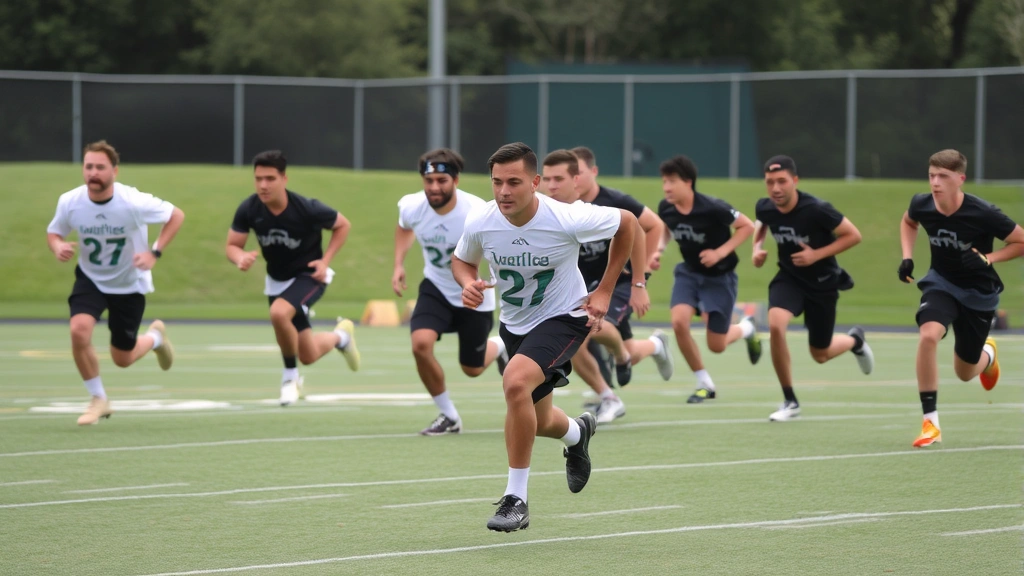
Football demands unique stamina characteristics—repeated maximum-effort sprints separated by brief recovery, requiring both aerobic base and anaerobic capacity. Understanding college football game duration reveals that athletes must sustain performance across 3-4 hours of competition, with plays averaging 5-8 seconds of intense effort followed by 30-40 seconds of relative recovery.
Position-Specific Training
Different positions require tailored conditioning. Defensive backs and wide receivers need exceptional acceleration and repeated sprint capacity, benefiting from short-interval HIIT and acceleration-focused drills. Linemen require strength-endurance and the ability to sustain effort against resistance, emphasizing circuit training and moderate-intensity running. Quarterbacks need aerobic fitness supporting sustained focus throughout games.
Analyzing football game statistics reveals that stamina deterioration correlates with increased injuries and reduced performance in final quarters. Players with superior conditioning maintain technique and decision-making when fatigue sets in, directly impacting competitive outcomes.
Practice Integration Strategies
Conditioning shouldn’t exist in isolation from football-specific skills. Coaches effectively build stamina through practices emphasizing continuous movement and limited rest. Modifying drills to increase work density (more repetitions in less time) naturally develops conditioning while maintaining sport-specificity. Conditioning circuits using football movements—shuttle sprints, lateral bounds, agility ladder drills—improve fitness while reinforcing athletic patterns.
Game-Simulation Training
Training sessions replicating game demands prove highly effective. Conducting scrimmages with extended play sequences and minimal stoppages develops the specific stamina required during actual competition. Players experience the repeated sprint-recovery pattern, mental fatigue, and physical demands of real games in controlled environments.
Mental Toughness and Stamina
Stamina involves psychological components equally important as physiological adaptations. Mental toughness—the ability to maintain focus, motivation, and effort during discomfort—separates elite endurance athletes from average performers.
Developing Discomfort Tolerance
Athletes must practice tolerating the sensations accompanying intense effort. High-intensity intervals create significant discomfort as lactate accumulates and muscles fatigue. Rather than avoiding this sensation, elite athletes embrace it through progressive exposure. Regular HIIT training conditions your nervous system to tolerate discomfort, reducing the perceived difficulty of intense efforts.
Visualization techniques enhance mental stamina. Athletes imagining themselves performing strongly during fatigue develop mental pathways supporting actual performance. Spending 5-10 minutes daily visualizing successful performance during challenging moments strengthens mental resilience and improves competitive outcomes.
Goal-Setting and Progress Monitoring
Clear, measurable goals provide motivation during challenging training phases. Rather than vague objectives like “get better,” specific targets (run 5K in under 20 minutes, complete 12 rounds of circuit training) create concrete benchmarks. Regular progress monitoring—tracking workouts, heart rate data, and performance metrics—reveals improvement and maintains motivation.
Managing Training Stress
Balancing training stress with recovery prevents mental burnout and overtraining. Athletes pushing excessively without adequate recovery experience declining motivation, persistent fatigue, and elevated resting heart rate. Experienced coaches manipulate training stress strategically, varying intensity and volume to maintain enthusiasm while driving adaptation.
FAQ
How long does it take to build stamina?
Initial stamina improvements appear within 2-3 weeks of consistent training, with significant adaptations occurring by 6-8 weeks. However, developing exceptional stamina requires months or years of progressive training. Most athletes experience measurable VO2 max improvements within 4-6 weeks of implementing structured conditioning programs.
Can you build stamina without running?
Absolutely. Cycling, rowing, swimming, and circuit training all develop cardiovascular fitness and stamina. Choose activities you enjoy for sustainability. Cross-training reduces overuse injury risk while developing stamina through varied movement patterns.
What’s the difference between aerobic and anaerobic stamina?
Aerobic stamina develops through lower-intensity, longer-duration training using oxygen for energy. Anaerobic stamina builds through high-intensity intervals and strength training, developing capacity to perform without adequate oxygen. Both qualities prove essential for most sports.
How often should I do HIIT training?
Most coaches recommend 2-3 HIIT sessions weekly, separated by at least one day. Excessive HIIT frequency prevents adequate recovery and increases injury risk. Combining HIIT with moderate-intensity training optimizes results while maintaining sustainability.
Does strength training reduce stamina?
Strategic strength training enhances stamina through improved efficiency and injury resilience. However, excessive strength training volume without adequate recovery can impair aerobic development. Balance strength work with dedicated aerobic training for optimal stamina development.
What role does nutrition play in stamina?
Nutrition profoundly impacts stamina development. Adequate carbohydrates fuel intense training, protein supports muscle adaptation, and micronutrients enable optimal physiological function. Poor nutrition blunts training adaptations and impairs recovery, limiting stamina improvements regardless of training quality.
Can I build stamina while losing weight?
Yes, but carefully. Modest caloric deficits (300-500 calories daily) combined with adequate protein and structured training preserve muscle while improving stamina. However, aggressive caloric restriction impairs training capacity and slows adaptation. Moderate approaches prove most sustainable.
How does altitude training affect stamina?
Training at elevation increases red blood cell production, enhancing oxygen-carrying capacity and improving sea-level performance. However, altitude training requires careful planning and gradual acclimatization. Most athletes experience benefits after 2-3 weeks at elevation, with improvements persisting months after returning to sea level.


