
FSU vs Alabama: Which Team Has Better Fitness? A Deep Dive into Conditioning and Athletic Performance
When Florida State and Alabama take the field, fans witness two powerhouse programs with distinct training philosophies and conditioning strategies. The question of which team possesses superior fitness transcends simple observation—it requires understanding the science of athletic conditioning, periodization models, and how elite collegiate football programs structure their strength and endurance training. Both FSU and Alabama have produced NFL-caliber athletes, but their approaches to building championship-level fitness reveal fascinating differences in methodology, philosophy, and execution.
Fitness in college football extends far beyond basic cardiovascular health. Modern strength and conditioning coaches employ sophisticated metrics including VO2 max, muscular power output, body composition analysis, and sport-specific movement efficiency. The American College of Sports Medicine emphasizes that elite football conditioning requires integrated approaches combining aerobic capacity, anaerobic power, strength maintenance, and injury prevention. Both FSU and Alabama invest heavily in these areas, but their implementation strategies differ significantly based on their respective coaching staff philosophies and player development systems.
Understanding which program maintains superior fitness requires examining their training infrastructure, coaching expertise, player recruitment patterns, and measurable performance indicators throughout the season. This comprehensive analysis explores the fitness advantages and challenges each program faces.
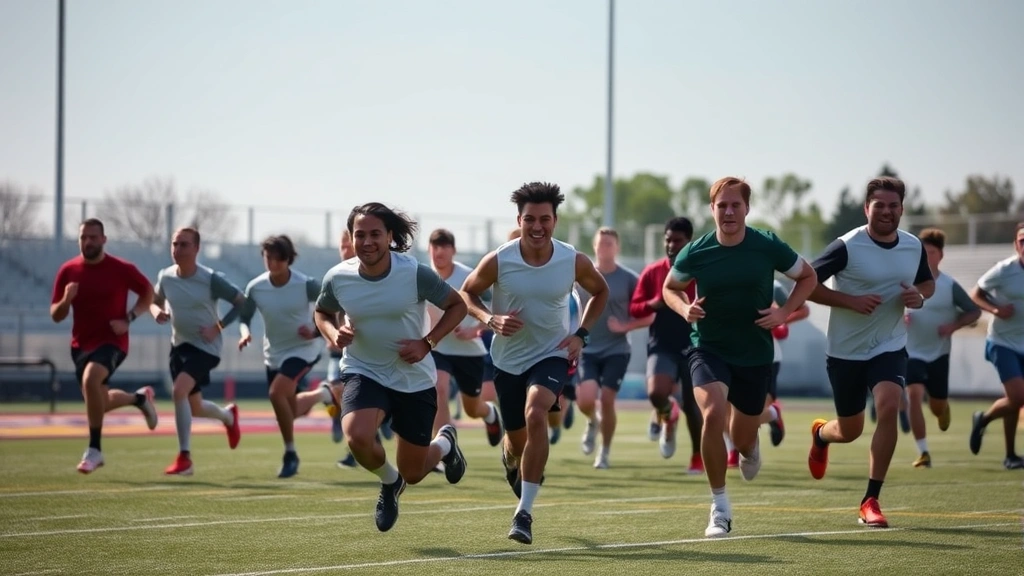
FSU’s Conditioning Philosophy and Training Methods
Florida State’s football program operates under a strength and conditioning model emphasizing explosive power development and sport-specific movement patterns. The Seminoles’ coaching staff prioritizes building athletes capable of dominating in short-burst activities—critical for defensive line disruption, linebacker pursuit angles, and wide receiver separation. FSU’s fitness approach incorporates high-intensity interval training (HIIT) principles, recognizing that football demands repeated efforts separated by brief recovery periods rather than sustained aerobic effort.
The FSU conditioning program utilizes advanced monitoring technology including GPS tracking during practices, heart rate variability analysis, and force plate measurements to assess player readiness. Coaches track individual player metrics to prevent overtraining while ensuring adequate stimulus for adaptation. This data-driven approach allows FSU’s strength staff to customize programming for different position groups—offensive linemen receive different conditioning emphasis than cornerbacks, reflecting the distinct physiological demands of their roles.
FSU incorporates substantial plyometric training, focusing on reactive strength index and elastic energy utilization. Defensive backs and skill position players benefit from explosive power development that translates directly to game performance. The program emphasizes movement quality alongside power output, recognizing that college football success requires technical excellence under fatigue.
The Seminoles’ training cycle integrates periodized approaches where off-season strength building transitions into in-season maintenance with sport-specific conditioning emphasis. This prevents fitness degradation during competition while managing injury risk. FSU coaches understand that maintaining explosive capacity throughout a 13-game schedule requires strategic programming rather than random effort.

Alabama’s Strength and Fitness Infrastructure
Alabama’s football program operates under legendary strength coach Scott Cochran’s proven system, widely recognized as among the most sophisticated in collegiate athletics. The Crimson Tide’s conditioning philosophy emphasizes building relentless athletes capable of maintaining dominance throughout four quarters and entire seasons. Alabama’s infrastructure investment in sports science exceeds most collegiate programs, with state-of-the-art facilities, multiple strength coaches specializing in different training modalities, and comprehensive recovery technology.
The Alabama model prioritizes building work capacity—the ability to perform at high intensity repeatedly with minimal fatigue accumulation. This philosophy requires exceptional aerobic base development combined with anaerobic power, creating athletes who resist fatigue in fourth quarters when championship games are decided. Alabama’s conditioning produces players demonstrating remarkable consistency in performance metrics regardless of game situation or opponent quality.
Alabama implements sophisticated load management protocols, utilizing wearable technology to monitor training stress, recovery status, and individual readiness. Coaching staff adjusts practice intensity based on accumulated fatigue, preventing overtraining while ensuring adequate stimulus for fitness adaptation. This scientific approach explains Alabama’s historically low injury rates relative to training volume—coaches understand physiological adaptation requires balance between stress and recovery.
The Crimson Tide’s strength and conditioning program emphasizes building redundancy in athletic qualities. Players develop exceptional baseline fitness across multiple energy systems, creating adaptable athletes who perform effectively in various game situations. This breadth of conditioning capability provides Alabama advantages when facing unexpected game scenarios or opponent schemes requiring adjustment.
Comparing Aerobic Capacity Development
Aerobic capacity, measured as VO2 max and lactate threshold, provides foundational fitness for football athletes. Both FSU and Alabama recognize that players must recover between plays while maintaining performance throughout games. However, their approaches to aerobic development differ subtly but meaningfully.
Alabama emphasizes building robust aerobic capacity through sustained conditioning work, creating athletes with exceptional oxygen utilization efficiency. The Crimson Tide’s training incorporates longer intervals and continuous efforts that build mitochondrial density and capillary networks. This approach produces players who maintain performance during extended offensive drives or defensive sequences without excessive fatigue accumulation.
FSU’s aerobic training emphasizes sport-specific intensity distribution, recognizing that football rarely demands sustained maximum effort. Rather than building pure aerobic capacity, FSU conditions players for repeated high-intensity efforts separated by active recovery periods. This approach may produce slightly lower absolute VO2 max values but superior sport-specific conditioning for football’s actual demands.
Research from the Journal of Sports Sciences demonstrates that sport-specific conditioning often outperforms general aerobic training for performance in that sport. FSU’s approach aligns with this research, while Alabama’s comprehensive aerobic base provides insurance against various game scenarios. Both strategies possess merit depending on player population and competitive context.
Anaerobic Power and Explosive Strength
Anaerobic power—the ability to produce maximum force in short timeframes—separates elite college football players from average competitors. Both programs prioritize explosive strength development, but emphasis varies based on their respective coaching philosophies and player recruitment patterns.
FSU’s explosive training emphasizes reactive strength and elastic energy utilization. Defensive backs and skill position players benefit from comprehensive plyometric progressions developing ground contact efficiency and vertical power. Coaches focus on movement pattern optimization alongside force production, recognizing that explosive power without technical execution provides minimal competitive advantage.
Alabama’s approach to anaerobic power combines traditional strength building with explosive movement development. The Crimson Tide emphasizes absolute strength foundation, believing that greater maximum strength capacity translates to superior explosive power and injury resilience. Alabama players frequently demonstrate exceptional vertical leap, broad jump, and change-of-direction ability—metrics reflecting comprehensive anaerobic power development.
Modern sports science research indicates that the National Strength and Conditioning Association emphasizes both approaches provide complementary benefits. Alabama’s stronger absolute strength baseline may provide advantages in collision-based sports like football, while FSU’s reactive strength emphasis optimizes movement efficiency. Elite programs typically integrate both philosophies, explaining why both FSU and Alabama produce explosive, powerful athletes.
Injury Prevention and Recovery Protocols
Fitness encompasses not only performance capacity but injury prevention and recovery optimization. Both programs invest substantially in these areas, recognizing that injured athletes cannot maintain fitness regardless of conditioning quality.
Alabama’s injury prevention program combines comprehensive movement screening, personalized corrective exercise, and sophisticated recovery technology. The Crimson Tide emphasizes identifying movement dysfunction before injury occurs, addressing asymmetries and mobility restrictions that predispose players to injury. This proactive approach explains Alabama’s historically low injury rates—prevention surpasses rehabilitation in effectiveness and efficiency.
FSU implements similar injury prevention philosophy with emphasis on movement quality assessment and individualized corrective programming. Coaches recognize that returning players to competition requires more than healing tissue—players must restore movement capacity and confidence in previously injured structures. FSU’s recovery protocols include various modalities from ice bath protocols to advanced hyperbaric oxygen therapy.
Both programs utilize compression therapy, ice baths, contrast water therapy, and active recovery sessions to optimize recovery between training sessions. The difference lies partly in investment magnitude—Alabama’s resources permit more sophisticated technology and larger support staff—but both programs understand that recovery quality directly impacts subsequent training quality and long-term fitness development.
Seasonal Periodization Strategies
Strategic periodization—planning training cycles to peak for competition—separates sophisticated programs from those employing random training approaches. Both FSU and Alabama utilize periodized models, though specific implementation reflects their distinct philosophies.
Alabama’s periodization emphasizes building fitness during off-season training, maintaining capacity during competition, and managing fatigue accumulation throughout seasons. The Crimson Tide’s model permits aggressive off-season training knowing that in-season demands will provide adequate stimulus to maintain fitness. This approach maximizes championship-season readiness while managing injury risk during competition.
FSU’s periodization emphasizes sport-specific conditioning development during off-season training, with in-season programming focusing on maintaining movement quality and explosive capacity. This model recognizes that competition provides substantial conditioning stimulus, requiring coaches to reduce training volume while maintaining intensity during football season.
Both approaches align with contemporary sports science research demonstrating that periodized training outperforms random programming. The question isn’t whether periodization matters—both programs implement it—but which specific model optimizes performance for their player population and competitive context.
In-Game Fitness Performance Metrics
Ultimately, fitness quality reveals itself through in-game performance metrics. Both FSU and Alabama must demonstrate superior conditioning when championship competitions occur, where fatigue becomes decisive factor.
Alabama’s athletes historically demonstrate exceptional fourth-quarter performance, with injury rates and fatigue-related mistakes declining rather than increasing as games progress. This pattern reflects superior fitness conditioning enabling players to maintain focus and execution when opponents fade. Crimson Tide teams typically appear stronger late in games—a characteristic reflecting exceptional conditioning rather than luck.
FSU athletes display explosive early-game dominance, frequently establishing leads through superior first-half performance. This pattern reflects FSU’s emphasis on explosive power and sport-specific conditioning that optimizes initial performance. However, questions occasionally arise regarding fourth-quarter maintenance of this dominance, potentially reflecting different conditioning emphasis.
Modern analysis of college football performance data reveals that conditioning advantage frequently determines championship outcomes. Teams maintaining performance metrics—tackle efficiency, coverage tightness, offensive line dominance—in final quarters possess superior fitness. Both FSU and Alabama typically demonstrate these characteristics, explaining their consistent success.
Recruiting Athletic Talent
Fitness advantage begins with recruiting—both programs attract exceptional athletes, but their recruitment philosophies differ slightly. Alabama frequently targets players with exceptional measurables including vertical leap, broad jump, and forty-yard dash times. This emphasis on athletic metrics enables Alabama’s strength staff to work with already-exceptional athletes and further develop their capabilities.
FSU recruits similarly talented players but sometimes emphasizes specific movement qualities and football intelligence alongside pure athletic metrics. This approach recognizes that exceptional athletes don’t always translate to exceptional football players—coaching and intelligence matter substantially. FSU’s recruitment strategy occasionally yields undervalued athletes who develop into elite performers under superior coaching.
Both programs benefit from recruitment of exceptional athletes, but Alabama’s resources and brand permit slightly more selective recruitment of athletically elite prospects. This advantage compounds over years as Alabama’s teams contain multiple first-round draft picks—players with exceptional baseline genetics and athleticism who develop into elite performers under sophisticated coaching.
Coaching Staff Expertise Comparison
Coaching staff expertise determines how well recruited talent develops into elite fitness and performance. Both programs employ exceptional strength coaches with proven track records developing elite athletes.
Alabama’s coaching staff, led by Scott Cochran, possesses decades of experience implementing sophisticated conditioning models at the highest levels. Cochran’s reputation attracts elite assistant coaches, creating comprehensive staff capable of addressing every aspect of player fitness development. This expertise translates to superior implementation of conditioning programs and better individual athlete management.
FSU’s coaching staff similarly possesses substantial expertise, with coaches bringing experience from elite programs and proven success developing athletes. The distinction lies partly in resource disparity—Alabama’s budget permits hiring multiple specialized coaches while FSU’s staff must accomplish comparable results with somewhat fewer resources. This doesn’t diminish FSU coaching quality but reflects resource reality affecting program capabilities.
Modern strength coaching increasingly represents a specialized discipline requiring continuous education and refinement. Both FSU and Alabama invest in coach education, attend conferences, and maintain awareness of contemporary sports science developments. The difference reflects partly magnitude of resources available rather than fundamental coaching philosophy or expertise gaps.


