
Football Card Values: Expert Collector Insights
The football card market has exploded into a multi-billion dollar industry, attracting serious collectors, investors, and enthusiasts worldwide. Whether you’re exploring Peak Play Arena’s comprehensive blog coverage or diving deep into card valuation, understanding what drives football card values is essential for making informed decisions. From rookie cards of Hall of Famers to limited-edition autographed memorabilia, the market dynamics are complex and constantly evolving.
Modern collectors face unprecedented opportunities and challenges. The explosion of grading services, online marketplaces, and authentication platforms has democratized access to premium cards while simultaneously creating new valuation standards. Whether you’re a casual fan looking to preserve memories or a serious investor seeking portfolio diversification, this guide reveals the expert insights that separate savvy collectors from casual buyers.
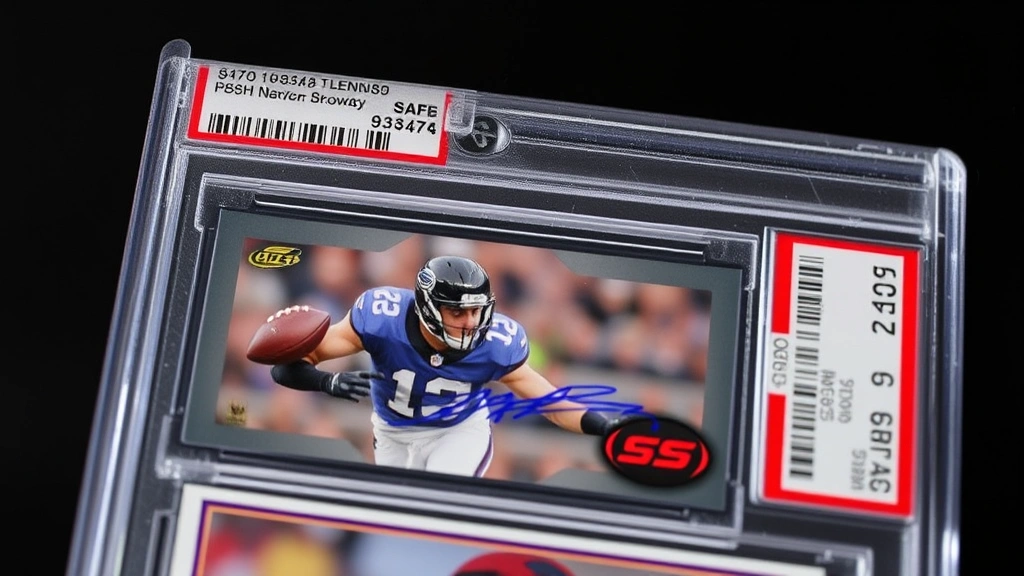
What Drives Football Card Values in Today’s Market
Football card values are determined by a fascinating intersection of scarcity, player performance, card condition, and market sentiment. The most valuable cards typically feature legendary players during their peak years, limited production runs, and exceptional physical condition. Understanding these fundamental drivers helps collectors make strategic purchasing decisions and recognize value opportunities.
Player performance remains the primary driver of card appreciation. When a quarterback wins a Super Bowl, breaks records, or earns MVP honors, their card values often spike dramatically. Similarly, breakthrough rookie seasons can transform previously affordable cards into valuable collectibles. The connection between athletic achievement and collectible value creates natural market cycles that astute collectors can anticipate and leverage.
Scarcity fundamentally shapes football card values. Cards from the 1980s and earlier typically command premium prices because fewer were produced and preserved compared to modern cards. Limited edition releases, short-print variations, and cards with lower population reports (according to grading services) inherently possess greater scarcity value. When demand exceeds supply, prices escalate rapidly—a principle that explains why certain rookie cards appreciate thousands of percent over decades.
Condition is non-negotiable in determining football card values. A card graded PSA 10 (gem mint) might be worth 50 times more than the same card graded PSA 6 (excellent-mint). Even minor differences in centering, corners, edges, and surface quality dramatically impact valuation. This is why professional grading services have become indispensable tools for serious collectors and investors evaluating expensive purchases.

Grading Standards and Their Impact on Pricing
Professional grading services—primarily PSA, BGS, and SGC—have revolutionized how collectors evaluate and price football cards. These services employ rigorous standards to assess card condition on a 1-10 scale, providing third-party authentication and standardized grading that creates confidence in the marketplace. Understanding grading mechanics is essential for anyone serious about football card values.
The grading scale ranges from 1 (poor) to 10 (gem mint), with half-point increments available for PSA submissions. A PSA 9 (mint) card appears virtually flawless to the naked eye but may have minor imperfections visible under magnification. PSA 10 cards are extraordinarily rare and command exponentially higher prices. The difference between a PSA 8.5 and PSA 9 can represent 30-50% price variations for high-end cards.
BGS (Beckett Grading Services) employs a subgrades system that breaks condition into centering, corners, edges, and surface quality. This granular approach appeals to collectors who want detailed condition information. SGC, the oldest grading service, uses a 1-10 scale as well but has different market perception—certain vintage SGC slabs command premium valuations from collectors valuing historical grading authenticity.
Explore Peak Play Arena’s football plays section to understand player performance metrics that influence card valuations. When you understand how players’ statistical achievements translate to market recognition, you can better predict which cards will appreciate in value. Grading services track population reports showing how many cards have been graded at each level, providing crucial scarcity data.
The authentication hologram or label itself has become part of the product’s value proposition. Counterfeiters aggressively target high-value cards, making professional grading essential for expensive purchases. A graded card in a tamper-evident slab provides peace of mind and market liquidity that raw cards cannot match.
Rookie Cards: The Foundation of Collector Value
Rookie cards represent the cornerstone of football card collecting and investment. The rookie card of a future Hall of Famer can appreciate from initial retail value to six or seven-figure valuations over decades. Understanding what makes certain rookie cards valuable and others forgettable is crucial for building a strategic collection.
The most valuable rookie cards feature:
- Hall of Fame careers – Players who dominated their era and achieved legendary status command the highest values
- Limited production runs – Older rookie cards from the 1950s-1980s are inherently scarcer than modern cards
- First appearance scarcity – Some players have multiple rookie card releases; the earliest is typically most valuable
- Exceptional condition – High-graded rookie cards appreciate exponentially faster than lower grades
- Iconic imagery – Cards featuring memorable photos or special design elements attract more collectors
Joe Montana’s 1979 Topps rookie card exemplifies how fantasy football rankings and real-world player excellence drive collectible values. His card has appreciated from pennies to thousands of dollars as his legendary career unfolded. Similarly, Tom Brady’s 2000 Bowman card, initially overlooked, now commands five-figure prices in high grades.
Modern rookie cards follow different patterns due to increased production volumes and grading availability. A 2023 rookie card graded PSA 10 might be worth $500-2,000 today but could appreciate significantly if that player becomes a Hall of Famer. Smart collectors evaluate draft capital, athletic testing results, and coaching situations when identifying rookie cards with appreciation potential.
Authentication and Counterfeits: Protecting Your Investment
Counterfeit football cards represent an existential threat to collector confidence and market integrity. As card values escalate, counterfeiters employ increasingly sophisticated techniques to deceive even experienced collectors. Understanding authentication red flags is essential for protecting your investment.
Professional grading services employ expert authentication techniques including UV light analysis, ink examination, and paper stock evaluation. However, counterfeiters continue improving their methods, occasionally creating slabbed fakes that pass initial inspection. This arms race between authenticators and counterfeiters creates ongoing market risk for high-value purchases.
Red flags suggesting potential counterfeits include:
- Suspiciously low prices for cards that typically command premium valuations
- Sellers with limited history or negative feedback on established platforms
- Slight color variations or printing irregularities compared to known authentic examples
- Inconsistent or poorly executed grading labels and holograms
- Transactions conducted through untraceable payment methods or international transfers
- Cards lacking proper provenance or authentication documentation
Purchase high-value cards exclusively from reputable dealers who provide detailed authentication guarantees and return policies. Utilize PSA’s official database to verify population reports and compare your card’s characteristics against known authentic examples. When spending over $1,000, professional authentication becomes non-negotiable.
Building a Strategic Football Card Portfolio
Successful collectors approach football card acquisition with strategic intentionality rather than emotional impulse. Building a portfolio that balances passion with investment potential requires understanding diversification principles and market cycles. Whether you’re drawn to college football predictions and emerging talent or established NFL legends, strategic portfolio construction maximizes both enjoyment and appreciation potential.
Consider these portfolio-building principles:
- Diversify by era – Include vintage cards (1950s-1980s) for scarcity value, semi-modern cards (1990s-2000s) for legendary player exposure, and modern cards for emerging talent potential
- Balance star power with value plays – Include iconic Hall of Famers alongside undervalued cards of excellent players overlooked by mainstream collectors
- Focus on condition consistency – Building a collection where most cards grade PSA 7 or higher creates a more cohesive and valuable portfolio than random condition variations
- Track population reports – Prioritize cards with lower population counts at your target grade, as scarcity creates appreciation potential
- Document acquisition costs – Maintain detailed records including purchase dates, prices, and condition grades for portfolio tracking and potential tax implications
- Monitor market trends – Stay informed about emerging player achievements and vintage card trends that influence valuations
Connect your card collecting passion with deeper football knowledge. Reviewing high school football scores and NFL Thursday Night Football Tonight coverage helps you identify emerging talent before their cards appreciate significantly. Early recognition of breakout players often precedes card value increases by months or years.
Market Trends Influencing Card Valuations
Football card values fluctuate based on broader market trends including economic conditions, collector demographics, and sports entertainment trends. Understanding these macro influences helps collectors anticipate market movements and position their portfolios strategically.
The 2020-2021 period witnessed explosive card market growth driven by pandemic-related factors, celebrity collector participation, and mainstream media attention. Prices appreciated dramatically across most categories. However, subsequent market corrections demonstrated that card values aren’t immune to speculative bubbles. Collectors who purchased at peak prices experienced significant losses when reality reasserted itself.
Generational trends significantly influence football card values. Millennial and Gen Z collectors drive demand for 1990s-2000s cards featuring players they watched growing up. This demographic shift has elevated cards that previous generations undervalued. As these demographics age and accumulate wealth, their collecting preferences will continue reshaping market valuations.
Authentication technology improvements and grading service competition have increased supply of graded cards, potentially moderating prices for common cards while premium examples maintain strength. The emergence of alternative grading services and direct-to-consumer authentication platforms creates additional market complexity.
Celebrity collector participation, including athletes and entertainers, has elevated football card collecting’s cultural status. When high-profile individuals publicly showcase valuable collections or make significant purchases, mainstream media attention follows, temporarily inflating prices. Savvy collectors recognize these hype cycles and adjust their strategies accordingly.
Understanding professional sports organization data and statistics helps contextualize player achievements that drive card values. Hall of Fame voting results, statistical milestone achievements, and career trajectory changes create predictable valuation impacts that experienced collectors anticipate.
The shift toward online marketplaces has democratized access to football card values and increased price transparency. Collectors can now compare pricing across multiple platforms instantly, reducing information asymmetries that previously benefited knowledgeable dealers. This transparency has generally compressed profit margins while creating more efficient price discovery.
Regulatory attention on collectible card markets, including potential gambling and speculation concerns, could influence future valuations. Any regulatory changes affecting grading services, authentication standards, or marketplace operations would likely create significant market disruptions and repricing opportunities.
FAQ
What football card values have appreciated most dramatically?
Joe Montana’s 1979 Topps rookie card, Tom Brady’s 2000 Bowman card, and Jerry Rice’s 1986 Topps rookie have appreciated exponentially. Vintage cards from the 1950s-1970s featuring Hall of Famers in exceptional condition command the highest absolute values, with some exceeding six figures.
Should I invest in modern rookie cards or vintage cards?
Both offer distinct advantages. Vintage cards provide established scarcity and Hall of Fame pedigree. Modern rookie cards offer lower entry costs and upside potential if the player becomes legendary. A balanced approach includes both categories.
How much does professional grading cost?
PSA charging typically ranges from $10-$300+ per card depending on service tier and declared value. BGS and SGC offer similar pricing. For valuable cards, professional grading’s authentication and condition documentation justify the expense.
Can counterfeit cards get past grading services?
Historically, sophisticated counterfeits occasionally fool initial authentication, though grading services continuously improve detection methods. Purchasing from established dealers with authentication guarantees provides additional protection beyond grading service reliance.
What factors most significantly impact football card values?
Player Hall of Fame potential, card condition/grade, production scarcity, market sentiment, and historical significance drive valuations most dramatically. Cards featuring legendary players in exceptional condition command premium pricing.
Is football card collecting a viable long-term investment?
Strategic collecting focused on Hall of Famers, vintage scarcity, and exceptional condition has demonstrated solid long-term appreciation. However, speculative purchases of modern cards without established pedigree carry significant risk. Approach collecting as a passion-driven hobby with investment upside rather than pure speculation.


