
Is College Football a Good Workout? Coach Insights on Athletic Conditioning
College football demands exceptional physical fitness, mental toughness, and tactical intelligence. Players sprint up to 100 yards per game, execute explosive movements from static positions, and sustain high-intensity efforts across 60 minutes of competition. But is college football itself an effective workout, or does success require supplemental training? Based on coaching expertise and sports science research, the answer is nuanced—college football provides world-class conditioning stimulus, yet strategic strength and conditioning programs separate elite performers from average athletes.
Anderson University football, like programs across NCAA Division III, demonstrates how structured athletic development transforms raw talent into championship-caliber competitors. The Ramblers’ strength and conditioning protocols reflect cutting-edge exercise physiology principles that maximize performance while minimizing injury risk. Understanding these methods reveals why college football alone represents incomplete training, and how comprehensive periodization drives athletic excellence.

Cardiovascular Demands of College Football
College football players operate at intensities comparable to professional athletes, with heart rates frequently reaching 85-95% of maximum during games. According to research from the American College of Sports Medicine (ACSM), football creates interval training patterns that stress both aerobic and anaerobic energy systems simultaneously. A defensive end performs explosive tackles (anaerobic burst), then jogs back to formation (aerobic recovery), repeating this cycle 60-80 times per game.
This stop-and-start nature differs fundamentally from steady-state cardio like running or cycling. Football demands rapid acceleration from rest, deceleration, lateral movement, and directional changes—each requiring different energy system recruitment. Players covering 3-5 miles per game achieve this through repeated 5-20 yard sprints rather than continuous distance running. The cardiovascular adaptation becomes sport-specific, building explosive capacity rather than pure endurance.
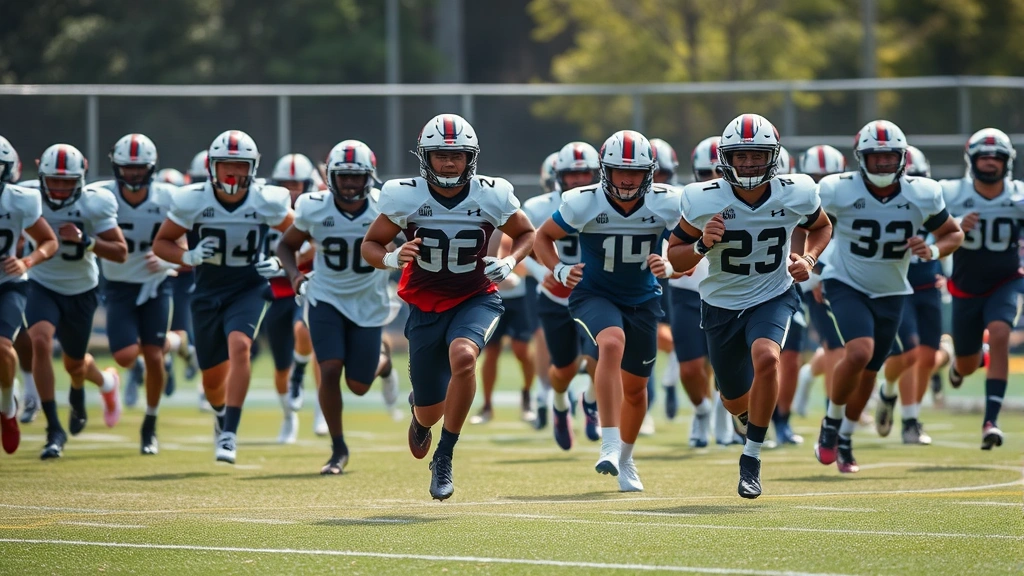
Anderson University football coaches emphasize that peak athletic performance requires conditioning beyond game play. Practice sessions address cardiovascular fitness systematically, but competition alone doesn’t optimize aerobic base development. Coaches integrate tempo runs, shuttle drills, and controlled-intensity sessions to build foundation fitness that supports match-day intensity.
Strength and Power Requirements
College football positions demand distinct strength profiles. Offensive linemen require maximum strength for drive-blocking (generating 800+ pounds of force), while wide receivers prioritize rate of force development for acceleration. No single practice session develops all necessary strength qualities simultaneously.
The National Strength and Conditioning Association (NSCA) identifies football-specific strength needs: lower body power for jumping/sprinting, core stability for collision resistance, upper body pulling strength for tackling, and rotational power for throwing and twisting movements. Game play develops power-endurance (repeated efforts at moderate intensity) but doesn’t systematically overload muscles with progressive resistance needed for strength gains.
Anderson University’s strength program implements periodized resistance training: off-season hypertrophy phases building muscle mass, pre-season strength phases maximizing force production, and in-season maintenance phases preserving gains while managing fatigue. College football success requires this structured progression—practice alone cannot replace barbell work, plyometrics, and controlled resistance exercises.
Key strength adaptations from systematic training:
- Increased muscle cross-sectional area (hypertrophy) supporting power output
- Enhanced neural efficiency allowing muscles to recruit more fibers
- Greater tendon stiffness improving force transfer and injury resilience
- Improved rate of force development enabling explosive first steps
Metabolic Conditioning Specificity
College football taxes three energy systems: phosphocreatine system (0-6 seconds), glycolytic system (6-90 seconds), and aerobic system (90+ seconds). Different positions emphasize different systems. A linebacker performs repeated 10-second maximal efforts with 15-20 second recoveries, while a safety covers 30-40 yard distances requiring sustained effort.
Research published in the Journal of Strength and Conditioning Research demonstrates that sport-specific metabolic conditioning requires targeted energy system training. Football practice develops general metabolic fitness, but doesn’t optimize all three systems simultaneously. Coaches design supplemental conditioning sessions addressing specific deficiencies:
- Phosphocreatine training: 5-10 second sprints with full recovery develops explosive power
- Glycolytic training: 30-90 second efforts at 85-95% intensity builds lactate threshold
- Aerobic training: 2-5 minute efforts at 70-85% intensity supports recovery between plays
Anderson University football implements these principles through dedicated conditioning blocks. Players don’t simply “work hard”—they work specifically, with targeted intensities, durations, and recovery protocols designed by strength coaches applying exercise science principles.
Injury Prevention Through Structured Training
College football’s high-impact nature creates injury risk. Tackling, collision, and repetitive running stress joints, muscles, and connective tissues. Proper conditioning reduces injury incidence by preparing tissues for game demands and correcting muscular imbalances.
According to the National Center for Biotechnology Information (NCBI), strength training reduces lower extremity injury risk by 30-40% in team sports. Systematic resistance work strengthens stabilizer muscles, improves proprioception, and enhances tissue resilience. Football practice alone cannot achieve these adaptations—structured strength and conditioning programs are essential.
Injury prevention requires addressing:
- Eccentric strength: Resisting forces during deceleration prevents muscle strains
- Joint stability: Rotator cuff and hip stabilizer work prevents sprains
- Postural alignment: Core stability and flexibility prevent chronic pain
- Movement quality: Technique refinement reduces abnormal stress patterns
Anderson University’s coaching staff recognizes that athletic excellence requires injury prevention as foundational component. Staying healthy for 12-14 games demands conditioning investment beyond game participation.
Comparing Football to Traditional Workouts
College football provides exceptional conditioning stimulus but remains incomplete as standalone training. Compare football’s effects to traditional workout modalities:
Football vs. Resistance Training: Football develops power-endurance through game play but lacks progressive overload mechanisms inherent to barbell training. A lineman blocking 50 times per game doesn’t trigger maximum strength adaptations without resistance training progressively challenging muscles beyond game demands.
Football vs. Aerobic Training: Football’s interval nature develops aerobic capacity but emphasizes anaerobic power. Dedicated aerobic training builds aerobic base supporting recovery between plays. Players with strong aerobic foundation recover faster, maintaining intensity throughout games.
Football vs. Plyometric Training: Game play involves jumping and explosive movements, but plyometric training systematically develops elastic properties of muscles and tendons. Structured plyometrics (box jumps, bounding, medicine ball throws) exceed game-play demands, building reserve capacity.
Football vs. Mobility Work: Football’s repetitive movements can create muscle imbalances and reduced range of motion. Systematic stretching, foam rolling, and mobility exercises prevent these adaptations, maintaining movement quality and injury resilience.
The evidence clearly shows: college football is excellent conditioning stimulus but insufficient as standalone training. Elite programs like Anderson University football integrate football practice with periodized strength training, targeted metabolic conditioning, and mobility work.
Coach Recommendations for Optimal Results
Experienced college football coaches recommend comprehensive athletic development addressing all fitness qualities:
Off-Season Phase (January-April): Focus on maximum strength development through resistance training 4 times weekly, hypertrophy work building muscle mass, and aerobic conditioning establishing fitness base. Football-specific conditioning remains secondary during this phase. Players gain 5-15 pounds of muscle, increasing power output and collision resilience.
Pre-Season Phase (June-August): Transition to power development through plyometrics and Olympic lifts, increase sport-specific conditioning through football drills, and reduce resistance training volume while maintaining intensity. This phase bridges general fitness and competition demands, peaking players for opening games.
In-Season Phase (September-November): Maintain strength and power through 2-3 resistance sessions weekly (reduced volume/intensity), prioritize recovery through mobility work and sleep optimization, and manage fatigue through strategic practice design. The focus shifts from building fitness to maintaining performance while managing cumulative fatigue.
Specific recommendations from Anderson University coaching philosophy:
- Implement periodized resistance training year-round (never stop strength work)
- Develop position-specific conditioning addressing individual energy system demands
- Prioritize movement quality and technique in all training modalities
- Integrate flexibility and mobility work daily (15-20 minutes minimum)
- Monitor athlete readiness through performance testing and subjective measures
- Emphasize nutrition and recovery as training components equal to physical work
- Individualize programming based on position, injury history, and performance data
The coaching consensus is clear: college football is an excellent workout component, not a complete training program. Maximizing performance requires integration with structured conditioning, progressive resistance training, and recovery optimization. Athletes competing at Anderson University level understand this reality—they train specifically, measure progress objectively, and adjust programming based on performance data.
FAQ
Does college football alone build muscle?
College football develops functional muscle through repeated explosive movements and impacts. However, systematic resistance training with progressive overload produces greater hypertrophy. Football provides stimulus; strength training provides adaptation. Combining both modalities optimizes muscle development.
How many calories does a college football game burn?
A college football player burns 800-1200 calories during a game, depending on position and intensity. However, caloric expenditure alone doesn’t determine conditioning quality. Energy system development, movement specificity, and adaptation quality matter more than raw calorie burn.
Can football players get in shape without gym training?
Football players can maintain baseline fitness through practice alone, but cannot optimize performance without structured resistance and conditioning training. Elite college programs distinguish themselves through systematic training beyond practice. Anderson University football demonstrates this principle—championship-level performance requires comprehensive athletic development.
What’s the best workout for college football players?
Periodized training combining resistance work (3-4x weekly), sport-specific conditioning (3-4x weekly), and mobility work (daily) optimizes football performance. Training should vary by season: maximum strength off-season, power development pre-season, and maintenance in-season. Programming should address position-specific demands.
Is college football harder than CrossFit or traditional gym training?
College football and structured training programs stress different energy systems and adaptations. Football emphasizes sport-specific power and metabolic conditioning; resistance training emphasizes maximum strength and muscle development; CrossFit emphasizes varied functional movements and metabolic capacity. Elite athletes integrate all three modalities.


