
UWF Football: Fitness Insights from Experts
The University of West Florida Argonauts football program demands peak physical conditioning from every athlete who steps onto the field. Success at the collegiate level requires more than raw talent—it demands a comprehensive fitness strategy that combines strength training, cardiovascular endurance, sport-specific agility work, and proper recovery protocols. In this guide, we’ll explore the science-backed fitness principles that elite UWF football programs implement to develop championship-caliber athletes.
Whether you’re a current player looking to enhance your performance, a prospective recruit preparing for the next level, or a fitness enthusiast curious about collegiate football training methodologies, understanding these expert-endorsed fitness insights will transform your approach to athletic development. The conditioning standards at UWF Football reflect industry best practices from strength coaches and sports scientists who prioritize athlete longevity alongside competitive excellence.
Strength Training Foundation for Football Athletes
Building a robust strength foundation is absolutely critical for UWF football athletes who must withstand the rigorous demands of collegiate competition. Modern strength training for football isn’t about simply lifting heavy weights—it’s about developing functional strength that translates directly to on-field performance. The foundation begins with compound movements that engage multiple muscle groups simultaneously, creating the neuromuscular adaptations necessary for explosive power and injury resilience.
The primary compound lifts—squats, deadlifts, bench presses, and overhead presses—form the cornerstone of any legitimate football strength program. According to the American College of Sports Medicine, resistance training protocols that emphasize compound movements produce superior strength gains and transfer better to athletic performance than isolation exercises. UWF Football programs typically implement periodized strength training cycles that progress from hypertrophy phases (building muscle mass) to strength phases (maximizing force production) to power phases (developing explosive capacity).
Athletes at UWF focus on developing lower body strength through variations like front squats, Bulgarian split squats, and trap bar deadlifts. These movements directly enhance tackling ability, acceleration, and the ability to maintain balance during contact situations. Upper body strength development emphasizes horizontal and vertical pressing patterns alongside pulling movements, which strengthen the posterior chain—critical for preventing injuries and maintaining postural integrity during the intense physical battles inherent in football.
Progressive overload principles guide the strength development strategy, with coaches systematically increasing weight, volume, or intensity variables throughout training blocks. This structured approach ensures continuous adaptation and prevents performance plateaus. Most collegiate programs recommend strength training sessions 3-4 times weekly, with adequate recovery between sessions targeting the same muscle groups.
Cardiovascular Conditioning and Energy Systems
Football athletes must develop exceptional cardiovascular fitness because the sport demands repeated high-intensity efforts interspersed with brief recovery periods throughout the game. Rather than traditional steady-state cardio, modern UWF football conditioning emphasizes sport-specific energy system development through interval training protocols that mirror actual game demands.
The three primary energy systems—phosphocreatine (ATP-PC), anaerobic glycolytic, and aerobic—must all function optimally for football performance. Research from sports science journals demonstrates that high-intensity interval training (HIIT) protocols most effectively develop these systems for team sport athletes. UWF programs typically incorporate various interval formats: short sprints (10-20 seconds) with brief recovery, medium-intensity repeats (30-60 seconds), and longer tempo efforts (2-5 minutes) that train different metabolic pathways.
Conditioning specialists design workouts that closely replicate game situations—for example, running sprint distances similar to actual play situations, with recovery periods matching average huddle times. This specificity ensures that training adaptations directly transfer to competitive performance. Athletes develop the ability to maintain high-quality movement patterns and decision-making speed even when fatigued, a critical factor in late-game situations where championships are decided.
Aerobic base development remains essential, providing the foundation upon which high-intensity work is built. Most programs include longer, lower-intensity runs or alternative conditioning methods (rowing, bike intervals) 1-2 times weekly to develop aerobic capacity while allowing recovery from intense strength and speed sessions. This balanced approach prevents overtraining while maximizing adaptation.
Speed, Agility, and Directional Change
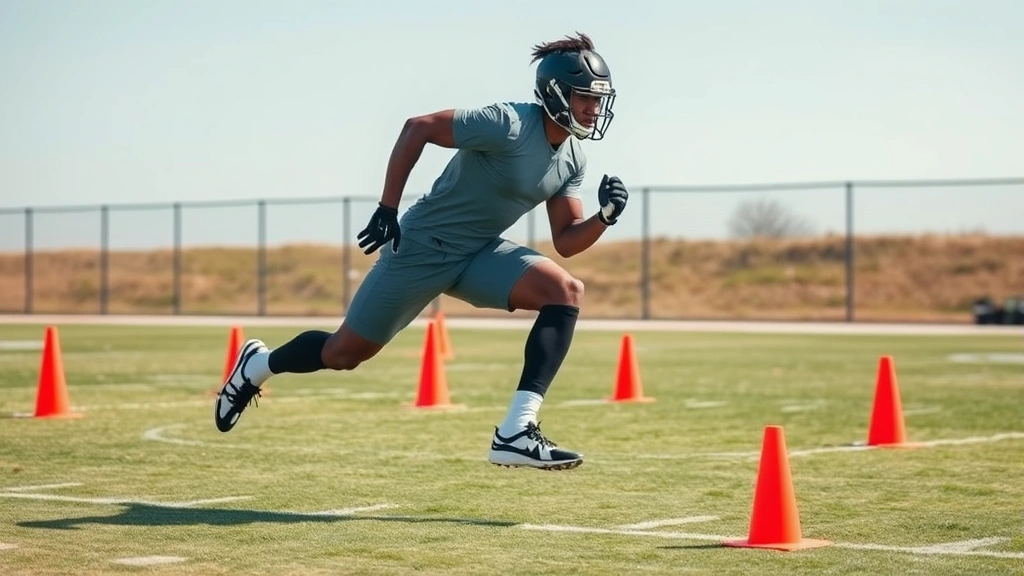
Speed development represents one of the most sought-after athletic qualities in football, and UWF Football programs invest substantial resources into optimizing athlete velocity. However, true speed development extends beyond simply running fast in a straight line—it encompasses acceleration, deceleration, lateral movement, and the ability to change direction explosively while maintaining balance and body control.
Acceleration development focuses on the first 5-10 yards, where proper mechanics and force application produce the greatest performance gains. Coaches emphasize ground contact time reduction, optimal body lean angles, and powerful hip extension through drills like sled pushes, resisted sprints, and explosive step-ups. These acceleration-focused movements directly translate to off-the-line quickness, which separates elite athletes from good ones.
Agility training goes beyond simple cone drills—it integrates cognitive decision-making with physical execution. Athletes practice reacting to visual or auditory cues while executing directional changes, developing the neural patterns necessary for game-speed movements. Lateral shuffles, backpedaling patterns, and angular cutting drills are performed with game-realistic stimuli, ensuring training specificity.
Deceleration training is often overlooked but proves absolutely critical for injury prevention and performance maintenance. The ability to rapidly slow down from high speeds requires eccentric strength and proprioceptive control. UWF programs incorporate eccentric-focused exercises, plyometric landing drills, and change-of-direction movements that demand athletes to control their bodies during deceleration phases.
Plyometric training develops the elastic properties of muscle and connective tissue, enabling powerful explosive movements. Box jumps, bounding variations, and medicine ball throws teach athletes to rapidly transition between eccentric (lengthening) and concentric (shortening) muscle contractions. This reactive strength proves invaluable for defensive movements, jumping ability, and maintaining stability during contact.
Sport-Specific Movement Patterns
Excellence in UWF football requires mastery of movement patterns that don’t exist outside the sport context. Position-specific training develops the unique physical demands placed on quarterbacks, receivers, linemen, and defensive backs. Each position demands different strength ratios, movement capacities, and conditioning profiles.
Offensive linemen require exceptional lower body strength, horizontal power, and the ability to maintain balance while generating force from low positions. Training emphasizes heavy squats, deadlifts, and lateral movements that develop the lateral stability necessary for pass protection assignments. Defensive line athletes need similar strength but with greater emphasis on rapid lateral movement and explosive first steps.
Skill position athletes (receivers, running backs, defensive backs) require different conditioning profiles emphasizing acceleration, top-end speed, and agility. Their training incorporates more sprint work, directional change drills, and plyometric exercises that develop the elastic strength and neural efficiency needed for explosive movements. College football programs consistently recognize that position-specific training produces superior results compared to generic athletic development.
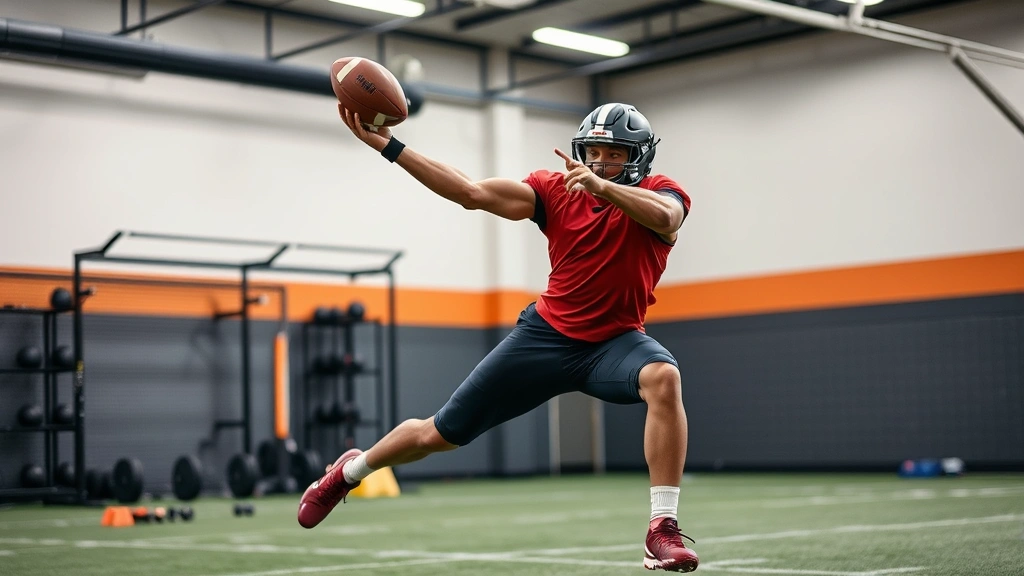
Quarterbacks need particular attention to rotational core strength, shoulder stability, and the explosive hip extension necessary for throwing power. Medicine ball throws, rotational exercises, and explosive leg movements develop the kinetic chain sequencing required for efficient, powerful throwing mechanics. Conditioning also emphasizes maintaining mechanical integrity under fatigue, as late-game accuracy depends on maintaining proper throwing patterns.
Integrated sport-specific training sessions combine strength, speed, and agility components in sequences that mimic actual game demands. For example, athletes might perform an explosive lift followed immediately by a sprint and directional change drill, training the nervous system to produce quality movements even when fatigued. This integration proves far more effective than compartmentalized training approaches.
Recovery and Regeneration Strategies
Adaptation occurs during recovery, not during training itself. The most sophisticated UWF football programs recognize that recovery management separates championship-caliber athletes from those who plateau. Elite programs implement comprehensive recovery strategies that address sleep quality, active recovery modalities, nutrition timing, and stress management.
Sleep represents the most powerful recovery tool available, yet many athletes underestimate its importance. During sleep, human growth hormone secretion peaks, muscle protein synthesis accelerates, and the nervous system consolidates motor learning patterns. Most collegiate athletes require 8-10 hours nightly, with some research suggesting elite athletes benefit from strategic napping. Programs encourage consistent sleep schedules and optimal sleep environments.
Active recovery sessions using lower-intensity movement, stretching, and mobility work enhance blood flow to recovering muscles while promoting parasympathetic nervous system activation. Light swimming, easy cycling, or movement-based yoga sessions 1-2 times weekly support recovery without imposing additional training stress. Foam rolling and self-myofascial release techniques reduce muscle tension and may enhance recovery quality.
Cold water immersion, contrast water therapy, and compression garments represent popular recovery modalities, though research evidence remains mixed. Athletes should experiment with various modalities to identify personal responses rather than assuming all recovery methods produce identical results. Sports science organizations emphasize that recovery strategy personalization based on individual response patterns produces superior results.
Stress management through meditation, breathing exercises, and mental skills training reduces cortisol elevation and supports parasympathetic recovery. The psychological demands of collegiate football are substantial, and programs that address mental recovery alongside physical recovery develop more resilient athletes. Regular sessions with sports psychologists help athletes develop coping strategies and maintain emotional equilibrium.
Nutrition and Fueling for Performance
Optimal nutrition provides the building blocks for adaptation and the fuel for high-quality training sessions. UWF football programs work with sports dietitians to develop individualized nutrition plans that support training demands, body composition goals, and competitive performance. Nutrition strategy goes far beyond generic healthy eating—it requires precise timing, macronutrient distribution, and hydration protocols.
Protein consumption supports muscle protein synthesis, with most athletes requiring 1.6-2.2 grams per kilogram of body weight daily. Distributed protein intake throughout the day—rather than concentrated in single meals—maximizes muscle protein synthesis rates. Post-training protein and carbohydrate consumption accelerates recovery, with research supporting 20-40 grams of high-quality protein within 2 hours post-training.
Carbohydrate timing directly impacts training quality and recovery capacity. Athletes performing high-intensity training require sufficient carbohydrate availability to maintain power output and central nervous system function. Moderate-to-high carbohydrate intake before training (2-3 hours prior) ensures adequate muscle glycogen for quality efforts. Post-training carbohydrates replenish depleted glycogen stores, supporting recovery and adaptation.
Hydration status profoundly impacts performance, thermoregulation, and cognitive function. Dehydration exceeding 2% of body weight impairs strength, speed, and decision-making—critical factors in football. UWF programs implement individualized hydration plans accounting for sweat rates, environmental conditions, and position-specific demands. Athletes learn to monitor hydration status through urine color and body weight changes.
Micronutrient optimization supports immune function, energy production, and injury recovery. Many athletes exhibit deficiencies in iron, vitamin D, and magnesium—nutrients critical for performance. Regular assessment and targeted supplementation ensure athletes maintain optimal micronutrient status. Proper nutrition strategy also supports injury prevention through adequate nutrient availability for tissue repair and adaptation.
Injury Prevention and Resilience Building
The physical demands of football inevitably create injury risk, but sophisticated injury prevention programs substantially reduce incidence rates while building resilience. UWF Football programs implement multi-faceted approaches addressing movement quality, strength imbalances, mobility restrictions, and environmental factors that predispose athletes to injury.
Movement screening identifies biomechanical dysfunctions and mobility limitations before they manifest as injuries. Athletes demonstrating poor landing mechanics, asymmetrical strength patterns, or movement compensations receive targeted corrective exercises. Research demonstrates that movement-based injury prevention programs reduce ACL injury rates by 50% or more when implemented consistently.
Strength imbalances between opposing muscle groups create injury vulnerability. Programs specifically address posterior chain development (glutes, hamstrings, back extensors) relative to anterior structures. Adequate hip external rotator strength protects knees during cutting movements. Rotator cuff strengthening prevents shoulder injuries in throwing athletes. These targeted interventions prevent the common overuse patterns that plague football athletes.
Mobility and flexibility work maintains ranges of motion necessary for efficient movement patterns. Tight hip flexors, restricted ankle mobility, and limited thoracic spine rotation create compensatory movement patterns that increase injury risk. Regular mobility sessions, dynamic stretching, and targeted flexibility work maintain the movement quality necessary for injury-free performance.
Proprioceptive training enhances body awareness and balance, critical for maintaining stability during complex movements and unexpected contact situations. Single-leg balance exercises, unstable surface training, and reactive stabilization drills develop the neural patterns that prevent ankle sprains and ACL injuries. This training proves especially valuable for skill position players who change direction at high speeds.
Environmental factors including playing surface, equipment fit, and environmental conditions influence injury risk. Programs ensure proper equipment maintenance, optimize training surfaces, and implement environmental modifications during extreme heat or cold. Gradual return-to-play protocols after injuries ensure adequate healing before resuming full training, preventing re-injury cycles.
FAQ
What fitness standards do UWF football athletes need to meet?
UWF football programs establish position-specific fitness standards including vertical jump height, broad jump distance, 40-yard dash times, bench press repetitions, and squat strength relative to body weight. Defensive backs typically require the fastest 40 times and greatest agility capacity, while linemen emphasize absolute strength. Most programs expect athletes to meet or exceed standards established by American College of Sports Medicine guidelines for their respective positions.
How often should UWF football players train during the offseason?
Offseason training typically occurs 5-6 days weekly, combining strength training (3-4 days), conditioning work (3-4 days), and sport-specific skill development. This frequency maximizes adaptation while allowing adequate recovery. In-season training reduces frequency to 2-3 strength sessions weekly, prioritizing recovery and maintaining fitness rather than building new capacity.
What role does flexibility and mobility play in football fitness?
Mobility and flexibility directly impact injury prevention, movement quality, and performance capacity. Restricted ranges of motion force compensatory movement patterns that increase injury risk. Regular mobility work maintains the ranges necessary for efficient movement patterns, supports recovery, and prevents the chronic tightness that develops from intensive training.
How important is mental fitness alongside physical conditioning?
Mental fitness proves equally important as physical conditioning for collegiate football success. Stress management, emotional resilience, focus development, and decision-making speed all determine performance outcomes. UWF programs increasingly incorporate sports psychology services, meditation training, and mental skills development alongside physical training.
What distinguishes elite UWF football fitness programs from average programs?
Elite programs employ sophisticated periodization strategies, individualized training plans, comprehensive movement screening, and integrated recovery protocols. They emphasize position-specific development, implement data-driven training adjustments, and maintain consistent execution of science-backed principles. Additionally, top programs invest in quality coaching staff with advanced credentials and ongoing professional development, ensuring athletes receive evidence-based instruction aligned with current sports science research.


