
UW Whitewater Football: Strength Training Secrets That Build Championship Athletes
The University of Wisconsin-Whitewater Warhawks have established themselves as a powerhouse in NCAA Division III football, and their success isn’t accidental. Behind every bone-crushing tackle, explosive sprint, and powerful throw lies a meticulously designed strength training program that transforms talented athletes into elite competitors. This comprehensive guide reveals the exact training methodologies, periodization strategies, and nutritional protocols that UW Whitewater football players use to dominate their conference and compete at the highest collegiate level.
What separates championship programs from the rest? It’s the relentless commitment to strength development combined with sport-specific conditioning. The Warhawks understand that modern football demands more than raw talent—it requires strategic muscle development, injury prevention, and the mental toughness to push through demanding training cycles. Whether you’re a college athlete aspiring to join their ranks or a dedicated strength coach seeking evidence-based training wisdom, this article decodes the strength training secrets that have made UW Whitewater a consistent playoff contender.
The Foundation: Periodized Training Systems
Elite programs like UW Whitewater football build their strength foundation on periodized training systems, a scientifically-proven approach that cycles training intensity, volume, and focus throughout the year. Rather than hitting maximum effort every single day, the Warhawks strategically manipulate training variables to maximize adaptation while minimizing injury risk. This approach follows the general adaptation syndrome principle, where the body adapts to progressively increasing demands.
The UW Whitewater strength and conditioning staff implements a four-phase periodized model aligned with their competitive calendar. During the off-season preparatory phase (January-March), athletes focus on building foundational strength through moderate to heavy loads with higher volume. The pre-season phase (April-July) transitions toward power development and sport-specific conditioning. The in-season maintenance phase (August-November) preserves strength gains while preventing overtraining. Finally, the recovery phase (December) allows for active recovery and structural restoration.
Research from the American College of Sports Medicine confirms that periodized training produces superior strength gains compared to non-periodized approaches. By manipulating variables like exercise selection, rep ranges (6-8 for max strength, 8-12 for hypertrophy, 12-15 for endurance), and rest periods (3-5 minutes for strength, 60-90 seconds for hypertrophy), the Warhawks optimize every training session for specific adaptations.
Lower Body Power Development for Linemen and Running Backs
Lower body power separates good football programs from great ones. UW Whitewater’s offensive and defensive linemen must generate explosive force from a stationary position, while running backs need to accelerate rapidly while maintaining balance. The strength training program addresses these demands through a strategic combination of compound movements and sport-specific variations.
The cornerstone exercise for lower body development is the back squat, performed with loads ranging from 85-95% of one-rep max during strength phases. Linemen typically squat in the 500-600+ pound range, building the tremendous leg drive necessary for winning leverage battles in the trenches. The program emphasizes controlled eccentric (lowering) phases of 2-3 seconds, a brief pause at the bottom, and explosive concentric (lifting) phases to develop rate of force development.
Beyond squats, the Warhawks incorporate deadlift variations including conventional deadlifts, trap bar deadlifts, and deficit deadlifts to build posterior chain strength crucial for tackling power and hip extension. Research demonstrates that deadlifts increase vertical jump performance by an average of 4-6 inches when programmed correctly, directly translating to improved athletic performance on the field.
Speed development receives equal emphasis through Olympic lifting derivatives. Power cleans, hang power cleans, and power snatches teach athletes to generate force rapidly, mimicking the explosive movements required during game situations. These ballistic movements activate fast-twitch muscle fibers and develop the neural pathways necessary for explosive performance. UW Whitewater athletes perform these lifts 1-2 times weekly during strength phases, focusing on perfect technical execution with moderate loads (60-75% of max) rather than maximal weights.
Single-leg work including Bulgarian split squats, pistol squat progressions, and single-leg deadlifts addresses muscular imbalances and improves stability—critical for injury prevention and change-of-direction ability. The running backs particularly benefit from unilateral training, as it mimics the single-leg loading patterns experienced during cutting and acceleration.
Accessory work includes leg press variations, hamstring-focused movements like Nordic curls and glute-ham raises, and quad-dominant work through leg extensions and sissy squats. The program strategically balances anterior and posterior chain development to maintain healthy knee function and reduce ACL injury risk.

Upper Body Strength for Defensive Dominance
Defensive linemen and linebackers must possess exceptional upper body strength to shed blocks, make tackles, and generate force in multiple directions. The UW Whitewater strength program builds upper body power through a comprehensive approach combining pressing movements, pulling strength, and rotational power.
The bench press serves as the primary upper body strength builder, with elite defensive linemen regularly performing heavy sets in the 405-500+ pound range. However, the Warhawks recognize that football demands more than pure pressing strength. They incorporate floor press variations (which reduce range of motion and emphasize lockout strength), pin press variations (which build mid-range strength), and paused bench press (which eliminates momentum and builds positional strength).
Pulling movements receive equal emphasis through weighted pull-ups, rows, and chin-ups. Defensive backs need exceptional pulling strength for coverage responsibilities, while linebackers require powerful lats and back muscles for tackling mechanics. The program typically includes 2-3 rowing variations per week, including barbell rows, dumbbell rows, Pendlay rows, and machine rows, rotating through variations to prevent adaptation plateaus.
Shoulder health receives particular attention given football’s demanding nature. Rotator cuff strengthening through external rotations, face pulls, and band pull-aparts prevents shoulder injuries common in throwing and tackling athletes. The program incorporates these movements 3-4 times weekly as part of warm-up protocols and accessory work.
Grip strength development addresses an often-overlooked but critical component of football performance. Defensive linemen with superior grip strength maintain block shedding ability longer during games. Farmer carries, dead hangs, and grip trainers build crushing hand strength necessary for controlling opponents and maintaining proper tackling mechanics.
Core Stability and Rotational Power
The core isn’t just about six-pack abs—it’s the foundation connecting upper and lower body force transmission. UW Whitewater football players develop exceptional core stability through a comprehensive program addressing anti-rotation, anti-extension, and rotational power.
Anti-rotation exercises like Pallof presses, landmine rotations, and cable chops teach the core to resist unwanted movement, directly transferable to tackling situations where opponents attempt to twist away. These movements develop the transverse abdominis and oblique muscles under functional loading patterns.
Anti-extension work through planks, dead bugs, and ab wheel rollouts strengthens the anterior core and rectus abdominis, preventing excessive lumbar extension that occurs during blocking and being blocked. The program progresses these movements from basic variations to advanced single-arm and explosive versions.
Rotational power development through medicine ball throws, landmine rotations with explosive intent, and Russian twists with weight builds the explosive rotation necessary for throwing mechanics (quarterbacks) and tackling power (all positions). These movements train the core to generate and transfer power between lower and upper body segments.
The Warhawks implement core work 4-5 times weekly, often incorporating it into warm-up protocols and between main lift sets. This frequent exposure builds resilient core structures resistant to the repetitive stresses of football training and competition.
Speed and Agility Integration
Strength training at UW Whitewater doesn’t exist in isolation—it integrates seamlessly with comprehensive training programs emphasizing speed and agility development. Research confirms that strength gains must translate to improved athletic performance through specific speed training.
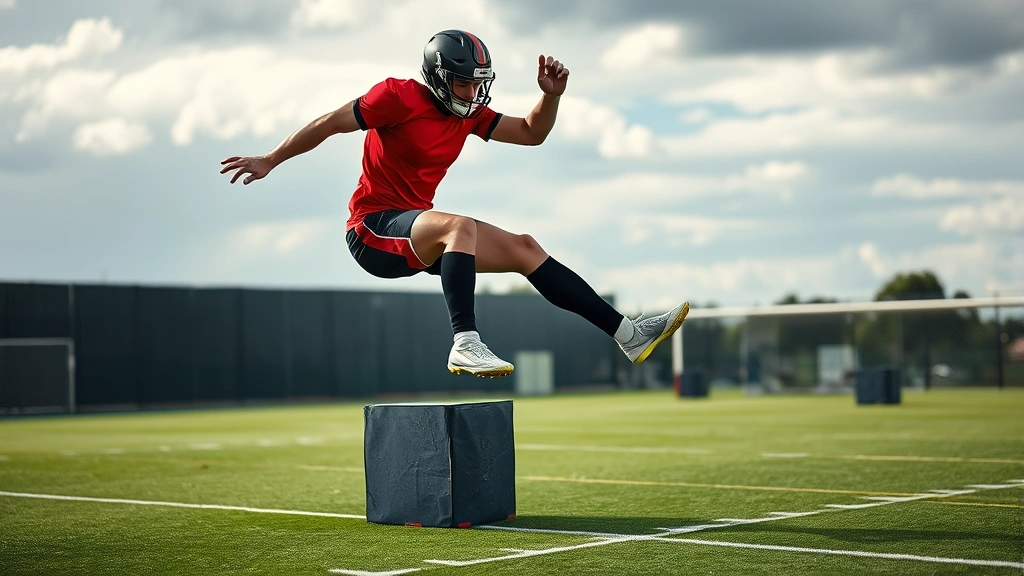
The program incorporates plyometric training including box jumps, broad jumps, and single-leg hops to develop explosive power. These ballistic movements teach the nervous system to recruit muscle fibers rapidly, improving acceleration and vertical jump performance. Plyometrics are performed 1-2 times weekly during off-season phases, placed strategically after dynamic warm-ups but before heavy strength work when the nervous system is fresh.
Agility ladder drills, cone drills, and change-of-direction training develop the neuromotor control necessary for cutting, pivoting, and lateral movement. The program emphasizes proper mechanics—low center of gravity, quick foot placement, and efficient weight transfers—that reduce injury risk while improving performance.
Linear speed development through short sprint intervals (10-40 yards) performed 1-2 times weekly improves acceleration, critical for all field positions. The strength staff recognizes that true speed emerges from the combination of strength, power, and technical proficiency rather than any single training method.
Injury Prevention Protocols
Preventing injuries isn’t separate from performance training—it’s integrated throughout the UW Whitewater football program. The strength and conditioning staff implements evidence-based protocols reducing injury rates while improving resilience.
Movement screening identifies muscular imbalances and movement dysfunction before they cause injuries. The program uses functional movement assessments to determine individual limitations, then addresses them through targeted accessory work. An athlete with poor hip mobility receives additional hip mobility work, while someone with shoulder impingement receives specialized rotator cuff training.
Dynamic warm-ups prepare the body for training through active mobility work, neural activation exercises, and movement preparation. Rather than static stretching before training (which reduces strength and power output), the Warhawks perform dynamic stretches, leg swings, arm circles, and activation drills that increase core temperature and prepare neuromuscular systems for intense effort.
Eccentric training—emphasizing the lengthening phase of movements—builds tendon resilience and prevents common football injuries. Eccentric loading through movements like Nordic hamstring curls, eccentric calf raises, and eccentric leg press variations conditions connective tissues to handle the high forces experienced during competition.
Recovery protocols including foam rolling, massage, ice baths, and compression therapy support adaptation and reduce inflammation. The program recognizes that training stimulus only triggers adaptation; recovery allows the body to actually adapt and improve.
Nutrition and Recovery Strategies
Strength training performance depends on proper nutrition fueling training sessions and supporting recovery. UW Whitewater football players follow periodized nutrition protocols aligned with training phases and individual body composition goals.
During heavy strength phases, athletes consume elevated protein intake (1.6-2.2 grams per kilogram of body weight) supporting muscle protein synthesis. A 220-pound defensive lineman might consume 160-220 grams of protein daily distributed across 4-5 meals, ensuring consistent amino acid availability for muscle repair and growth.
Carbohydrate intake varies based on training demands. High-volume training days require elevated carbohydrate consumption (5-7 grams per kilogram) replenishing muscle glycogen stores, while lighter recovery days require moderate carbohydrate intake (3-5 grams per kilogram). This strategic carbohydrate periodization prevents energy deficits while avoiding unnecessary fat gain.
Hydration receives meticulous attention, with athletes consuming fluid strategically throughout the day and during training sessions. The program monitors urine color and body weight changes to ensure adequate hydration, critical for strength performance and recovery.
Sleep optimization receives equal emphasis to training and nutrition. The program recommends 7-9 hours nightly, recognizing that sleep deprivation impairs strength gains, increases injury risk, and reduces athletic performance. During high-stress training blocks, some athletes increase sleep to 9-10 hours, prioritizing recovery.
Position-Specific Training Variations
While all UW Whitewater football players follow the foundational periodized strength program, position-specific variations address unique demands. Understanding college football predictions and performance metrics helps coaches tailor programs appropriately.
Offensive and Defensive Linemen emphasize maximum strength and power development through heavy compound movements. These positions require tremendous force production in static positions, so the program prioritizes loads in the 80-95% of max range. Accessory work focuses on arm and shoulder strength for blocking and shedding.
Linebackers balance strength with exceptional power and conditioning. Their training emphasizes explosive movements, single-leg work for lateral agility, and metabolic conditioning for sustained performance. They typically perform slightly lighter loads with greater velocity emphasis compared to linemen.
Running Backs require exceptional lower body power combined with lateral agility. Their program includes extensive single-leg work, plyometric training, and change-of-direction drills. Upper body training emphasizes power and rotational strength for breaking tackles.
Wide Receivers and Defensive Backs emphasize speed, agility, and upper body power for catching and throwing (receivers). Their training includes extensive plyometric work, lateral movement drills, and explosive pressing movements. Lower body training emphasizes single-leg stability and lateral strength.
Quarterbacks receive specialized training addressing rotational power, shoulder stability, and lower body mechanics. The program includes extensive rotational core work, shoulder mobility and stability training, and lower body power development for movement and scrambling ability.
The comprehensive nature of UW Whitewater’s program extends to high school football development, as the coaching staff recognizes that recruiting players with proper training backgrounds accelerates their collegiate development.
FAQ
What percentage of UW Whitewater football players’ success comes from strength training versus other factors?
Strength training contributes approximately 30-40% to overall athletic performance, with the remainder determined by technical skill, tactical knowledge, mental toughness, and game experience. However, strength training amplifies all other factors by improving power output, injury resilience, and work capacity.
How often should football players train for strength during the off-season?
Most elite programs, including UW Whitewater, implement 4-5 strength training sessions weekly during off-season phases, complemented by conditioning, position-specific work, and recovery activities. This frequency allows sufficient training stimulus while permitting adequate recovery between sessions.
What’s the most important exercise for football-specific strength?
The back squat ranks among the most important for football, as it develops the lower body power and leg drive essential for all positions. However, comprehensive programming requires multiple movement patterns rather than relying on any single exercise.
Do UW Whitewater players use supplements to support their training?
The program emphasizes whole-food nutrition as the foundation, with research-backed supplements like whey protein, creatine monohydrate, and beta-alanine used strategically. All supplements comply with NCAA regulations and undergo third-party testing for contamination.
How does in-season training differ from off-season training?
In-season training reduces volume while maintaining intensity, shifting focus toward injury prevention and power maintenance rather than building new strength. Sessions typically last 30-45 minutes versus 60-90 minutes during off-season, with emphasis on quality over quantity.
What role does mobility training play in the UW Whitewater program?
Mobility training receives significant emphasis as a foundation for strength development and injury prevention. Poor mobility limits exercise range of motion and increases injury risk, so the program dedicates 10-15 minutes daily to mobility work addressing individual limitations.
How do UW Whitewater strength coaches assess training effectiveness?
The program tracks multiple performance metrics including max strength (one-rep max testing quarterly), power output (vertical jump and broad jump tested monthly), speed (40-yard dash times tested quarterly), and body composition (measured monthly). These objective measures guide programming adjustments.
The strength training secrets behind UW Whitewater football’s success combine scientific principles with practical application, creating a comprehensive system that develops elite collegiate athletes. By implementing periodized training, addressing position-specific demands, and integrating recovery and nutrition protocols, the Warhawks have established a replicable framework for athletic excellence. Whether aspiring to join their ranks or seeking to understand elite football training, these evidence-based methodologies provide the blueprint for transforming dedicated athletes into championship competitors.


