
Best Exercises for Athletes? Coach Insights from Elite Trainers
Elite athletes don’t become champions by accident. Behind every explosive sprint, powerful serve, and game-winning performance lies a meticulously designed training program built on fundamental exercises that develop strength, speed, agility, and mental resilience. Whether you’re a competitive athlete or aspiring to reach peak performance, understanding which exercises separate the elite from the rest is crucial to your success.
As a fitness coach specializing in athletic development, I’ve spent years analyzing what separates championship-caliber athletes from those who plateau. The answer isn’t complicated—it comes down to intelligent exercise selection, progressive overload, and consistent execution. This comprehensive guide reveals the science-backed exercises that coaches at top programs use to develop world-class athletes, including those competing for college football predictions and football trivia fame.
Foundation Movements Every Athlete Needs
Before athletes can develop elite power and speed, they must master fundamental movement patterns. These foundation exercises create the neuromuscular base upon which all athletic performance is built. Coaches recognize that athletes who skip this foundational phase inevitably suffer from limitations and increased injury risk.
The Back Squat remains the gold standard for lower body development. This compound movement builds quadriceps strength, glute activation, and posterior chain stability—essential for jumping, sprinting, and change-of-direction movements. When performed with proper form and progressive loading, back squats develop the type of functional strength that directly transfers to athletic performance. Research from the American College of Sports Medicine demonstrates that athletes who prioritize squat strength show significant improvements in vertical jump height and acceleration metrics.
Deadlifts develop total-body power and posterior chain dominance. Unlike isolating exercises, deadlifts engage the glutes, hamstrings, lower back, traps, and core simultaneously. This integrated muscle activation pattern mirrors the demands of athletic competition where multiple muscle groups must work in harmony. Elite strength coaches emphasize deadlift variations because they build the foundation for explosive movements like jumping and tackling.
Bench Press and Upper Body Pushing develop chest, shoulders, and triceps strength necessary for contact sports and upper body power generation. Athletes in football, rugby, and wrestling require significant upper body strength to maintain position and generate force. The bench press also develops pressing power that translates to throwing velocity in baseball and football.
Rowing Movements create balanced upper body development and posterior shoulder health. Many athletes neglect pulling movements, leading to anterior shoulder dominance and injury risk. Horizontal and vertical rowing variations (barbell rows, cable rows, pull-ups) activate the lats, rhomboids, and rear deltoids—muscles critical for shoulder stability and injury prevention. Visit our Peak Play Arena Blog for additional athletic training insights.
Power Development Exercises
Athletic dominance requires explosive power—the ability to generate maximum force in minimal time. While foundation strength provides the base, power exercises teach the neuromuscular system to recruit muscle fibers rapidly and explosively.
Olympic Lifting Variations (Clean and Jerk, Snatch, Power Clean) represent the pinnacle of power development. These dynamic movements require rapid hip extension, ankle plantarflexion, and shoulder elevation in coordinated sequence. The learning curve is steep, but athletes who master Olympic lifts develop unparalleled explosive power. Studies published in the Journal of Strength and Conditioning Research consistently demonstrate that Olympic lifters achieve superior vertical jump heights and sprinting acceleration compared to athletes using only traditional strength training.
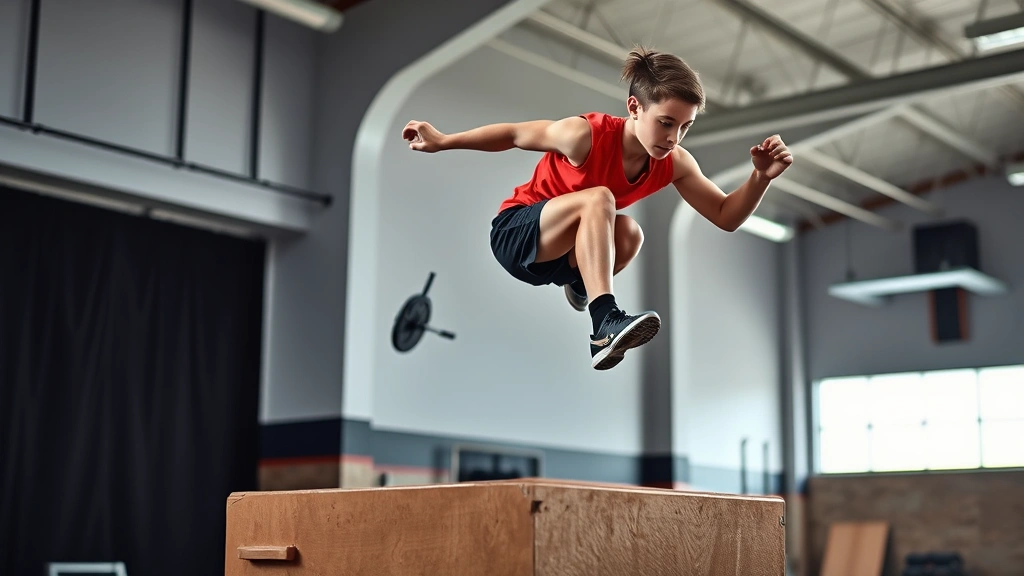
Plyometric Exercises train the stretch-shortening cycle—the mechanism by which muscles rapidly lengthen then shorten to produce explosive movement. Jump variations (box jumps, depth jumps, broad jumps), medicine ball throws, and bounding drills teach the nervous system to produce rapid force development. These exercises are essential for sports requiring frequent jumping, sprinting, or rapid direction changes.
Kettlebell Training develops ballistic power and grip strength while improving movement fluidity. Kettlebell swings, snatches, and Turkish get-ups build explosive hip drive and core stability. The offset loading of kettlebells also challenges stabilizer muscles, improving overall movement quality and injury resilience.

Med Ball Throws combine strength and power in sport-relevant patterns. Overhead throws, rotational throws, and chest passes develop upper body power and core explosiveness. Athletes benefit from medicine ball training because it allows rapid force development without the technical complexity of Olympic lifts.
Sprinting and Acceleration Work represents the most sport-specific power development. Short sprints (10-40 yards) with adequate recovery develop the neuromuscular capacity for explosive acceleration. Coaches structure sprint training to emphasize first-step quickness and acceleration mechanics rather than pure maximum velocity.
Sport-Specific Training Protocols
While foundation and power exercises apply broadly, elite coaching recognizes that different sports demand different training emphasis. Successful athletic development requires sport-specific customization built on universal principles.
Football Athletes require comprehensive strength development emphasizing lower body power for explosiveness and upper body strength for contact. Tennessee Volunteers football athletes, for instance, benefit from programs balancing squat and deadlift strength with plyometric development and positional-specific work. Defensive linemen prioritize lower body explosiveness and hand strength, while wide receivers emphasize acceleration and lateral agility. Finding quality college football predictions requires understanding how player development impacts team performance.
Baseball and Softball Athletes need rotational power development, shoulder stability, and explosive hip drive for batting and throwing. Medicine ball rotational throws, landmine rotations, and single-leg exercises develop the power necessary for elite throwing velocity and batting distance. These athletes also require extensive shoulder mobility work given the high-velocity demands of throwing.
Basketball and Volleyball Athletes require vertical jump development, lateral agility, and lower body shock absorption. Depth jumps, box jumps, and split-squat variations develop the necessary lower body power and stability. These athletes also benefit from lateral lunges and side-plank variations that develop frontal and transverse plane stability.
Tennis and Racquet Sport Athletes need rotational power, lateral agility, and explosive first-step quickness. Single-leg exercises, anti-rotation core work, and lateral bounding drills develop the specific demands of these sports. Shoulder stability and rotator cuff health are paramount given the repetitive overhead demands.
Distance Running and Endurance Athletes benefit from strength training emphasizing movement efficiency and injury prevention rather than maximum strength. Single-leg exercises, core stability work, and moderate-intensity strength training improve running economy and reduce injury risk. These athletes require less emphasis on maximum strength but benefit significantly from movement quality and muscular balance.
Injury Prevention and Mobility Work
The most overlooked aspect of athletic development is injury prevention. Coaches understand that the strongest, fastest athlete who’s injured provides zero value to the team. Intelligent training programs integrate mobility, stability, and movement quality work throughout the training week.
Dynamic Mobility Routines prepare the body for training demands while improving movement quality. Leg swings, walking lunges, inchworms, and arm circles activate muscles while improving range of motion. These pre-training routines require minimal time investment but significantly impact performance and injury prevention.
Core Stability Work prevents lower back injury and improves force transfer from lower to upper body. Planks, dead bugs, bird dogs, and Pallof presses develop anti-rotation and anti-extension core strength. These exercises stabilize the spine during dynamic movements, reducing injury risk and improving power transfer.
Single-Leg Exercise Variations address strength imbalances between limbs and develop proprioceptive awareness. Single-leg squats, single-leg deadlifts, Bulgarian split squats, and single-leg hops force each leg to work independently, identifying and correcting imbalances before they cause injury.
Shoulder Health Exercises are critical for upper body health, especially in overhead and throwing sports. Face pulls, band pull-aparts, prone Y-T-W raises, and external rotation work develop rotator cuff strength and scapular stability. These exercises prevent the shoulder injuries that plague athletes in baseball, volleyball, and swimming.
Ankle and Hip Mobility prevents lower extremity injuries while improving movement efficiency. Foam rolling, ankle circles, hip circles, and deep squat holds improve joint mobility. Athletes with restricted ankle mobility compensate with knee or hip dysfunction, increasing injury risk. Regular mobility work maintains the range of motion necessary for athletic performance.
Programming for Athletic Success
Understanding individual exercises means little without intelligent programming that sequences exercises, manages fatigue, and builds progressively toward peak performance. Elite coaching integrates periodization principles to optimize adaptation and minimize injury risk.
Periodization Framework structures training into distinct phases emphasizing different qualities. Hypertrophy phases build muscle mass and work capacity, strength phases develop maximum force production, and power phases teach the nervous system to express that strength explosively. This systematic approach prevents plateaus and optimizes performance timing for competition.
Exercise Selection and Order matters significantly. Complex exercises (squats, deadlifts, Olympic lifts) require maximal nervous system resources and should occur early in training when the athlete is fresh. Supplemental exercises and isolation work follow complex movements when the nervous system is partially fatigued. This sequencing maximizes adaptation to priority movements.
Volume and Intensity Management prevents overtraining while driving continuous adaptation. Elite coaches track training volume (total repetitions and load) and ensure adequate recovery between high-intensity sessions. Athletes performing multiple high-intensity sessions per week require careful attention to recovery to avoid burnout and injury.
Deload Weeks represent critical recovery periods where training volume and intensity decrease 40-50%. These planned recovery weeks allow the nervous system and musculoskeletal system to fully recover, preventing accumulated fatigue that leads to performance plateaus and injury. Most effective programs include a deload week every 3-4 weeks.
In-Season Maintenance differs significantly from off-season development. During competition, strength training emphasizes movement quality and injury prevention rather than maximal strength development. Coaches reduce training volume while maintaining intensity, ensuring athletes maintain strength and power without accumulating excessive fatigue during competition.
For comprehensive training analysis and competitive insights, explore our fantasy football names guide and sports betting odds explained resources to understand competitive dynamics. Learn more about athletic performance through our golf swing improvement guide which emphasizes similar athletic principles.
Research from the National Strength and Conditioning Association demonstrates that athletes following structured periodized programs outperform those using random exercise selection. Coaches who systematically progress exercises, manage fatigue, and align training with competition schedules consistently produce superior results.
FAQ
What’s the single best exercise for athletic development?
No single exercise develops all athletic qualities. However, the back squat comes closest because it develops lower body strength, power, and stability—qualities essential for most sports. Pair it with Olympic lifting variations, plyometrics, and sport-specific training for comprehensive development.
How often should athletes train?
Most athletes benefit from 4-5 training sessions weekly, combining strength development, power work, sport-specific training, and recovery. The exact frequency depends on sport demands, competition schedule, and individual recovery capacity. In-season training frequency often decreases to maintain strength without overtraining.
Are athletes too young for weightlifting?
Youth athletes (ages 7-12) benefit from bodyweight exercises, movement quality work, and light resistance training. As athletes mature (ages 13+), progressive resistance training becomes increasingly beneficial. The key is emphasizing movement quality and gradual progression rather than maximum loads.
How important is genetics in athletic performance?
Genetics influence athletic potential but don’t determine success. Systematic training, intelligent programming, and consistent effort overcome genetic limitations. Many athletes with modest genetic gifts outperform naturally gifted athletes through superior training discipline and coaching.
Should athletes specialize early in one sport?
Research suggests early sport specialization (before age 12-14) increases injury risk without improving long-term performance. Multi-sport participation develops diverse athletic qualities and reduces overuse injury risk. Specialization becomes appropriate as athletes mature and competition intensity increases.
How does recovery impact athletic performance?
Recovery determines whether training stimulus produces adaptation or accumulated fatigue. Sleep (7-9 hours nightly), nutrition (adequate protein and carbohydrates), and active recovery (light movement and mobility work) are essential. Many coaches recognize that recovery quality separates elite athletes from those who plateau.


