
Boost Endurance for MSHSAA Football: Coach Insights and Science-Backed Strategies
MSHSAA football demands exceptional endurance. Whether you’re a defensive end chasing quarterbacks for four quarters or a running back grinding through tough conference matchups, cardiovascular fitness separates champions from the rest. High school football in Missouri operates under intense competitive standards, and athletes who can maintain peak performance in the fourth quarter gain a decisive advantage that coaches recognize immediately.
This comprehensive guide reveals proven endurance-building strategies that MSHSAA coaches implement with their most successful players. We’ll explore the physiological demands of football, examine training methodologies backed by exercise science, and provide actionable protocols you can integrate into your program today. Whether you’re coaching varsity or developing freshman talent, these insights will elevate your team’s stamina and competitive edge.
Understanding Football-Specific Endurance Demands
MSHSAA football presents unique physiological challenges that differ significantly from soccer, basketball, or track. Players experience repeated high-intensity efforts lasting 5-15 seconds followed by shorter recovery periods. A linebacker might sprint 40 yards, plant, and change direction three times in a single play, then get 30-40 seconds rest before the next snap. This pattern repeats 50-70 times per game across 48 minutes of actual playing time.
The sport demands both aerobic and anaerobic capacity. Your aerobic system provides steady-state energy for recovery between plays and enables sustained performance throughout the second half. Your anaerobic system delivers explosive power for individual plays and maintains intensity when fatigue sets in. Research from the American College of Sports Medicine demonstrates that football players require VO2 max levels between 45-55 ml/kg/min for optimal performance, significantly higher than sedentary individuals.
Position-specific demands vary considerably. Defensive linemen accumulate approximately 4-6 miles of total movement per game, while defensive backs and receivers cover 5-7 miles. Offensive linemen experience shorter bursts but extreme power demands. Quarterbacks demand high cognitive function under fatigue, requiring exceptional cardiovascular conditioning to maintain decision-making accuracy when oxygen availability decreases.

Aerobic Foundation Training Methods
Building aerobic capacity provides the foundation for all football conditioning. Without adequate aerobic fitness, athletes cannot recover between plays, leading to performance degradation and injury risk. Coaches should implement high school football programs emphasizing consistent aerobic development from the offseason through competition.
Steady-state running remains essential. Implement 20-35 minute continuous runs at 65-75% maximum heart rate, conducted 2-3 times weekly during offseason and 1-2 times weekly during season. These efforts improve mitochondrial density, enhance oxygen utilization, and strengthen aerobic enzymes. Athletes should maintain conversational pace—able to speak in short sentences but not sing.
Tempo runs bridge aerobic and anaerobic systems. Execute 8-12 minute sustained efforts at 80-85% max heart rate. For MSHSAA athletes, this translates to challenging but manageable paces where speech becomes difficult. Perform tempo runs once weekly during periodized training blocks. Research indicates tempo training improves lactate threshold, enabling athletes to maintain higher intensities before fatigue accumulates.
Cross-training prevents overuse injuries while building aerobic capacity. Integrate cycling, rowing, swimming, and elliptical training 1-2 times weekly. These modalities strengthen supporting musculature, improve cardiovascular function without excessive ground impact, and maintain engagement during offseason periods. Many successful MSHSAA programs rotate cross-training activities to prevent adaptation plateaus.
High-Intensity Interval Training for Football
HIIT represents the most football-specific endurance training method. The sport’s repeated sprint nature demands anaerobic power combined with rapid recovery. Interval protocols should mirror actual game demands: high-intensity efforts lasting 5-15 seconds with incomplete recovery periods.
Short interval protocols (30-45 seconds hard, 30-60 seconds recovery) develop anaerobic capacity while maintaining aerobic stimulation. Perform 6-10 repetitions once or twice weekly. Examples include:
- 200-meter sprints with walk recovery
- 40-yard shuttle runs with 45-second rest
- Hill sprints (20-30 seconds) with walk-down recovery
- Sled pushes with 60-second intervals
Medium interval protocols (60-90 seconds hard, 90-120 seconds recovery) build sustained anaerobic power. Execute 4-6 repetitions weekly. These might include 400-meter repeats, 90-second bike efforts, or position-specific circuit combinations lasting the prescribed duration.
Game-simulation intervals most closely replicate MSHSAA football demands. Design 40-50 yard directional sprints with plant-and-cut movements, followed by 40-45 second recovery. Perform 8-10 repetitions. This approach develops position-specific power while training the exact recovery pattern athletes experience during games.
External load monitoring ensures appropriate intensity. Research on sport-specific conditioning demonstrates that perceived exertion ratings between 7-9 out of 10 during hard intervals optimize adaptation while minimizing overtraining risk. GPS tracking and accelerometer data provide objective intensity confirmation for serious programs.
Sport-Specific Conditioning Drills
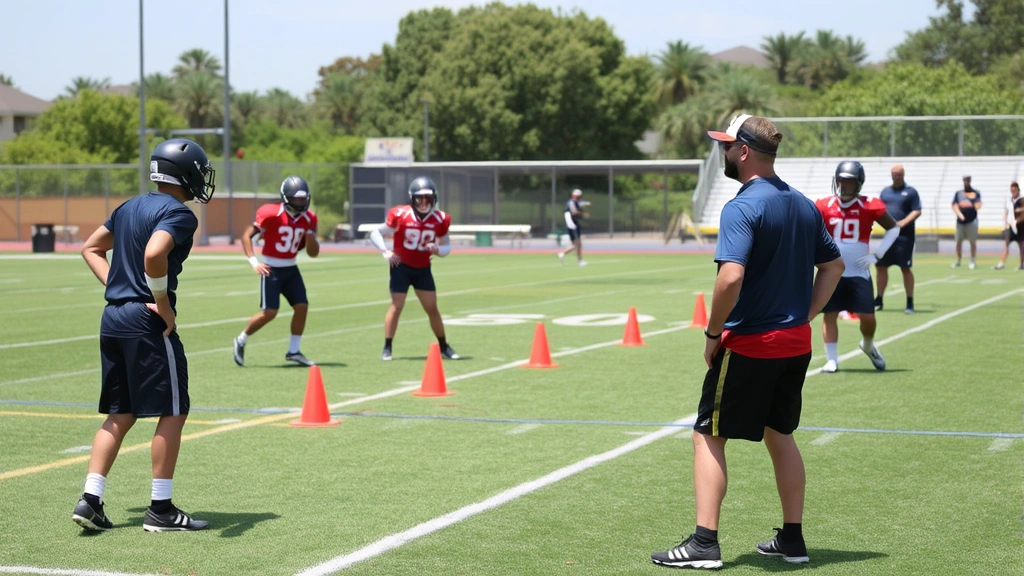
The most effective endurance training integrates football-specific movements. Generic conditioning builds general fitness but fails to develop the precise demands of MSHSAA competition. Position-specific drills accelerate adaptation and enhance transfer to game performance.
Defensive conditioning circuits develop endurance specific to defensive demands. Construct 45-60 second circuits combining:
- Backpedal 20 yards, sprint forward 20 yards (repeat 2-3 times)
- Lateral shuffle 15 yards each direction
- Plant-and-cut drills (three 40-yard directional sprints)
- Tackling bag engagement (10 explosive tackles)
Execute 6-8 circuit repetitions with 90-120 second recovery between rounds. This approach develops directional change capacity, maintains tackling technique under fatigue, and trains the specific energy systems defensive players demand.
Offensive skill position circuits emphasize route running endurance and explosive cutting. Perform:
- Cone routes (slant, dig, corner) at game-speed intensity
- 60-yard shuttle combinations (simulating pass patterns)
- Catch-and-run sequences with directional changes
- Blocking and release movements under fatigue
Execute 5-7 circuit rounds with position coaches evaluating movement quality. This integrates conditioning with technical development, ensuring athletes maintain proper form when fatigued—critical for injury prevention and game-day performance.
Offensive line conditioning requires specialized programming. Linemen need explosive power combined with sustained effort capacity. Implement:
- Sled push/pull intervals (20-30 second efforts)
- Drive-block repetitions against progressive resistance
- Directional footwork drills maintaining intensity
- Heavy-light contrast training (heavy strength followed by explosive movement)
Research from strength and conditioning specialists indicates that linemen benefit from strength-endurance protocols emphasizing movement quality over pure cardiovascular demand.
Recovery and Nutrition Strategies
Endurance development occurs during recovery, not during training. MSHSAA athletes must prioritize systematic recovery strategies to maximize adaptation and maintain injury resilience. Training stress without adequate recovery accumulates, leading to overtraining, performance decrements, and increased injury risk.
Sleep optimization provides the foundation for recovery. Target 8-10 hours nightly for developing athletes. Sleep deprivation impairs glycogen restoration, reduces growth hormone secretion, and compromises immune function. Establish consistent sleep schedules, minimize screen exposure one hour before bed, and maintain cool, dark sleeping environments.
Nutrition timing directly impacts endurance adaptation. Consume carbohydrates within 30-60 minutes post-training to replenish glycogen stores. A 3:1 carbohydrate-to-protein ratio optimizes recovery—for example, chocolate milk, a banana with peanut butter, or a sports drink with protein powder. During extended conditioning sessions exceeding 90 minutes, consume 30-60 grams carbohydrates per hour to maintain blood glucose and performance.
Hydration protocols prevent performance degradation. Athletes lose 1-2% body weight during conditioning before performance decrements become measurable. Establish baseline hydration by weighing athletes before and after training—target losing no more than 2% body weight. Drink 16-20 ounces fluid for every pound lost during recovery.
Active recovery accelerates adaptation between hard training sessions. On recovery days, perform light 15-20 minute easy runs, mobility work, or swimming. These activities increase blood flow, facilitate waste product removal, and reduce soreness without imposing additional training stress.
Monitoring Progress and Adjusting Programs
Systematic progress monitoring ensures training effectiveness and prevents overtraining. MSHSAA coaches should implement objective assessment protocols throughout the season, using data to guide programming adjustments.
Field testing protocols measure endurance development directly. Perform these assessments every 4-6 weeks:
- Yo-Yo Intermittent Recovery Test: Measures repeated sprint ability with incomplete recovery, highly predictive of football performance
- Pro Agility Shuttle (5-10-5): Evaluates directional change capacity and acceleration
- 300-yard shuttle: Assesses total-body endurance and anaerobic capacity
- 1.5-mile run: Measures aerobic capacity and relative fitness progression
Track individual performance trends rather than absolute numbers. A player improving their 1.5-mile time by 30 seconds over 6 weeks demonstrates clear aerobic adaptation, regardless of starting point.
Heart rate variability (HRV) monitoring provides insight into nervous system recovery status. Athletes with elevated HRV demonstrate adequate parasympathetic recovery; suppressed HRV suggests overtraining. Many Peak Play Arena blog readers implement simple HRV protocols using smartphone applications, testing resting heart rate and heart rate variability each morning before rising.
Rate of perceived exertion (RPE) logs track training stress accumulation. Athletes rate each session’s difficulty (1-10 scale) and duration, generating RPE load (difficulty × duration). Sudden load increases above 150% of weekly average correlate with injury risk. Maintain relatively consistent weekly loads, varying intensity and duration rather than both simultaneously.
Adjust programming based on assessment data. If athletes plateau on aerobic measures, implement new interval protocols or cross-training modalities. If power assessments decline despite maintained conditioning, increase recovery emphasis and reduce training volume. Effective coaches view data as programming guides, not judgment tools.
FAQ
How long does endurance development take for MSHSAA football players?
Measurable aerobic adaptations emerge within 3-4 weeks of consistent training. Significant fitness improvements require 8-12 weeks of systematic programming. Peak endurance development occurs after 16+ weeks of periodized training. Begin offseason conditioning 12 weeks before season to ensure athletes reach competitive readiness.
Can endurance training negatively impact strength and power?
Excessive endurance training can compromise strength development through interference effects. Balance conditioning with high school football strength training by performing endurance work after strength sessions or on separate days. Prioritize strength development 2-3 times weekly, conditioning 2-3 times weekly, with clear separation between modalities.
What’s the ideal conditioning frequency during the season?
Maintain 1-2 conditioning sessions weekly during the competitive season. Emphasize sport-specific drills over high-volume running, as game competition provides substantial conditioning stimulus. Monitor fatigue carefully, reducing conditioning volume in weeks preceding important conference matchups or playoffs.
How should conditioning differ between positions?
Position-specific programming optimizes adaptation. Defensive backs and receivers require high-speed directional change conditioning. Defensive linemen benefit from explosive power-endurance work. Linebackers need balanced conditioning emphasizing lateral movement and sudden acceleration. Tailor conditioning to positional demands rather than implementing universal protocols.
What role does mental toughness play in endurance performance?
Mental resilience significantly impacts endurance capacity. Athletes who embrace challenging conditioning, maintain positive self-talk, and visualize successful performance demonstrate superior fatigue tolerance. Incorporate mental skills training alongside physical conditioning, teaching athletes to manage discomfort and maintain focus during high-intensity efforts.


