College Football Game Length: Expert Insights on Duration and Factors
College football games are a staple of American sports culture, drawing millions of fans to stadiums and screens every fall. But if you’ve ever sat through an entire game wondering when it will finally end, you’re not alone. The average college football game lasts approximately 3 hours and 25 minutes, though this can vary significantly depending on numerous factors. Understanding what influences game length helps fans plan their day and appreciate the complexity of collegiate athletics.
Whether you’re a dedicated fan planning your Saturday or a newcomer curious about the sport, knowing the actual duration of college football games is essential. This comprehensive guide breaks down everything you need to know about game length, what causes delays, and how it compares to other football formats. We’ll explore the science behind timing, the rules that affect pace, and expert insights that reveal why some games fly by while others seem to stretch into eternity.
Average Game Duration and Breakdown
College football games are officially 60 minutes of actual playing time, divided into four quarters of 15 minutes each. However, the clock doesn’t run continuously like in soccer. The game clock stops for numerous reasons: incomplete passes, players going out of bounds, timeouts, penalties, and when the ball is placed for the next play. This explains why a 60-minute game takes more than three hours to complete.
The breakdown typically looks like this: the first quarter averages around 40-45 minutes of real time, the second quarter roughly 45-50 minutes, the third quarter 40-45 minutes, and the fourth quarter 50-60 minutes (often longer due to dramatic finishes). Between halves, there’s a 20-minute intermission, which adds to the total duration. When you combine these elements, you arrive at the standard 3 hours and 25 minutes figure that most fans experience.
For context, the Peak Play Arena Blog provides extensive coverage of football timing dynamics. Understanding these intervals is crucial for anyone attending a game in person, as bathroom breaks and concession stand visits require strategic planning around the action.
Factors That Extend Game Length
Several controllable and uncontrollable factors can push college football games well beyond the three-hour mark. The most significant factor is television commercials. Networks broadcasting college football games insert commercial breaks after every score, at the two-minute warning, and at regular intervals. A single touchdown can add 2-3 minutes to game time through commercial stoppages alone.
Penalties and reviews represent another major time consumer. A single penalty can stop play for 30 seconds to a minute, and coaches’ challenges or replay reviews can consume 2-5 minutes per occurrence. Games with multiple controversial calls can easily add 15-20 minutes to their total length. Football Trivia resources often highlight how rule changes have impacted game pacing over the years.
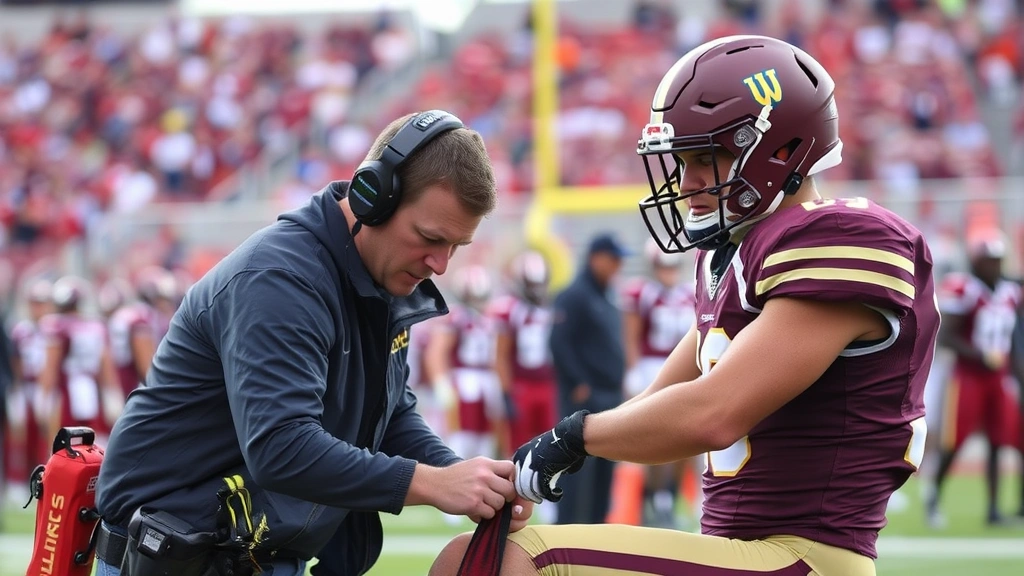
Injuries create unavoidable delays. When a player goes down with a serious injury, medical staff must enter the field, assess the situation, and potentially transport the player to the sideline or off the field. These stoppages can range from a few seconds to several minutes depending on severity. Weather conditions also play a role—lightning delays have been known to pause games for 30 minutes or more, and rain can slow down the pace of play significantly.
Timeouts represent another critical factor. Each team receives three timeouts per half, and coaches strategically use them to manage the clock, adjust strategy, or ice kickers. Additionally, official timeouts occur for measurement of first downs, which can add several minutes across a full game. Teams trailing late in the game often use all their timeouts, extending the fourth quarter considerably.
Commercial and Television Impact
The television era has fundamentally transformed college football game length. Network broadcasts demand commercial breaks that weren’t necessary in earlier decades. Premium cable networks like ESPN have contractual obligations to broadcast a specific amount of advertising, directly impacting game duration. A game on ESPN prime time will invariably last longer than the same matchup broadcast on a regional network.
The NCAA and conferences have attempted to address this issue. In recent years, rule modifications have been implemented to reduce unnecessary stoppages. For example, the clock now runs after first downs in certain situations, and officials work faster to spot the ball. However, these efficiency measures often take a backseat to television revenue considerations.
Networks also contribute to extended games through extensive pre-game and post-game coverage. While these don’t technically count toward game length, they add to the total time commitment for fans. Some broadcasts begin 30 minutes before kickoff and continue 30+ minutes after the final whistle, turning a three-hour game into a four-plus-hour television event.
Comparison to Other Football Leagues
College football games are typically longer than their professional counterparts. The NFL has made concerted efforts to reduce game length, with recent average game times hovering around 3 hours and 10 minutes. However, college games average about 15 minutes longer, making the difference more noticeable than one might expect.
High school football games, conversely, are significantly shorter, typically lasting 2 to 2.5 hours. This is because high school broadcasts generate less television revenue, resulting in fewer commercial breaks. Additionally, high school games use a running clock in certain situations, which speeds up play considerably.
International football formats show even starker contrasts. Canadian football games, despite having 12 players per side and larger fields, actually run slightly shorter due to different commercial break structures and clock management rules. Understanding these differences helps contextualize why college games take as long as they do.
Strategies to Speed Up Games
College football stakeholders have implemented several strategies to combat increasingly lengthy games. The NCAA has experimented with various rule changes aimed at improving pace. One successful modification involves reducing the play clock from 40 seconds to 35 seconds in certain situations, forcing teams to snap the ball faster and reducing downtime between plays.
Another approach involves limiting the number of officials’ timeouts. By consolidating measurements and reducing stoppages for administrative purposes, games can move more efficiently. Some conferences have also implemented rules allowing teams to decline timeouts in specific situations, further streamlining the process.
Technology also plays a role in efficiency improvements. Sports organizations are exploring faster replay review systems and better sideline communication to reduce the time spent on challenges and reviews. Real-time communication between replay officials and on-field officials has improved significantly, cutting review time from an average of 4-5 minutes to 2-3 minutes in many cases.
Media coverage and college football predictions often discuss these efficiency measures, as fans and analysts recognize that game length affects attendance and viewership. Networks are also experimenting with more efficient commercial placement, though this remains a contentious issue between broadcasters and the NCAA.
Historical Trends in Game Length
College football game length has increased dramatically over the past three decades. In the 1990s, average game length was approximately 2 hours and 50 minutes. By the 2010s, this had extended to over 3 hours and 20 minutes. The primary driver of this increase has been the exponential growth in television coverage and associated commercial breaks.
The expansion of conference networks and the proliferation of prime-time games have contributed significantly to longer durations. When games air during peak viewing hours, networks maximize commercial inventory, directly extending game length. Saturday games broadcast in primetime regularly exceed 3 hours and 40 minutes.
Interestingly, academic research on sports timing has shown that game length doesn’t necessarily correlate with fan satisfaction. Sports science research indicates that close games and exciting finishes justify extended durations, while blowouts of similar length often frustrate audiences. This insight has informed discussions about balancing commercial interests with fan experience.
Recent data suggests that game length may have plateaued. The NCAA implemented rule changes in 2019 specifically designed to address this issue, and early results indicate that these modifications have stabilized game length rather than continuing the upward trend. However, the fundamental economics of television broadcasting continue to pressure for longer games.
Strategic planning for game attendance requires understanding these historical trends. Fans attending games should expect the standard 3 hours and 25 minutes but prepare for potential extensions, particularly if the game is competitive or involves multiple reviews and penalties. Fantasy football enthusiasts also benefit from understanding game length, as it affects player availability and scheduling.
Practical Tips for Managing Game Duration
For fans attending college football games in person, managing the three-plus-hour commitment requires strategic planning. Arrive early to soak in the pre-game atmosphere without feeling rushed. Plan your bathroom and concession visits strategically—avoid the second quarter when many fans make simultaneous trips.
If you’re a new fan unfamiliar with the sport, understanding the rhythm of play helps pass the time more enjoyably. Learn to anticipate commercial breaks and use them for social interaction rather than viewing them as dead time. Many experienced fans use these moments to discuss strategy, check statistics, or simply enjoy the stadium environment.
For television viewers, the extended duration is less problematic. You can pause for breaks, fast-forward through commercials (if recording), or multitask during slower moments. However, if you’re watching live, having snacks and comfortable seating prepared beforehand enhances the experience considerably.
Weather preparedness is crucial for outdoor stadium attendees. Bring sunscreen for day games and layers for evening games, as sitting for three-plus hours exposes you to the elements. Hydration is equally important—the combination of physical inactivity and outdoor exposure can dehydrate fans quickly.
The Future of College Football Game Length
The future of game length in college football remains uncertain. The transfer to new conference structures and evolving media rights deals may alter the commercial landscape. Some industry experts predict that games could become shorter as streaming services with different revenue models gain prominence in broadcasting college football.
Conversely, increased competition for viewership might encourage networks to extend games further, as longer broadcasts mean more advertising opportunities. The tension between fan experience and revenue generation will likely define the trajectory of game length in coming years.
Advanced analytics and sports trivia analysis continue to reveal insights about optimal game pacing. Some progressive programs have experimented with alternative formats during non-conference games, testing new rules and timing structures. These experiments may eventually influence broader NCAA policy.
One emerging consideration involves the health and safety implications of game length. Extended play increases injury risk, particularly in the fourth quarter when player fatigue sets in. This concern has prompted some athletic departments to advocate for stricter enforcement of pace-of-play rules.
FAQ
How long is a typical college football game?
The average college football game lasts approximately 3 hours and 25 minutes. This includes 60 minutes of actual playing time (four 15-minute quarters) plus stoppages for timeouts, commercials, penalties, reviews, and the 20-minute halftime break.
Why do college football games take so long?
College football games are extended primarily by television commercials, which networks require for revenue. Additional factors include timeout usage, penalty enforcement, injury stoppages, replay reviews, and the natural rhythm of play where the clock stops frequently.
Are college football games longer than NFL games?
Yes, college football games typically last about 15 minutes longer than NFL games. The average NFL game is around 3 hours and 10 minutes, while college games average 3 hours and 25 minutes, though both can vary significantly.
What’s the longest college football game ever played?
The longest college football game occurred between Texas Tech and Oklahoma in 2012, which went to seven overtimes and lasted approximately 5 hours and 40 minutes. However, most extended games fall in the 4-4.5 hour range.
Can college football games be shortened?
The NCAA has implemented several rule changes to improve pace, including reducing the play clock and limiting official timeouts. However, television commercial obligations remain a significant constraint on shortening game length.
Do all college football games have the same length?
No, game length varies considerably based on factors like television network, competitiveness of the matchup, number of penalties, injuries, and weather conditions. Primetime games broadcast nationally tend to be longer than regional broadcasts.


