
High School Football: Coach’s Training Tips for Building Championship Teams
High school football represents a critical developmental stage where young athletes transition from recreational play to competitive sport. As a coach, your training methodology directly impacts not only performance outcomes but also player safety, confidence, and long-term athletic development. This comprehensive guide provides evidence-based training strategies that have proven effective across countless successful programs, combining strength and conditioning principles with sport-specific skill development.
The foundation of any winning high school football program rests on three pillars: intelligent conditioning, proper technique coaching, and mental resilience development. Whether you’re managing a varsity squad or developing younger talent, understanding how to periodize training, prevent injuries, and maximize athletic potential separates championship programs from the rest. This guide equips you with actionable coaching strategies grounded in exercise science and real-world application.
Periodization: The Foundation of Effective Training
Periodization represents the systematic planning of athletic training to peak at critical moments while managing fatigue and preventing overtraining. For high school football coaches, implementing a structured periodization model ensures players develop progressively without hitting plateaus or suffering preventable injuries. The competitive season demands that athletes perform at their peak during Friday night games, making strategic planning essential.
Macrocycle Planning divides the entire year into distinct phases. The off-season (roughly January through May) focuses on building foundational strength and addressing movement deficiencies. The pre-season (June through August) emphasizes sport-specific power, agility, and team integration. The in-season (September through November) maintains strength while prioritizing recovery and technical refinement. This structure aligns with American College of Sports Medicine guidelines for athletic development.
Within each macrocycle, implement mesocycles lasting 3-4 weeks that emphasize specific adaptations. During the off-season strength block, focus on hypertrophy (muscle building) and foundational strength. Progress to a power block emphasizing explosive movements. This structured approach prevents the common mistake of maintaining identical training stimulus throughout the year, which leads to stagnation and diminished returns on training investment.
Microcycles represent individual weeks of training, where you manipulate volume and intensity based on competition schedule. During in-season weeks, reduce total training volume by 30-40% on days immediately following games to facilitate recovery while maintaining competitive readiness. This scientific approach to football training planning distinguishes elite programs from those relying on outdated methodology.

Strength and Power Development for Football Athletes
Strength serves as the foundation for every physical quality in football. Stronger athletes run faster, jump higher, accelerate quicker, and resist injury more effectively. However, not all strength training approaches produce equal results for high school athletes still developing physically and neurologically.
Compound Movement Emphasis should dominate your strength program. The barbell back squat remains the gold standard for lower body development, building tremendous force production through the legs, hips, and core. Deadlifts develop posterior chain strength critical for explosive movement and injury resistance. Bench press and overhead press build upper body strength essential for blocking, tackling, and pushing opponents.
Begin each strength session with a dynamic warm-up targeting mobility and movement quality. Perform 5-10 minutes of movement preparation including leg swings, inchworms, glute bridges, and arm circles. This preparation elevates heart rate, increases neural activation, and reduces injury risk during heavy lifting.
Structure strength sessions using a lower/upper split or full-body approach depending on frequency. For athletes training three days weekly, alternate between lower body emphasis, upper body emphasis, and full-body sessions. Each session should include a primary compound lift performed for 3-5 sets of 3-6 repetitions at 80-90% of estimated one-rep maximum. This rep range builds maximum strength and power without excessive joint stress.
Follow primary lifts with 2-3 supplemental exercises targeting weak points and movement patterns. A lower body session might include: Back Squat (primary), Romanian Deadlift (posterior chain), Bulgarian Split Squats (unilateral strength), and Nordic Curls (hamstring eccentric strength). This comprehensive approach builds balanced strength reducing injury risk.
Power Development requires training explosiveness through Olympic lifts, plyometrics, and ballistic movements. Power cleans, hang power cleans, and push presses teach athletes to generate force rapidly—essential for the explosive movements football demands. Perform these technical lifts early in workouts when nervous system fatigue is minimal, using 3-5 sets of 2-3 repetitions at moderate weights emphasizing speed.
Plyometric training builds power through reactive strength. Box jumps, broad jumps, medicine ball throws, and bounding develop the stretch-shortening cycle—the ability to quickly transition from eccentric (lengthening) to concentric (shortening) muscle contractions. This quality directly translates to faster first steps, higher vertical jumps, and more explosive tackles. Progress plyometric volume carefully, as these high-impact activities stress the nervous system significantly.
Speed and Agility Training Protocols
Football success depends heavily on lateral quickness, acceleration, and change-of-direction ability. While genetics influence speed potential, coaching methodology dramatically impacts how effectively athletes develop their inherent capabilities. Speed training requires specificity—athletes must practice the exact movement patterns they’ll execute during competition.
Linear Speed Development begins with proper sprinting mechanics. Many high school athletes demonstrate inefficient running form, limiting their speed potential. Emphasize hip extension power, forward lean mechanics, and ground contact time reduction. Perform 10-15 meter acceleration sprints weekly, focusing on achieving maximum velocity in minimal distance. This repeated exposure to high-speed running builds neural patterns supporting faster movement.
Work with athletes on block starts and reaction drills mimicking game situations. Have defensive backs react to receiver movements, linemen respond to snap counts, and linebackers diagnose and react to offensive formations. This sport-specific speed training proves far more effective than general running programs lacking football context.
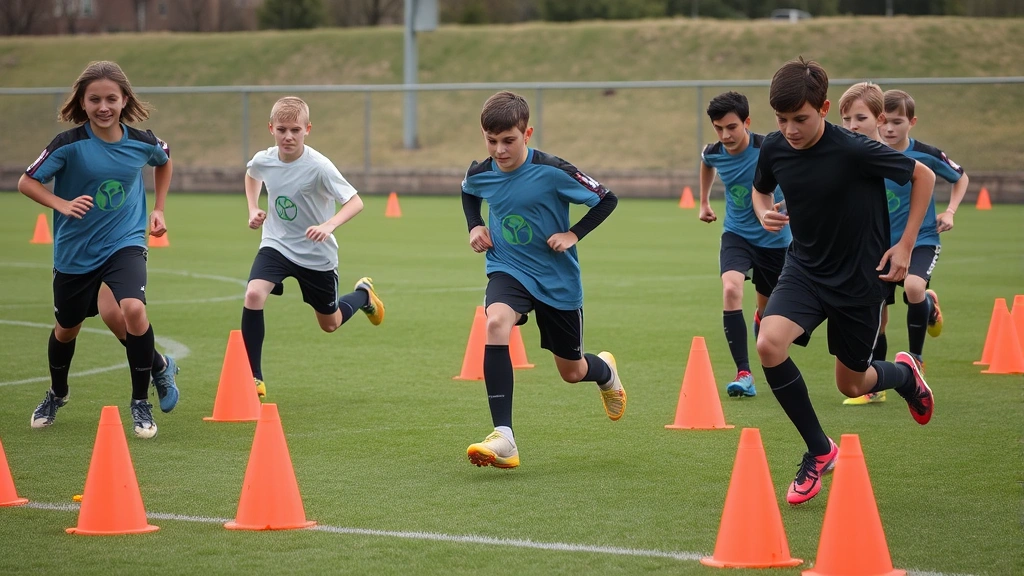
Lateral Agility and Change of Direction distinguish elite football players. Implement ladder drills, cone drills, and shuttle runs that require rapid deceleration, direction change, and acceleration. The T-drill, 5-10-5 shuttle, and 3-cone drills measure and develop change-of-direction ability. These drills should be performed fresh early in training sessions when coordination and nervous system function are optimal.
Agility development requires eccentric strength (deceleration ability) and ankle stability. Perform lateral lunges, lateral bounds, and single-leg balance exercises to build the stability required for rapid direction changes. Athletes with poor ankle stability or weak hip abductors demonstrate compromised agility and increased injury risk. Address these deficiencies through targeted accessory work.
Conditioning Programs That Build Endurance Without Burnout
Conditioning separates adequately prepared teams from those capable of dominating in the fourth quarter. However, excessive conditioning volume creates overtraining, suppresses immune function, and increases injury risk. The goal involves building sufficient aerobic capacity and work capacity while maintaining strength and power qualities.
High-Intensity Interval Training (HIIT) provides superior conditioning benefits compared to steady-state running. Research published in sports science journals demonstrates that short bursts of high-intensity effort followed by brief recovery periods build aerobic capacity, anaerobic power, and work capacity simultaneously. For football players, this might include 30-second sprints followed by 30-60 seconds of walking recovery, repeated 8-12 times.
Implement position-specific conditioning reflecting actual game demands. Defensive backs might perform shuttle sprints and directional changes mimicking coverage responsibilities. Linemen perform explosive movements with minimal rest reflecting the intense effort-recovery pattern of their position. Receivers sprint routes with brief recovery between repetitions. This sport-specific approach proves more effective and maintains athlete engagement compared to generic conditioning.
Battle rope exercises, sled pushes, and farmer carries build work capacity while maintaining strength. These methods condition the entire body through functional movements rather than repetitive running that may increase injury risk in high school athletes still developing skeletal maturity. Vary conditioning modalities throughout the season to maintain adaptation and prevent monotony.
Monitor conditioning intensity through heart rate, perceived exertion, or work-to-rest ratios. Ensure athletes achieve adequate recovery between high-intensity sessions. Never perform intense conditioning on days following games or heavy strength sessions. This periodization prevents accumulating fatigue that compromises performance and recovery.
Aerobic Base Development shouldn’t be neglected despite emphasis on high-intensity work. Incorporate 1-2 steady-state sessions weekly during off-season phases, performing moderate-intensity running or biking for 20-30 minutes. This builds aerobic capacity supporting recovery between high-intensity efforts and general health.
Injury Prevention and Recovery Strategies
Injury prevention represents the most important coaching responsibility. A healthy athlete training at 100% capacity outperforms an injured athlete at 80% capacity. Implement comprehensive injury prevention strategies addressing movement quality, strength imbalances, and recovery adequacy.
Movement Screening identifies athletes with movement dysfunction increasing injury risk. The Functional Movement Screen (FMS) or similar assessment tools reveal asymmetries, mobility restrictions, and stability deficits. Athletes demonstrating poor ankle mobility, weak hip abductors, or limited thoracic spine rotation require targeted corrective exercises before progressing to high-intensity training.
Address common high school football injuries through targeted prevention work. ACL injuries, hamstring strains, and ankle sprains represent prevalent injuries. Build single-leg stability through Bulgarian split squats and single-leg deadlifts. Strengthen hamstrings with Nordic curls and glute-ham raises. Develop ankle stability through proprioceptive training and lateral movements.
Recovery Protocols prove equally important as training stimulus. Sleep represents the most powerful recovery tool—aim for 8-10 hours nightly for teenage athletes still growing. Nutrition timing and composition significantly impact recovery; provide carbohydrates and protein within two hours post-training to optimize muscle protein synthesis and glycogen replenishment.
Implement foam rolling and mobility work as part of regular training sessions. While not a replacement for adequate training design and recovery, self-myofascial release helps maintain tissue quality and movement patterns. Dynamic stretching before training and static stretching post-training support mobility and recovery.
Manage training load systematically using metrics like session RPE (rating of perceived exertion) or training impulse. Track weekly training load, recognizing that acute spikes in training volume increase injury risk significantly. Increase training load gradually—no more than 10% weekly—allowing physiological adaptation.
Position-Specific Training Approaches
While all football players benefit from comprehensive strength and conditioning, position-specific demands require tailored training emphasis. Understanding positional demands allows you to maximize training efficiency while addressing position-specific needs.
Offensive and Defensive Line demands immense lower body power and upper body strength. Emphasize heavy compound lifts—squats, deadlifts, and bench press—building the strength required for explosive drives and powerful tackles. Include sled work, farmer carries, and medicine ball throws. Develop lateral agility through ladder drills and cone drills enabling lateral pursuit and gap responsibility. These athletes require exceptional core stability supporting powerful movement in all directions.
Linebacker Development requires balanced development across all athletic qualities. These athletes must accelerate rapidly, change direction explosively, and maintain intensity throughout the game. Implement comprehensive training addressing linear speed, lateral agility, vertical jump capacity, and rotational power. Include lateral movements, diagonal sprints, and multi-directional drills reflecting their coverage and pursuit responsibilities.
Skill Positions (receivers, defensive backs, running backs) prioritize linear speed, acceleration, and change-of-direction ability. Emphasize single-leg strength through split squats and single-leg deadlifts. Develop ankle stability supporting rapid directional changes. Include extensive agility work—cone drills, ladder drills, and shuttle runs—building the movement quality distinguishing elite skill position players.
Quarterbacks require unique training addressing rotational power, shoulder stability, and lower body foundation. Emphasize medicine ball throws, landmine rotations, and core stability exercises supporting powerful throws. Include lower body work building the foundation for stability during complex footwork. Address shoulder health through rotator cuff strengthening and thoracic mobility work preventing overuse injuries.
Mental Toughness and Leadership Development
Physical training alone never builds championship teams. The mental and emotional qualities separating winning programs from losing ones prove equally important. Coaching mental toughness and developing leaders requires intentional effort and systematic approach.
Adversity Response Training builds resilience through controlled exposure to challenging situations. Include conditioning finishers requiring athletes to push through discomfort. Implement mental skills training teaching athletes to reframe negative self-talk and focus on controllable factors. Practice difficult situations—trailing in the fourth quarter, responding to mistakes, executing when fatigued—developing the mental fortitude winning requires.
Create a team culture emphasizing accountability, continuous improvement, and collective responsibility. Recognize that football success depends on 11 players executing simultaneously. Develop this team consciousness through group activities, shared goals, and peer accountability systems. Athletes playing for teammates prove far more resilient than those focused solely on individual performance.
Leadership Development should be systematic rather than assuming natural leaders emerge. Identify potential leaders and provide leadership training. Develop communication skills, decision-making ability, and emotional intelligence. Create peer-coaching opportunities where senior players mentor younger athletes. This system ensures leadership continuity and develops next-generation captains.
Game Day Preparation and Performance Optimization
All training culminates in game day performance. Proper preparation protocols optimize readiness while managing pre-game anxiety and nervous system activation.
Pre-Game Warm-Up should be systematic and consistent. Begin with 5-10 minutes general warm-up elevating heart rate and core temperature. Progress to dynamic stretching addressing mobility restrictions. Include sport-specific movements—footwork, change-of-direction drills, and positional movements—preparing the nervous system for competition demands. Finish with individual mental preparation including visualization and confidence-building routines.
Manage pre-game nutrition carefully. Provide easily digestible carbohydrates 2-3 hours before competition supporting energy availability. Ensure adequate hydration beginning 24 hours pre-game. During the game, provide carbohydrate-containing beverages supporting sustained performance. Proper nutrition management prevents performance decrements from fuel depletion.
Implement halftime strategy addressing first-half performance, injury management, and second-half adjustments. Provide brief recovery opportunity, allow adequate hydration and fuel, and refocus mentally on second-half objectives. Many games are determined by second-half performance—ensure your team enters the second half more prepared than opponents.
Post-game recovery begins immediately. Provide cool-down activities, stretching, and refueling opportunities. Begin recovery protocols within 30 minutes post-game when muscle protein synthesis remains elevated. Assess injuries, manage inflammation, and begin recovery protocols supporting next-day readiness. This systematic approach to game day management maximizes performance and minimizes injury consequences.
FAQ
How many days per week should high school football players train?
During off-season, 4-5 training days weekly allows adequate recovery while building fitness. During pre-season, maintain similar frequency while adding sport-specific work. During in-season, reduce to 2-3 strength sessions weekly with conditioning work integrated into practice. Always prioritize recovery and avoid excessive volume risking overtraining.
What’s the best way to prevent ACL injuries in football players?
Implement comprehensive injury prevention addressing movement quality, single-leg strength, eccentric hamstring strength, and ankle stability. Perform corrective exercises addressing identified movement deficiencies. Build adequate deceleration capacity through eccentric training. Ensure players develop proper landing mechanics and movement patterns. Research demonstrates that systematic prevention programs reduce ACL injury risk significantly.
Should high school football players use supplements?
Focus first on whole food nutrition providing adequate calories, protein, carbohydrates, and micronutrients. Only after optimizing nutrition consider evidence-based supplements like creatine monohydrate or beta-alanine. Ensure any supplements comply with school and athletic organization policies. Consult with sports nutritionists before recommending supplements.
How do you balance strength training with practice during the season?
Reduce strength training volume by 30-40% during in-season. Maintain primary compound lifts at lower volume emphasizing maintenance. Prioritize recovery and injury prevention over building new strength. Schedule strength sessions on non-consecutive days, allowing adequate recovery between sessions and games. This balanced approach maintains strength while emphasizing game preparation.
What’s the most important quality to develop in young football players?
Movement quality and proper technique foundation prove most important. Young athletes with excellent movement patterns, proper lifting mechanics, and sound athletic foundation develop more efficiently throughout their careers. Invest heavily in teaching movement quality rather than pursuing immediate performance gains through excessive volume or intensity.


