
DePauw Football: Strength Training Insights for Peak Athletic Performance
DePauw University’s football program has established itself as a competitive force in Division III athletics, and much of that success stems from intelligent strength training methodologies tailored to the demands of modern football. Whether you’re a player looking to enhance your performance, a coach designing training protocols, or an athlete aspiring to compete at the collegiate level, understanding the science-backed approaches used by elite programs like DePauw can transform your athletic trajectory. The combination of sport-specific strength development, injury prevention strategies, and periodized programming creates the foundation for championship-caliber athletes.
The football landscape has evolved dramatically over the past decade. Players are bigger, faster, and more explosive than ever before. This means that generic strength training no longer cuts it—athletes need sophisticated, science-based programs that address the unique biomechanical demands of football. DePauw’s strength and conditioning staff recognizes that successful football players require more than just raw power; they need functional strength, athletic resilience, and the capacity to maintain performance throughout grueling seasons. This comprehensive guide explores the strength training principles that drive DePauw football’s competitive edge.

The Foundation: Understanding Football-Specific Strength
Football demands a unique blend of strength qualities that differ significantly from other sports. Unlike powerlifters who focus on maximum strength in controlled environments, or endurance athletes prioritizing aerobic capacity, football players must generate explosive force in chaotic, unpredictable situations while maintaining the ability to repeat high-intensity efforts throughout a 60-minute contest. DePauw’s strength program recognizes that functional strength—the ability to generate force that translates directly to on-field performance—matters far more than absolute strength numbers.
The sport requires players to accelerate from standing positions, decelerate rapidly to avoid contact, change direction explosively, and maintain structural integrity under collision forces. Research from the American College of Sports Medicine (ACSM) demonstrates that football-specific strength training must address multiple movement planes simultaneously. Traditional bilateral movements like squats and bench presses form the foundation, but DePauw coaches integrate unilateral exercises, rotational movements, and dynamic stability work to prepare athletes for real-world game situations.
Understanding the position-specific demands is equally critical. Offensive and defensive linemen require tremendous absolute strength to control gaps and maintain leverage. Linebackers need explosive vertical power combined with lateral quickness. Defensive backs demand reactive strength and the ability to decelerate rapidly. Wide receivers require upper body strength to secure contested catches. By tailoring programs to these specific demands, DePauw ensures that every athlete develops the strength qualities most relevant to their role on the field.
Periodization Strategies for Collegiate Athletes
One of the most sophisticated aspects of DePauw football’s strength program is its approach to periodization—the systematic manipulation of training variables throughout the year to optimize performance while minimizing overtraining and injury risk. Rather than training with the same intensity and volume year-round, successful collegiate programs cycle through distinct phases that build upon each other strategically.
The off-season phase (typically January through April) prioritizes hypertrophy and general strength development. Players engage in higher volume training with moderate loads, focusing on building muscle tissue and establishing a solid strength foundation. This phase includes more variety in exercises and movement patterns, allowing coaches to identify and address individual weaknesses. DePauw’s athletes perform 8-12 repetitions per set, accumulating significant training volume while maintaining technical proficiency.
The pre-season phase (May through August) transitions toward power development and sport-specific conditioning. Training intensity increases while volume decreases slightly. Movements become more explosive, and programs incorporate plyometric work, Olympic lifting variations, and sport-specific drills. This phase prepares athletes for the demands of fall camp and preseason competitions. The focus shifts from “how much can we lift” to “how fast and explosively can we move.”
In-season training (September through November) emphasizes maintenance and injury prevention rather than continued progression. Volume decreases significantly, but intensity remains relatively high to maintain strength and power gains developed during off-season and pre-season phases. Sessions become shorter and more focused, with careful attention to recovery between games. DePauw’s coaching staff understands that excessive training volume during the season increases injury risk without providing meaningful performance benefits.
Post-season programming (December) provides active recovery and allows athletes to address individual deficiencies. This brief window enables personalized training adjustments before the cycle begins again. This strategic periodization approach, supported by research in sports science journals, ensures that athletes peak when it matters most while protecting long-term health and career longevity.
Lower Body Development and Explosiveness
Lower body strength forms the foundation of football performance. The capacity to generate explosive force from the ground drives acceleration, vertical jump height, lateral agility, and the ability to maintain stability during contact. DePauw’s lower body training emphasizes both maximum strength and rate of force development—the speed at which athletes can generate that strength.
The back squat remains a cornerstone exercise, with DePauw athletes regularly performing heavy bilateral squats during strength-focused phases. However, coaches also emphasize unilateral variations like Bulgarian split squats, single-leg deadlifts, and step-ups that address strength imbalances and improve single-leg stability crucial for athletic movements. These variations also reduce compressive forces on the spine compared to loaded bilateral movements, an important consideration for long-term joint health.
Deadlift variations—conventional deadlifts, trap bar deadlifts, and deficit deadlifts—develop posterior chain strength essential for hip extension power. Football players constantly extend their hips explosively to drive forward, and adequate deadlift strength correlates strongly with sprint performance and jumping ability. DePauw athletes typically perform deadlifts once or twice weekly, with loads ranging from 70-90% of their one-repetition maximum depending on the training phase.
Plyometric training—jumping, bounding, and reactive movements—develops the rate of force development that separates elite athletes from good ones. DePauw incorporates various jump progressions: bilateral jumps for general power development, single-leg jumps for stability and asymmetry correction, and sport-specific variations like box jumps and broad jumps. Research demonstrates that plyometric training, when performed with proper progression and technique, significantly enhances athletic performance while actually reducing injury risk by improving neuromuscular control and reactive strength.
Sled pushes and prowler work develop explosive leg power in a more controlled environment, allowing athletes to generate maximum force without the deceleration demands of traditional jumps. These exercises prove particularly valuable for linemen who must drive forward explosively against resistance. By combining heavy strength work, unilateral stability exercises, and power-focused plyometrics, DePauw develops lower bodies capable of dominating in competitive situations.
Upper Body Strength for Competitive Advantage
Upper body strength impacts football performance across every position. Linemen require tremendous pressing and pulling strength to control opponents. Linebackers need powerful upper bodies to shed blocks and make tackles. Skill position players benefit from upper body strength that improves catch radius, ball security, and the ability to drive through contact. DePauw’s upper body programming addresses these diverse demands through intelligent exercise selection and progression.
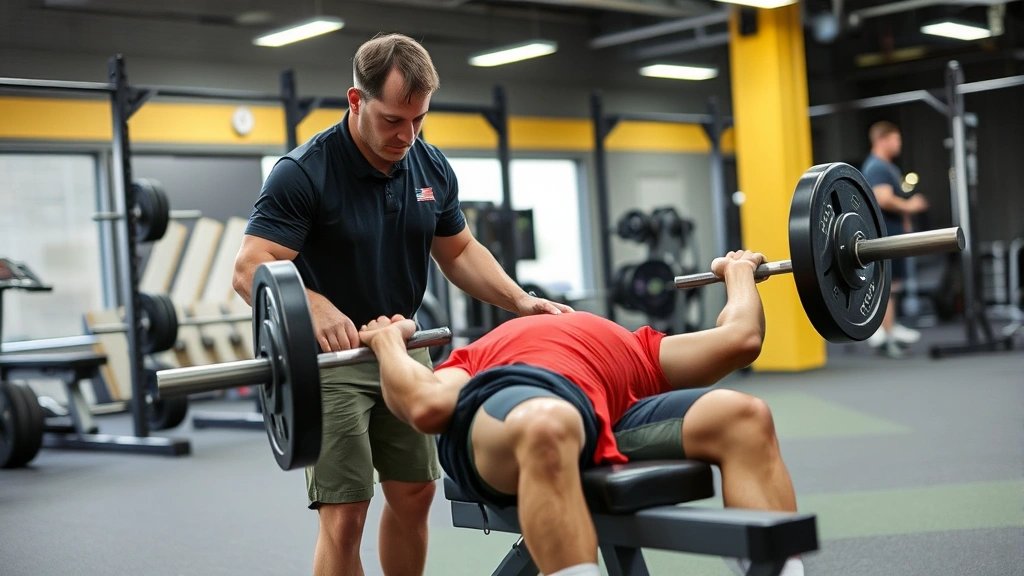
Horizontal pressing movements—bench press variations, dumbbell presses, and push-ups—develop chest and anterior shoulder strength. DePauw coaches use both barbell and dumbbell variations, recognizing that dumbbells demand greater stabilizer muscle activation and allow a greater range of motion. Athletes perform pressing movements 2-3 times weekly, varying between heavy strength-focused sessions and higher-volume hypertrophy work.
Vertical pressing—overhead press, push press, and pike push-ups—develops shoulder and upper back strength crucial for blocking, ball security, and rotational power. The National Strength and Conditioning Association (NSCA) research indicates that overhead pressing strength correlates with improved athletic performance and reduced shoulder injury risk when programmed appropriately.
Pulling movements—rows, pull-ups, and lat pulldowns—develop back strength and improve shoulder health by balancing pressing volume. A common mistake in football training involves excessive pressing work without adequate pulling, creating muscular imbalances that predispose athletes to shoulder injuries. DePauw maintains a roughly 1:1 pressing-to-pulling ratio, ensuring balanced strength development and healthy shoulder function. For every set of pressing work, athletes perform approximately equal volume of pulling movements.
Rotational and anti-rotational exercises—pallof presses, landmine rotations, and sled pushes—develop the functional strength patterns demanded by football. These movements enhance the ability to transfer force from lower to upper body, critical for throwing and striking motions. Athletes discover that improving rotational strength often translates directly to increased throwing velocity or increased effectiveness in delivering tackles.
Core Stability and Rotational Power
The core transcends traditional “ab exercises.” In football, the core functions as the force transfer center, connecting lower body power generation to upper body expression. DePauw’s core training emphasizes stability, anti-rotation, and dynamic strength rather than simply accumulating repetitions of crunches or sit-ups.
Anti-rotation exercises like pallof presses and Landmine rotations develop the core’s primary function: resisting unwanted movement. These exercises train the obliques and deep stabilizers to maintain spinal position under load and during dynamic movements. Athletes perform these movements with moderate loads and controlled tempos, emphasizing quality over quantity. The capacity to resist rotational forces translates directly to improved tackling power, throwing mechanics, and injury resilience.
Dead bugs, bird dogs, and quadruped movements develop core stability without spinal flexion, reducing injury risk while improving functional strength. These movements particularly benefit athletes recovering from or seeking to prevent lower back injuries. DePauw incorporates these exercises throughout training phases, with particular emphasis during in-season programming when reducing spinal loading becomes more important.
Rotational power exercises—medicine ball throws, rotational slams, and explosive landmine rotations—develop the dynamic core strength needed for throwing and striking motions. These movements performed with explosive intent train the core’s capacity to generate and transfer power. Research demonstrates that enhanced rotational power correlates with increased throwing velocity in quarterbacks and improved tackling effectiveness in defensive players.
Sled work, farmer carries, and loaded carries develop core stability under heavy loads while improving grip strength and overall work capacity. These functional movements closely mimic the demands of football, where athletes must maintain position and generate force while under pressure. DePauw athletes regularly perform these exercises as part of their comprehensive core development strategy.
Injury Prevention Through Smart Training
Strength training, when programmed intelligently, serves as the most effective injury prevention tool available to athletes. DePauw’s approach to injury prevention through smart training integrates multiple strategies that reduce injury risk while simultaneously enhancing performance.
Eccentric strength training—emphasizing the lowering phase of movements—develops the strength capacity needed to decelerate safely. Football demands constant rapid deceleration: slowing down after sprinting, controlling the body during tackles, and stabilizing joints during cutting movements. By incorporating eccentric training, DePauw athletes develop the strength to handle these demands safely. Tempo training, where athletes control the lowering phase over 3-5 seconds, effectively develops eccentric strength while allowing athletes to handle heavier loads.
Unilateral training addresses strength imbalances that increase injury risk. Most athletes develop asymmetries between left and right sides. DePauw’s coaches use unilateral exercises to identify and correct these imbalances before they contribute to injury. Single-leg training also improves neuromuscular control and proprioception, enhancing the body’s ability to respond to unexpected movements and forces.
Mobility and flexibility work, integrated throughout training sessions, maintains joint health and movement quality. DePauw incorporates dynamic warm-ups, foam rolling, and mobility drills that prepare tissues for training while improving movement patterns. These practices reduce compensation patterns that lead to overuse injuries. Research from exercise physiology demonstrates that adequate mobility combined with proper strength development significantly reduces injury incidence.
Progressive overload—systematically increasing training demands—builds tissue resilience while preventing the stagnation that occurs with repetitive, unchanging training. By gradually increasing loads, volume, and complexity, DePauw’s program allows tissues to adapt and strengthen without overwhelming them. This progressive approach, supported by sports science research, reduces the injury spikes that often accompany abrupt increases in training demands.
Recovery integration represents perhaps the most undervalued aspect of injury prevention. DePauw recognizes that strength gains occur during recovery, not during training. Adequate sleep, nutrition, hydration, and active recovery days allow tissues to adapt and strengthen. Athletes who train hard but neglect recovery accumulate fatigue and injury risk. By prioritizing recovery as seriously as training stimulus, DePauw protects athlete health while optimizing performance gains.
Nutrition and Recovery Integration
Strength training represents only one component of a comprehensive performance enhancement strategy. Nutrition and recovery practices determine whether athletes actually realize the benefits of their training investment. DePauw’s integrated approach recognizes that the finest strength program yields disappointing results without supporting nutrition and recovery protocols.
Protein intake forms the foundation of strength training nutrition. Muscles require amino acids to repair and grow following training stimulus. DePauw athletes consume approximately 1.6-2.2 grams of protein per kilogram of body weight daily, distributed across multiple meals to optimize muscle protein synthesis. This elevated intake supports the continuous tissue breakdown and rebuilding inherent in strength training.
Carbohydrate intake fuels training performance and supports glycogen repletion between sessions. DePauw athletes performing high-intensity strength and power training require adequate carbohydrates to maintain training quality and support recovery. The specific amount varies based on individual body composition, training volume, and metabolic factors, but typically ranges from 5-10 grams per kilogram of body weight daily depending on training demands.
Micronutrient sufficiency—adequate vitamins and minerals—supports recovery processes and immune function. Intense training temporarily suppresses immune function, increasing infection risk. DePauw emphasizes whole-food nutrition rich in antioxidants, B vitamins, and minerals that support immune recovery and overall health. When whole-food intake proves insufficient, strategic supplementation addresses specific deficiencies identified through dietary analysis.
Sleep quality and duration form the cornerstone of recovery. During sleep, the body releases growth hormone, consolidates neural adaptations, and repairs damaged tissues. DePauw emphasizes 7-9 hours of quality sleep nightly, recognizing that sleep deprivation impairs strength gains, increases injury risk, and diminishes cognitive performance. Coaches educate athletes about sleep hygiene practices: consistent sleep schedules, dark sleeping environments, and limiting pre-sleep screen exposure.
Active recovery—light movement on non-training days—enhances circulation and facilitates waste removal while promoting psychological recovery. DePauw athletes engage in walking, swimming, or light cycling on recovery days. These low-intensity activities maintain movement quality without imposing training stress, allowing complete nervous system recovery while keeping athletes engaged in their sport.
Monitoring and adjustment based on performance data enables DePauw coaches to identify when athletes require additional recovery. Heart rate variability, jump performance, and subjective wellness measures provide early indicators of inadequate recovery. When these markers suggest accumulated fatigue, coaches reduce training volume or intensity before overtraining becomes problematic.
FAQ
What makes DePauw football’s strength program different from other collegiate programs?
DePauw emphasizes football-specific strength development with careful attention to periodization, individual athlete needs, and injury prevention. The program combines heavy strength work with power development, unilateral training for symmetry correction, and comprehensive recovery protocols. Rather than following generic programs, DePauw’s coaches develop individualized approaches based on position demands and athlete characteristics.
How often should football players perform strength training?
During off-season and pre-season phases, most football players benefit from 4-5 strength training sessions weekly, allowing adequate recovery between sessions. During in-season, frequency typically reduces to 2-3 sessions weekly, emphasizing maintenance over progression. The exact frequency depends on individual recovery capacity, training age, and position-specific demands.
What’s the most important exercise for football players?
Rather than a single exercise, football players benefit from comprehensive training addressing multiple movement patterns. However, if forced to identify one, the back squat provides tremendous bang for your buck—developing lower body strength, power, and work capacity while building mental toughness. Complementing heavy squats with pulling movements, single-leg work, and power exercises creates a balanced program.
How can players avoid injuries during strength training?
Progressive overload, proper technique, adequate recovery, and individualized programming reduce injury risk substantially. Start with lighter loads and master movement patterns before increasing loads. Include unilateral exercises to identify and correct imbalances. Emphasize eccentric strength development. Maintain adequate mobility. Prioritize sleep and nutrition. When in doubt, consult qualified strength coaches or sports medicine professionals.
Should football players use supplements?
Whole-food nutrition should form the foundation of any athlete’s nutrition strategy. Established sports nutrition guidelines recommend identifying and addressing deficiencies through food first. When gaps exist or convenience demands supplementation, evidence-based supplements like whey protein, creatine monohydrate, and beta-alanine provide modest performance benefits. Always consult with qualified sports nutritionists before beginning supplementation protocols.
How does DePauw’s program compare to professional football strength training?
While professional programs have greater resources, DePauw’s fundamental principles align with elite professional training. The emphasis on sport-specific development, periodization, individual assessment, and recovery integration mirrors professional approaches. The primary differences involve resource availability and training volume—professional athletes can dedicate more time to training and recovery. However, sound principles remain consistent across competitive levels.
What’s the timeline for seeing strength gains?
Initial neuromuscular adaptations appear within 2-3 weeks of consistent training. Noticeable strength increases typically emerge after 4-6 weeks. Significant hypertrophy requires 8-12 weeks of consistent training. Power development timelines vary but generally require 6-8 weeks of dedicated power training. Patience and consistency prove more important than rapid progression—athletes who progress slowly and sustainably outperform those seeking quick gains.


