
Can College Football Boost Fitness? Expert Insight into Athletic Performance and Physical Development
College football represents one of the most demanding physical activities available to student-athletes, combining explosive power, cardiovascular endurance, strategic thinking, and mental resilience into a single sport. Whether you’re considering joining a college football program or simply curious about the fitness benefits this sport offers, the evidence strongly suggests that college football can dramatically transform your physical condition and athletic capabilities. This comprehensive guide explores how college football enhances fitness, what scientific research reveals about the sport’s training benefits, and whether participation aligns with your personal fitness goals.
The modern college football athlete undergoes rigorous conditioning that rivals professional-level training programs. With strength and conditioning coaches employing cutting-edge periodization strategies, sports science principles, and evidence-based training methodologies, players develop functional fitness across multiple domains—from raw strength to agility to sport-specific endurance. Beyond the physical transformation, college football provides structured accountability, competitive motivation, and access to world-class facilities that most recreational fitness enthusiasts never experience.
The Physical Demands of College Football
College football stands apart from most recreational sports due to its extreme physical demands across all aspects of human performance. According to research from the American College of Sports Medicine (ACSM), college football players experience training volumes and intensities that exceed most conventional fitness programs. During a single season, athletes participate in practice sessions lasting 2-3 hours, strength training 4-5 times weekly, and competitive games that demand maximal effort in short bursts followed by tactical repositioning.
The sport uniquely combines anaerobic and aerobic energy systems. Linemen require tremendous absolute strength and power for explosive movements lasting 5-10 seconds per play. Wide receivers and defensive backs need exceptional speed and agility with repeated acceleration-deceleration cycles. Quarterbacks and skill position players demand sport-specific cardiovascular fitness to maintain performance across 60+ plays per game. This multifaceted demand means college football naturally develops well-rounded athletic fitness rather than specializing in single fitness dimensions.
Research published in the Journal of Strength and Conditioning Research demonstrates that college football players achieve superior body composition compared to sedentary populations and most recreational athletes. The sport’s intensity naturally drives favorable changes in muscle mass, body fat percentage, and overall metabolic health. Players typically maintain 12-18% body fat while carrying significantly more muscle mass than average college-aged individuals, reflecting the sport’s integrated approach to performance development.
Strength and Power Development
Strength training forms the foundation of college football conditioning programs, with coaches implementing periodized protocols designed to build maximal strength while maintaining sport-specific power. Unlike bodybuilding-focused training, college football strength development emphasizes functional strength—the ability to generate force through compound movements that transfer directly to on-field performance.
College football programs employ periodization strategies that cycle through distinct training phases: offseason power development, preseason strength maintenance, in-season preservation, and postseason recovery. This systematic approach prevents plateaus while ensuring athletes peak during competition. Players typically perform compound lifts including squats, deadlifts, bench presses, and Olympic lift variations 3-5 times weekly with structured progression.
The strength gains achieved through college football training are substantial and well-documented. Linemen frequently increase squat maxima by 100+ pounds during their collegiate careers, while skill position players develop explosive lower body power measured through vertical jump improvements of 8-12 inches. Upper body pressing strength similarly increases dramatically, with many players doubling their bench press performance from freshman to senior year.
Beyond raw strength numbers, college football develops power output—the rate at which athletes generate force. This matters tremendously for athletic performance. A player with high power output accelerates faster, jumps higher, and changes direction more explosively than a similarly strong athlete with lower power output. College football’s emphasis on Olympic lifts, plyometrics, and explosive resistance training specifically targets power development across all positions.
Cardiovascular Conditioning Benefits
Many observers mistakenly believe football lacks significant cardiovascular demands compared to distance running or soccer. This misconception overlooks the sport’s unique physiological challenges. College football combines high-intensity interval training (HIIT) principles with repeated-sprint ability demands. Players experience maximal or near-maximal heart rate elevations during individual plays, followed by 20-40 second recovery periods, then explosive efforts resume—a pattern repeating 60+ times per game.
This training stimulus produces remarkable cardiovascular adaptations. College football athletes develop superior cardiac output, oxygen utilization efficiency, and anaerobic capacity compared to untrained populations. Research from exercise physiology laboratories reveals that college football players achieve VO2 max values (maximum oxygen consumption) ranging from 45-55 ml/kg/min, approaching levels seen in elite endurance athletes despite the sport’s non-traditional cardio structure.
The cardiovascular benefits extend beyond maximal capacity. College football training improves resting heart rate, heart rate recovery (how quickly heart rate decreases after intense effort), and vascular function. These markers predict cardiovascular health and disease risk better than traditional measures. Athletes completing college football seasons demonstrate improved arterial flexibility, enhanced blood flow capacity, and better metabolic efficiency—all hallmarks of cardiovascular fitness.
Additionally, the sport’s repeated-sprint training naturally builds lactate threshold—the exercise intensity at which lactate accumulation exceeds clearance. This adaptation enables athletes to sustain high-intensity efforts longer before fatigue accumulation forces performance decrements. College football players consequently demonstrate superior fatigue resistance across multiple performance domains.
Speed, Agility, and Functional Movement
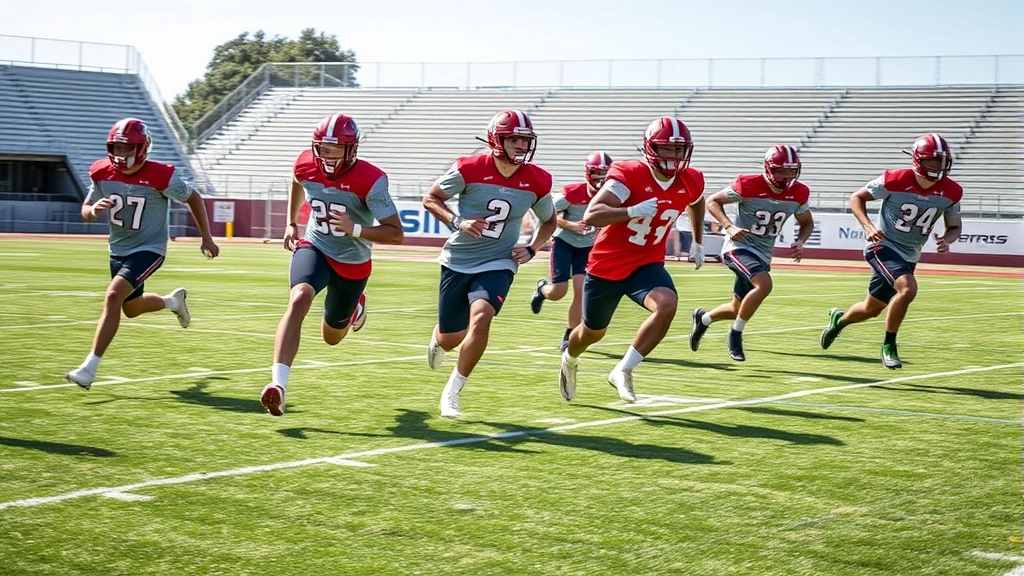
College football demands exceptional speed, agility, and multidirectional movement capability—qualities that define athletic excellence. Speed development in college football extends beyond simple straight-line sprinting to include acceleration (0-20 yards), maximum velocity maintenance, and deceleration control. These qualities require specialized training emphasizing proper mechanics, force application, and neural adaptation.
Agility in football context involves rapid direction changes while maintaining speed and balance—movements fundamentally different from linear sprinting. College football programs develop agility through sport-specific drills including shuttle runs, three-cone drills, and reactive agility exercises. Players learn to plant their outside foot while shifting weight, maintaining low center of gravity during cuts, and accelerating explosively from deceleration positions. These movement patterns require months of deliberate practice to master, and college football provides this systematic development.
Functional movement quality—the ability to perform athletic movements with proper mechanics across multiple planes—improves substantially through college football training. Athletes develop movement literacy across sagittal (forward-backward), frontal (side-to-side), and transverse (rotational) planes. This comprehensive movement development prevents injury, improves performance, and creates durable athletes capable of handling unexpected physical demands.
The sport naturally builds proprioception and body awareness through constant contact, balance challenges, and complex movement patterns. Players develop superior spatial awareness, improved reaction time, and enhanced neuromuscular control compared to non-athletes. These qualities transfer beyond football into everyday activities and other athletic pursuits, improving overall physical capability and injury resilience.
Injury Prevention and Resilience
Paradoxically, while college football carries injury risks, the sport’s systematic training approach builds remarkable injury resilience when properly implemented. Modern college football programs employ evidence-based injury prevention strategies grounded in sports medicine research. Certified athletic trainers, strength coaches, and medical professionals work collaboratively to identify and address movement deficiencies before they become injuries.
College football athletes develop muscular balance—symmetrical strength across antagonist muscle groups—that prevents common overuse injuries. A player with balanced quadriceps-to-hamstring strength ratios experiences fewer knee injuries. Balanced rotator cuff strength reduces shoulder injuries. This balanced development extends throughout the body, creating robust athletes less susceptible to injury despite high training volumes.
Additionally, the sport builds connective tissue resilience. Tendons and ligaments strengthen through progressive loading, developing greater tensile strength and elasticity. The bone density improvements from resistance training and high-impact activities further enhance skeletal resilience. These adaptations take months to develop but ultimately create more durable athletes capable of handling intense physical demands.
College football programs implement comprehensive injury prevention programs including dynamic warm-up protocols, movement screening assessments, and targeted corrective exercise. Athletes learn proper landing mechanics, deceleration control, and injury-risk awareness. Access to athletic training staff provides immediate injury evaluation and rehabilitation, preventing minor issues from becoming chronic problems. This integrated approach to injury prevention distinguishes college football from many recreational fitness settings.
For athletes interested in how to avoid sports injuries, college football programs provide a masterclass in evidence-based injury prevention strategies that transfer to any athletic context.
Comparing College Football to Other Training Methods
How does college football fitness development compare to traditional strength training, endurance sports, or other athletic pursuits? The answer depends on your fitness priorities, but college football offers unique advantages for developing comprehensive athletic fitness.
Versus Traditional Strength Training: Conventional gym-based strength training builds absolute strength efficiently but often neglects cardiovascular development, speed training, and sport-specific movement patterns. College football integrates strength development within a comprehensive athletic context, ensuring strength transfers to actual athletic performance. Additionally, the competitive and social elements of team sports enhance training adherence and psychological motivation compared to solitary gym training.
Versus Endurance Sports: Distance running or cycling builds exceptional aerobic capacity but often results in strength deficits and repetitive-use injuries from single-plane movement patterns. College football develops balanced fitness across strength, power, speed, and cardiovascular domains while exposing athletes to multidirectional movement patterns. The sport’s contact and collision components also build resilience and practical toughness that endurance sports don’t emphasize.
Versus Recreational Team Sports: While soccer, basketball, and volleyball offer team sport benefits and movement variety, college football’s systematized training approach—with dedicated strength coaches, periodized programming, and sport-science integration—exceeds most recreational sports contexts. The intensity and volume of college football training create greater physiological adaptations than casually played recreational sports.
College football’s comprehensive approach to fitness development makes it exceptionally effective for building well-rounded athletic capability. Few activities demand and develop such broad fitness across multiple domains simultaneously.
Mental and Psychological Fitness Gains
Physical fitness represents only one dimension of college football’s comprehensive benefits. The sport builds exceptional mental and psychological resilience that distinguishes college athletes from casual fitness enthusiasts. Competing at the highest amateur level requires confronting fear, managing pressure, accepting failure, and persisting through adversity—qualities that extend far beyond athletic contexts.
College football demands mental toughness—the psychological ability to perform optimally under challenging conditions. Athletes learn to manage pre-competition anxiety, maintain focus during critical moments, and execute complex skills under physical and mental fatigue. These capacities develop through repeated exposure to high-pressure situations and systematic mental training approaches employed by modern programs.
The sport also builds confidence through progressive mastery. Freshman players often struggle with speed and complexity of college football. Through consistent effort, technical improvement, and competitive success, players develop genuine confidence rooted in demonstrated capability rather than false bravado. This earned confidence transfers to all life domains, improving decision-making, risk-taking ability, and resilience to setbacks.
Team dynamics create accountability structures that enhance motivation and consistency. Unlike solitary fitness pursuits, college football athletes train knowing their performance affects teammates’ success. This interdependence creates powerful motivation for consistent effort, proper nutrition, and recovery prioritization. Research in sports psychology demonstrates that team-based training contexts produce superior adherence and more substantial long-term adaptations than individual training.
Additionally, college football provides structured goal-setting frameworks and performance feedback mechanisms. Coaches establish clear performance objectives, provide consistent feedback, and create measurable progress indicators. This systematic approach to goal pursuit develops capabilities transferable to academic, professional, and personal success contexts.
For those interested in exploring additional athletic pursuits, understanding concepts like fantasy football draft strategy can deepen appreciation for college football’s complexity and the varied skills athletes must develop. Similarly, reviewing college football predictions provides insight into how coaches and analysts evaluate player development and performance improvement across seasons.
FAQ
Does college football require prior athletic experience?
Most college football programs recruit athletes with substantial football experience, but walk-on opportunities exist for dedicated individuals willing to develop fundamentals. Success requires genuine commitment to skill development, strength training, and tactical understanding. Many walk-ons eventually earn scholarships through consistent improvement and demonstrated reliability.
What positions develop the most fitness?
Skill positions (wide receivers, defensive backs, running backs) develop exceptional speed and agility. Linemen develop extreme strength and power. Quarterbacks develop sport-specific endurance and decision-making under pressure. All positions develop comprehensive fitness, though emphasis varies by position. The sport’s structure ensures all players develop well-rounded athletic capability.
How long does fitness transformation typically require?
Noticeable fitness improvements occur within 4-6 weeks of consistent college football training. Substantial transformations typically emerge within one season (3-4 months). Complete physical development across all fitness domains requires multiple seasons, with most athletes continuing improvement throughout their college careers.
Can college football training benefit non-athletes?
Absolutely. The training principles employed in college football—periodized strength training, high-intensity interval conditioning, movement quality development—apply to any fitness context. While the sport-specific elements require football knowledge, the underlying training science benefits anyone seeking comprehensive athletic development. Consulting fitness and sports performance resources can help translate these principles to individual fitness pursuits.
What nutrition supports college football fitness gains?
College football athletes require substantial caloric intake (3,500-5,500+ calories daily depending on position and training phase), adequate protein (1.6-2.2 grams per kilogram bodyweight), and strategic carbohydrate timing around training sessions. Hydration, micronutrient sufficiency, and recovery nutrition support adaptation. Most college programs employ sports dietitians to optimize nutrition for individual athletes.
How does college football compare to CrossFit or other high-intensity training?
College football combines elements of strength training, conditioning, and sport-specific skill development within a systematic framework. CrossFit emphasizes varied functional movements and high-intensity metabolic conditioning. College football develops greater sport-specific performance and strength-power capabilities, while CrossFit may provide superior general physical preparedness for non-sport contexts. The ideal choice depends on personal goals.
Can college football fitness improvements persist after playing ends?
Yes. The adaptations developed through college football—muscle mass, strength, cardiovascular fitness, movement patterns—persist with continued training. Many former players maintain impressive fitness decades after completing their playing careers. Continued strength training and cardiovascular conditioning preserves the athletic capabilities developed during college football participation.


