
Fantasy Football Trades: Expert Value Chart Insight
Winning your fantasy football league doesn’t happen by accident—it requires strategic thinking, timely adjustments, and the wisdom to know when to hold and when to fold. One of the most powerful tools separating championship teams from also-rans is understanding and leveraging a fantasy football trade value chart. These charts serve as your negotiating compass, helping you identify undervalued assets and exploit market inefficiencies before your league mates catch on. Whether you’re a seasoned veteran or climbing the ranks for the first time, mastering trade value dynamics will transform your ability to build a championship roster mid-season.
The beauty of trade value charts lies in their flexibility—they’re not rigid commandments but rather educated frameworks based on performance data, playoff schedules, injury reports, and expert consensus. A player whose value plummets due to an ankle sprain might represent the steal of the season if you believe in their recovery timeline. Conversely, a breakout star whose value skyrockets could be the perfect trade chip to acquire that elite pass-catcher your team desperately needs. In this comprehensive guide, we’ll decode the science behind trade value assessment, show you how to weaponize these insights, and help you orchestrate the trades that will propel your team toward victory.
Understanding Trade Value Chart Fundamentals
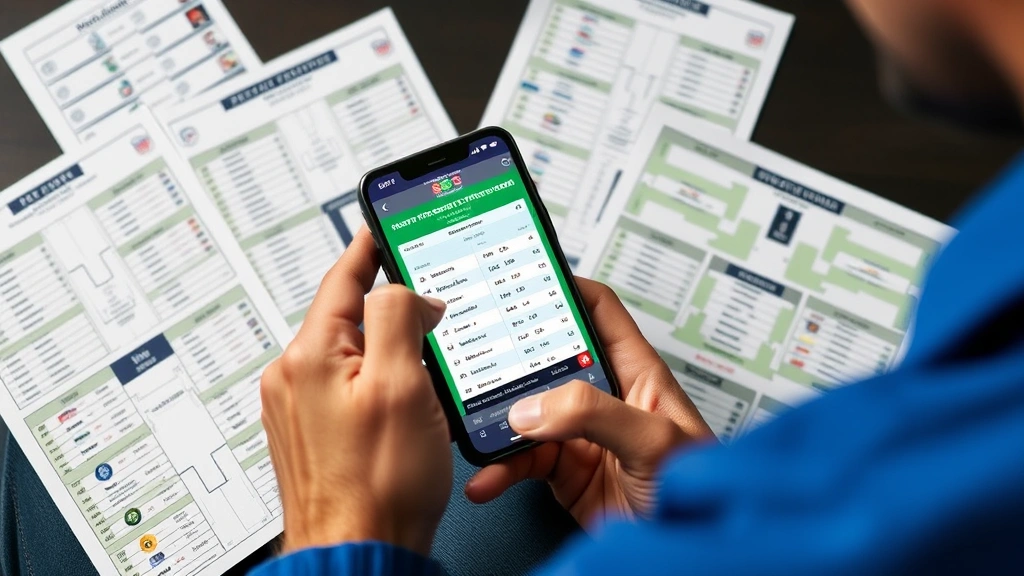
A fantasy football trade value chart is essentially a ranking system that assigns relative worth to each player based on their expected future production. Unlike draft boards that measure pre-season potential, trade value charts operate in real-time, adjusting for actual performance, injury status, schedule difficulty, and remaining strength of schedule (SOS). Think of it as a constantly evolving market where player valuations fluctuate based on supply, demand, and new information.
The core principle behind trade value is positional scarcity. If you have three elite wide receivers but your running back rotation is pedestrian, you’re sitting on tradeable assets. A league mate struggling at receiver but flush with quality backs would likely view that trade favorably. This asymmetrical value perception creates trading opportunities. Visit our fantasy football draft strategy guide to understand how pre-season positioning sets the stage for mid-season trades.
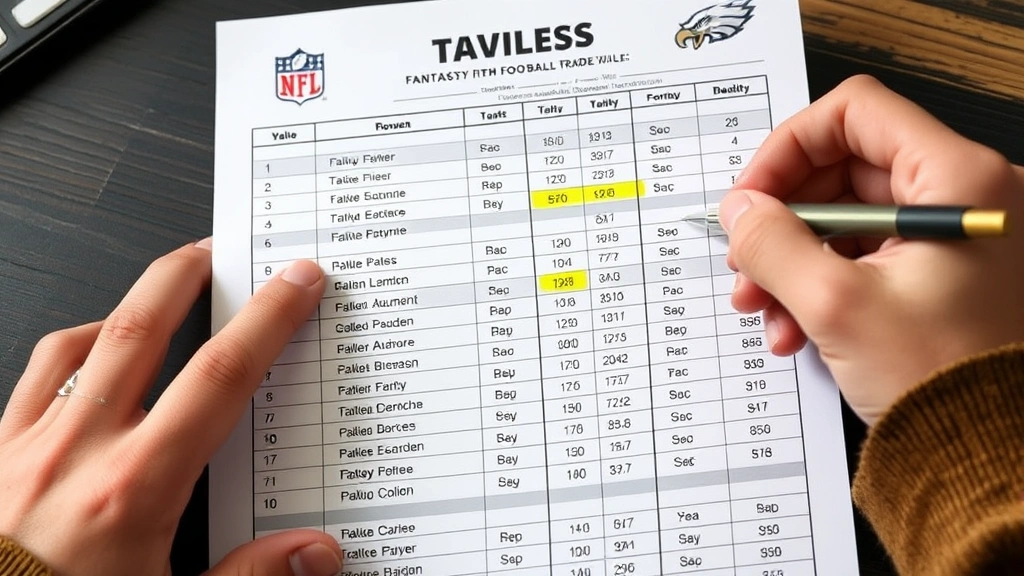
Expert charts typically use a baseline reference point—often assigning the current-week top-ranked player a value of 100, then scaling all other players proportionally. If your league’s premier wide receiver is rated 100, the second-best might be 85, and so on. This relative scoring makes it easy to spot when a trade makes mathematical sense. If you’re trading away a player rated 75 for one rated 82, you’re gaining value. It sounds simple, but most fantasy owners ignore this principle and make emotionally-driven trades instead.
The fantasy football start-sit decisions you make each week actually inform trade value. A player you’re benching repeatedly might be undervalued in your league’s perception, making them an ideal acquisition target from an owner who sees their name and assumes they’re still producing.
How Expert Charts Are Built and Updated
Professional analysts use sophisticated methodologies to construct and maintain trade value charts. The most credible sources—including resources from the National Center for Biotechnology Information’s sports science database and industry experts—employ multi-factor analysis. They begin with points per game (PPG) projections for the remainder of the season, adjusting for playoff schedules, bye weeks, and matchup difficulty.
Injury analysis forms a critical component. Expert chart creators monitor practice reports, medical evaluations, and historical recovery data. When a star player suffers a soft-tissue injury, algorithms factor in typical recovery timelines and confidence intervals. A backup running back’s value spikes proportionally to their starter’s injury severity. This is where staying informed through beat reporters and team official updates gives you an edge over casual league mates.
Volume and target share trends heavily influence valuations. A wide receiver whose air yards are increasing week-over-week might be undervalued despite modest point totals, because the trajectory suggests explosive growth ahead. Conversely, a player on a team that just acquired a superstar at their position might see their usage decline, warranting a value reduction regardless of past production.
The most sophisticated charts incorporate regression analysis, examining whether a player’s performance represents sustainable productivity or statistical anomaly. A kicker who’s made 15-of-15 field goal attempts might be overvalued due to regression toward the league mean, while a receiver with 8 catches on 6 targets is likely undervalued.
Position-Specific Trade Value Strategies
Running Back Value Dynamics: Running backs require the most nuanced trade analysis because their production depends heavily on volume, efficiency, and team game script. An elite back on a team that’s consistently losing games will see increased carries as their team falls behind. Conversely, a talented back on a championship-contending team might see reduced volume due to game flow. When evaluating running back trades, project remaining games and offensive line health. A back losing their starting left tackle will experience a statistical hit.
Wide Receiver Evaluation: Receivers offer more stability than backs because elite talent typically generates consistent target volume. However, quarterback changes, coaching adjustments, and competing receivers drastically alter value. A WR1 who loses their QB to injury might plummet 30+ spots on value charts, while a third receiver on a team whose starter was traded might skyrocket. Study snap counts and route participation rates, not just catch totals.
Tight End Strategy: Tight ends represent the most volatile position for trades because production is so concentrated. Three or four elite options dominate scoring, creating a cliff where value drops dramatically. If you have a top-3 tight end, you’re sitting on a valuable trade chip. Many teams desperately need upgrades at this position and will overpay. Conversely, if you’re seeking a tight end upgrade, wait for injuries or bye weeks to create desperation sales.
Quarterback and Defense Considerations: Most fantasy analysts recommend waiting on QB and defense acquisitions because the positional depth means late-round picks often produce first-round value. However, if your league mate is panicking after their QB suffered a bad game, they might trade you a quality player for a streaming option. Use this psychology to your advantage.
Timing Your Trades for Maximum Impact
The when of trading matters as much as the what. Early-season trades (weeks 1-4) typically offer poor value because sample sizes are small and overreactions are common. A running back who had one bad game might be valued 20 points below his actual worth. Savvy traders pounce on these panic sales.
Mid-season trades (weeks 5-10) represent the sweet spot. Enough data exists to identify true breakout players versus flukes, and teams either solidify playoff positioning or accept they’re sellers. This is when championship teams acquire that final piece. The Peak Play Arena blog regularly updates trade recommendations during this window.
Late-season trades (weeks 11+) feature desperate sellers willing to accept reduced value for future help, and teams fighting for playoff spots overpay for immediate production. A player with a favorable playoff schedule becomes exponentially more valuable. Position yourself before this rush by acquiring playoff-friendly assets earlier when their value is suppressed.
Bye week timing creates predictable value fluctuations. In the week before a player’s bye, their value dips slightly because owners fear the production gap. The week after a bye, value typically recovers. Smart traders buy before the bye and sell immediately after.
Common Trading Mistakes to Avoid
The most frequent mistake is overvaluing past performance. A running back who rushed for 150 yards last week doesn’t automatically deserve a premium valuation this week. Regression to the mean is real. Check whether that performance was sustainable or an outlier given offensive line health, defensive quality, and game script.
Never trade based on name recognition alone. Rookies drafted high often disappoint, and late-round discoveries sometimes outperform first-rounders. Use objective metrics—target share, snap count percentage, red zone touches—rather than draft pedigree.
Avoid roster construction blindness. Having three elite options at one position and zero depth at another creates a win-now mentality that leads to desperate trades. Instead, proactively address weaknesses before they become critical.
Don’t ignore playoff schedule strength. A player with a brutal playoff schedule might be overvalued in a trade compared to someone with favorable matchups. Weeks 15-17 matchups should influence your mid-season trading strategy significantly.
Finally, resist emotional attachment to draft picks. If you drafted a player in round 3 and they’ve underperformed, that sunk cost shouldn’t prevent you from trading them. Evaluate current and future value, not where they were drafted.
Creating Your Custom Trade Framework
While expert trade value charts provide valuable guidance, the most successful fantasy owners develop custom frameworks aligned with their league dynamics. Start by identifying your league’s trading tendencies. Do certain owners panic-sell after bad weeks? Do others stubbornly hold declining assets? Does your league value name recognition over analytics?
Create a spreadsheet tracking player performance against expert projections. When a player significantly outperforms or underperforms consensus, note whether it’s sustainable. This personal data warehouse becomes invaluable when evaluating future trades.
Develop position-specific thresholds. Decide in advance what you’d accept to trade your starting running back (maybe a mid-tier WR1 plus a backup RB), so you’re not making emotional decisions during negotiations.
Monitor ESPN’s official fantasy football resources and NFL.com fantasy updates for injury reports and trade deadline information. Many leagues have mid-season trade deadlines that compress the trading window.
Study RotoWire’s expert analysis and similar sources for consensus rankings, but remember these are starting points, not gospel. Your league’s unique dynamics might reward different strategies.
Track your trades over multiple seasons. Which deals worked? Which didn’t? This retrospective analysis reveals whether you’re undervaluing certain positions or overestimating player decline. Even championship-winning teams learn that some trades seemed brilliant at the time but disappointed in hindsight.
Advanced Trade Negotiation Psychology
Understanding trade value charts is meaningless if you can’t negotiate effectively. The best trades feel good to both parties—otherwise, the other owner will reject them or regret accepting. Frame proposals around each team’s specific needs rather than abstract value. “I need running back depth and you need wide receiver help” resonates better than “my player ranked 78 for your player ranked 75.”
Create win-win scenarios by bundling players. Trading one-for-one is rarely optimal. A package deal allowing both teams to address multiple weaknesses creates momentum. “I’ll give you my backup RB plus that WR you like for your WR1” feels different than simply proposing two players of equivalent value.
Use scarcity pressure strategically. If another league mate is also interested in acquiring a player you’re trading, mention it. Urgency motivates faster decisions and better terms. Conversely, if you’re acquiring someone, downplay other suitors.
Timing negotiations matters. Trade proposals sent to an owner immediately after their team loses tend to receive more favorable responses than proposals after victories.
Technology and Trade Value Tools
Modern fantasy football offers incredible technology for evaluating trades. Apps and websites instantly show you how trades impact both rosters, projecting playoff point differentials. These tools remove ambiguity from negotiations. If an app shows both teams improving their playoff projection, it’s a trade worth considering.
Some platforms offer built-in trade analyzers that reference expert consensus rankings. Use these as sanity checks, but remember they’re general guidelines. Your league-specific context matters more than national averages.
Discord servers and fantasy football forums constantly update trade value discussions. Participating in these communities exposes you to perspectives you might miss, helping you identify overlooked opportunities before the broader market does.
FAQ
What’s the best time to propose trades?
Mid-season (weeks 5-10) offers the best trading environment when enough data exists to identify true value. Avoid early-season panic selling unless you’re targeting a specific overreaction. Late-season trades favor playoff contenders with clear needs.
Should I trade for a player with an upcoming bye week?
Generally, acquire players after their bye week when value is suppressed, or before their bye only if you have sufficient depth to absorb the production gap. Avoid trading for someone right before their bye unless you’re getting exceptional value.
How do I evaluate trades involving injured players?
Research injury prognosis thoroughly. Use ACSM sports medicine guidelines and beat reporter updates to estimate return timelines. A player returning week 12 with a favorable playoff schedule might be worth more than current value suggests. Conversely, a player whose return is uncertain shouldn’t be overvalued.
What’s the difference between trade value and draft value?
Draft value measures pre-season potential; trade value measures current and future production. A third-round bust has zero draft value but might have significant trade value if recent performance suggests improvement ahead.
Can I use the same trade value chart for all leagues?
No. League size, scoring format, and roster construction dramatically affect relative values. A PPR league values pass-catching backs more highly than standard leagues. A 10-team league’s tight end values differ from a 14-team league’s. Always customize your analysis to your specific league.


