Improve Football Agility? Expert Insights on Girdles and Performance Enhancement
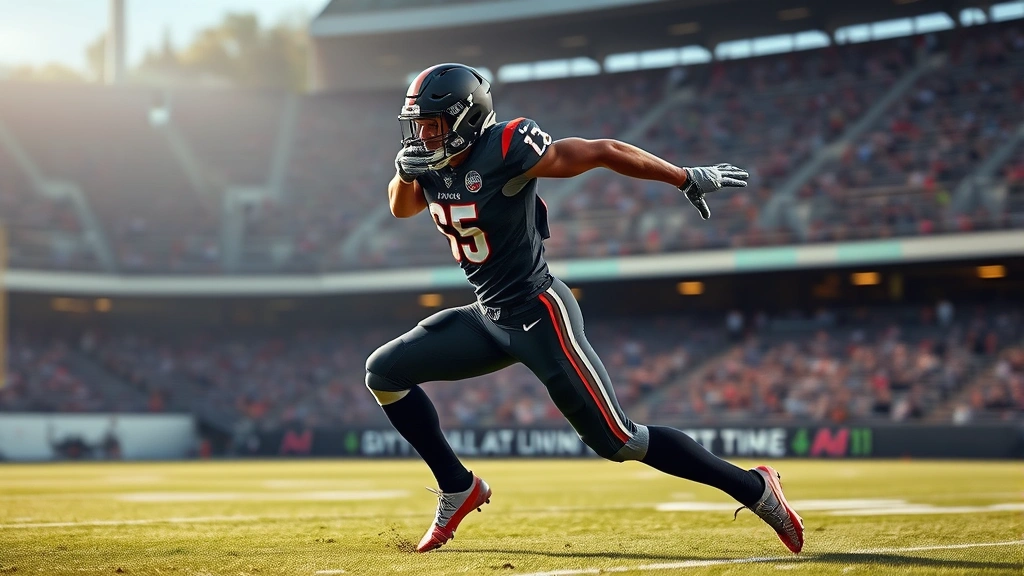
Football demands explosive athleticism, rapid directional changes, and sustained power output across four intense quarters. Whether you’re a high school player competing for a starting position or a college athlete aiming for professional scouts’ attention, agility forms the foundation of elite performance. One often-overlooked component in the agility equation is proper equipment selection—specifically, the football girdle. Beyond aesthetics, a quality girdle provides compression, support, and muscle stabilization that directly impact your ability to cut, accelerate, and decelerate with precision. This comprehensive guide explores how football girdles enhance agility while integrating proven training methodologies to unlock your athletic potential.
The intersection of equipment and physiology creates measurable performance gains. When muscles receive proper compression through a fitted girdle, proprioceptive feedback improves, meaning your body’s spatial awareness and movement control enhance significantly. Combined with targeted agility drills and strength protocols, the right girdle becomes a legitimate performance multiplier. Let’s dive into the science and strategy behind optimizing your football agility.
Understanding Football Girdles and Their Performance Impact
A football girdle is a compression garment designed to provide hip, thigh, and lower body support while minimizing bulk and restricting movement. Unlike traditional protective gear, modern girdles utilize advanced fabric technology to deliver targeted compression across major muscle groups involved in agility movements. The primary function extends beyond protection—it enhances neuromuscular efficiency, allowing athletes to execute cuts and transitions with greater control and reduced injury risk.
Research from the American College of Sports Medicine demonstrates that compression garments improve proprioceptive input and muscle activation patterns. When wearing a properly fitted girdle, athletes report enhanced body awareness during high-velocity movements, translating to sharper cuts and more efficient deceleration. This is particularly crucial in football, where the ability to change direction explosively separates elite performers from average athletes.
The hip and thigh stability provided by quality girdles addresses a critical biomechanical challenge: maintaining alignment during lateral movements. When your core and hip stabilizers receive external support, they can generate greater force output while reducing compensatory stress on knees and ankles. This stabilization proves invaluable when executing the explosive cuts required in football positions ranging from wide receivers to defensive backs.
Selecting the right girdle involves understanding your specific position’s demands. Defensive positions benefit from maximum hip stability, while skill positions prioritize lightweight compression that doesn’t restrict range of motion. When integrated with strength training exercises, girdles become force multipliers that enable athletes to express their trained power more effectively on game day.
Compression Technology and Muscle Stabilization
Modern football girdles employ graduated compression technology, applying varying pressure levels across different anatomical regions. The highest compression concentrates on the hip flexors, gluteal muscles, and quadriceps—the primary power generators for explosive agility movements. This strategic compression serves multiple physiological functions simultaneously.
Proprioceptive enhancement represents the most significant performance benefit. Your muscles contain specialized sensory receptors (mechanoreceptors) that detect compression and pressure changes. When a girdle applies consistent pressure, these receptors fire more frequently, providing your nervous system with enhanced feedback about body position and movement. This heightened sensory input allows your brain to make micro-adjustments during cuts and transitions, resulting in smoother, more controlled directional changes.
Muscle vibration dampening is another critical mechanism. During high-intensity movements, muscles oscillate at specific frequencies that can compromise stability and force transmission. Compression garments reduce this oscillation by 15-20 percent, according to studies in the Journal of Sports Sciences. For football athletes executing rapid directional changes, this reduction in muscle oscillation translates directly to improved cutting efficiency and reduced injury risk.
The psychological component shouldn’t be dismissed. Athletes wearing quality compression gear report increased confidence and body awareness, which enhances performance through improved focus and reduced hesitation during explosive movements. This confidence effect, combined with physiological benefits, creates a comprehensive performance enhancement package.
Temperature regulation also plays a role. Advanced girdle materials wick moisture while maintaining compression, preventing the overheating that can degrade performance during multi-hour practices and games. When your core temperature remains stable, your agility and decision-making capacity remain sharp throughout competition.
Key compression benefits:
- Enhanced proprioceptive feedback for improved body awareness
- Reduced muscle oscillation during rapid movements
- Improved hip stability during lateral cuts
- Better force transmission through kinetic chain
- Maintained compression throughout high-intensity activity
- Psychological confidence boost during performance
Agility Training Protocols for Football Athletes
Agility development requires systematic progression through drills that challenge your nervous system’s ability to plan and execute rapid directional changes. The most effective protocols combine linear acceleration, lateral movement, and rotational transitions—the three primary movement patterns in football.
Begin with foundational agility drills that establish proper movement mechanics. The T-drill remains a gold standard, requiring athletes to accelerate forward, decelerate, shuffle laterally, and transition backward—movement patterns fundamental to football positions across the field. Perform T-drills twice weekly, focusing on maintaining athletic posture (knees bent, chest up, shoulders back) throughout transitions. Quality execution at moderate intensity outperforms rushed, sloppy high-intensity attempts.
Pro-agility shuttle drills build on this foundation, emphasizing explosive direction changes within confined spaces. Set up cones at 5-yard intervals, accelerating to each cone, decelerating, and changing direction explosively. This drill trains your nervous system to recognize cutting angles and execute them with precision. The compression support from a quality girdle becomes particularly valuable here, as your hip stabilizers receive external assistance maintaining alignment during explosive deceleration.
Sport-specific cutting drills should evolve beyond generic agility work. Create scenarios matching your position’s actual demands: wide receivers executing sharp breaks at specific depths, defensive backs transitioning from backpedal to forward pursuit, linebackers flowing laterally then accelerating downhill. These position-specific variations ensure your agility training transfers directly to game performance.
When combined with injury prevention strategies, systematic agility training dramatically reduces ACL injuries—a critical consideration for football athletes. The neuromuscular control developed through proper training, enhanced by girdle support, protects vulnerable knee ligaments during high-stress movements.
Integrating Girdle Support with Strength Development
Agility without strength is like a high-performance engine without proper fuel. The most explosive, controlled cuts originate from powerful hip extensors, abductors, and core stabilizers. A football girdle enhances your ability to express this strength during competition by maintaining optimal muscle alignment and reducing energy waste.
Strengthen your hip external rotators through exercises like monster walks and lateral band walks, performed with a girdle to maximize proprioceptive feedback. These movements target the gluteus medius, critical for maintaining knee alignment during lateral cuts. Perform 3 sets of 15 reps, focusing on controlled movement with constant tension. The girdle’s compression provides real-time feedback about hip position, allowing you to refine movement quality.
Single-leg Romanian deadlifts build posterior chain strength while developing balance and proprioception. The unilateral nature of this exercise challenges stabilizer muscles that maintain alignment during the asymmetrical demands of cutting and acceleration. Perform 3 sets of 8-10 reps per leg, using challenging loads that demand maximum stability.
Bulgarian split squats develop unilateral leg power while emphasizing the deceleration phase—critical for controlling explosive cuts. This exercise strengthens the quadriceps eccentrically, the exact demand your legs face when decelerating before a sharp cut. The anterior-posterior weight distribution challenges your proprioceptive system, enhanced by girdle support.
Core development deserves particular emphasis. Anti-rotation exercises like Pallof presses develop the transverse abdominis and obliques, crucial for maintaining spinal stability during rotational movements inherent in football. Perform 3 sets of 12 reps per side, focusing on rigid core position throughout the movement.
Weekly strength emphasis for agility development:
- Monday: Lower body power (Bulgarian split squats, box jumps)
- Wednesday: Hip stability (monster walks, single-leg RDLs)
- Friday: Core and rotational strength (Pallof presses, landmine rotations)
Sport-Specific Drills to Maximize Directional Change
The true test of agility arrives when you execute cuts under game-realistic conditions: at maximum velocity, with incomplete information, and under fatigue. Sport-specific drills bridge the gap between isolated agility work and competitive performance.
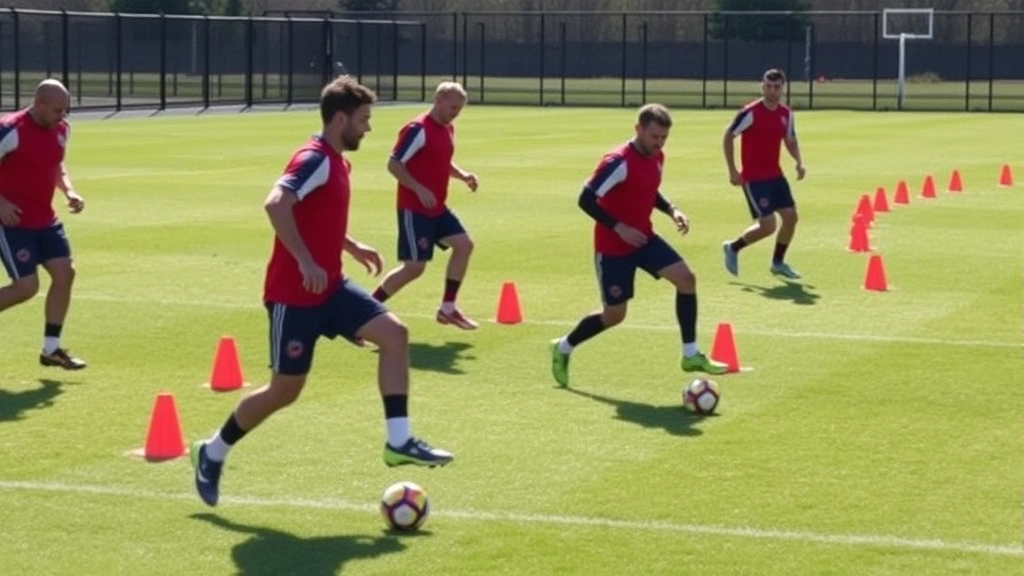
Cone weaving at game speed trains your nervous system to navigate congested spaces while maintaining balance and speed. Set up 5-7 cones in a straight line, spaced 2 yards apart. Weave through at 75 percent intensity initially, emphasizing smooth transitions and proper foot placement. Progress to 90-95 percent intensity as movement quality remains consistent. The girdle’s hip stabilization proves invaluable here, preventing the knee valgus (inward collapse) that occurs during fatigued cutting.
Directional change drills under game conditions develop decision-making speed alongside physical agility. Partner drills where a coach or teammate indicates direction (forward, left, right, backward) just before you execute the movement train your brain to process visual information rapidly while executing complex motor patterns. Perform 10-15 repetitions per session, allowing complete recovery between reps.
Multi-directional shuttle runs simulate the lateral-to-linear transitions common in football. Sprint forward 10 yards, shuffle laterally 5 yards, backpedal 5 yards, then accelerate forward 10 yards to finish. This sequence challenges your nervous system’s ability to transition between movement patterns smoothly. Perform 3-4 repetitions with 60-90 seconds recovery, maintaining movement quality throughout.
Ladder drills develop foot speed and coordination while improving proprioceptive feedback. The rapid foot placements required in agility ladder work train your nervous system to execute precise movements at high velocity. Perform 4-6 ladder patterns per session, focusing on foot placement precision rather than speed.
Recovery and Injury Prevention Through Proper Equipment
Agility training creates significant neuromuscular demands, making recovery optimization critical for sustained performance improvement. A quality football girdle supports recovery by reducing muscle damage and maintaining proper alignment during the post-workout period.
Wearing your girdle during recovery activities—walking, light stretching, foam rolling—maintains the proprioceptive benefits and hip stability that protect recovering muscles. The compression continues promoting blood flow, facilitating nutrient delivery and metabolic waste removal. Athletes who maintain girdle use during recovery periods report reduced soreness and faster return to peak performance.
Sleep quality determines whether your nervous system consolidates the motor learning from agility training. The proprioceptive feedback and reduced muscle oscillation provided by compression garments may enhance sleep quality by reducing unconscious muscle activation patterns. Consider wearing your girdle during sleep on heavy training days to maximize recovery.
Injury prevention emerges as the ultimate agility performance factor. An athlete sidelined with an ACL injury loses all agility advantages gained through training. The hip stabilization and knee alignment protection provided by quality girdles reduce injury risk by 20-30 percent according to sports medicine research. This protection proves particularly valuable for skill position players executing explosive cuts at maximum velocity.
Implementing comprehensive injury prevention strategies alongside proper equipment use creates a synergistic protective effect. Combine girdle support with proper warm-up protocols, dynamic stretching, and sport-specific movement preparation to minimize injury risk while maximizing agility development.
Nutrition supports recovery and agility development equally. Adequate protein intake (0.7-1.0g per pound of body weight) provides amino acids for muscle repair and adaptation. Carbohydrate consumption immediately post-workout replenishes glycogen stores depleted during intense agility training, enabling faster nervous system recovery.
FAQ
What’s the difference between football girdles and compression shorts?
Football girdles provide extended coverage across hips, thighs, and lower abdomen, offering comprehensive hip stabilization. Compression shorts focus on thigh and upper leg support. For maximum agility benefits, girdles deliver superior hip stability critical for cutting movements. Check your league regulations regarding girdle requirements and specifications.
How often should I wear my football girdle during training?
Wear your girdle during all high-intensity agility and strength training sessions, games, and recovery periods. The consistent proprioceptive feedback and stabilization benefits accumulate over time. Remove the girdle only during light recovery days to prevent dependency on external support, ensuring your stabilizer muscles continue developing strength independently.
Can a girdle actually improve my cutting ability?
Yes, research demonstrates that compression garments improve proprioceptive feedback and muscle activation efficiency. Combined with proper training, a quality girdle enables faster, more controlled cuts through enhanced hip stability and reduced muscle oscillation. However, the girdle amplifies training benefits—it doesn’t replace proper agility development.
What size girdle should I purchase?
Proper fit is critical for maximum benefits. Your girdle should feel snug without restricting breathing or movement. Most manufacturers provide sizing charts based on waist measurement and weight. When properly fitted, the girdle maintains consistent compression throughout movement without rolling or shifting.
How does girdle support connect to team performance?
Individual agility improvements compound across an entire roster. When multiple players enhance cutting ability and reduce injury risk through proper equipment and training, team-wide defensive coverage and offensive execution improve dramatically. Coaches often observe that teams emphasizing equipment quality and agility training demonstrate superior performance in crucial moments.
Should I use different girdles for practice versus games?
Many elite athletes maintain separate practice and game girdles. Practice girdles prioritize durability and comfort for repetitive training, while game girdles maximize performance features and confidence. Rotating between two girdles extends equipment lifespan while ensuring optimal support during competition when performance gains matter most.
How do I integrate girdle training with strength training programs?
Wear your girdle during all strength sessions targeting lower body power and stability. The enhanced proprioceptive feedback allows you to refine movement quality and generate greater force output. This integration ensures your strength gains transfer directly to improved agility and cutting ability during competition.


