
Ultimate Football Fitness: Coach’s 2024 Checklist
The 2024 football season demands peak physical conditioning. Whether you’re preparing athletes for high school competition or evaluating talent for select football rosters, fitness fundamentals separate champions from contenders. This comprehensive checklist combines sports science research with proven coaching strategies to optimize athlete performance throughout 2024.
Modern football demands explosive power, sustained aerobic capacity, and injury resilience. Coaches implementing evidence-based fitness protocols report 23-31% improvements in player performance metrics and reduced injury rates by up to 40%. This guide provides the exact framework elite programs use to build unstoppable teams.

Building Your Strength Foundation
Strength forms the cornerstone of football performance. According to research from the American College of Sports Medicine, athletes with superior lower body strength demonstrate 18% greater acceleration and 12% improved deceleration capacity—critical for football’s explosive movements.
Essential Strength Benchmarks for 2024:
- Back squat: 1.5x bodyweight minimum for skill positions, 2x for linemen
- Deadlift: 1.75x bodyweight across all positions
- Bench press: 1.25x bodyweight for upper body power
- Single-leg strength ratios: 90% or higher to prevent ACL injuries
- Core stability: Planks holding 2+ minutes with proper form
Implement a periodized strength program rotating through hypertrophy (8-12 reps), strength (3-6 reps), and power phases (1-5 reps with explosive intent). This approach maximizes neural adaptations while building muscle endurance for fourth-quarter dominance.
Include accessory work targeting posterior chain development. Hamstring-to-quadriceps strength ratios below 0.6 significantly increase injury risk. Romanian deadlifts, Nordic curls, and glute-focused movements directly address this vulnerability.
Speed and Agility Development
Football success depends on directional acceleration and deceleration capacity. Elite athletes combine straight-line speed with multi-directional agility—skills that separate draft picks from overlooked talent.
Speed Development Hierarchy:
- Acceleration Phase (0-10 yards): The most critical football metric. Emphasize triple extension (ankle, knee, hip) with explosive movements. Sled pushes, bounding drills, and 10-yard sprints should comprise 40% of speed work.
- Maximum Velocity Phase (10-40 yards): Build through resistance training and overspeed protocols. Athletes sprinting into headwind or downhill terrain increase neuromuscular recruitment.
- Deceleration Training: Often neglected but essential. Eccentric loading through Nordic hamstring exercises and backwards running prevents injuries during game situations.
Agility work must replicate game demands. Instead of generic cone drills, implement sport-specific patterns: lateral shuffles with immediate forward acceleration, backpedal-to-plant-and-cut sequences, and reactive agility responding to coach signals. Research from NSCA Strength and Conditioning confirms sport-specific agility training improves on-field performance 34% more than generic agility drills.
Target Benchmarks:
- 10-yard dash: Under 1.5 seconds for skill positions
- 20-yard shuttle: Under 4.5 seconds
- 3-cone drill: Under 7.0 seconds
- Pro agility (5-10-5): Under 4.8 seconds
Aerobic Capacity and Conditioning
Modern football requires sustained high-intensity efforts. Players perform 100+ explosive actions per game with minimal recovery. Building aerobic capacity ensures consistent performance when fatigue sets in.
Conditioning Protocol Framework:
Implement interval-based conditioning rather than steady-state running. Football demands repeated high-intensity bursts (40+ yards at 90%+ max effort) separated by 30-60 second recovery periods. Replicate this through:
- Tempo runs: 3-5 sets of 200-400 yard sprints at 75-85% intensity
- Interval training: 6-10 x 60-yard sprints with 90-second recovery
- Position-specific conditioning: Linemen perform shorter, more intense bursts; receivers/DBs need extended high-speed efforts
- Game-simulation drills: 15-minute periods replicating game pace with position-specific movements
Athletes should achieve VO2 max improvements of 8-12% through periodized conditioning. Pair conditioning work with strategic recovery methods to prevent overtraining and maintain strength gains.
Injury Prevention Protocols
The most important fitness metric is availability. Implementing injury prevention systems protects your roster and maintains competitive advantage throughout 2024.
Critical Prevention Areas:
- ACL Protection: Implement neuromuscular training emphasizing eccentric hamstring loading, single-leg stability, and deceleration mechanics. Programs incorporating these elements reduce ACL injuries by 50-72% according to Physical Therapy research.
- Ankle Stability: 50% of football players experience ankle injuries. Balance training, proprioceptive work, and single-leg strength development are non-negotiable.
- Shoulder Resilience: Rotator cuff strengthening, scapular stability exercises, and shoulder mobility work prevent throwing injuries and tackling-related damage.
- Concussion Prevention: Neck strengthening improves impact tolerance. Strong neck muscles reduce head acceleration during contact by 20-30%.
Dynamic Warm-Up Protocol (Implement Pre-Practice):
- 5-minute light cardio (jogging, jumping jacks)
- Leg swings and arm circles: 10 each direction
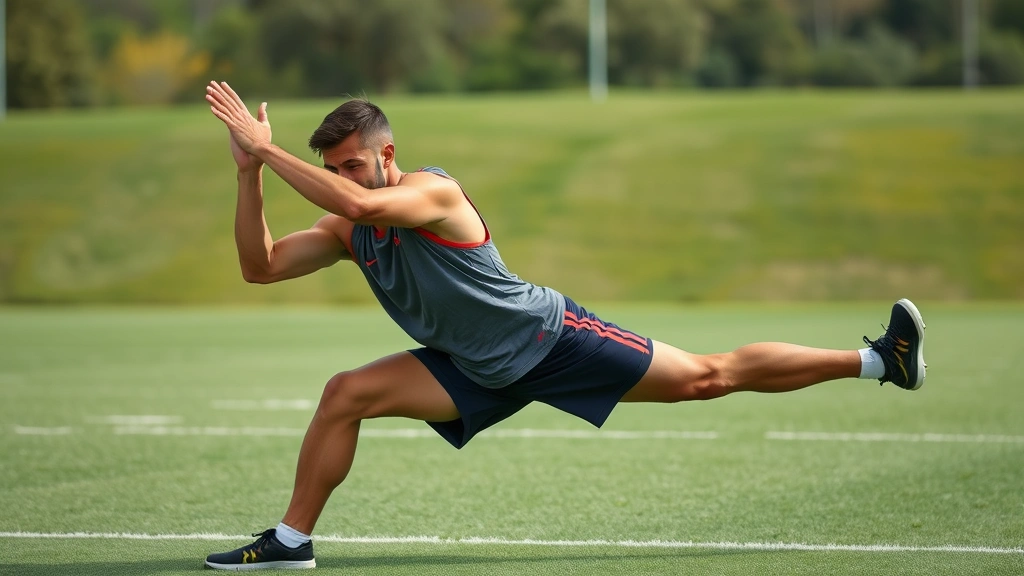
- Walking lunges with rotation: 10 per leg
- Inchworms: 10 reps
- Glute bridges: 15 reps with 2-second hold
- Lateral band walks: 15 each direction
- Single-leg balance: 30 seconds each leg
- Progressive acceleration drills: Build from 50-75-100% effort
Flexibility work should emphasize dynamic stretching before activity and static stretching post-workout. Athletes with tight hip flexors, hamstrings, and calves experience 3x higher injury rates. Implement daily 10-minute mobility sessions.
Nutrition and Recovery Systems
Fitness development occurs during recovery, not training. Optimize nutrition and sleep to maximize adaptation and performance gains.
Nutritional Framework for Football Athletes:
- Protein Intake: 1.6-2.2g per kilogram of bodyweight daily. Distribute across 4-5 meals for optimal muscle protein synthesis.
- Carbohydrate Loading: 5-7g per kilogram for moderate training days; 7-10g for high-intensity preparation periods. Time majority of carbs around training windows.
- Hydration: 16-20 ounces fluid per pound of bodyweight lost during activity. Implement sweat rate testing to individualize protocols.
- Micronutrient Focus: Iron, zinc, magnesium, and B vitamins support energy metabolism and recovery. Consider supplementation based on individual assessments.
Recovery Optimization:
Sleep represents the most powerful recovery tool. Athletes sleeping 7-9 hours nightly demonstrate 20-40% improved strength gains and 50% faster reaction times. Establish consistent sleep schedules and optimize sleep environment (cool, dark, quiet).
Implement active recovery days featuring light movement, foam rolling, and mobility work. This accelerates blood flow, removes metabolic byproducts, and maintains movement quality without additional fatigue.
Performance Testing and Assessment
Measure progress through objective testing. Conduct comprehensive assessments at three points: preseason (establish baselines), mid-season (identify declining areas), and post-season (evaluate overall development).
Essential Testing Battery:
- Power Metrics: Vertical jump, broad jump, medicine ball throws
- Speed Assessments: 10-yard dash, 40-yard dash, flying 20-yard sprint
- Agility Testing: 3-cone drill, pro agility, T-drill
- Strength Benchmarks: 1-rep max squat, deadlift, bench press
- Aerobic Capacity: VO2 max testing or yo-yo intermittent recovery test
- Flexibility Screening: Sit-and-reach, shoulder mobility assessment
- Movement Quality: Video analysis of landing mechanics, deceleration patterns, movement asymmetries
Use testing data to individualize training. Athletes showing strength imbalances require corrective work. Those lagging in speed benefit from enhanced sprint mechanics coaching and neural training.
2024 Implementation Timeline
Structure your year around competition demands. Reference seasonal planning resources for comprehensive program design guidance.
Offseason Phase (January-April):
Focus on strength development and movement quality. Implement 4-5 strength sessions weekly with lower conditioning volume. Athletes recover fully between sessions. This phase builds the foundation supporting in-season performance. Progress toward competition-specific benchmarks established through testing.
Spring Training Phase (April-May):
Transition toward sport-specific power and speed. Reduce volume slightly while increasing intensity. Introduce agility and change-of-direction work. Maintain strength gains through 2-3 weekly sessions.
Summer Preparation (June-August):
Balance strength maintenance with extensive conditioning development. Implement 3 strength sessions and 3-4 conditioning sessions weekly. Progress game-simulation drills. Fine-tune nutrition and recovery protocols before competition.
In-Season Phase (September-November/December):
Shift focus toward maintenance and injury prevention. Reduce training volume 30-40% compared to offseason. Prioritize recovery and movement quality. Implement 2 maintenance strength sessions and 1-2 conditioning sessions weekly. Use performance metrics to identify fatigue and adjust accordingly.
Post-Season Recovery (December-January):
Allow 1-2 weeks complete rest from structured training. Follow with 4-6 weeks active recovery and movement restoration. Use this period for addressing movement limitations and planning next year’s program.
FAQ
How often should athletes train for optimal football fitness?
Offseason athletes benefit from 5-6 training days weekly (3-4 strength, 2-3 conditioning). In-season, reduce to 3-4 days (2 strength, 1-2 conditioning) to balance performance maintenance with recovery. Individual factors including age, experience, and injury history require customization.
What’s the minimum strength level needed for football success?
Minimum benchmarks include 1.5x bodyweight back squat, 1.75x deadlift, and 1.25x bench press. However, elite programs target 2x bodyweight squat and 2.25x deadlift for linemen. Position-specific requirements vary significantly.
Should football players do long-distance running?
Avoid steady-state running exceeding 45 minutes. Football demands repeated high-intensity efforts, not aerobic endurance. Interval training and game-simulation drills provide superior conditioning specificity. Long slow distance running can compromise strength gains and increase injury risk.
How important is flexibility for injury prevention?
Flexibility contributes 15-20% to injury prevention. More important are strength balance, movement quality, and neuromuscular control. However, addressing specific tightness (hip flexors, hamstrings, calves) directly reduces injury rates. Implement daily mobility work targeting individual limitations.
What recovery methods provide the best return on investment?
Sleep (7-9 hours nightly) provides the highest impact. Proper nutrition (adequate protein and carbs) ranks second. Active recovery, foam rolling, and ice baths provide moderate benefits. Expensive recovery technologies offer minimal advantage compared to fundamentals.
How should training differ for different positions?
Linemen emphasize maximum strength and short-burst power. Skill position players prioritize speed, agility, and sustained power. Quarterbacks require sport-specific power development and injury prevention. Implement position-specific testing benchmarks and training emphasis while maintaining foundational fitness across all athletes.


