12 Personnel Football: Coach Insights & Strategies
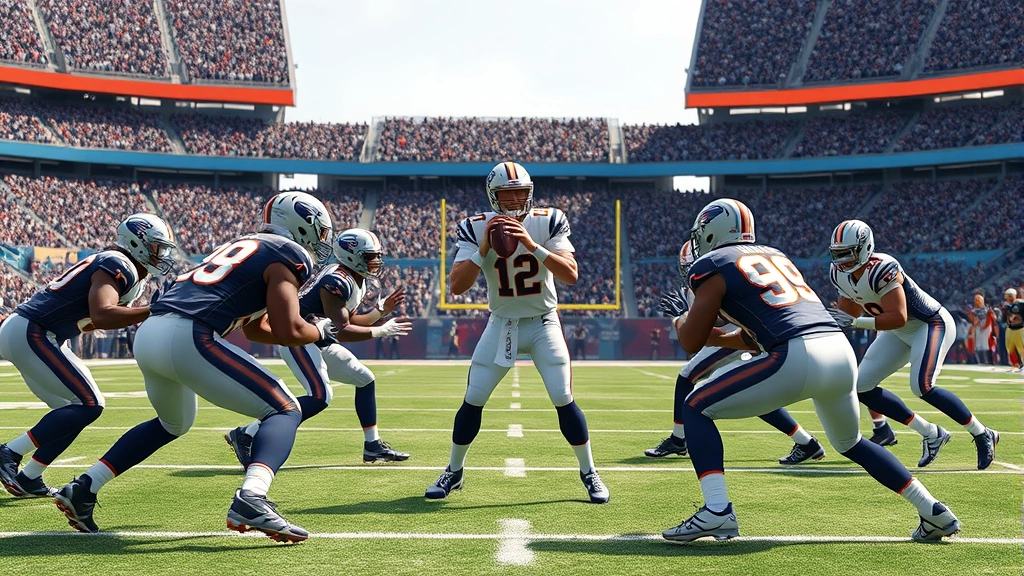
12 personnel in football represents one of the most versatile and strategically significant formations in modern offensive play-calling. The nomenclature—1 running back, 2 tight ends, and 2 receivers—creates a balanced attacking structure that forces defensive coordinators into difficult decisions. This formation has become a cornerstone of successful offensive schemes across the NFL and college football, delivering consistent results through both power running plays and explosive passing attacks.
Understanding 12 personnel goes beyond memorizing a simple formation code. It requires coaches to comprehend spacing principles, defensive reactions, and how to exploit mismatches that emerge when defenses attempt to counter this adaptable package. Whether you’re an aspiring coach, fantasy football enthusiast, or serious football strategist, mastering 12 personnel provides a competitive edge that translates directly to on-field success.
What is 12 Personnel in Football?
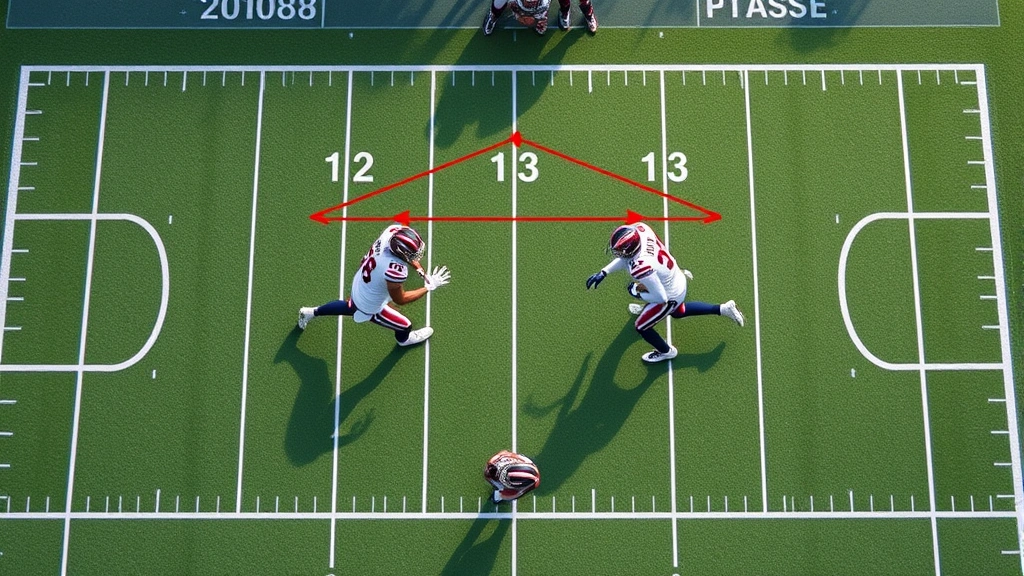
12 personnel consists of one running back, two tight ends, and two wide receivers aligned on the field. This five-eligible-receiver configuration creates immediate strategic complexity because defenses must choose between committing linebackers to coverage or maintaining run-stopping power. The beauty of this personnel grouping lies in its inherent flexibility—it doesn’t prescribe a specific play type but rather establishes a framework that accommodates diverse offensive philosophies.
The two tight ends serve as the architectural centerpiece of this formation. These athletes provide multiple functional roles: they block in run-heavy schemes, create coverage nightmares in pass-heavy systems, and enable creative motion packages that shift defensive assignments. Modern tight ends like Travis Kelce and George Kittle have elevated 12 personnel usage by combining elite receiving skills with adequate blocking prowess, making this grouping exponentially more valuable than in previous football generations.
When you’re developing college football predictions or analyzing professional matchups, understanding personnel packages proves essential. 12 personnel typically indicates offensive intent leaning toward balanced attack, though skilled coordinators deploy it in situationally-specific contexts where surprise and deception become paramount.
Core Strategic Advantages
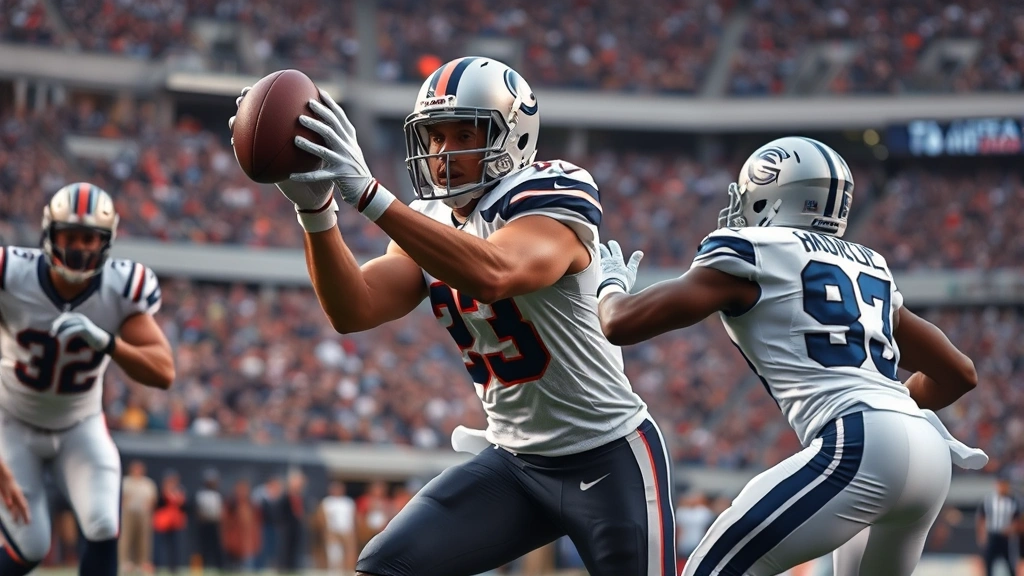
The primary advantage of 12 personnel centers on defensive confusion and mathematical mismatches. When a defense aligns with nickel or dime packages to stop passing plays, the offense gains numerical superiority in the running game. Conversely, when defenses stack the box with linebacker and safety support, the two tight ends create coverage problems for defensive backs forced into man-to-man assignments.
Mismatch Creation represents the most compelling reason coaches deploy 12 personnel repeatedly. A linebacker covering a slot receiver or tight end in space becomes a liability. This forces defensive coordinators into impossible choices: either accept coverage disadvantages or sacrifice run-stopping capability by removing front-seven defenders. The psychological pressure of these dilemmas influences play-calling decisions throughout entire games.
Versatility in Motion allows offensive coordinators to disguise actual intentions pre-snap. A tight end can shift to the slot, creating confusion about whether the play targets the run or pass game. Motion packages within 12 personnel often force defensive re-alignment at the snap, generating the microseconds of chaos that separate successful offensive drives from stalled possessions.
Red Zone Efficiency dramatically improves with 12 personnel implementation. Near the goal line, two tight ends compress the field vertically and horizontally, making defensive coverage exponentially more difficult. The reduced field dimensions amplify the value of multiple eligible receivers within tight spacing, enabling quick-hitting plays with high completion percentages and touchdown probability.
Understanding how to avoid sports injuries becomes increasingly important as players execute more complex assignments within 12 personnel packages, requiring proper conditioning and technique development throughout training camps.
Running Game Applications
12 personnel excels in power running schemes because the two tight ends provide substantial blocking surface area. Zone running concepts become devastatingly effective when tight ends execute proper tracking assignments downfield. The running back receives a clear downhill path while perimeter defenders face immediate engagement from multiple blockers.
Inside Zone Running represents the foundational running concept within 12 personnel. The offensive line attacks gap integrity while tight ends block down on edge defenders. This scheme generates consistent four to six-yard gains because defensive fronts struggle to maintain structural integrity against the double-team blocks and downfield tracking established by elite tight ends.
Power Scheme Variations utilize the second tight end as a lead blocker, creating a fullback-like role without removing a receiver from the field. This hybrid approach generates explosive plays because defenses expecting pass coverage must immediately adjust to power-running assignments. Defensive ends and linebackers caught in coverage responsibilities cannot generate proper gap integrity, resulting in frequent explosive runs exceeding ten yards.
Stretch Plays and Perimeter Attack employ 12 personnel to create numbers advantages on the edge. When tight ends motion to the slot or align wide, they become eligible blockers on outside running concepts. The running back receives an extended running lane with multiple support blockers, enabling consistent edge gains that wear down defensive corners and safeties throughout the game.
Coaches implementing these schemes should consult research from American College of Sports Medicine regarding conditioning protocols that ensure running backs maintain explosiveness throughout four-quarter contests.
Passing Concepts and Route Trees
12 personnel revolutionizes passing game architecture by creating legitimate vertical and intermediate threats at multiple levels. The two tight ends run defined route trees that attack specific defensive vulnerabilities, while receivers execute complementary patterns that create space and highlight coverage breakdowns.
Flood Concepts align three receivers to one side of the field, creating numerical advantages against two-deep safety coverage. One tight end runs vertical, while the other executes an underneath route. This stacks coverage decisions vertically and horizontally, forcing safeties into impossible choices regarding which level to defend.
Mesh Concepts utilize tight end positioning to create pick plays and vertical separation opportunities. As routes cross, defenders assigned to underneath coverage become entangled, creating windows for receivers running complementary patterns. Modern offensive minds have refined mesh concepts within 12 personnel to generate explosive plays with high success rates.
Play-Action Integration amplifies 12 personnel effectiveness by forcing linebackers into hesitation before committing to pass coverage. The running threat established by power-running schemes creates authentic play-action looks. Tight ends release vertically or intermediate while the running back executes fake-carry assignments, generating explosive passing plays.
Dual-Tight End Verticals create legitimate deep-shot opportunities when both tight ends run vertical routes against coverage. Defensive backs assigned to these assignments face immediate separation challenges, and safeties cannot cover both vertical threats simultaneously. This concept generates touchdowns and explosive plays that define successful offensive seasons.
Defensive Adjustments and Counters
Defensive coordinators employ specific strategic responses to neutralize 12 personnel effectiveness. Understanding these counter-strategies enables offensive coaches to predict defensive alignment and call plays that exploit predictable adjustment patterns.
Nickel Coverage Adjustments substitute a linebacker with a defensive back, attempting to improve coverage capability against passing threats. However, this sacrifice reduces run-stopping effectiveness. Offenses exploit this by calling power-running plays that attack the defensive line gap integrity, generating consistent four to six-yard gains.
Two-High Safety Looks protect against vertical passing threats by aligning safeties deep. This coverage structure sacrifices underneath robustness, enabling tight ends to gain separation underneath and slot receivers to generate space on intermediate routes. Offensive coordinators exploit this by calling mesh concepts and crossing routes that generate short-to-intermediate completions.
Linebacker Blitz Packages attempt to generate pass rush pressure before tight ends establish vertical separation. However, blitzing linebackers vacate run-stopping gaps, enabling effective inside-zone running plays. Offenses counter linebacker blitzes by executing quick-hitting pass plays and power-running schemes that exploit vacated defensive gaps.
Cover 2 Shells utilize two safeties aligned deep while corners play soft coverage underneath. This defense struggles against flood concepts and play-action passes. Offenses exploit cover 2 by attacking intermediate levels and employing vertical passing concepts that generate separation at the intermediate passing window.
Situational Usage Patterns
Successful coaches deploy 12 personnel in specific situations that maximize strategic advantages. Understanding situational context separates elite offensive coordinators from average play-callers.
Red Zone Offense represents the most obvious 12 personnel application. With reduced field dimensions, two tight ends create coverage nightmares within compressed space. Defensive backs cannot maintain proper coverage angles, enabling quick-hitting pass plays with high touchdown probability. This situational superiority directly impacts scoring efficiency and playoff success.
Third-and-Short Situations favor 12 personnel because the formation supports both power-running plays and quick-hitting pass concepts. Defenses cannot predict play-type intention, forcing defensive coordinators into guessing games. Offensive coordinators exploit this ambiguity by calling plays that attack defensive alignment tendencies.
Two-Minute Drill Scenarios benefit from 12 personnel’s versatility and quick-play capability. Tight ends release quickly into patterns, enabling rapid-fire completions that advance field position within compressed timeframes. The formation’s inherent flexibility supports both explosive plays and methodical drives that consume clock efficiently.
Goal-Line Situations showcase 12 personnel’s ultimate strategic value. With defenders compressed into tight alignment, tight ends create legitimate separation challenges. Power-running concepts generate explosive gains because gap integrity becomes mathematically impossible when two tight ends occupy defensive attention.
Coaching Implementation Framework
Implementing 12 personnel effectively requires systematic coaching approaches that develop player competency and strategic understanding. Elite coaches establish clear implementation frameworks that evolve throughout seasons.
Practice Installation begins with fundamental tight end blocking assignments and receiver route execution. Coaches must develop timing between quarterback and multiple receivers operating at different route depths. This requires dedicated practice periods focusing on specific concepts, repetition counts, and film study sessions.
Player Role Definition clarifies responsibilities for running backs, tight ends, and receivers within specific play-calls. Ambiguous role assignment generates execution errors and missed assignments. Clear communication regarding blocking assignments, route responsibilities, and progression reads ensures consistent execution.
Quarterback Progression Teaching demands extensive film study and on-field practice. Quarterbacks must develop rapid decision-making skills when multiple receiving options operate at different route depths. This requires teaching progression reads, hot routes, and checkdown assignments that maximize completion percentage and minimize negative plays.
Explore our Peak Play Arena Blog for additional coaching resources and strategic insights that enhance implementation effectiveness.
Film Study and Analysis
Serious coaches dedicate substantial time to film study, analyzing how elite NFL teams deploy 12 personnel across diverse situations. This analysis reveals strategic patterns and innovative applications that enhance offensive efficiency.
Kansas City Chiefs Methodology showcases exceptional 12 personnel utilization under Head Coach Andy Reid. The Chiefs employ two elite tight ends (Travis Kelce and various supporting players) to create vertical and intermediate passing threats. Their deployment of 12 personnel in play-action concepts generates explosive plays that define their offensive identity.
San Francisco 49ers Power Running demonstrates inside-zone mastery within 12 personnel frameworks. The 49ers utilize two tight ends to establish power-running schemes that generate consistent gains and wear defensive fronts throughout games. Their systematic approach to 12 personnel reveals how fundamental concepts, executed with excellence, generate sustainable offensive success.
Buffalo Bills Versatility illustrates how 12 personnel adapts to diverse passing concepts. The Bills employ motion packages and route concepts that attack defensive weaknesses systematically. Their coaching staff manipulates 12 personnel through pre-snap motion, creating confusion that translates directly to explosive plays.
Coaches seeking advanced strategic understanding should review peer-reviewed sports science research examining decision-making processes and strategic complexity in football coaching.
For fantasy football enthusiasts analyzing player performance within 12 personnel contexts, check our fantasy football names guide for understanding how personnel packages impact individual player production.
Systematic Analysis Framework involves charting 12 personnel usage across game situations, defensive responses, and play-calling success rates. This quantitative approach identifies patterns that enhance future play-calling decisions. Coaches maintaining detailed film study records develop statistical advantages that translate into competitive superiority.
FAQ
What does 12 personnel mean in football?
12 personnel refers to an offensive formation featuring 1 running back, 2 tight ends, and 2 wide receivers. This five-eligible-receiver package creates versatile offensive possibilities while maintaining power-running capability through dual tight end blocking assignments.
Why do coaches prefer 12 personnel?
Coaches deploy 12 personnel because it creates defensive confusion, generates mismatch opportunities, and supports both running and passing plays effectively. The formation’s versatility enables creative play-calling that exploits defensive alignment tendencies.
How do defenses stop 12 personnel?
Defensive coordinators employ nickel packages, two-high safety looks, linebacker blitz concepts, and cover 2 shells to counter 12 personnel. Each approach sacrifices specific defensive capabilities while attempting to neutralize particular offensive threats.
Which NFL teams use 12 personnel most effectively?
The Kansas City Chiefs, San Francisco 49ers, and Buffalo Bills rank among the most effective 12 personnel deployment teams. Each organization utilizes the formation through distinct strategic approaches that reflect their coaching philosophies.
Can 12 personnel work in youth football?
Yes, 12 personnel works effectively in youth football when coaches properly teach fundamental blocking assignments and receiver route execution. The formation’s balanced structure supports skill development while enabling competitive success.
How does 12 personnel impact red zone efficiency?
12 personnel dramatically improves red zone efficiency because two tight ends create coverage challenges within compressed field dimensions. Defensive backs cannot maintain proper separation, enabling quick-hitting passes with high touchdown probability.


